
Vis – the island that was closed to the world
For decades, foreign visitors were not allowed to travel to Vis. The Yugoslav military built tunnels, shelters and bases in the mountains. When the island opened again, a curious paradox awaited: the isolation that had held Vis back had also helped preserve something other destinations were losing.
There are islands that became famous because the world discovered them.
And then there is Vis.
An island whose modern identity was shaped to a large extent by the fact that the world was kept away for decades.
Today, the car ferry from Split takes around two hours and twenty minutes. Holidaymakers sit aboard with their suitcases, cars roll down onto the car deck, and ahead of the bow lies one of Croatia’s most distinctive islands.
Less than forty years ago, reality looked very different.
Foreign visitors were not allowed to come here.
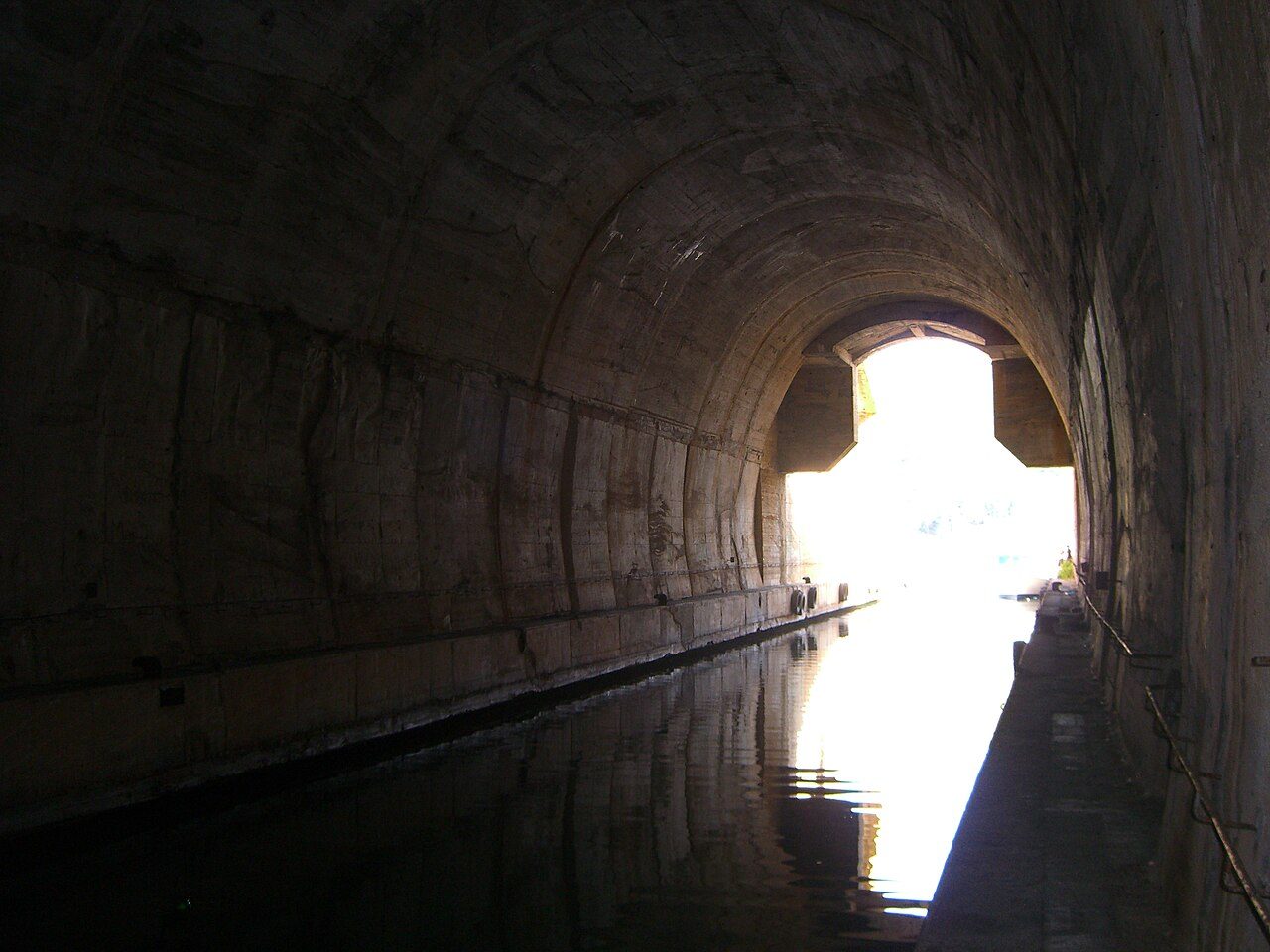
After the Second World War, Vis took on a central strategic role for the Yugoslav military. In a landscape of limestone, vineyards and small coastal communities, military facilities, underground shelters and tunnels were built.
On the island, which covers just under 90 square kilometres, there were a large number of military facilities, including underground spaces, fortifications and a tunnel used to shelter warships.
Vis was not just an island.
It was a military position in the middle of the Adriatic.
And the island remained closed to foreign visitors until 1989.
An island built to be defended
Vis’s military history did not begin with Yugoslavia.
Its position far out in the Adriatic has made it strategically important for centuries. Greeks, Romans, Venetians, British, Austrians and other powers have all left their mark.
During the brief British period in the early 19th century, the fortifications around Vis were strengthened. In 1866, the great naval battle of Vis was fought between Austria and Italy.
But it was in the second half of the 20th century that militarisation changed everyday life on the island in a very different way.
The Yugoslav state made Vis a military zone.
They built into the mountains.
Underground.
On the coast.
On strategic heights.
The remains are still there today.
It is hard to find a clearer contrast with the image many people have of the Croatian archipelago.
Behind the turquoise water is concrete.
Behind the vineyards are tunnels.
And behind the story of today’s holiday island lies a landscape once built for war.
Isolation came at a cost
It is tempting to romanticise all this in hindsight.
To say that the military presence ‘saved’ Vis from mass tourism and then move on to the next beautiful picture.
But the reality was more complicated.
Isolation came at a cost for the people who lived here.
Decades of separation held back tourism and economic development and contributed to people leaving the island.
That matters.
Because what a visitor today might experience as a charming absence of large-scale development was not a lifestyle choice for earlier generations.
It was a consequence of politics, military strategy and limited economic opportunities.
Still, an odd side effect emerged.
As other parts of the Adriatic coast developed their tourist industries, Vis remained partly on the sidelines.
And when the door finally opened, the island had not undergone exactly the same transformation.
The door opens in 1989
The ban on foreign visitors ended in 1989.
But the military era did not end overnight.
The Yugoslav army finally left Vis on 30 May 1992, after Croatia’s declaration of independence and during a dramatic period in the region’s history.
The infrastructure remained.
The tunnels.
The bunkers.
The barracks.
But there was also an island that now needed to find a new relationship with the outside world.
In just a few years, Vis had gone from military outpost to a place that could once again welcome international travellers.
What had once been kept hidden eventually became part of what people came to see.
When secrets became attractions
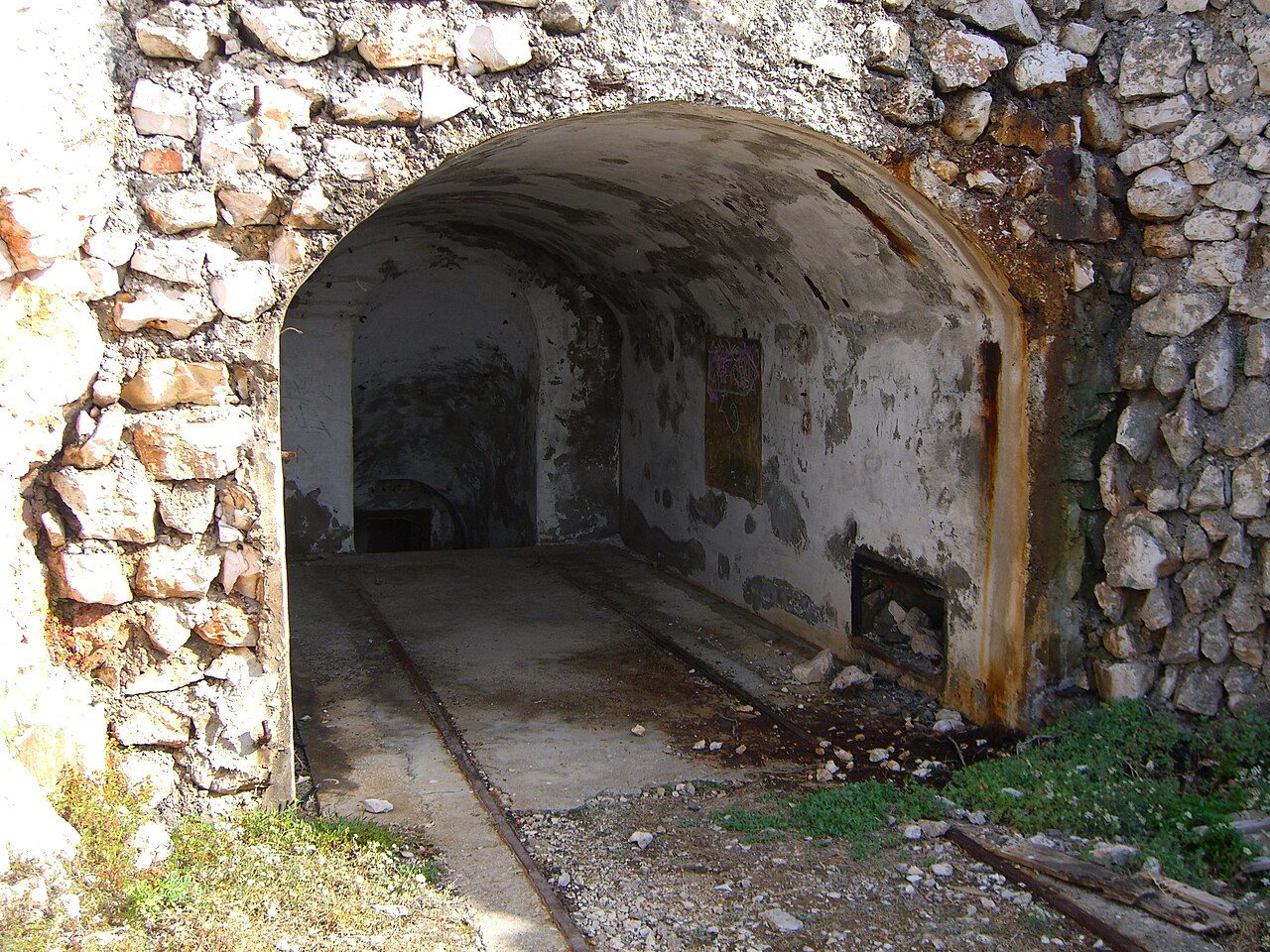
Today, parts of the old military infrastructure can be visited.
In various parts of the island, there are former gun emplacements, tunnels, bunkers and other remains from the military period. Some are included in organised tours that tell the story of Vis’s closed-off past.
There is something almost absurd about the transformation.
Facilities whose function once depended on secrecy now appear on tourist maps.
People arrive in sandals with cameras at places designed for soldiers and warships.
But Vis does not need to turn its military history into a theme park.
Quite the opposite.
What is interesting is that the remains are still there, right in the middle of a living landscape.
For above the tunnels, the vines grow
If Vis were only about military history, the story would be much simpler.
But a few kilometres from the concrete, there is a completely different world.
Vineyards.
Small konobas.
Stone walls.
Fishing boats.
And two names that come up again and again when the island’s wine tradition is discussed: Vugava and Plavac Mali.
Vugava is particularly associated with Vis, and the island’s wine landscape remains an important part of its identity.
The food tells the same story.
There is viška pogača, a local speciality made with bread dough filled with ingredients including salted fish, onion and olive oil – food whose history has far more to do with everyday life and the sea than with international restaurant trends.
Perhaps this is where Vis becomes most interesting.
The military island and the Mediterranean island exist side by side.
Vis and Komiža – two sides of the same island
The two main settlements also offer different pictures of Vis.
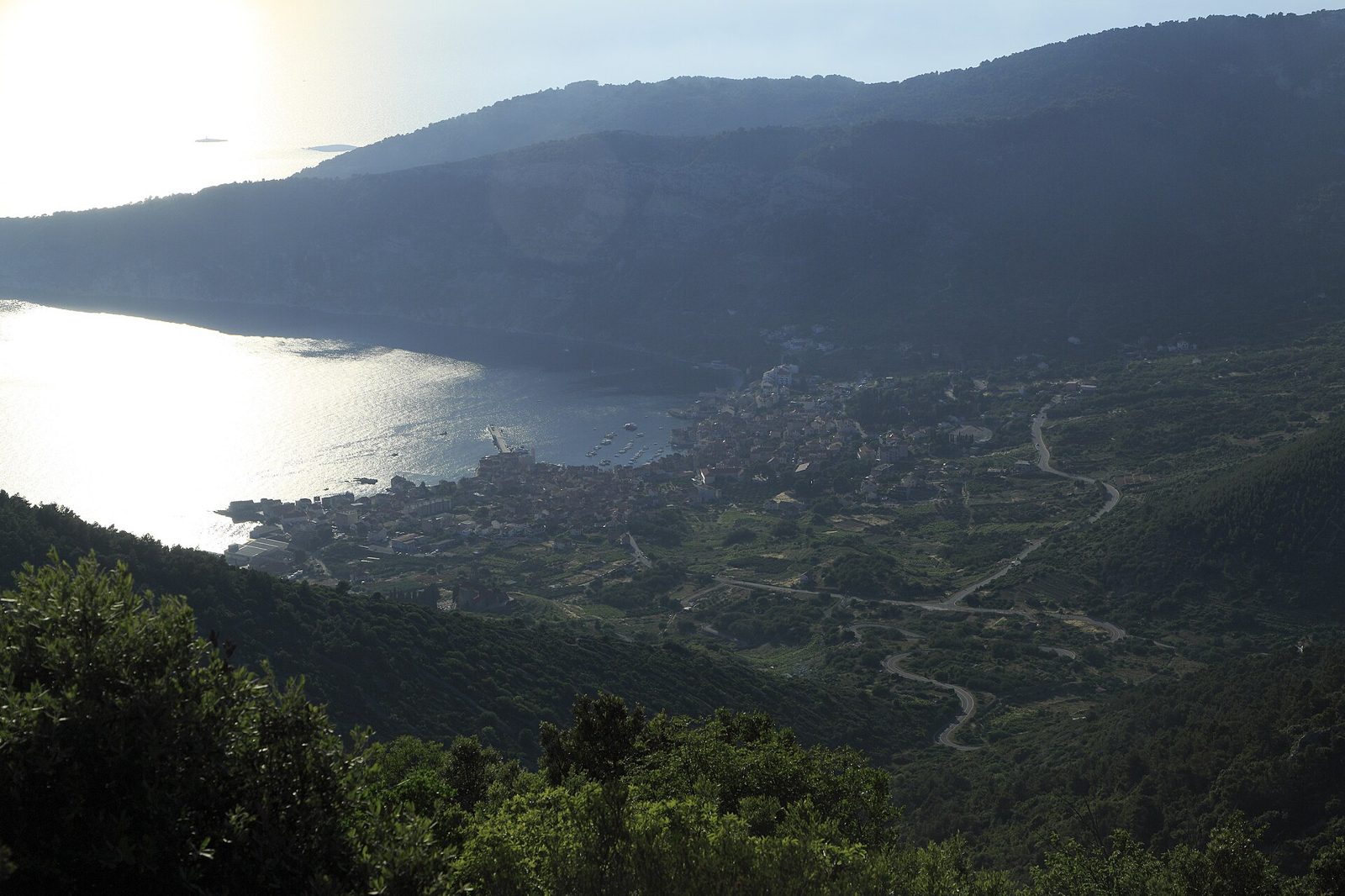
The town of Vis lies in a broad bay on the island’s north-eastern side. Here you’ll find the harbour where the ferry from Split docks, historic buildings and traces of a history that stretches back long before Yugoslavia.
On the other side of the island lies Komiža, tucked between the mountain and the sea, with a history strongly shaped by fishing.
The road between them crosses the island.
And perhaps that journey is a better introduction to Vis than any list of attractions.
You leave the harbour, drive through the interior and see how quickly the classic image of a beach island disappears.
Vis is not just a coastline.
There is an inner life here.
The island that became appealing because it did not have time to become everything
It would be too easy to claim that Vis is still ‘undiscovered’.
It isn’t.
The island features in international travel magazines, on social media and in travel itineraries far beyond Croatia.
But Vis still bears the consequences of its unusual modern history.
There is an irony in that.
For decades, isolation was an obstacle.
It limited the economy, tourism and contact with the outside world.
Today, some of what remains from that period is what many travellers seek: a smaller scale, layers of history, a vineyard landscape, fishing communities and distance from the biggest tourist machines.
That does not mean Vis should be frozen in time.
The people who live there need jobs, functioning infrastructure and a year-round economy.
The real challenge is harder:
to develop without destroying what made that development interesting in the first place.
An island cannot stay secret for ever
Perhaps that is why the old tunnels say more about Vis than you might think at first.
They were built for a world in which the island was to be protected by being closed off.
Today’s Vis faces almost the opposite question.
How do you open a place to the world without letting the world make it like everywhere else?
The answer is hardly to be found in a bunker.
But somewhere between the military tunnels, Komiža’s fishing boats, the vines and the ferry from Split, there is an island still trying to find its balance.
Vis was once attractive to the military because it lay far out at sea.
Today, perhaps it is that very distance that makes other people long to go there.
Plan your trip · Vis
Getting there
The regular car ferry runs between Split and Vis, and the crossing takes around two hours and twenty minutes. Faster passenger services also operate at certain times of the year. Timetables and the number of departures vary by season and should always be checked before travelling.
When should you go?
July and August offer classic high summer, but also bring the most visitors. For those mainly interested in exploring the island, walking, eating and discovering its wine landscape, June and September are appealing alternatives with a more relaxed pace.
Where should you stay?
Vis Town suits those who want the ferry, restaurants and amenities close by. Komiža suits those looking for a smaller coastal community with a strong fishing tradition and a different atmosphere. A car or scooter makes it easier to experience both the coast and the interior.
Don’t miss
Komiža, the island’s wine landscape, a properly guided tour of one of the old military facilities, and a dinner centred on local ingredients. Military facilities should only be visited where access is permitted.
How long should you stay?
A weekend is possible, but Vis loses much of its appeal if the trip becomes a hunt for attractions. Four to five nights allow time for Vis Town, Komiža, the interior and the sea. A week suits anyone who really wants to slow down.
Good to know
Vis lies farther from the mainland than several of the most visited Dalmatian islands. Plan your ferry journey early, especially in high season, and always check the current timetable before departure.
Sources & further reading
- Turistička zajednica Grada VisaVis – öns officiella turistinformation
- Turistička zajednica Općine KomižaKomiža – turistinformation
- JadrolinijaFärjeförbindelser Split–Vis
- WikipediaVis (island) – historik och militär period
Share the article
Translated from Swedish with AI assistance. Read the original.


