
Travelling between Zagreb, Sarajevo and Belgrade: How to navigate the Balkan bus and train maze
Travelling between the three classic Balkan cities of Zagreb, Sarajevo and Belgrade is a fantastic way to experience the region’s contrasts. But anyone expecting smooth European express trains will soon encounter a different reality. Here’s the complete guide to the best ways to get between the cities by public transport, how to handle border checks and what to bear in mind before buying your ticket.
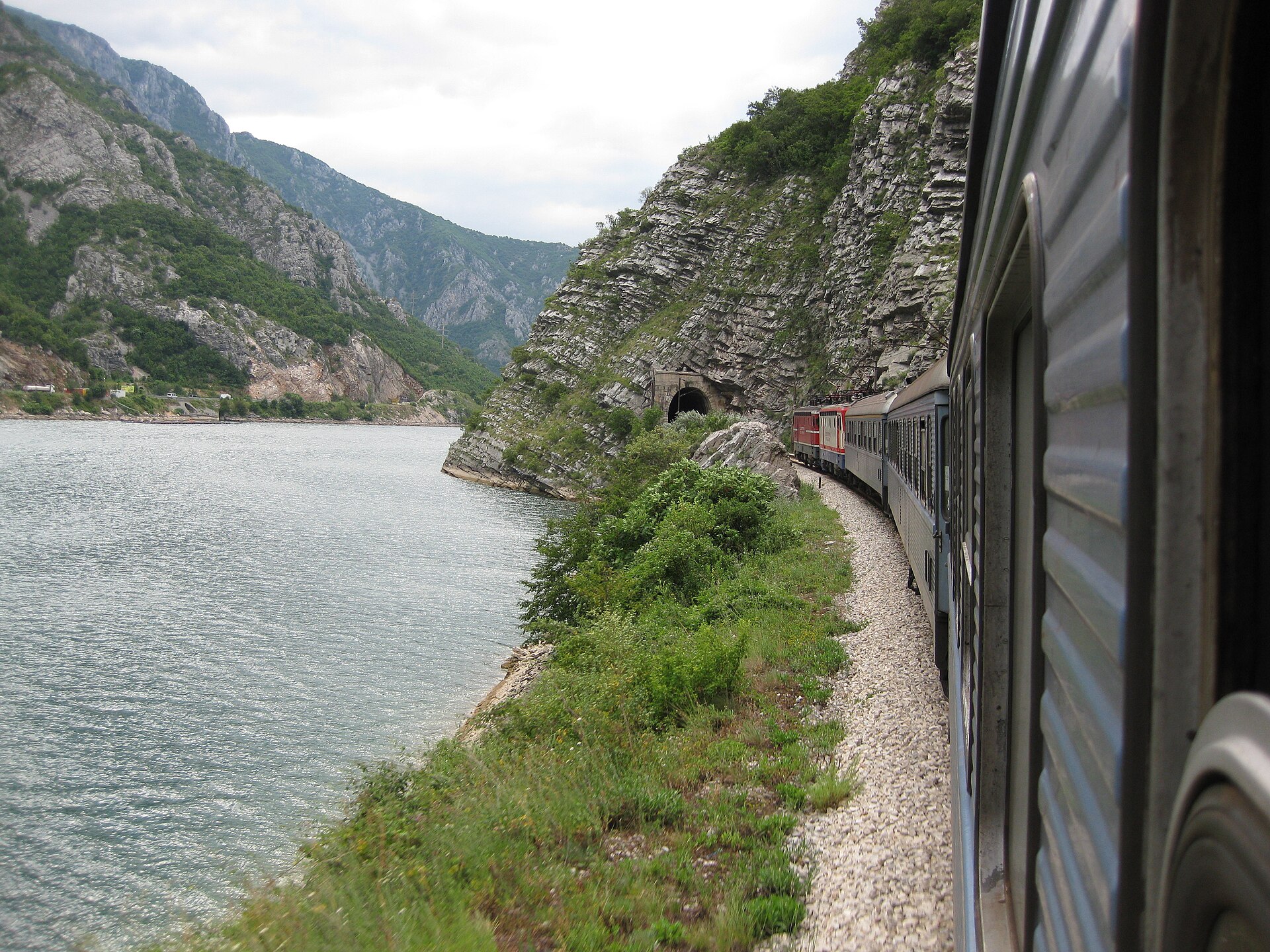
Many travellers are drawn to the idea of winding through the Balkans’ dramatic mountain scenery by train, coffee in hand, as villages and valleys pass by outside the window. But when it comes to travelling between the three most important hubs of the former Yugoslavia – Zagreb, Sarajevo and Belgrade – the dream of travelling by train soon collides with reality.
Today, it is the roads that connect the region. Travelling by bus is by far the most convenient option, and often the only one. However, it takes a little more planning than a typical train journey in Western Europe. Here’s everything you need to know to make your journey as smooth as possible.
The train dream that never came true: The reality of railways today
To make this absolutely clear from the outset: there are currently no direct international passenger trains between Zagreb, Belgrade or Sarajevo. The railway networks in Croatia, Bosnia and Herzegovina, and Serbia are very much alive at national level, but the cross-border routes that once connected the capitals have been discontinued or suspended indefinitely.
Historical and political tensions, poor track maintenance and complicated border bureaucracy have meant that cross-border rail services have been deprioritised. If you go to the railway station in Zagreb and ask for a ticket to Sarajevo or Belgrade, the ticket-office staff will look at you sympathetically and point you towards the large bus station just over a kilometre away. For public transport travellers, the bus is simply the only realistic option.
Zagreb to Sarajevo: Across the border into Bosnia
The journey between Croatia’s capital, Zagreb, and Bosnia’s heart, Sarajevo, is one of the most popular routes for travellers in the region. The route is just over 400 kilometres long and offers a fascinating experience of the landscape as the flat Slavonian countryside gradually gives way to Bosnia’s lush, dramatic mountain ranges.
Buses leave from Zagreb’s central bus station (autobusni kolodvor) on Avenija Marina Držića. Several companies operate the route daily, including the Bosnian national operator Centrotrans, Croatia Bus (often in partnership with Globtour) and FlixBus.
The journey usually takes between 6.5 and 8 hours. The difference in journey time mainly depends on how long the border checks take and which route the bus takes. Most buses head south towards the border crossings at Slavonski Brod/Brod or Stara Gradiška/Gradiška. As Croatia is in the EU and the Schengen Area, crossing into Bosnia means crossing the external Schengen border. This involves thorough passport checks for all passengers, which can cause significant delays during the peak season.
Belgrade to Sarajevo: A journey between two stations
The journey between Serbia’s capital, Belgrade, and Sarajevo is around 325 kilometres. Despite being shorter than the route between Zagreb and Sarajevo, it takes almost as long – allow around 7 to 8 hours. This is because the roads through eastern Bosnia are narrow and wind through mountain passes and river valleys, passing towns such as Ruma and Šabac, the border town of Zvornik and the winter sports resort of Pale.
Several operators run the route daily, including Lasta, Centrotrans and Kondor. But when planning this journey, there are a couple of very important details to keep in mind about the stations.
First, Belgrade’s central bus station (BAS) has recently moved. The old, run-down station near the railway station by the Sava River is closed. All long-distance buses now leave from the newly built station in the Novi Beograd district (Blok 42). It is modern, but may seem a little confusing at first, so make sure you arrive in good time.
Second, and perhaps most importantly, most buses from Belgrade do not arrive at Sarajevo’s central bus station (glavna autobuska stanica). Instead, they stop at the station in East Sarajevo (autobuska stanica Istočno Sarajevo), in the district of Lukavica. This is due to the country’s administrative division: Lukavica is in the entity of Republika Srpska.
Zagreb to Belgrade: The quickest route
The journey between Zagreb and Belgrade is the most direct and easiest in terms of infrastructure of the three. Buses travel along the E70 motorway, also known as the old “Highway of Brotherhood and Unity” from the Yugoslav era.
The route covers around 400 kilometres of flat motorway through Slavonia and Serbia’s Srem region. The journey usually takes between 5.5 and 6.5 hours. Several major operators, including Lasta, Čazmatrans and Fudeks, run the route several times a day.
The main uncertainty is the border crossing at Bajakovo (on the Croatian side) and Batrovci (on the Serbian side). This is one of the busiest border crossings in south-eastern Europe. During major holidays, such as Christmas and Easter, and in the summer holiday months, when hundreds of thousands of people travel between Western Europe and the Balkans, waiting times here can stretch to many hours. So always allow plenty of extra time if you have a connection to make.
Border checks, currency and tickets: Travelling in practice
Travelling by bus in the Balkans is somewhat different from travelling in the Nordic countries. Here are the key practical details to keep in mind to avoid problems at the station or border.
Online tickets vs. paper tickets: You can easily search for and buy tickets online through platforms such as Busticket4.me or GetByBus. But don’t assume that a QR code on your phone will be enough. Many Balkan bus companies still require you to have a printed paper ticket. If you buy online, read the terms carefully. Often, you’ll need to go to the station ticket office and show your booking to get a paper ticket and sometimes an accompanying plastic token (žeton) to get through the barriers to the platforms. This station fee (stanična usluga) usually costs the equivalent of 1–2 euros.
Bus luggage fee: When you travel with large bags that need to go in the bus luggage compartment, drivers almost always charge an extra fee per bag. This fee is paid in cash directly to the driver when you load your bag. It is usually around 1–2 euros (or the equivalent in local currency: around 2–3 BAM in Bosnia or 150–200 RSD in Serbia). Drivers do not accept cards for this, so make sure you have small notes or coins ready before you board.
Currency on your journey: Croatia uses the euro (EUR), Bosnia and Herzegovina uses the convertible mark (BAM, often abbreviated to KM locally), and Serbia uses the Serbian dinar (RSD). It can be difficult to use a card at smaller bus stations, for luggage fees or on the bus. Make a habit of withdrawing a small amount of local currency from an ATM as soon as you cross the border.
Facts
FACTS: Three important bus stations
- Zagreb autobusni kolodvor
Address: Avenija Marina Držića 4, Zagreb Getting there: Trams 2, 6, 7 and 8 stop right outside the terminal and take you to the railway station or Trg bana Jelačića square.
- Beogradska autobuska stanica (BAS)
Address: Blok 42, Novi Beograd Getting there: Easily reached by tram (e.g. routes 7, 9, 11 and 13) or local buses to Novi Beograd station.
- Istočno Sarajevo (East Sarajevo)
Address: Srpskih vladara 2, Lukavica Getting there: Located on the southern outskirts of the city. Take a taxi or walk 10 minutes to the trolleybus in the neighbouring district of Dobrinja.
:::las-aven READ ON Read more: A meeting with the wild horses of the Kruzi Plateau – one of Europe’s last wild horse populations, just a few hours from Sarajevo or Split.
Explore more: Sarajevo – articles and guides :::
Sources & further reading
Share the article
Translated from Swedish with AI assistance. Read the original.


