
Tito’s floating palace comes to life: legendary Galeb becomes a museum in Rijeka
For decades, she lay rusting away at the quay, a silent remnant of a bygone era. But now Josip Broz Tito’s legendary luxury yacht Galeb has undergone a complete transformation. In 2025, the historic ship—which once hosted both Cold War world leaders and Hollywood’s biggest stars—will open as a state-of-the-art floating museum on Rijeka’s harbour promenade.
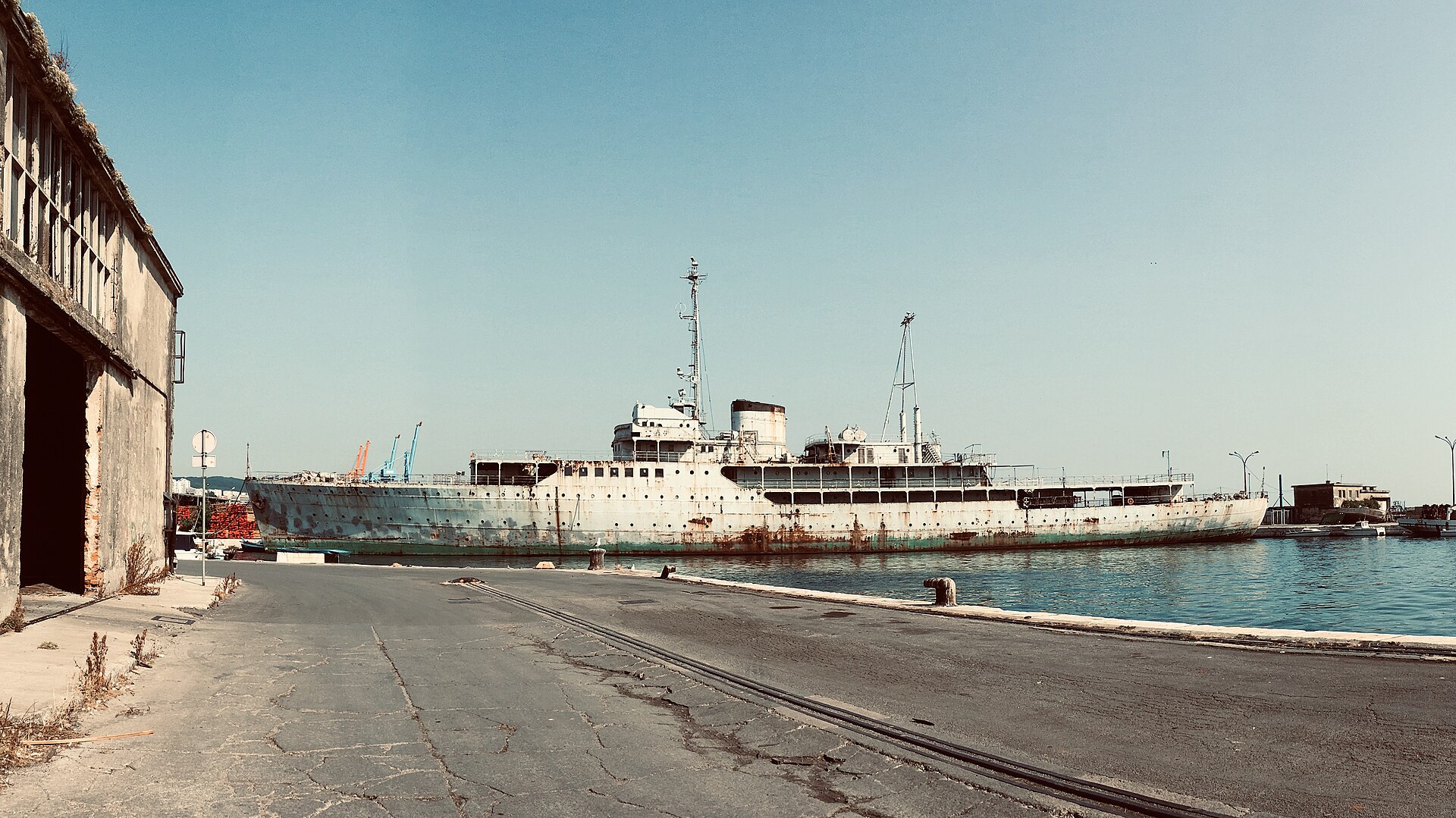
At the long breakwater of Molo Longo in the Croatian port city of Rijeka, a familiar silhouette has reclaimed its place. But the rusty, melancholy appearance that long defined the ship Galeb—the seagull in Croatian—is gone. After an extensive and at times challenging five-year renovation at the Kraljevica shipyard, the 117-metre-long vessel is ready for its next chapter. In the first half of 2025, the doors will open to what is described as one of the Adriatic’s most fascinating museum projects.
The story of Galeb is, in many ways, the story of the turbulent European twentieth century. The ship has served as an Italian banana boat, a minelayer in the German Navy, a sunken prize of war, a Yugoslav training ship and, finally, the floating palace of one of the Cold War’s most colourful heads of state.
From Italian banana boat to prize of war on the seabed
The journey began in Genoa, Italy, in 1938. The ship was originally built as a fast refrigerated cargo vessel under the name Ramb III, tasked with transporting bananas from Italian Somaliland to Europe. But peacetime was short-lived. When the Second World War broke out, the ship was requisitioned by the Italian Navy and converted into an auxiliary escort cruiser.
After Italy’s capitulation in 1943, the ship was seized by German forces, renamed Kiebitz and fitted out as a minelayer. Under the German flag, she laid thousands of mines in the northern Adriatic before fate caught up with her towards the end of 1944. During an Allied bombing raid on Rijeka’s harbour, the ship was hit and sank to the bottom.
There, at a depth of just over twenty metres in Rijeka’s muddy harbour basin, the story could have ended. But in 1948, the newly established Yugoslav regime decided to salvage the wreck. It was a technical feat that took more than a year. The ship was towed to the shipyard in Pula, where it was not only repaired but completely rebuilt as a modern training ship for the Yugoslav Navy. It was renamed Galeb, and it was not long before President Josip Broz Tito recognised the ship’s potential as a floating envoy.
Cold War diplomacy and Hollywood glamour
During the 1950s and 1960s, Galeb became the setting for a unique form of maritime diplomacy. Tito was afraid of flying and preferred to travel by sea. The ship became his floating residence and office during long foreign trips intended to build the Non-Aligned States Movement (the Non-Aligned Movement)—a bloc of nations seeking a third way between the United States and the Soviet Union.
Galeb sailed up the Thames in 1953 for a historic state visit to Britain, where Tito met Winston Churchill on board. It was the first time a communist head of state had visited the country after the war. Below deck, in the teak-panelled salons, decisions that influenced global politics were made during meetings with leaders such as Indian Prime Minister Jawaharlal Nehru and Egyptian President Gamal Abdel Nasser.
But life on board was not all high politics. Galeb was also a place of glamour and hospitality. When film stars Elizabeth Taylor and Richard Burton visited Yugoslavia in the early 1970s—in connection with Burton playing Tito in the lavish war film Sutjeska—they spent time aboard the ship. Taylor is said to have enjoyed the relaxed atmosphere on the aft deck, far from Hollywood’s paparazzi, as local wines were toasted and dishes prepared by Tito’s personal chefs were served.
Decline, legal dispute and an unexpected rescue
After Tito’s death in 1980 and the subsequent break-up of Yugoslavia in the early 1990s, Galeb faced a bleak fate. The ship first ended up in Montenegro but was later sold to Greek shipowner and billionaire John Paul Papanicolaou—known, among other things, for owning Aristotle Onassis’s legendary yacht Christina O.
The plan was to turn Galeb into a luxury charter boat for the world’s elite, but it fell through. Papanicolaou ran into financial difficulties and the ship was left to decay at the Viktor Lenac shipyard in Rijeka. In 2009, after years of unpaid harbour fees, the ship was seized by the Croatian state.
For a time, Galeb was at risk of being sold for scrap, which would actually have brought in more money at a direct auction than the low starting price set for the ship. But because the Croatian Ministry of Culture had already classified it as national cultural heritage, such a sale was prohibited. After a lengthy legal dispute with the ship’s previous owner, the city of Rijeka managed to buy Galeb, with the vision of giving her an entirely new life.
Inside the new museum: walking through history
Stepping aboard Galeb after the extensive renovation is like walking straight into a time capsule, but with a modern museum setting. The renowned Croatian designer Nikolina Jelavić Mitrović—previously known for her acclaimed exhibition designs at the Vukovar City Museum—has been responsible for the artistic vision, making the ship’s complex history understandable and vivid.
The work on the interior has been meticulous. The original furniture has been restored in collaboration with experts from the conservation department of the Ministry of Culture in Rijeka. Visitors will be able to walk through the recreated private cabins where Tito and his wife Jovanka Broz lived, see the elegant reception rooms and visit the impressive engine room, which still evokes the technology of the 1950s.
The exhibition does not hide the ship’s ideological or political role, but it also highlights the human stories behind the facade: the lives of the ordinary sailors who worked on board, the technical challenges of keeping the ship in constant working order and the role the shipbuilding industry played in the region’s development.
More than a museum: the harbour’s future meeting place
The investment in Galeb, which has been funded with the help of EU funds and the city of Rijeka’s own resources, goes beyond simply presenting a historical exhibition. The idea is for the ship to become an integrated part of urban life in Rijeka.
As well as museum spaces, Galeb will house a café and restaurant on deck, where visitors can have a coffee or dinner with a view of Rijeka’s harbour and the Kvarner Gulf. For those looking for a more immersive experience, accommodation will also be available on board, with parts of the ship adapted to welcome overnight guests in a unique historical setting.
For visitors who want to understand the Balkans beyond the usual tourist trails, Galeb offers a perfect introduction. It is a place where high politics, design history and maritime culture come together—and where one of the most legendary ships of the last century has finally found a true home.
Facts
Sources & further reading
- boatinternational.com117m presidential superyacht Galeb completes conversion into museum
- total-croatia-news.comRijeka Civic Museum Invites Everyone to Take Part in Legendary Galeb ...
- autoevolution.comClassic Superyacht Galeb Was Converted Into a Museum ...
- youtube.comTito's Abandoned Ship – What Remains of the Galeb ... - YouTube
Share the article
Translated from Swedish with AI assistance. Read the original.


