
The Road to Lukomir – Where Bosnia Still Feels Wild
High up on Bjelašnica, the tarmac ends and something else begins. The road narrows, the landscape expands, and everyday life grows more distant. At the end of the gravel road lies Lukomir – but it is the journey there that makes the place stay with you.
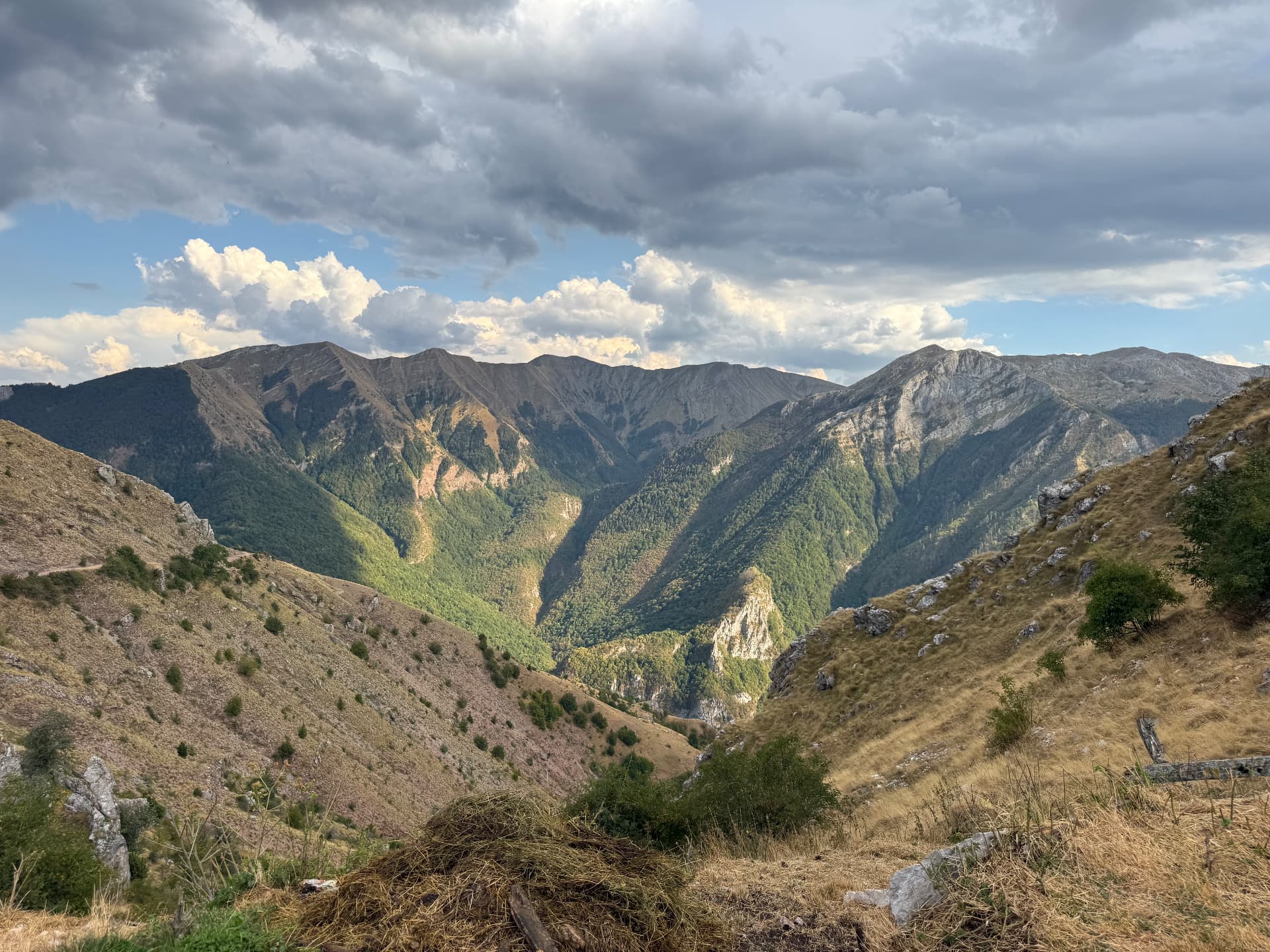
It does not begin in Lukomir.
It begins much earlier, when Sarajevo shrinks in the rear-view mirror and the road climbs towards Bjelašnica. The forest thins. The houses grow sparser. Eventually, the tarmac disappears beneath the wheels.
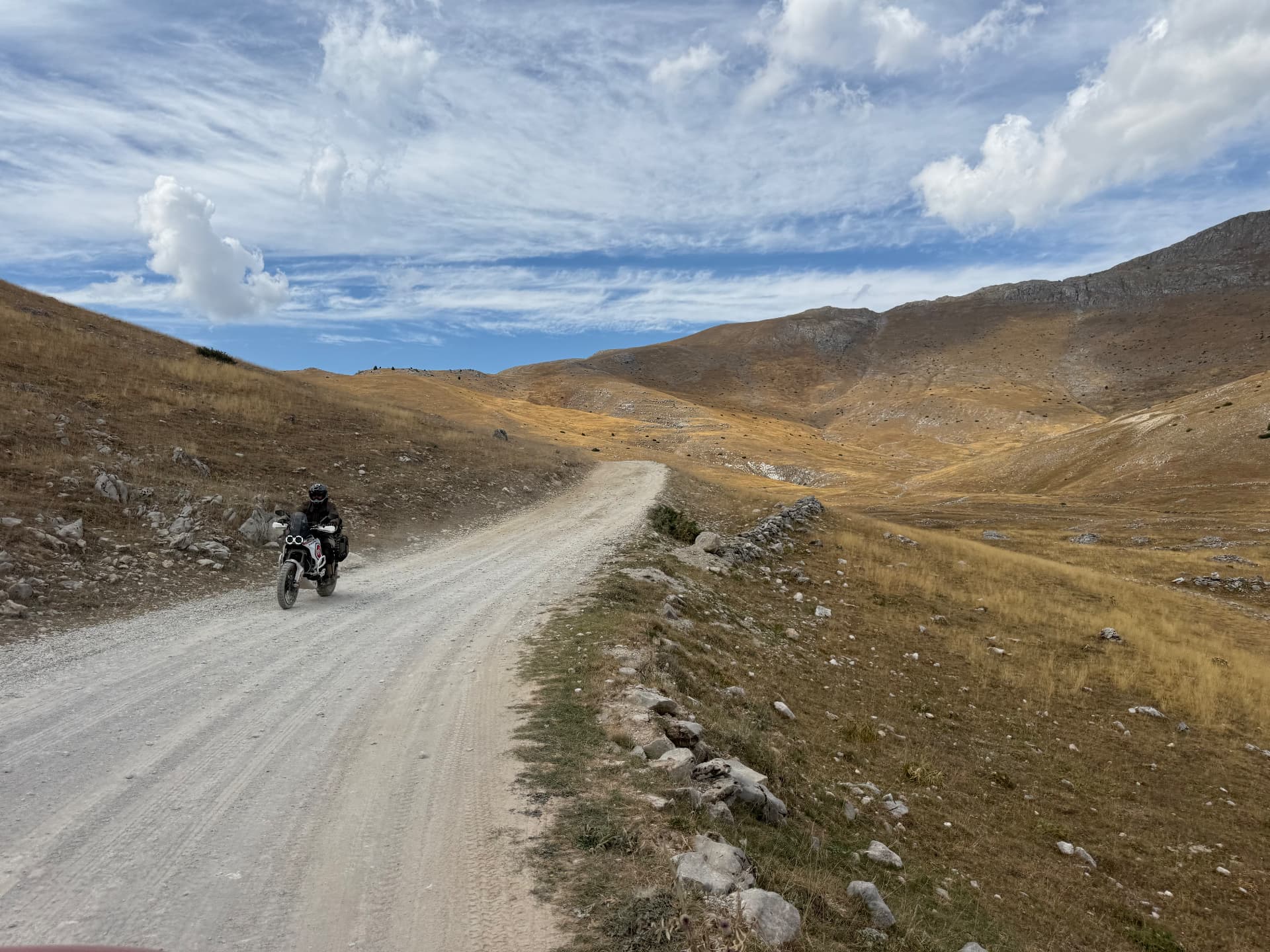
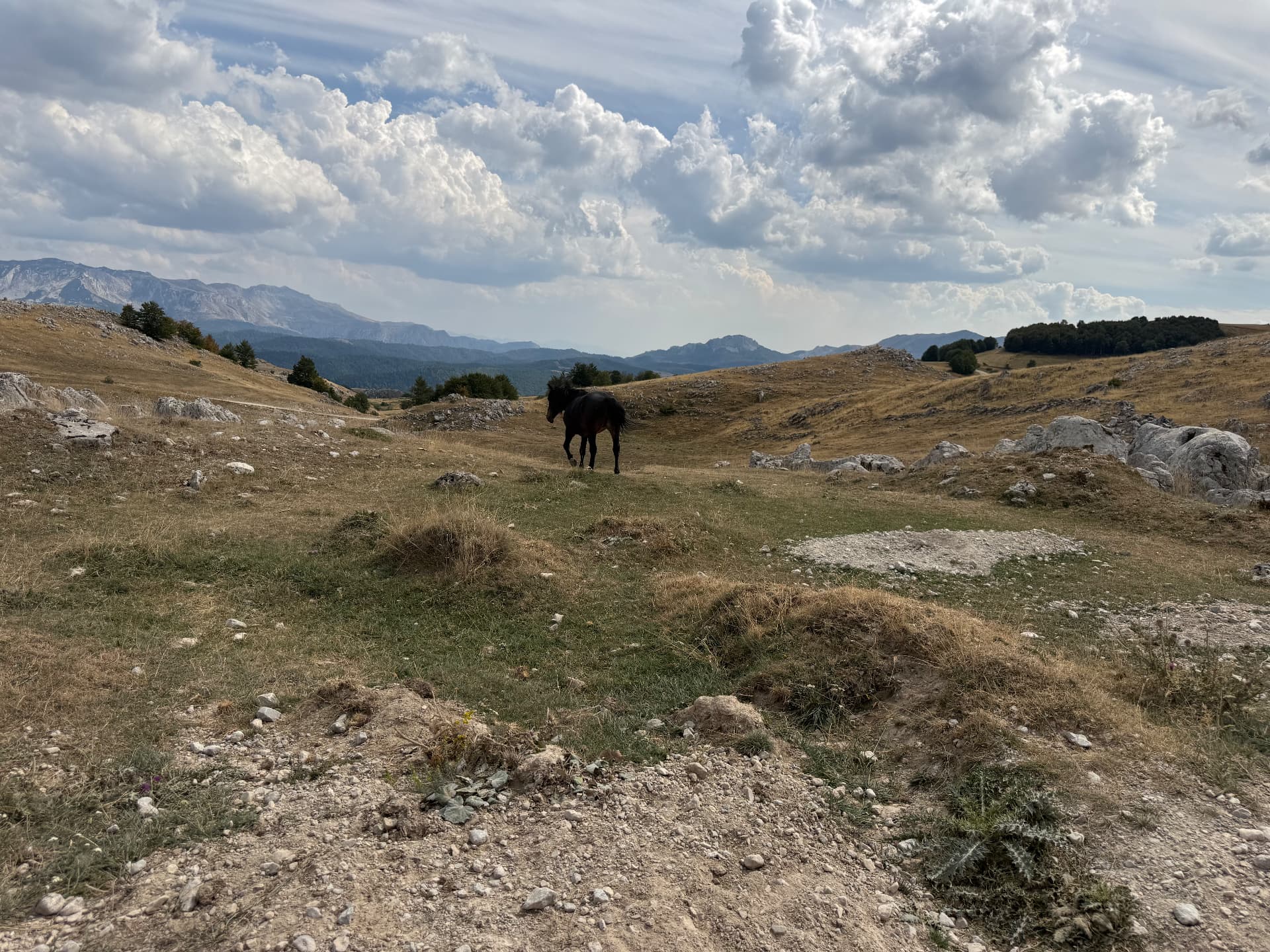
Ahead of us lies a gravel road through a landscape that feels almost impossibly open. Arid mountainsides, stone, high pastures, and clouds moving swiftly across the sky. Here and there, cows graze. A horse crosses the road without any great hurry.
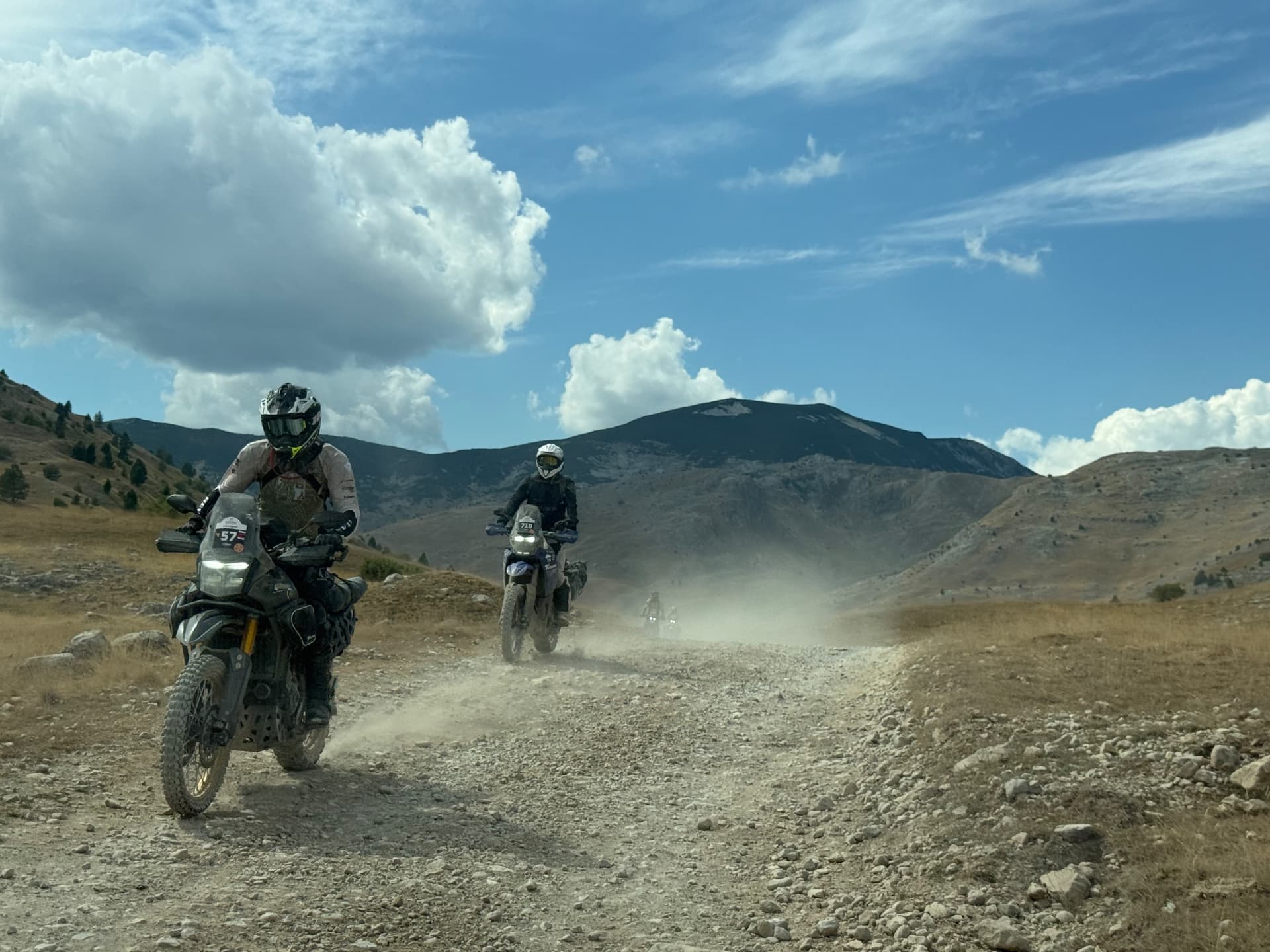
Then come the motorcycles.
They appear through a cloud of dust, one by one, making their way across the same barren plateau. A few minutes later, they are gone, and silence reclaims the landscape.
It is somewhere here that you realise the road to Lukomir is not just transit to a destination.
It is part of the journey.
A Different Bjelašnica
For many, Bjelašnica is still associated with the 1984 Sarajevo Winter Olympics, ski slopes, and winter. But beyond the lifts, a different side of the mountain opens up.
Here, there are no perfect roadsides, and few things attempt to capture the traveller's attention. The landscape has no need for it.
The road continues across the high plateau through an area where distances are hard to judge. A mountain that looks close is suddenly far away. A valley opens up where you least expect it. Behind the next bend, livestock stand along the road.
And sometimes, you simply have to stop.
Not because a sign tells you there is a viewpoint, but because the view demands it.
Lukomir lies around 1,500 metres above sea level on the high plateau of Bjelašnica, above the dramatic Rakitnica Canyon. The final stretch of the road traverses mountain terrain that can become difficult or impassable during winter.
Life here has therefore long followed the seasons. During the warmer months, people return to the village, keep livestock, and till the soil, while many leave the highlands when winter arrives.
The First Houses
After kilometres of almost empty landscape, the scene changes.
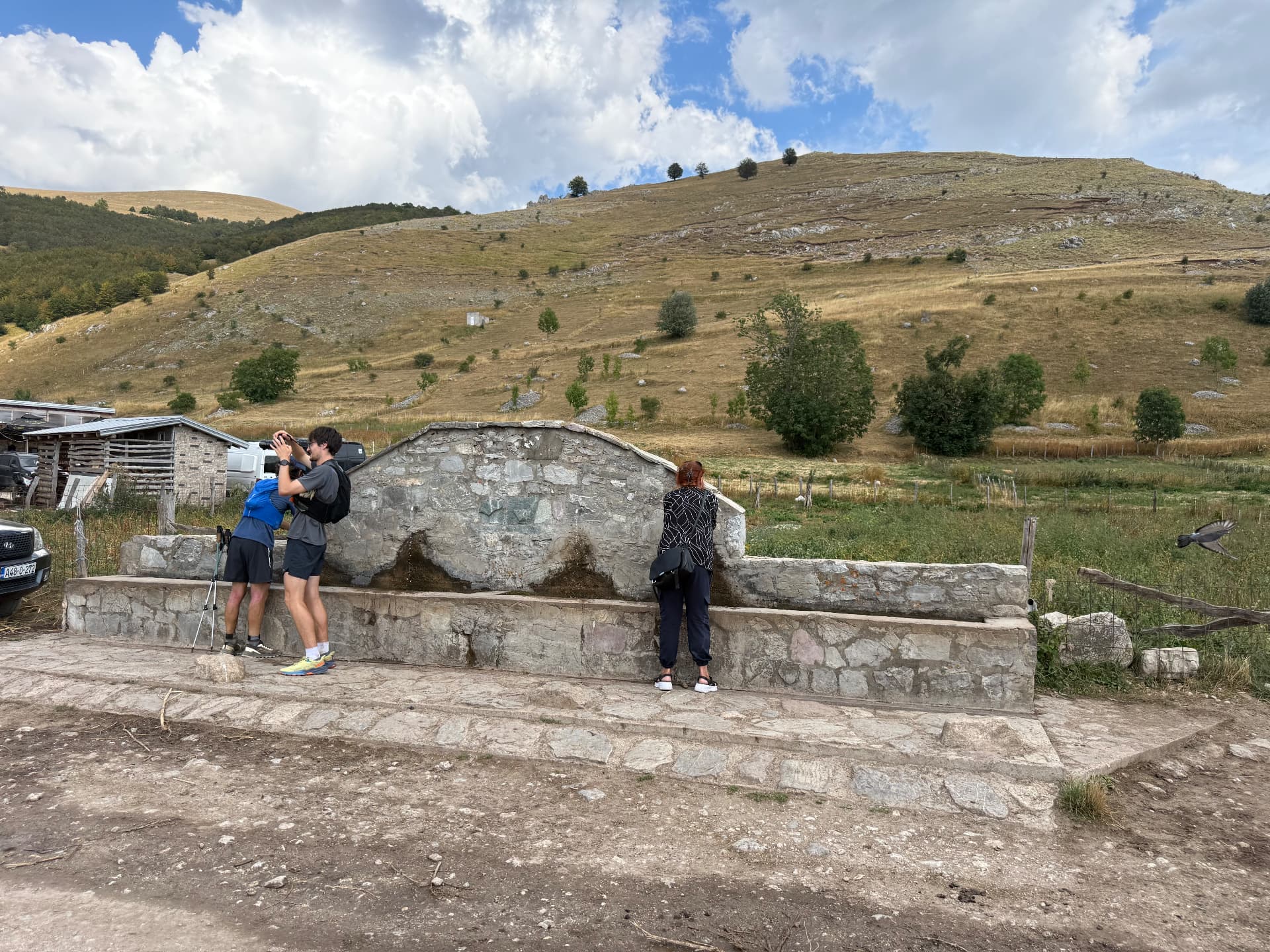
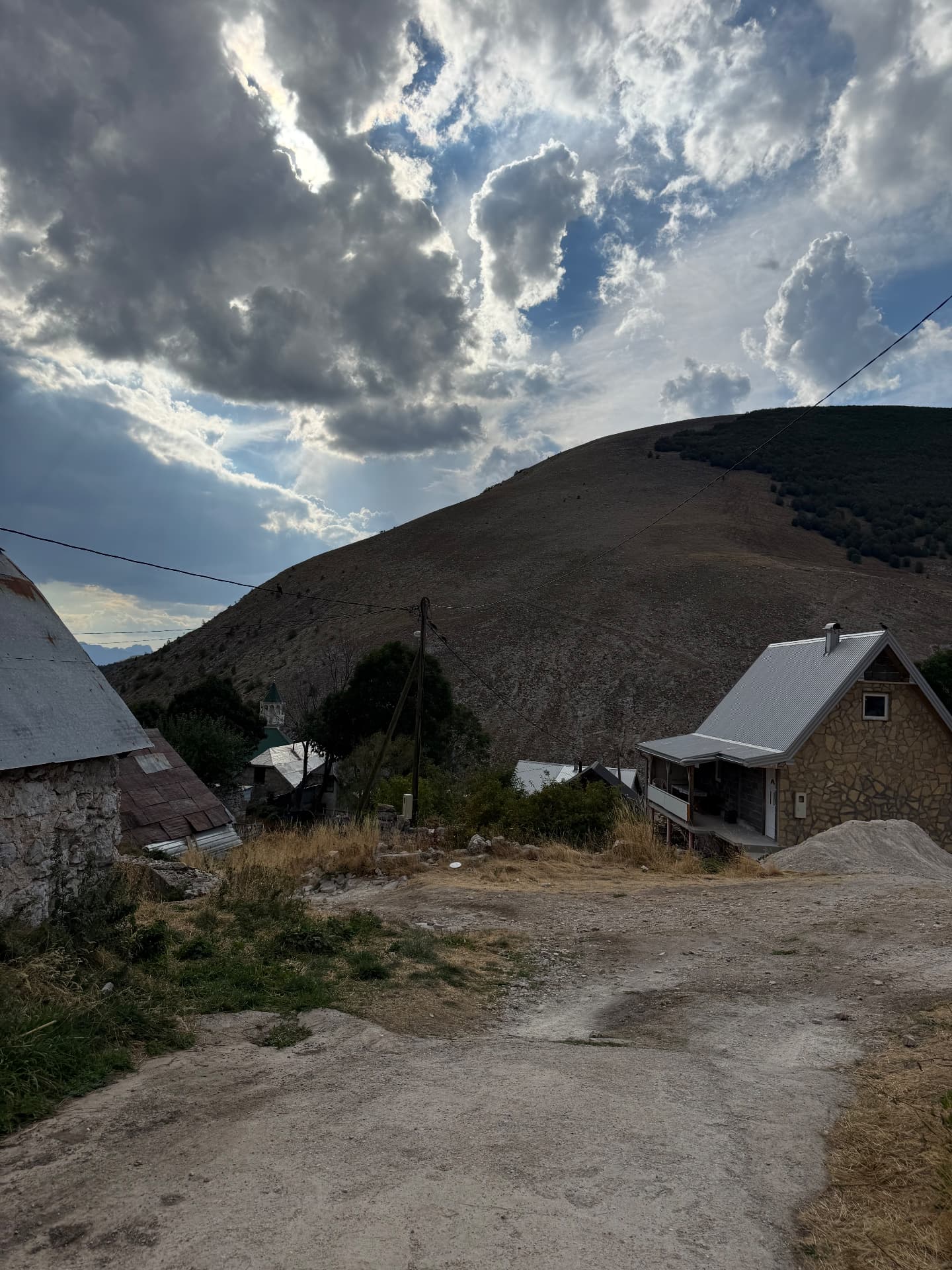
Stone houses begin to appear between the hills. Small vegetable patches lie next to the homes. Firewood is stacked against walls. Washing hangs outside. Some roofs are old, others new. Cars and quad bikes are parked next to buildings that speak of an entirely different era.
It is easy to describe Lukomir as a village where time has stood still.
But that is not quite true.
Time has not stopped here.
It has simply left more of its traces visible at the same time.
Old stone houses stand alongside renovated buildings. Traditional farming meets quad bikes and off-road vehicles. In summer, hikers, motorcyclists, and visitors from other parts of Bosnia and Herzegovina and the rest of the world arrive.
Lukomir has changed, just as other places change.
The difference is that the old is still visible.
A Landscape Worth Preserving
The cultural landscape of Gornji Lukomir is classified as a national monument in Bosnia and Herzegovina. This protection covers not only individual buildings but the cultural environment itself, which includes residential homes, outbuildings, and medieval tombstones – stećci.
Stone dominates.
In the walls. In the paths. In the walls between the plots. And everywhere around the village.
Yet between all the grey, there are small gardens and crops. Vegetables grow in soil that, at first glance, does not look particularly generous.
Perhaps this is one of the images that says the most about Lukomir: a green kitchen garden in front of an arid mountain.
People have not just lived in this landscape.
They have learned to live with it.
The Village on the Edge
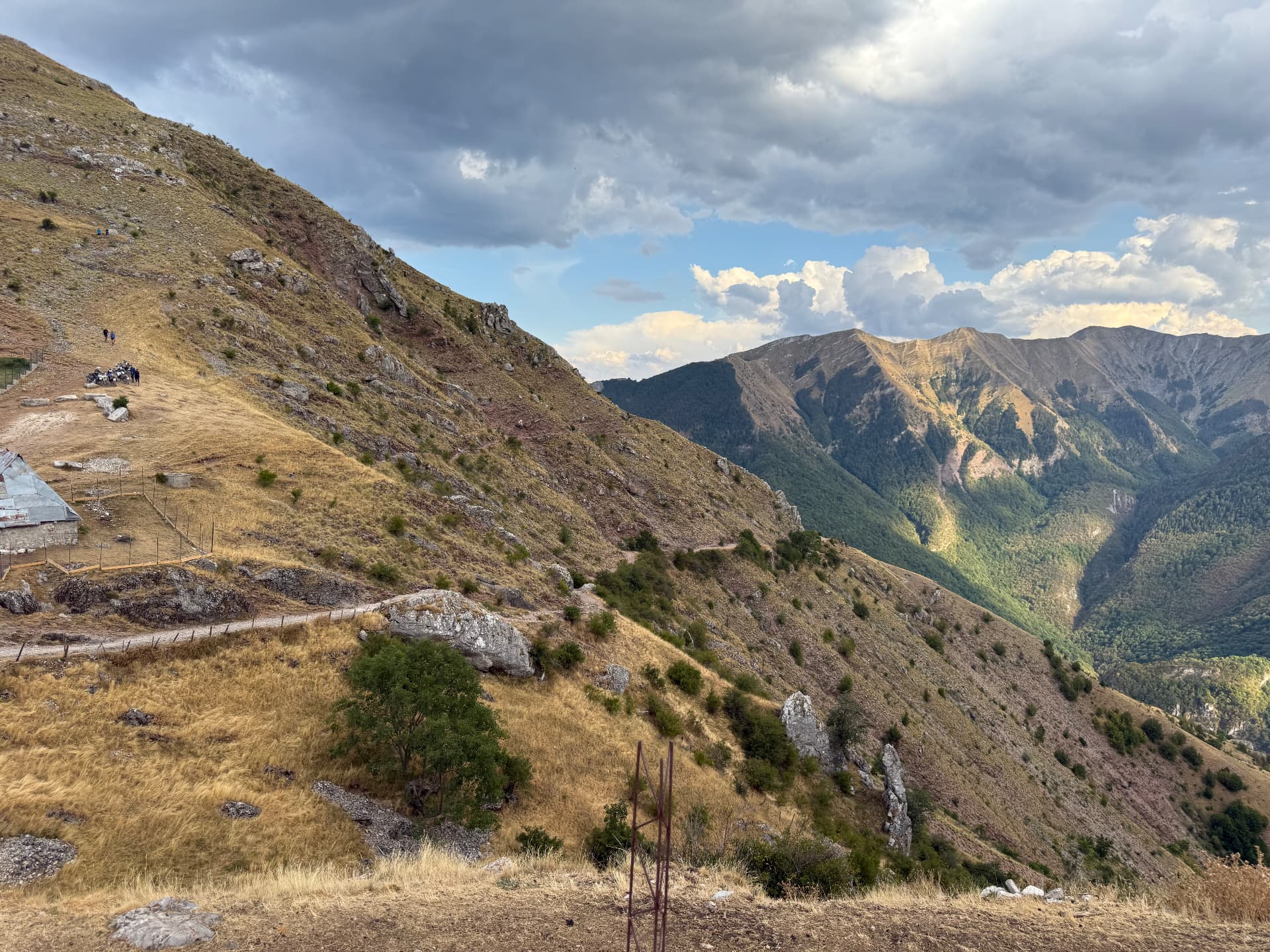
Not far from the houses, the terrain drops towards the Rakitnica.
The river has carved a deep canyon between Bjelašnica and Visočica, and from the area around Lukomir, you feel acutely how high up the village actually sits. The landscape, which looked soft from a distance, suddenly changes to steep slopes and stone.
Here, nature is not a backdrop to the village.
It is part of its explanation.
The pastures, the construction of the houses, the roads, and the seasonal rhythm have all been shaped by the same mountain.
And perhaps that is why the place still feels so different, despite the growing number of visitors.
Tourism Has Also Found Its Way Here
The romantic image of an entirely isolated mountain village no longer holds up.
In today's Lukomir, there are eateries, accommodation for visitors, and people selling local products. During the summer, villagers, hikers, motorcyclists, and day-trippers meet on the same narrow roads.
This does not have to be a contradiction.
For those who live here, visitors can represent an opportunity to earn an income in a place where work opportunities are otherwise limited. At the same time, tourism inevitably alters what people come here to experience.
That balance is visible everywhere.
And it is far more interesting than the notion of a village that has remained unchanged for hundreds of years.
Pita at the End of the Road
After the dust, the stones, and the hours out on the mountain, another side of Lukomir appears.
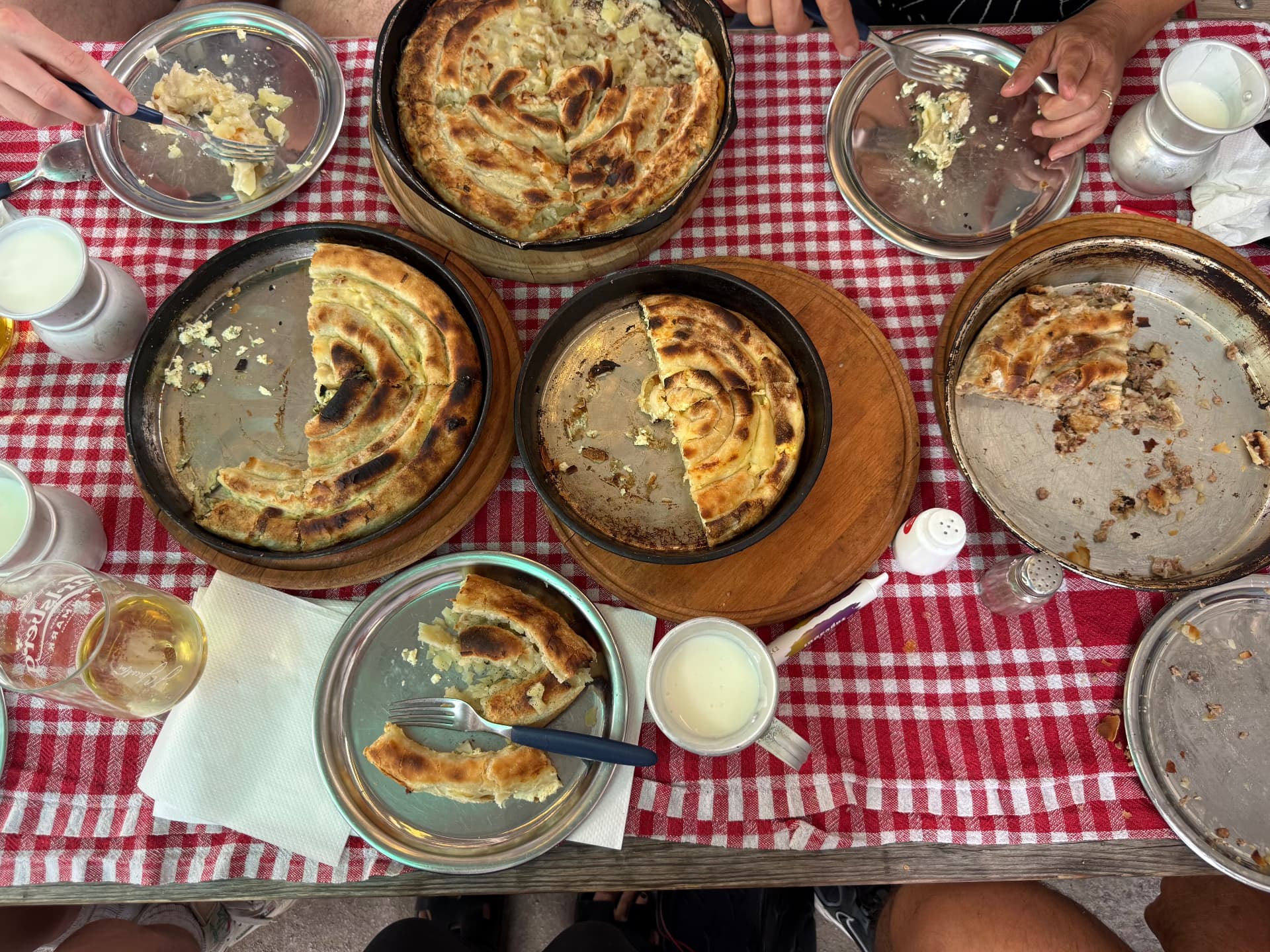
A table.
On it stand several tepsije (baking trays) with freshly baked Bosnian pita. Burek, krompiruša, and other varieties are shared around the table. Alongside them are small metal mugs of kiselo mlijeko (sour milk).
There are meals that are more sophisticated.
But few that are better suited to the place where they are eaten.
In one of the places in the village, a sentence is carved in wood:
"Došli ste kao gosti i odlazite kao prijatelji."
"You arrived as guests and you leave as friends."
It is easy to dismiss such phrasing as touristy. But after a day on Bjelašnica, it feels less like a slogan.
The Way Back
When we leave Lukomir, the light is lower.
On the gravel road, horses walk among the stones. The long shadows stretch across the ground, and the mountains have taken on the warm hue that exists only for a brief moment before the sun disappears.
Soon, the tarmac returns.
Then more houses. More traffic. Sarajevo.
But you do not truly leave Lukomir when you leave the village.
Because the strongest memory is perhaps not a single stone house or a particular view.
It is the transition.
From city to mountain. From tarmac to gravel. From traffic to silence.
And the feeling that there are still roads where you do not quite know what awaits behind the next bend.
That is where Bosnia still feels wild.
Text and photos: MOST
Share the article
Translated from Swedish with AI assistance. Read the original.


