
The Return of the Wild Grapes: How Albania is Reclaiming its Lost Wine History
During the post-war dictatorship, Albania’s rich winemaking tradition was reduced to just two state-sanctioned options: red and white. Today, a quiet renaissance is unfolding in the country’s vineyards. By rescuing forgotten, wild-growing grape varieties from oblivion, a new generation of winemakers is building a unique wine culture from the ground up.
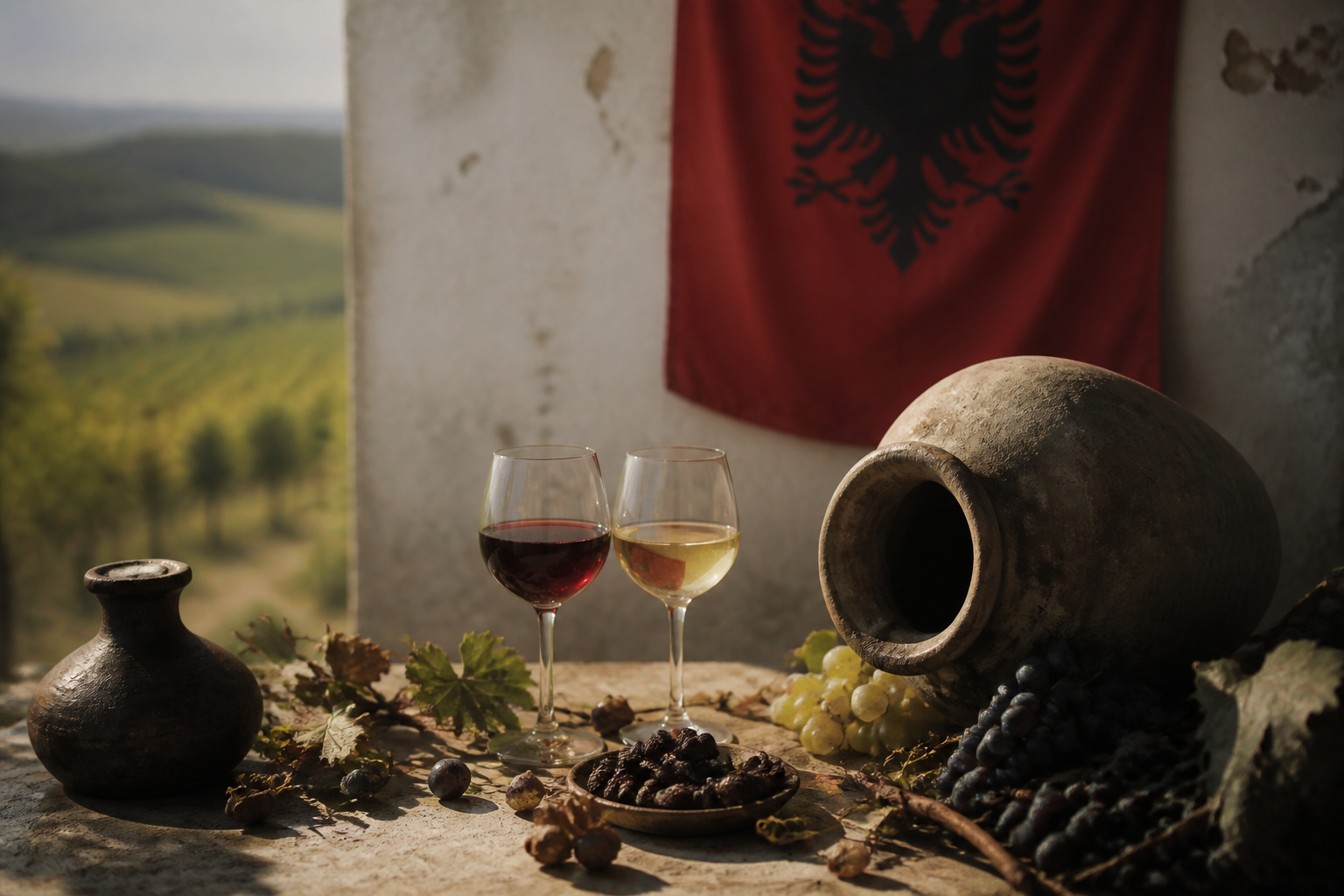
Some grapes refuse to conform to neat rows. High up in northern Albania, near Lake Ulëz, the rare Ceruja grape climbs wild along the trunks and branches of old mulberry trees. It is harvested only once every three or four years, and the only place in the world where you can enjoy a glass of this cool, golden-yellow wine is at Uka Farm, a biodynamic vineyard and restaurant just outside Tirana.
Here, Flori Uka leads a movement that is about much more than just winemaking. It is a rescue mission for a lost cultural heritage.
The Monopoly That Erased History
Albania has one of Europe’s oldest winemaking traditions, but under the communist dictatorship, this diversity was almost entirely wiped out. From the 1950s until the fall of the regime in 1991, private winemaking was banned. The state dictated the terms: cooperatives were tasked with producing massive volumes, but of only two kinds of wine – red and white. The unique local grape varieties, cultivated for generations, were left to die out or be forgotten in old gardens.
Today, the country is experiencing a dynamic renaissance. Around thirty innovative producers have taken it upon themselves to seek out and revive Albania’s dozens of indigenous grapes.
From a Single Vine to Filled Glasses
In the shadow of the historic fortress of Berat lies Çobo Winery. The Çobo family has been growing wine here since 1994, but their history stretches back much further. Muharram Çobo’s ancestors were established winemakers, but were banned from production during the dictatorship.
Today, the cellar is defined by a spirit of experimentation. Through small-scale micro-fermentations of just a few hundred bottles, the family experiments to understand the full potential of local grapes. One of their greatest successes is the rescue of Puls i Bardhë (white heart). The grape was revived from a single surviving vine found in the Albanian countryside. Today, it produces a fresh, characterful wine with distinct notes of citrus and tannins, served at the winery alongside local, salty Berat olives.
Çobo has also taken on the craft of sparkling wine. Their bottle-fermented Shendevere, made using the traditional method, shows that Albanian grapes can produce wines with high international potential.
The Battle Against Imported Habits
Despite this progress, Albanian winemakers still face challenges, not least on the home front. After decades of isolation, foreign wines have long held a higher status among the country’s consumers.
Flori Uka recalls being met with great scepticism when he first brought wine from Uka Farm to local restaurants. The prevailing attitude was that domestic wine should be extremely cheap, and restaurateurs were reluctant to pay even two euros for a bottle.
This has led to a paradoxical situation where Albania, with a population of three million, imports foreign wine worth nearly 50 million euros every year, primarily from neighbouring Italy. Its own domestic production remains at a modest one million bottles per year.
But attitudes are shifting. By focusing on organic methods, craftsmanship, and the unique flavour profiles found only in Albania’s microclimates, producers like Uka and Çobo have begun to attract a completely new audience. For food and wine lovers seeking authenticity and regional character, the wild, climbing grapes of Albania have become one of the Balkans' most exciting discoveries.
Facts
Sources & further reading
- theguardian.comAlbania's wine renaissance - The Guardian
Share the article
Translated from Swedish with AI assistance. Read the original.


