
The Last Nomad on the Sava: Bekim Sejranović’s Restless Journey Between Oslo and the Balkans
The author and translator Bekim Sejranović lived his life as a literary border-crosser. By translating Norwegian masters into South Slavic languages and writing novels about the rootlessness of exile, he built a bridge between Scandinavia’s melancholy and the Balkans’ river landscapes. Four years after his sudden death, the story of the last nomad lives on.
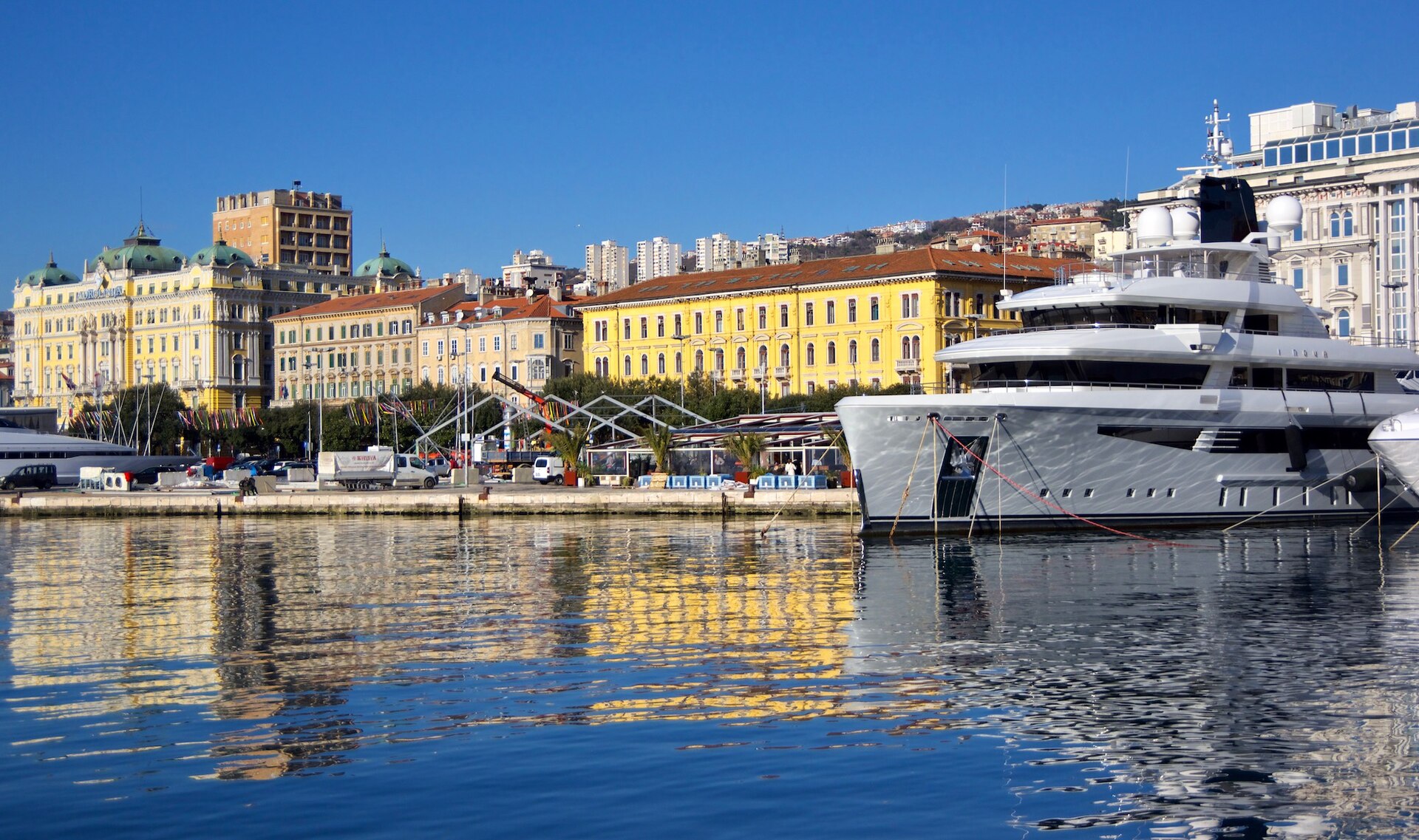
In May 2020, one of the most distinctive voices in modern literature between the Nordic countries and the Balkans fell silent. Bekim Sejranović died in Banja Luka, aged just 48. He left behind a body of work deeply mourned and an empty chair in the cafés of Oslo, Rijeka and Brčko where, for decades, he had written his stories. Sejranović was not merely a writer who portrayed migration; he embodied it. He was the translator who brought Balkan readers Kjell Askildsen’s minimalist prose, and the author who showed Norwegian readers what it feels like to live with one foot in two entirely different worlds.
Today, when questions of identity, belonging and borders are more urgent than ever, his writing seems prophetic. It carries a restlessness that is painfully universal, yet also deeply rooted in the specific experience of fleeing a disintegrating Yugoslavia and arriving in a chilly, well-ordered Norway.
Nomadic life between Oslo and the Balkans
Bekim Sejranović was born in 1972 in Brčko in northern Bosnia, in the river landscape that would later play such a central role in his books. He moved to Rijeka in Croatia to study maritime studies, but the war in the 1990s forced him to flee. In 1993, he arrived in Norway.
The contrast could hardly have been greater. From the intense, at times chaotic life by the Adriatic Sea and the Sava River, he found himself in a quiet Oslo. It was here, in what he called “the great desolate landscape”, that he began to write in earnest. He studied South Slavic languages and literature at the University of Oslo (University of Oslo), where he later also taught.
His debut novel Nigdje, niotkuda (2008), whose title can be translated as “Nowhere, from nowhere”, was a literary breakthrough. The novel is a winding, at times deeply ironic and at times melancholic portrayal of life in exile. The protagonist moves between a refugee centre in Norway, childhood in Bosnia and student life in Rijeka. Sejranović managed to capture the particular sense of alienation that affects those who have left their homeland but never quite manage to make a place for themselves in the new one. You become, as he put it, a permanent nomad – too much of a foreigner in Norway, and too Norwegian when you return to the Balkans.
The translator who built literary bridges
Alongside his own writing, Bekim Sejranović carried out important cultural work as a translator. He served as a living literary intermediary between the Scandinavian languages and his mother tongue. It was through his sensitive translations that writers such as Jostein Gaarder, Frode Grytten and Ingvar Ambjørnsen reached a large audience in the Balkans.
His translation of Kjell Askildsen’s short stories, collected under the Bosnian title Veliki pusti krajolik (A Great Desolate Landscape), was particularly significant. Through Sejranović’s feel for language, Askildsen’s spare, icy realism found a perfect tone in the South Slavic languages. It was as though Norwegian melancholy had found an unexpected resonance in the Balkan nostalgia that Sejranović himself carried. He showed that literature is not just about moving words from one language to another, but about translating feelings and moods across geographical and cultural divides.
The Sava River and the Huckleberry Finn dream
If Oslo represented intellectual work and the silence of exile, the Sava River represented the freedom of childhood and a life in motion. In the novel Tvoj sin Huckleberry Finn (“Your Son Huckleberry Finn”, 2015), these worlds merge in one of his best-loved stories.
The book is about a homemade wooden boat called Chinook and a journey along the Sava River, which flows past his childhood home of Brčko. Inspired by Mark Twain’s classic adventure, Sejranović portrays a journey that is as much an outward voyage down the river as an inward examination of the self. The Sava is a river steeped in history; it forms a border between different countries and cultures in the Balkans, but in the novel it becomes above all a symbol of the boundless.
To travel on the river is to exist in a state of perpetual in-betweenness. Aboard Chinook, the characters try to escape their pasts, their addictions and their complicated fathers. It is a beautiful, raw and humorous portrayal of the search for refuge, where the river’s slow rhythm contrasts with the characters’ inner storms. The boat becomes a microcosm of the author’s own life: fragile, constantly in motion and driven by a refusal to drop anchor.
The literary legacy of the last nomad
His last major work, Dnevnik jednog nomada (“A Nomad’s Diary”, 2017), was a hybrid of diary, travel writing and literary essay. Here we meet the writer travelling between Oslo, Ljubljana, Zagreb and Banja Luka. It is a revealing text about trying to combine life as a father with a rootless artistic existence, about constantly packing books into moving boxes, and about the physical and psychological exhaustion caused by perpetual travel.
When Bekim Sejranović died in the spring of 2020, a wave of grief swept across the literary Balkans and Norway. Literary scholars such as Ali Hasanović and Vedad Spahić at the University of Tuzla (University of Tuzla) have since pointed to how Sejranović’s work redefined post-Yugoslav migration literature. By refusing to write from a purely victim-centred perspective and instead embracing nomadism as a conscious artistic and existential choice, he gave a voice to an entire generation of transnational people.
Today, we remember him not as a writer who lost his home, but as one who created a new home in language – on both sides of the North Sea. His books continue to be translated and read, and with every new reader, the wooden boat Chinook continues its journey down the Sava, towards the great open sea.
Facts
Bekim Sejranović (1972–2020)
Background: Born in Brčko in Bosnia and Herzegovina, later moved to Rijeka in Croatia and came to Norway as a refugee in 1993.
Education: Master’s degree in South Slavic languages and literature from the University of Oslo (University of Oslo).
Selected bibliography:
- Nigdje, niotkuda (2008)
- Ljepši kraj (2010)
- Sandale (2013)
- Tvoj sin Huckleberry Finn (2015)
- Dnevnik jednog nomada (2017)
Translation: Introduced, among others, Kjell Askildsen, Frode Grytten and Jostein Gaarder to South Slavic audiences.
Sources & further reading
- researchgate.net(PDF) Nomadizam i pitanje identiteta u romanu Nigdje, niotkuda Bekima ...
- en.wikipedia.orgBekim Sejranović - Wikipedia
- academia.eduWriting and Unsettlement : Narratives of Migration in Bekim Sejranović ...
- kriticnamasa.comBekim Sejranović - Kritična masa
Share the article
Translated from Swedish with AI assistance. Read the original.


