
The Gaming Industry’s New Eastern Hub: Belgrade’s Digital Visionaries Meet the Nordics
From student flats to international acquisitions. Between Belgrade and Novi Sad, Serbian gaming studios have created titles and technology that reach a global audience. Nordeus and 3Lateral show how local talent can build companies that capture the world’s interest – and reshape the image of Serbia’s business sector.
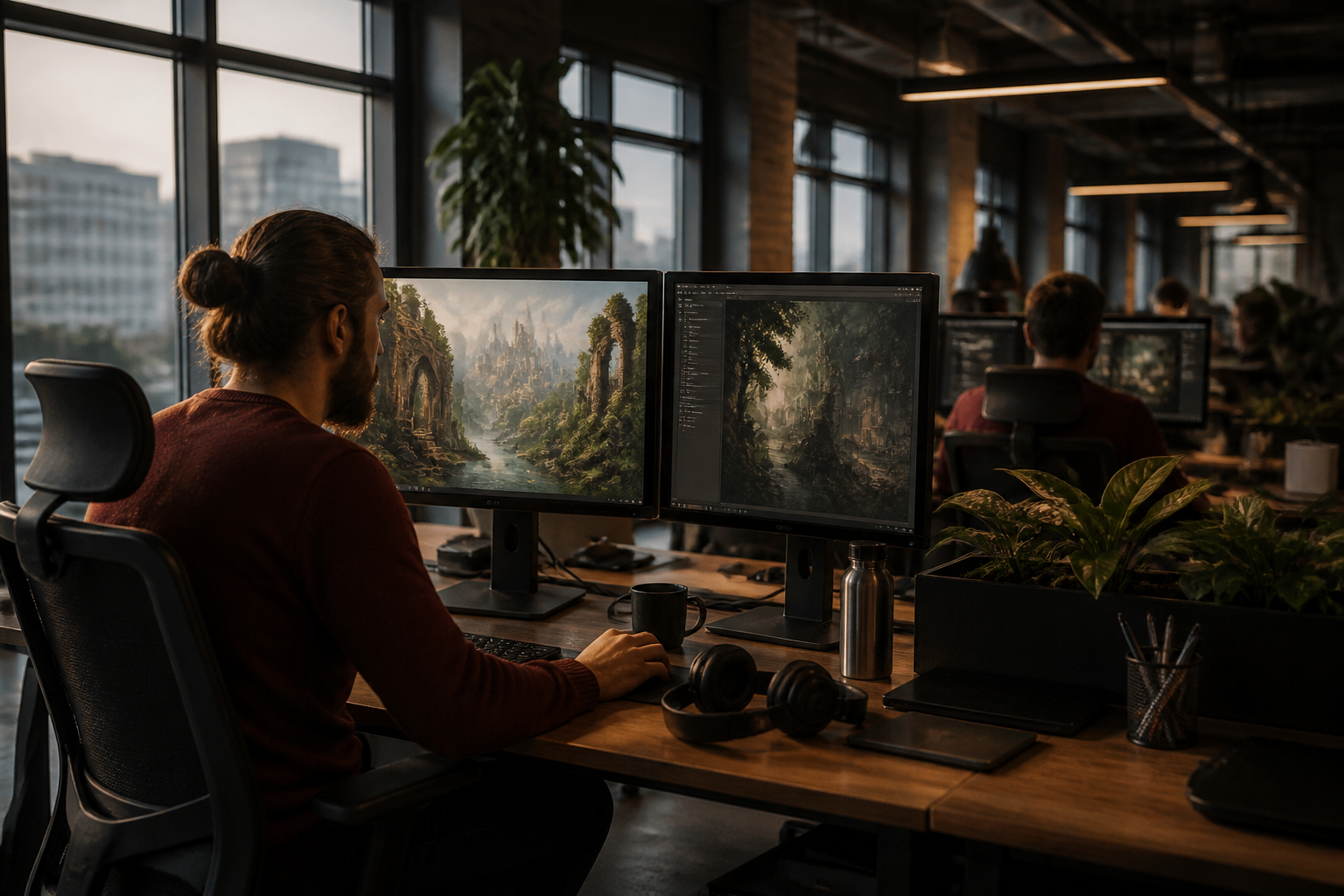
When walking through the spacious, newly built office complexes of Novi Beograd (New Belgrade), on the northern side of the Sava River, it is hard to imagine that the Serbian gaming industry once started in cramped student flats with borrowed hardware. Today, this district, alongside the university city of Novi Sad a few dozen miles to the north, is the heart of one of Southeast Europe's fastest-growing tech clusters.
Over the past decade, Serbia has transitioned from being a destination for cheap IT outsourcing to becoming a creative powerhouse in global game development. It is no longer just about writing code to order. Today, entire game concepts, pioneering graphics, and advanced AI technology are created on-site in Belgrade and Novi Sad. With annual exports steadily rising, the industry has become a vital cornerstone of the country's modern economy.
The Belgrade–Novi Sad Axis: The Creative Belt
Success rests on a very specific geography. It is the short distance between Serbia’s two largest cities, now connected by a high-speed train, that forms the backbone of the ecosystem.
Belgrade provides scale, capital, international connections, and a vibrant urban culture that attracts talent from across the region. Novi Sad, on the other hand, acts as the technical and academic laboratory. Led by its prestigious university, Novi Sad has for decades trained world-class engineers, mathematicians, and programmers.
When the Serbian Games Association (SGA) presents its reports, it becomes clear how tightly interwoven these two cities are. Together, they house the absolute majority of the country's more than 150 game studios. It is a young industry – the average age of employees is under 35 – and it is characterised by a flat organizational structure that differs markedly from the hierarchies of traditional Serbian business.
The Pioneers and the Global Giants
No single company personifies the Serbian gaming miracle quite like Nordeus. The company was founded in Belgrade in 2010 by four young Serbian engineers who chose to leave secure jobs abroad to build something of their own at home. Together, they created the mobile game Top Eleven Football Manager, which became a global success with hundreds of millions of registered players. This success was crowned in 2021 when the American gaming giant Take-Two Interactive acquired Nordeus in a deal valued at up to $378 million, with $225 million paid upfront in cash and shares, and the remainder structured as earn-outs if performance targets were met.
Nordeus proved that it was possible to build a globally successful company from a Belgrade base. But they were not alone. In Novi Sad, 3Lateral was founded, a company specialising in digital human characterisation and photorealistic facial animation. Their technology was so advanced that the global giant Epic Games acquired the company in 2019. Today, one of Epic Games' most important development centres is located in Novi Sad, where work continues on the technology behind Unreal Engine and tools like MetaHuman Creator – technology used by game and film studios worldwide.
Game developer Mad Head Games, with offices in both Belgrade and Novi Sad, is another example of the industry's maturity and international integration. The studio, which started with a focus on hidden object games, grew rapidly to develop complex action titles like the science-fiction game Scars Above. Since 2020, the studio has been part of the US-founded group Saber Interactive, making the Serbian talent pool an established part of one of the industry's larger international networks.
The development in Serbia is therefore no longer about isolated success stories. Both the SGA's annual reports and analyses by the Swiss Entrepreneurship Program describe how the country has step by step built a cohesive ecosystem, where global players now choose to establish a physical presence rather than outsourcing work remotely.
The Nordic Bridge
The connection to the Nordic countries is no coincidence. The Nordics, spearheaded by Sweden and Finland, have long been global powerhouses in game development, boasting heavyweight players and mature venture capital. At the same time, the Serbian scene has suffered from a lack of domestic capital but has possessed an abundance of technical talent.
This has created a natural synergy. In recent years, the Serbian gaming industry has attracted significant international interest, with foreign players looking not just for cost-effective labor, but to integrate Serbian expertise into their core operations.
The Swedish gaming group Embracer Group was part of this picture for a few years. When Saber Interactive was part of Embracer, Mad Head Games in Novi Sad and Belgrade existed within the same Swedish-owned structure. However, in March 2024, Embracer sold selected parts of Saber to Beacon Interactive, a company controlled by Saber co-founder Matthew Karch, and Mad Head Games transitioned to the new owner. The Swedish ownership link is now history, but contacts with the Nordic industry – knowledge of game design, marketing, and global distribution – live on through networks, projects, and personal relationships.
The exchange takes place on several levels, involving joint projects, talent exchanges, and conferences. When the SGA hosts networking events and industry conferences in Belgrade, Nordic speakers and investors are now a regular fixture. It is a partnership built on mutual respect: the Nordics contribute business acumen and structure, while Serbia provides raw mathematical and artistic talent.
The Contrasts: Global Exports Meet Local Challenges
Despite its successes, the Serbian gaming industry is not without challenges. The contrasts are striking. On the one hand, thousands of Serbian developers work with cutting-edge technology for a global market, with virtually the entire revenue stream generated outside the country's borders. On the other hand, they operate in a local economy that still struggles with bureaucracy and an almost total absence of domestic venture capital.
From the SGA's perspective, there is a recurring emphasis that support structures for smaller, independent studios need to be strengthened. While established players like Epic Games, Saber, and Nordeus have the resources to navigate international regulations, it is harder for start-up teams to take the step from idea to finished product.
The lack of local investors means that successful Serbian studios must in practice rely on foreign acquisitions or partners to scale up seriously. At the same time, there is a pride in keeping production and creative decisions within the country. It is about showing the next generation of young Serbians that they do not need to move to London, Stockholm, or San Francisco to work with world-leading technology – the best jobs may very well be in Belgrade or Novi Sad.
With industry weeks, a steady flow of new game titles on platforms like Steam, and a generation of developers who have grown up with a global audience, Belgrade's digital visionaries continue to advance their positions. The bridges to the Nordics and the rest of the world are already built, and along them, the digital entertainment of the future is now moving.
Facts
SGA (Serbian Games Association): The central trade association representing member companies, studios, and educational institutions in the Serbian gaming industry.
Geographical hubs: Belgrade (capital and commercial centre) and Novi Sad (academic hub and deep-tech centre).
Key players:
- Nordeus (Belgrade): Founded in 2010 by four engineers, creators of "Top Eleven", acquired by Take-Two Interactive in 2021 for up to $378 million.
- 3Lateral (Novi Sad): World leader in digital human characterisation, part of Epic Games since 2019.
- Mad Head Games (Belgrade/Novi Sad): Part of Saber Interactive, which has been owned by Beacon Interactive since March 2024 following its sale by Embracer Group.
Sources & further reading
- Serbian Games AssociationSerbian Games Association (SGA) Annual Report
- swissep.orgThe Serbian Games Association: from hero story to gaming ecosystem - Swiss Entrepreneurship Program
- sga.rsA record number of games in development, with the highest revenues so far - read the new report on the Serbian gaming industry for 2024 | Serbian Games Association - Serbian Games Association
- a3-architects.comEpic Games Campus – 3Lateral Office | A3 Projects
Share the article
Translated from Swedish with AI assistance. Read the original.


