
The bridge-builder from Malmö: How Hamdija Jusufagic is turning brain drain into success in Sarajevo
When entrepreneur Hamdija Jusufagic founded System Verification in Malmö, the focus was on software testing and quality assurance. But when he looked towards his parents’ homeland of Bosnia and Herzegovina, he saw something bigger: an opportunity to build a high-tech bridge across Europe, challenge perceptions of the Balkans and turn brain drain into a gain in expertise.
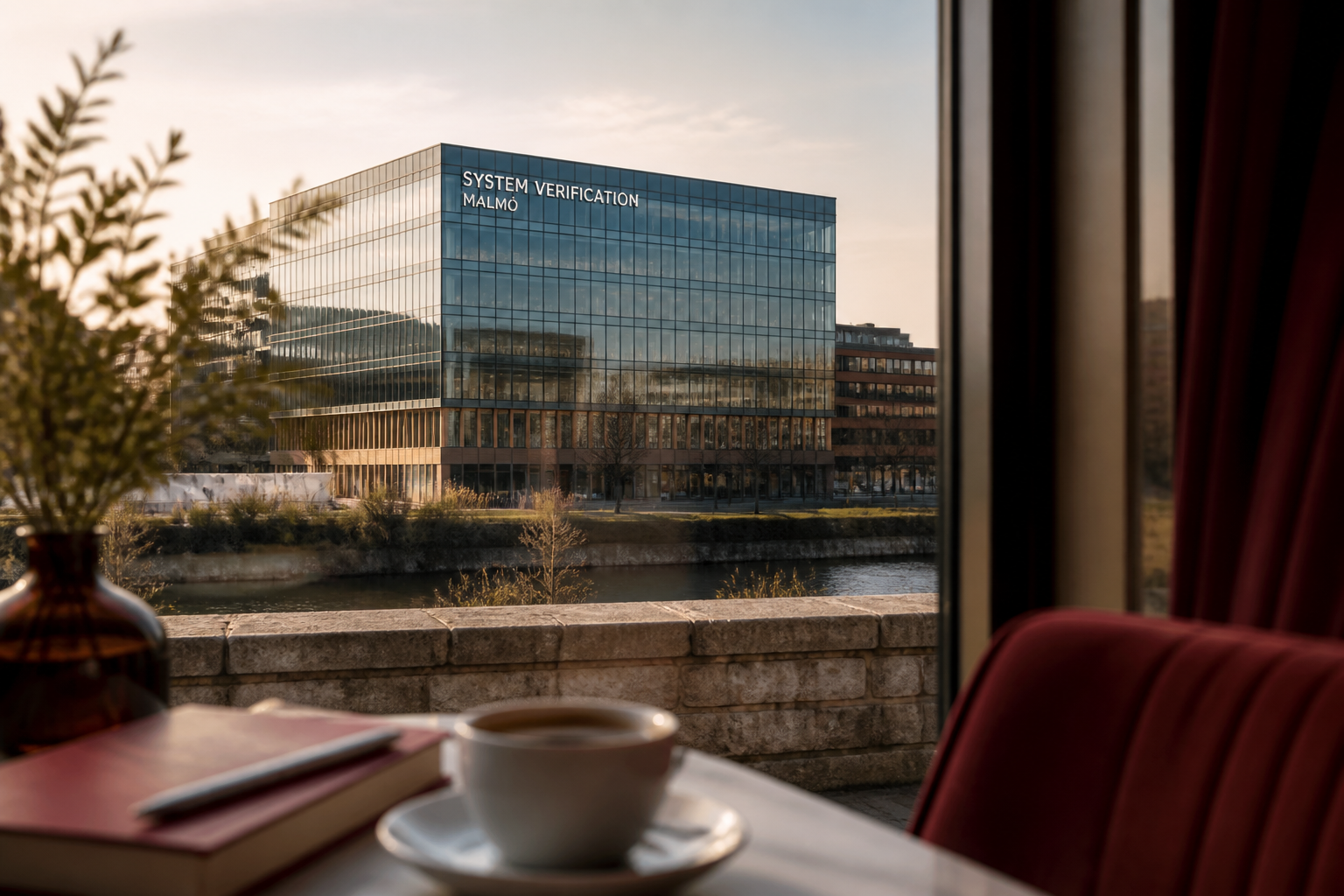
Bridges can be built from concrete and steel, but in a globalised economy the most durable structures are often made of digital networks, shared values and business trust. A bridge of this kind has taken shape over the past decade between the coastline of Skåne and the leafy mountain valleys of Sarajevo. Its architect is Hamdija Jusufagic, one of Malmö’s most prominent entrepreneurs.
The son of immigrants from the former Yugoslavia, he grew up in Malmö, a city then undergoing a painful transition from heavy shipbuilding to a modern knowledge economy. That journey went on to shape his own entrepreneurship. When he founded System Verification in 2002—a company specialising in software quality assurance—it was with the conviction that the future lay in cutting-edge technology and human expertise. Today, the company has offices in Malmö, Gothenburg and Stockholm, but its expansion southwards best illustrates his vision of how the diaspora can act as an economic catalyst.

The Sarajevo office: More than just outsourcing
When System Verification set up in Sarajevo just over ten years ago, the decision was met with scepticism in some quarters. In Swedish business circles, Bosnia and Herzegovina was still associated primarily with the legacy of war, political inertia and the large-scale emigration of well-educated young people—what economists call “brain drain”. But where others saw risks and structural problems, Hamdija Jusufagic saw an untapped goldmine of technical talent.
The strategy was clear from the outset: this was not traditional outsourcing, where simple tasks are moved to a low-cost country to cut prices. Instead, the company introduced a “co-shoring” model. This means that developers and testers in Sarajevo work as integrated, equal colleagues in teams alongside consultants in Sweden and Germany.
This philosophy also meant exporting Swedish workplace culture. At the Sarajevo office, hierarchies are flat, flexibility is high and work-life balance is a priority—marked differences from the traditional, often authoritarian local business culture. By offering competitive terms and international career opportunities at home, System Verification has succeeded in retaining key expertise in the country. Young Bosnian engineers no longer have to move to Frankfurt, Hamburg or Vienna to work with the latest technology; they can do so from Sarajevo while contributing to their own country’s tax base and economic development.

The partnership with Alfa Laval as a gateway
For a bridge like this to hold, major, established players need to be willing to cross it. One of the most important milestones for System Verification’s Bosnian operations was its partnership with Swedish industrial giant Alfa Laval.
The decision by a global company worth billions, with extremely high quality standards, to entrust a team in Sarajevo with part of its critical software testing sent a strong signal to the market. It showed that the city can deliver to the very highest international standards. The success with Alfa Laval opened the door to more global customers and demonstrated that Sweden’s geographical and cultural proximity to the Balkans is a real competitive advantage compared with traditional IT destinations in Asia.
Today, the Sarajevo office acts as a hub for delivering services to customers across Europe, not least in Germany, where the company has established offices in Frankfurt, Bonn and Hamburg. By combining Swedish project management with Bosnian expertise, the company has created a hybrid model that is both flexible and scalable.
The diaspora’s new role: From aid to business development
Hamdija Jusufagic’s journey is about more than the success of a single company. It represents a paradigm shift in how we view the relationship between the Nordic countries and the Balkans. Historically, support from the diaspora to countries of origin has often taken the form of remittances—money sent home to relatives for consumption or reconstruction. This is important support, but it rarely creates long-term economic growth.
By investing in knowledge-intensive industries and building local ecosystems, entrepreneurs such as Jusufagic show that the diaspora’s real strength lies in sharing knowledge, networks and business models. He has actively worked to highlight Bosnia and Herzegovina’s potential on the international stage and regularly collaborates with local investment bodies and organisations working to attract foreign capital to the region.
It is about giving back, but in a way that builds confidence and long-term sustainability. By showing that it is possible to build successful, profitable and high-performing tech companies in Sarajevo, they are paving the way for the next generation of entrepreneurs. The bridge between Malmö and Sarajevo is complete, and the flow of ideas, people and capital now runs in both directions.
Facts
FACTS: SYSTEM VERIFICATION AND HAMDIJA JUSUFAGIC
- Founded: In 2002 in Malmö by Hamdija Jusufagic.
- Business: Specialist company in quality assurance and software testing (quality assurance).
- Geographical presence: Offices in Malmö, Gothenburg, Stockholm, Sarajevo, Frankfurt, Bonn and Hamburg, among other locations.
- Sarajevo office: The office in Bosnia and Herzegovina’s capital opened in 2013 and has since grown into one of the most attractive employers in the local tech sector.
- Awards: Hamdija Jusufagic has received several awards for his entrepreneurship, including Pioneer of the Year in Sweden and awards for his work promoting integration and growth.
Sources & further reading
- System VerificationFrom Skåne to Sarajevo: System Verification's Delivery Hub in Sarajevo Creates Positive Social Change
- TeknikfreakSystem Verification satsar i Sarajevo – etablerar offshore kontor med egen personal
- ba.usembassy.govNew U.S. government project to help BiH citizens living ...
- gmfus.orgToward a New Youth Brain-drain Paradigm in the Western ...
Share the article
Translated from Swedish with AI assistance. Read the original.


