
The Battle of the Cauldron: When Slow Cooking Becomes a Team Sport in Bosnia
In the Swedish winter cold, we seek comfort in the quiet warmth of the oven, letting slow-cooked dishes look after themselves overnight. But in Semberija in north-eastern Bosnia and Herzegovina, the art of cooking low and slow is the exact opposite of a solo endeavour. There, hundreds gather around open fires for "Zlatni kotlić" – a public festival where cooking is a passionate team sport.
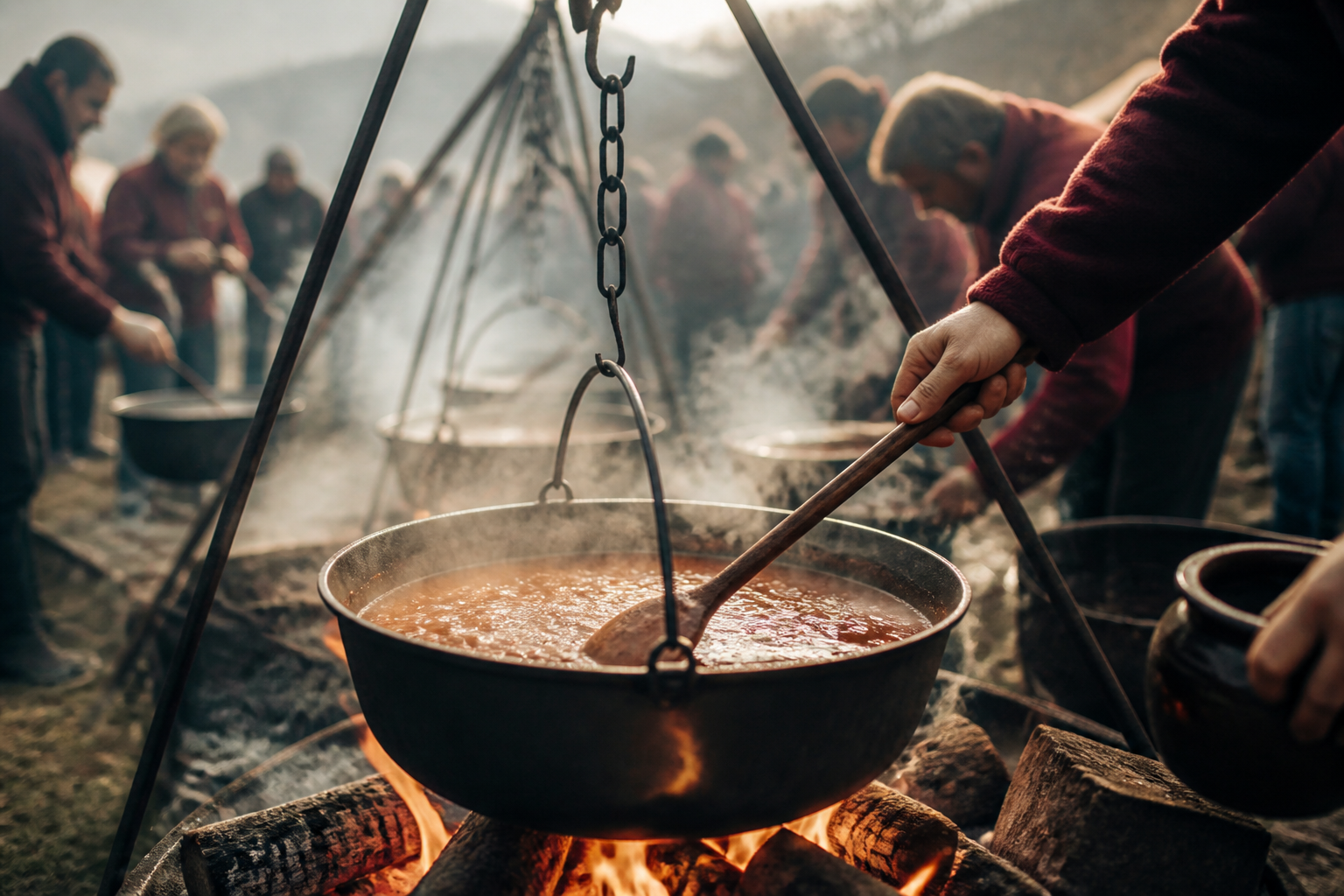
The prominent Swedish chef Alexandra Zazzi often points out the charm of slow cooking. It is about time, patience, and letting tougher cuts of meat, like chuck eye or beef cheek, slowly melt under a lid to absolute tenderness. It is a quiet, almost meditative process in the modern Nordic kitchen. But if you travel south, to the fertile plains of Semberija in north-eastern Bosnia and Herzegovina, the same culinary principle moves out into the open air – and is transformed into a vibrant public festival.
Here, kotlić – the hanging cauldron over an open fire – is much more than just a cooking utensil. It is a cultural touchstone and a hub for socialising. Every year, the Zlatni kotlić (Golden Cauldron) competition is held, where dozens of teams meet under the open sky to compete over who can cook the most perfect stew. What simmers in cauldron after cauldron is often hearty beef or game goulash, or spicy fish soups based on fresh freshwater fish from the nearby rivers Sava and Drina.
The air is filled with a thick haze of smoke, the aroma of roasted onions, sweet and hot paprika, and the deep notes of simmering broth. Around the fires, intense discussions take place. Cooking a kotlić is by no means a solitary task. It requires woodcutters, fire-watchers, onion-choppers and, above all, a "master" who periodically stirs the pot with a large wooden spoon. Each team jealously guards their secret ingredients – whether a splash of local wine, a specific herb blend, or the balance between different types of onions left to caramelise over several hours.
Even if the setting is radically different from a Swedish kitchen oven, the chemical magic is the same as that described by Alexandra Zazzi for a successful beef cheek stew. The long cooking time at a low temperature breaks down connective tissue and fat, making the meat so tender it falls apart at a touch, while the liquid reduces to an intensely flavourful jus. But while the Swedish Sunday roast is often enjoyed in the quiet comfort of the family home, the Balkan version is shared with hundreds of neighbours, friends, and curious visitors to the sound of live music and clinking glasses.
Understanding Balkan food culture is, in many ways, about understanding these moments of collective community – what in the local languages is often called merak, a feeling of deep pleasure and carefree existence. When the winner of the Golden Cauldron is finally crowned, prestige is of course involved, but the most important part is always the hours spent around the fire. For the Nordic traveller wishing to go beyond the classic tourist spots and understand the soul of the region, an afternoon spent by a simmering kotlić is a fantastic introduction.
Facts
Sources & further reading
Share the article
Translated from Swedish with AI assistance. Read the original.


