
She took Bosnia's stories to the world – Jasmila Žbanić's path from Sarajevo
Her films often begin in Bosnia but rarely stay there. From her breakthrough with Grbavica to the internationally acclaimed Quo Vadis, Aida?, Jasmila Žbanić has made some of the most prominent Balkan films of recent decades – without ever leaving Sarajevo as the starting point for her filmmaking.
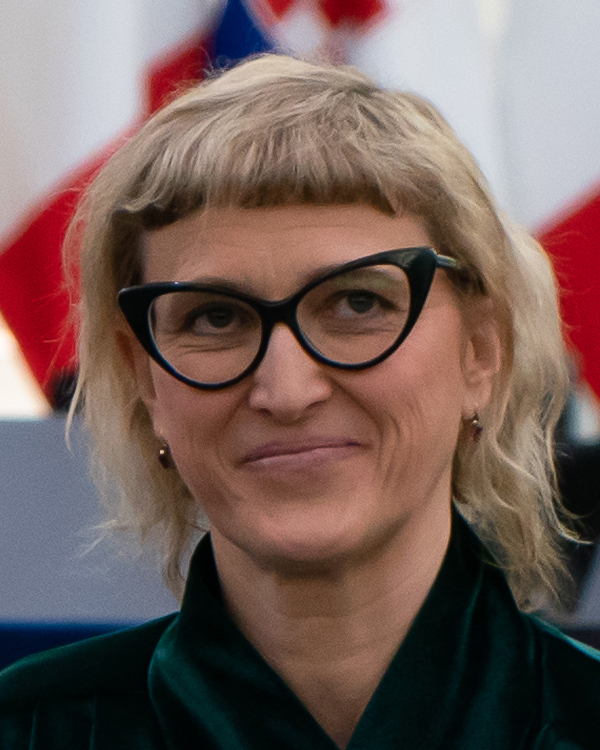
When Grbavica won the Golden Bear at the Berlin International Film Festival in 2006, something changed.
A film from Sarajevo about a mother, a daughter and the consequences of the war in Bosnia had taken home the main prize at one of the world's most important film festivals.
Behind the film was Jasmila Žbanić.
Born in Sarajevo in 1974, she had trained in film and theatre directing at the Academy of Performing Arts in Sarajevo and had already worked with film and art for several years.
But Grbavica made her name known far beyond Bosnia and Herzegovina.
It would not be the last time.
Sarajevo som utgångspunkt
Žbanić's path to film was not entirely conventional.
Before her feature films, she worked as a puppeteer with the Bread and Puppet Theater in Vermont, USA, and participated in a clown workshop with Lee Delong.
Back in Sarajevo, she co-founded the organisation and production company Deblokada in 1997 together with producer Damir Ibrahimović.
The name was no coincidence.
“Deblokada” comes from Sarajevo's wartime vocabulary – the longing for the blockade of the besieged city to be broken.
But for the founders, de-blocking was also about something that remained after the war had ended: political, economic and psychological blockages in Bosnian society.
Film became a way of examining them.
Filmen som förändrade allt
Grbavica is set in post-war Sarajevo.
At its centre are Esma and her daughter Sara.
What initially looks like a story of everyday life, money and the relationship between a single mother and her teenage daughter gradually leads towards a trauma from the war that the mother has tried to live with.
The film did not make a spectacle of the war.
It showed what happens afterwards.
When Grbavica won the Golden Bear in Berlin in 2006, the story reached an international audience. The film was sold to around 40 territories.
For Žbanić, it was the start of a filmmaking career where Bosnia remained the geographical starting point, while the questions grew larger than any single country.
What does war do to people after the weapons have fallen silent?
How does trauma live on between generations?
Och vem får berätta historien?
Bosnien efter kriget
In the films that followed, Žbanić returned to a society trying to move on.
Na putu – internationally On the Path – competed at the 2010 Berlinale and told the story of a couple in Sarajevo whose relationship changes when the man turns towards a more fundamentalist interpretation of Islam.
For Those Who Can Tell No Tales took its starting point in an Australian woman's journey to Višegrad and her confrontation with a history that is not visible to the casual visitor.
In the documentary One Day in Sarajevo, the camera was aimed at the city itself and the memory of the assassination of Archduke Franz Ferdinand in 1914.
Different stories.
But often the same larger question:
How does history live on in the present?
Sedan kom Aida
Almost fifteen years after Grbavica came the film that once again placed Žbanić at the centre of the European film world.
Quo Vadis, Aida?
The film is set during the days surrounding the Srebrenica genocide in July 1995.
Huvudpersonen Aida arbetar som tolk åt FN. När bosnienserbiska styrkor tar över Srebrenica befinner sig hennes man och söner bland de tusentals människor som söker skydd vid FN-basen.
Aida understands the language.
She hears what is being said in the negotiations.
She translates the words between people who have power over what will happen.
Samtidigt försöker hon rädda sin egen familj.
By allowing the disaster to be experienced through the perspective of a single woman, Žbanić did something that characterises much of her filmmaking.
The major historical events are there.
But the camera stays with the human being.
Från Srebrenica till Europas biosalonger
Quo Vadis, Aida? became a major international success and was nominated for an Oscar for Best International Feature Film.
At the 2021 European Film Awards, it was named Best European Film. Žbanić also received the award for Best European Director, and Jasna Đuričić, who plays Aida, was named Best European Actress.
The following year, the film also won the LUX Audience Award, awarded by the European Parliament and the European Film Academy together with European partners.
A story about a few days in Srebrenica had become European film history.
Att berätta lokalt och nå universellt
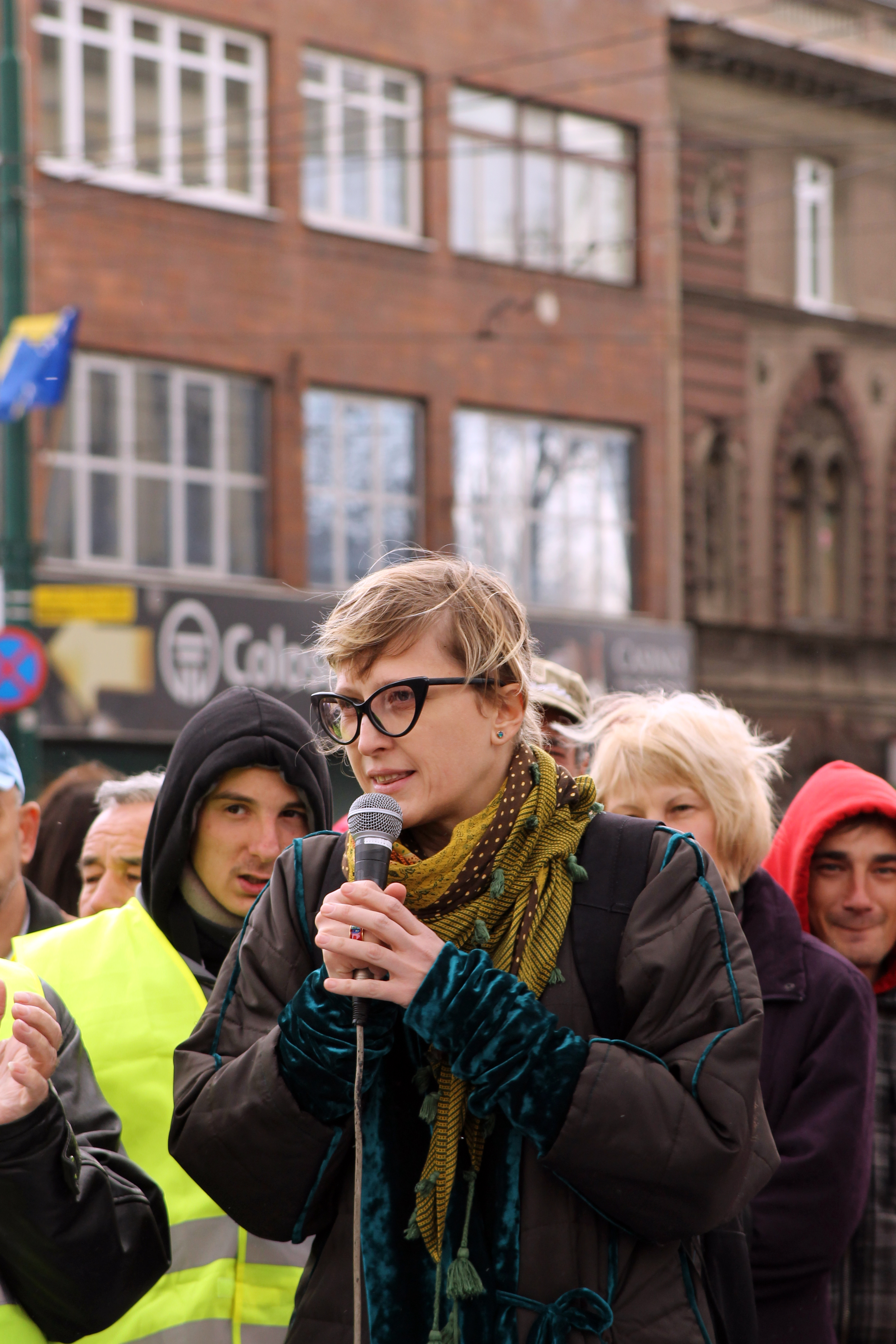
It would have been possible for Žbanić to leave Sarajevo behind after her international breakthrough.
Instead, the city and Bosnia have continued to be central parts of her work.
This does not mean that all her films are about the war.
Rather, there is a recurring desire to examine people living with history, society and identity around them.
The local never becomes a barrier for the international audience.
On the contrary.
Ju mer specifik platsen är, desto tydligare kan människorna bli.
Sarajevo does not need to be made anonymous to be understood in Berlin, Stockholm, Paris or New York.
Srebrenica does not need to be turned into a generic story to move someone who has never been to Bosnia.
The specific carries the universal.
En annan bild av Balkan
For an international audience, the Balkans have long been portrayed from the outside.
War.
Nationalism.
Ethnic conflicts.
Political instability.
Žbanić's films do not deny these aspects of the region's history. On the contrary, several of her works go straight into some of its most difficult experiences.
The difference is the perspective.
The stories come from within.
The people are not illustrations of a conflict. They are mothers, children, partners, workers, neighbours and individuals who make decisions under circumstances they have not chosen themselves.
That is an important difference.
And perhaps part of the explanation for why films with such a clear footing in Bosnia have been able to reach far beyond the country's borders.
Från Sarajevo, utan att be om ursäkt för det
There is an old notion that anyone coming from a small country must leave the local behind to become international.
Jasmila Žbanić's career shows another possibility.
You can start in Sarajevo.
You can speak Bosnian.
You can tell stories about Grbavica, Višegrad or Srebrenica.
And the story can still end up on the Berlinale's biggest stage, before the European Parliament or among films discussed all over the world.
Perhaps that is precisely where her significance lies.
Not in her having moved away from Bosnia.
But in her having shown how far a story from Bosnia can reach.
Text: MOST
Share the article
Translated from Swedish with AI assistance. Read the original.


