
Nordic Light in Greek Harbour Districts: Thessaloniki’s Film Autumn Builds New Bridges
As November’s chill settles over the Nordic countries, the film world turns its attention to northern Greece. In Thessaloniki’s old harbour district, innovative aesthetics, major industry players and a curious audience come together. Through the “Bridge to the north” initiative, the festival has become one of the most important meeting places for collaborations between Nordic and Greek filmmakers.
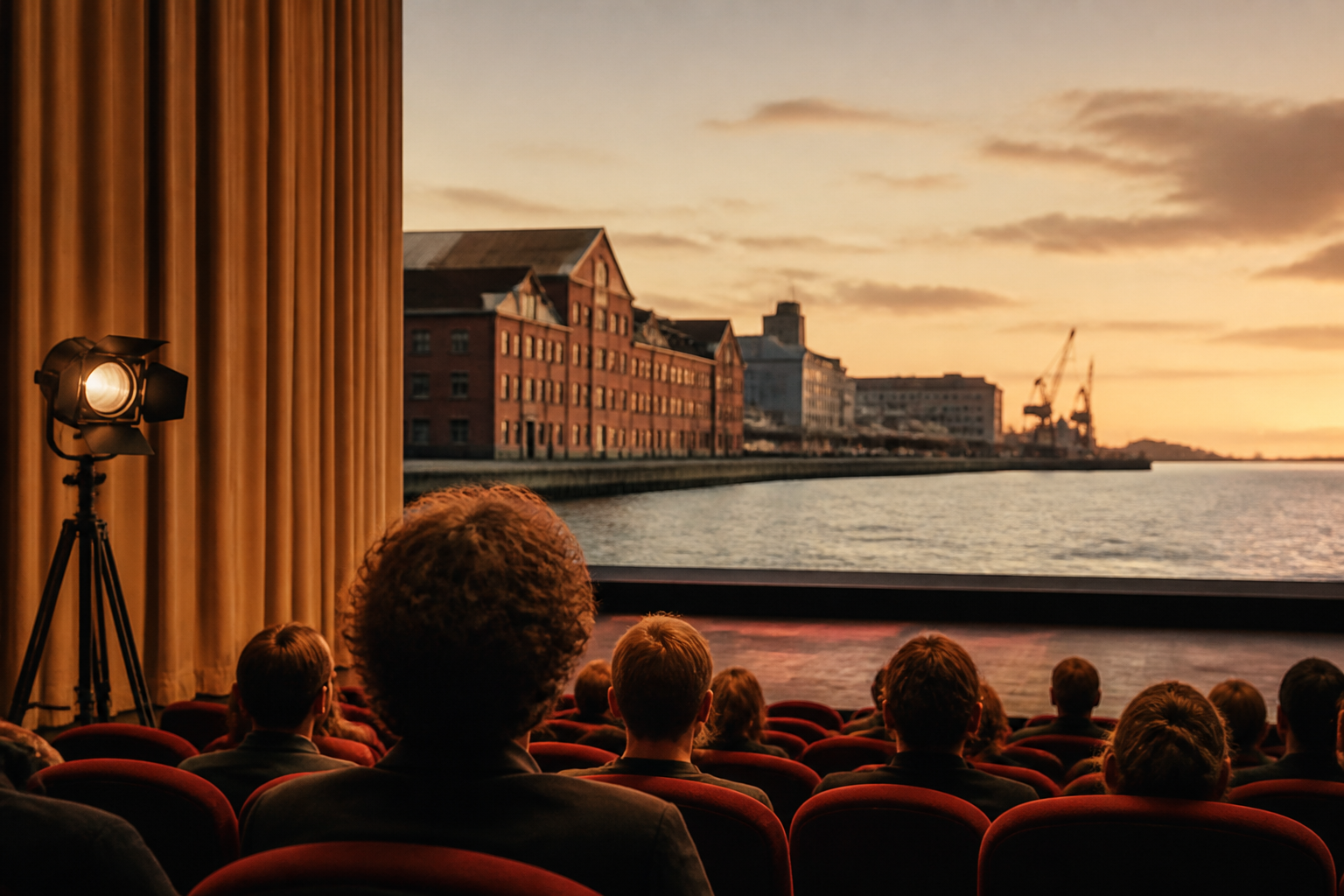
The waters of the Thermaic Gulf lie mirror-still in the mild November light. Along the pier in Thessaloniki harbour, the smell of salt water and espresso mingles with the quiet murmur of festivalgoers moving between the old brick warehouses. Here, in a setting where industrial history meets modern cinema, the Thessaloniki International Film Festival takes place — one of southern Europe’s most influential film events.
For anyone accustomed to the strictly commercial and tightly guarded red carpets of Cannes or Venice, Thessaloniki offers something quite different. The atmosphere is intimate, the barriers to entry are low, and conversations between filmmakers, critics and audiences are lively. It is a place where Hollywood stars such as Matt Dillon can be seen discussing independent cinema in an unassuming harbour café, just a stone’s throw from the cinemas.
In recent years, the festival has also developed into an important catalyst for collaboration between two geographical extremes: the Nordic countries and south-eastern Europe.
A bridge across Europe
At the heart of this transnational movement is “Bridge to the north”. This is a strategic industry initiative aimed at building lasting creative and financial bridges between the Nordic countries and the countries of the Balkans and the eastern Mediterranean. Through close collaboration with institutions such as the Swedish Film Institute and the Göteborg Film Festival, Thessaloniki has created a platform where directors, producers and screenwriters from both regions can meet.
The connection is not merely administrative; it is very much an artistic one. The Nordic presence can be felt in several ways during the festival. Among other things, Danish visual artist Jesper Just has been celebrated with an extensive special programme exploring the space between film, video installations and architecture. The fact that the festival’s prestigious closing film was also the Danish-produced apocalyptic musical The end by Joshua Oppenheimer underlines just how firmly Nordic influence has taken root in northern Greece.
Bringing together Nordic storytelling, often minimalist and melancholic, and the distinctive, sometimes absurd aesthetic of Greek cinema — which became known globally in the 2010s as the “Greek Weird Wave” — gives rise to new and unexpected artistic expressions.
Co-productions in focus at Agora
But film is not only about vision; it is also about financing. This is where the festival’s industry market, Agora, and its Crossroads Co-production Forum play a crucial role. Tomorrow’s film projects are presented here to potential co-producers, distributors and financiers.
In recent years, Greece has become a highly attractive partner for international filmmakers. The country’s generous financial incentives, combined with the high technical expertise of local film crews, have led more and more foreign productions to choose to work here. Through the Crossroads forum, Nordic producers gain a direct route into this ecosystem.
A recent example of this kind of cross-border collaboration is the atmospheric and acclaimed film Handling the undead (Hanteringen av odöda). The film, a co-production between Norway, Sweden, Greece and Denmark, shows how resources and talent from different parts of Europe can work together to create distinctive genre films with strong artistic credentials.
Several new projects in development were discussed at this year’s forum. Among them was the Finnish project Quiet lake by director Tonislav Hristov, produced by the experienced Finnish producer Kaarle Aho. The project is a prime example of how stories rooted in one country can grow and find their final form through cross-border collaboration.
The unique festival setting in the harbour
For visitors attending the festival simply as film lovers, however, it is the physical setting that leaves the strongest impression. The festival’s main hub is concentrated in the harbour area of Thessaloniki. The old warehouses dating from the early 20th century have been carefully renovated and now house state-of-the-art cinemas, including Warehouse A and Warehouse B, as well as the festival headquarters.
Walking between screenings along the quay, with glittering sea views and the city skyline in the background, gives a sense of space and freedom rarely found at film festivals. When darkness falls, the spotlights come on and the harbour area becomes a lively meeting place where discussions about the films continue late into the night over a glass of local wine or a craft beer.
The Thessaloniki Concert Hall (Megaro Mousikis), a modern architectural creation further south along the waterfront, is also used for the biggest gala screenings, offering a contrast to the harbour’s rugged industrial romanticism.
Independent film and tomorrow’s talent
The Thessaloniki International Film Festival was founded as early as 1960 and has retained its focus over the decades on discovering and showcasing new talent in independent cinema. The festival’s international competition section is dedicated to directors making their first or second feature film, making it one of the best places in Europe to see where cinema as an art form is heading.
For Nordic filmmakers, it is an ideal arena. Thessaloniki audiences are known for being both generous and deeply knowledgeable about film, and the discussions that follow screenings are often informed and engaging. Having a film shown here is often the starting point for a further journey on the international festival circuit.
As the Greek film autumn gives way to winter, it is clear that initiatives such as “Bridge to the north” are about more than moving film reels between countries. They are about creating a shared European platform where the Northern Lights and Mediterranean light can meet and enrich one another. For Nordic audiences and the film industry, Thessaloniki is no longer a distant point on the map — it is one of the most vibrant and essential stops on cinema’s shared journey.
Facts
FFT – Thessaloniki International Film Festival
- Founded: 1960 (became an international film festival in 1992).
- When: Held annually in November.
- Focus: Independent film, new directors (first and second films) and south-eastern European cinema.
- Agora: The festival’s industry section, which includes the Crossroads Co-production Forum, where projects in development seek partners.
- Setting: The heart of the festival lies in Thessaloniki’s historic harbour district, where old warehouses have been converted into cinemas.
Sources & further reading
- nordiskfilmogtvfond.comNordic artistic light with an apocalyptic end in Thessaloniki
- deadline.comThessaloniki Film Festival's AGORA Co-Production Forum ...
- filmfestival.grThessaloniki Film Festival: Home
- dokufest.comShort Film Forum 2026 Winners
Share the article
Translated from Swedish with AI assistance. Read the original.


