
Music Technopolis lets Athens swing from Cretan lyre to punk
Cretan dance music, satirical indie, and electric rock all find a home at Music Technopolis in Athens' former gasworks. Grigoris Samolis, Skiadareses, and Mora sti Fotia offer completely different entry points to a music scene where the Greek language, rather than the sound itself, is the unifying thread.
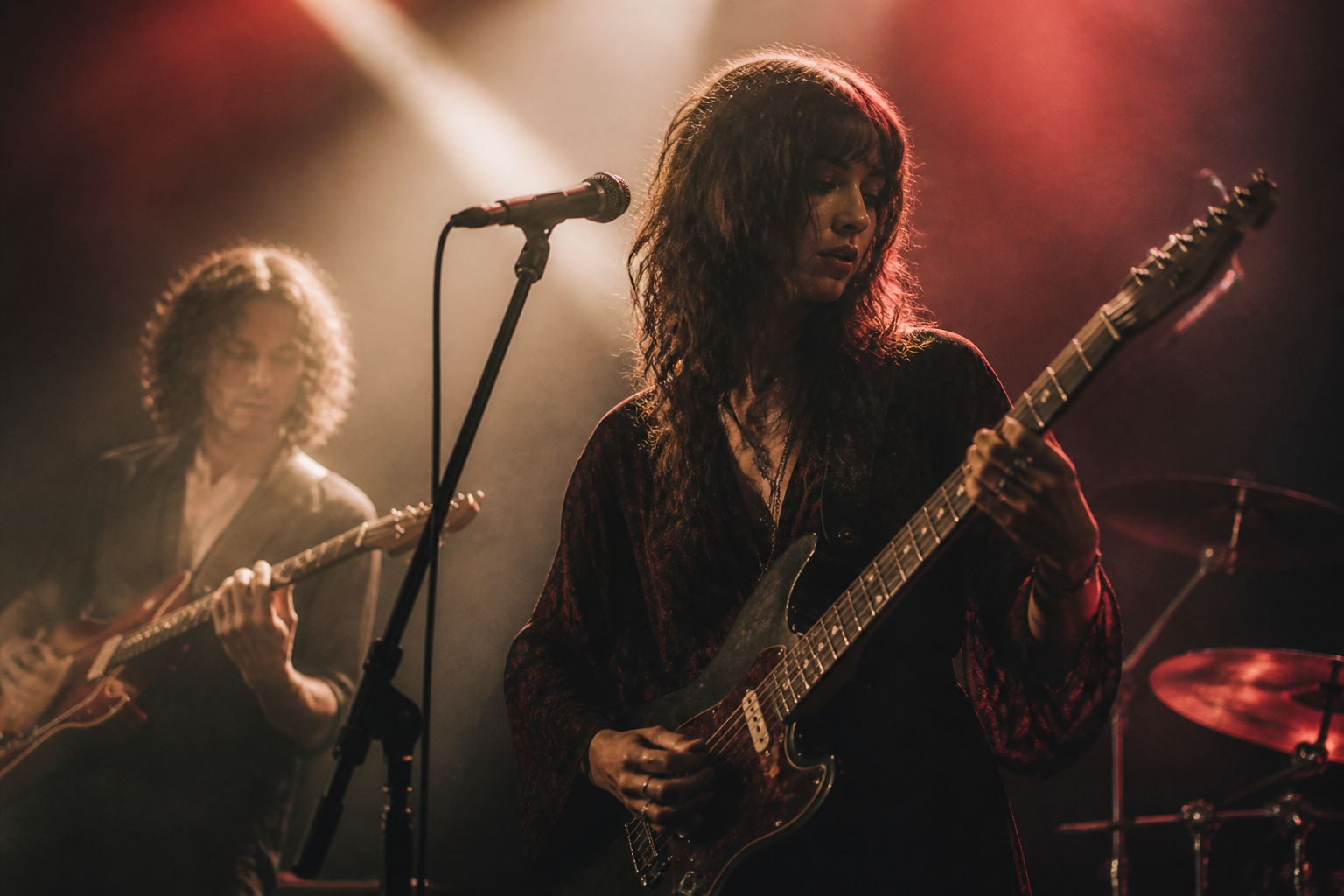
Queue Grigoris Samolis and Mora sti Fotia one after the other on a playlist. The string tones and Cretan singing of the former, the electric guitars and driving rock momentum of the latter. Then add Skiadareses, whose humour makes the very manner of singing part of the storytelling. The kinship does not lie in the instruments.
This breadth is what makes Music Technopolis such a useful place to start listening. The concert series' programme moves between traditional expressions, indie, punk, rock, and popular music. It is not an attempt to force everything into a single, uniform Greek style. Rather, the differences are allowed to be heard, bringing different artists and audiences together under the same banner.
A gasworks with room for different sounds
Technopolis is located at 100 Pireos in Gazi, Athens. The brick buildings, chimneys, and industrial structures of the former gasworks give the cultural complex a distinct physical character. It offers a very different setting from a traditional concert hall: a cohesive venue where buildings and open spaces come together to form the performance environment.
In Music Technopolis, Greek and international musical expressions meet. Yet it is worth lingering on the Greek names, even when they are unfamiliar. Recognising a genre is not the same as knowing its local language. Punk guitars may feel intimately familiar, whilst the vocal inflections and stresses of the singing work differently. A traditional string melody may sound foreign to the ear, yet possess a rhythm that is effortlessly easy to follow.
Grigoris Samolis, Skiadareses, Mora sti Fotia, and Apon serve here as listening pathways through the breadth of the series, rather than a calendar of upcoming gigs. They also demonstrate why the label 'Greek music' says very little until you begin to distinguish between its diverse expressions.
Grigoris Samolis and the drive of the lyre
With Grigoris Samolis, the Cretan lyre takes centre stage. This small bowed instrument is held upright and has a concentrated, piercing tone. It is capable of carrying both delicate melodic ornamentation and a powerful rhythmic drive. Listen to how the phrases interlock, rather than waiting for the big chorus of a pop song.
In Cretan music, the lyre often dialogues with the laouto, a long-necked lute that provides rhythmic stability and harmonic support. The instruments have different roles, but the energy is generated between them: the fluid movement of the bow contrasting with the plucked accompaniment. The vocals overlay this interplay with another melodic line, featuring drawn-out notes, ornamentations, and stresses that do not follow the Swedish folk song (visa) tradition.
The music is also deeply intertwined with dance and social gatherings. The Cretan tradition features mantinades, short rhyming verses that can express love, grief, humour, or a sharp-witted commentary. This does not mean that every song by Samolis should be understood as improvised, or that every concert turns into a village feast. However, it helps to understand a musical world where the lyrics and the connection with those present hold immense significance.
When tradition migrates to a larger concert stage, the relationship between musician and audience shifts. Amplification and the physical orientation of the stage impose a different framework from an intimate gathering where the music surrounds the dancers. But listen closely for what remains: the melodic repetition, the relentless stamina of the rhythm, and vocal phrases that leave space for recognition. With Samolis, tradition is a way of playing and singing in the present tense, not merely a repertoire to be preserved.
Skiadareses lets humour guide the vocals
With Skiadareses, the listener's focus shifts. The duo's satirical indie relies not just on melodies and arrangements, but on tone of voice. The mundane, the exaggerated, and the emotionally charged sit side by side. A vocal phrase can be simultaneously sincere and deliberately theatrical.
For those who do not speak Greek, some of the humour will naturally be lost. Wordplay, double entendres, and shifts between colloquial and formal language cannot be read from a facial expression alone. This is precisely why it is wise not to settle for the simple label of 'comedic music'. It tells us nothing about who is mocking whom, or whether the joke is actually directed at the narrator themselves.
A good place to start is with a live performance. Watch the interplay between the voices, the pauses, and the delivery of each line. Then, listen to the same song without the visuals. It becomes clearer how much of the expression lies in the vocals themselves, and how much is derived from stage presence. A translation of the lyrics can open up another layer, even if it rarely captures the precise comic timing.
It is also the contrast with Samolis that makes Skiadareses so intriguing in this context. Both place the voice at the core of their work, but using entirely different means. Where Cretan singing works with melodic ornamentation and traditional phrasing, the indie aesthetic can lie in sounding deliberately flat, dry, or off-kilter.
Mora sti Fotia between punk and rock
Mora sti Fotia injects a different kind of electric charge into the concert series. The band's music navigates between punk and rock, with melodies and a rhythmic drive that defy any narrow genre classification. Punk is a useful entry point to their energy, but it is far from a complete description of their songs.
Begin with Oneiroopolos, a title that roughly translates as 'the dreamer'. It offers a tangible path into the band's musical universe. Listen to the relationship between the vocal phrasing and the accompaniment: how the words lock into the rhythm, where a phrase is strained, and where the melody is allowed to soar. The Greek language is not merely decorative dressing on top of an international rock sound; its syllables and stresses are fundamental to how the music moves.
Here, the contrast with Samolis becomes clear, without needing to be framed as a clash between the old and the new. The ornamentation of the lyre and the strike of the rock guitar create entirely different sonic worlds, yet both build intensity through repetition. One is not inherently more contemporary just because it is amplified.
Mora sti Fotia also serves as a reminder that listening to music in a language you do not understand does not have to start as a translation exercise. Begin with the sound and the shape of the song. Turn to the lyrics only once the music has sparked a question.
Laïko is not another word for folk music
To understand the breadth of Music Technopolis, one must also grasp laïko. The term refers to a popular genre deeply rooted in Greek urban working-class culture, often with a strong focus on the singer, the melody, and an unmediated emotional directness. It is not the same as regional folk music, and is therefore not just another label for what Samolis does.
The bouzouki is a defining sound in the history of laïko, but the genre cannot be defined by a single instrument. Themes of love, loss, and separation dominate the repertoire, alongside a singing style where emphasis and phrasing carry much of the emotional weight. In contemporary productions, this can merge with programmed beats and modern pop production, blurring any neat boundaries.
Giorgos Mazonakis is a key reference point for laïko within the musical landscape of the series. Apon, in turn, invites us to listen to the borderlands of modern Greek pop. Here, it is far more rewarding to ask what an individual song is doing rather than pigeonholing the artist: how is the chorus constructed, what role does the rhythm play, and where can we hear the vocals' kinship with other Greek styles?
This is the kind of close listening that Music Technopolis rewards. Trace a path from the bowed phrases of the lyre to the dry delivery of Skiadareses, onwards to the guitars of Mora sti Fotia, and finally to modern pop productions. What emerges is not a single, defining sound of Athens, but rather a multitude of musical conversations happening all at once in the very same city.
Share the article
Translated from Swedish with AI assistance. Read the original.


