
Joan Miró's Inundația II Became Postage Stamps for Romania's Affected Children
A gouache, a dated signature, and a greeting to children affected by flooding. With Inundația II, Joan Miró’s visual world was linked to Romania’s disastrous spring of 1970. When the work became a postage stamp motif, the art took on a different format – and a mission far beyond the art world.
24 August 1970. The date stands alongside Joan Miró's signature on a vignette belonging to the Romanian postage stamp issue. Nearby is art associated with his free, symbol-rich visual world. But the context is concrete: the floods that hit Romania during the spring, and a greeting to the affected children.
It is this connection between artwork and postal print that the National Museum of Romanian History (Muzeul Național de Istorie a României) in Bucharest highlights in its presentation of Inundația II. The museum refers to the work as a graphic maquette. The gouache is thus not merely an image to be contemplated on its own, but also an original intended to find a life in reproduction.
Therein lies the core of the story. An internationally active artist directs his attention to a specific disaster. His image is then transferred to an object that can be printed in editions, collected, and used in the postal world.

A date after the disastrous spring
The floods in Romania in the spring of 1970 form the background of the work. The title Inundația II translates roughly as The Flood II, anchoring the image to that event. Without the title and the accompanying texts of the issue, the viewer would have greater freedom to read it as part of Miró's broader oeuvre.
Miró was a Catalan artist with close ties to Surrealism. In his painting, recurring symbols evoke bodies, birds, stars, and celestial bodies without being locked into a single meaning. He also worked with printmaking, ceramics, and sculpture. It was therefore not alien to his practice that an image should leave the format of painting and meet a different audience.
The date on the vignette introduces a personal time marker into the Romanian issue. It falls after the spring floods, binding Miró's signed greeting to the aftermath of the disaster. However, it should not automatically be read as the day the gouache was finished, the commission was made, or the stamp was issued. These are separate events.
The exact chain of initiative – who contacted Miró and how the commission was brokered – is not clear from the available documentation. The narrative therefore does not require an invented scene of commission. What is significant is the documented connection between the work, the disaster, and the postal issue.
The flag becomes part of the visual language
In Inundația II, blue, yellow, and red are used – the colours of the Romanian flag. They give the image a geographical anchoring, even if the expression does not function as a realistic depiction of a flooded landscape.
The choice of colours can be read on two levels. For those who recognise the tricolour, it points to Romania. In an artistic reading, the colours simultaneously work through their mutual contrasts: the bright yellow, the red, and the blue create varying weight and intensity in the image. The national reference, therefore, does not have to stand apart from the painting; it can exist within its very expression.
Here, it is important not to turn every shape into an unambiguous message. Miró's visual language invites associations, but this does not mean a viewer can reliably identify a specific river, person, or event within it. Such precise identification would require support from the artist's own accounts or documentation of the work.
A more reasonable reading is that the image unites two kinds of recognition: Miró's artistic language and the colours of Romania. The disaster is indicated through the title and the context, while the painting is allowed to retain its openness. This makes the image something other than an illustrated news report.
Gouache is also a medium with distinctive properties. The paint is water-based and can be applied opaquely, leaving a matte surface. In the original, there is the paper, the paint layers, and the physical traces of the work. A printed reproduction can convey the motif, but not the full material experience of the painting.
From gouache to postage stamp
The transition to a postage stamp alters how the image meets its viewer. The original can be studied as a standalone piece. On the stamp, the motif must work alongside postal elements and within a small area. Colour and form take on different proportions in relation to the surrounding text.
This does not mean that one can establish exactly how the colours changed or whether the image was cropped without a direct comparison between the original and clear reproductions of the print. Furthermore, a digital image can be affected by photography and scanning; differences in colour on a screen are not automatically differences between the gouache and the printed issue.
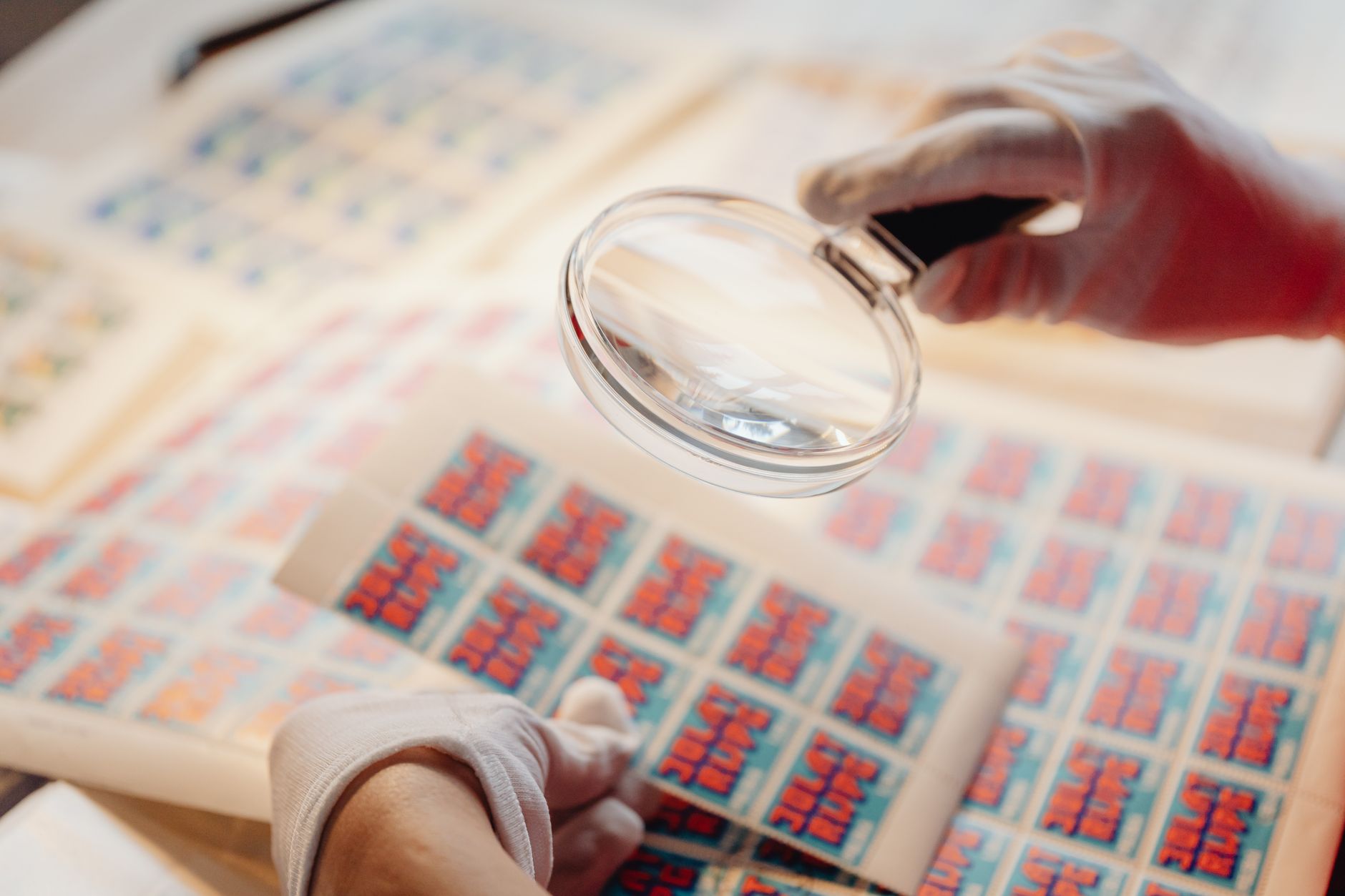
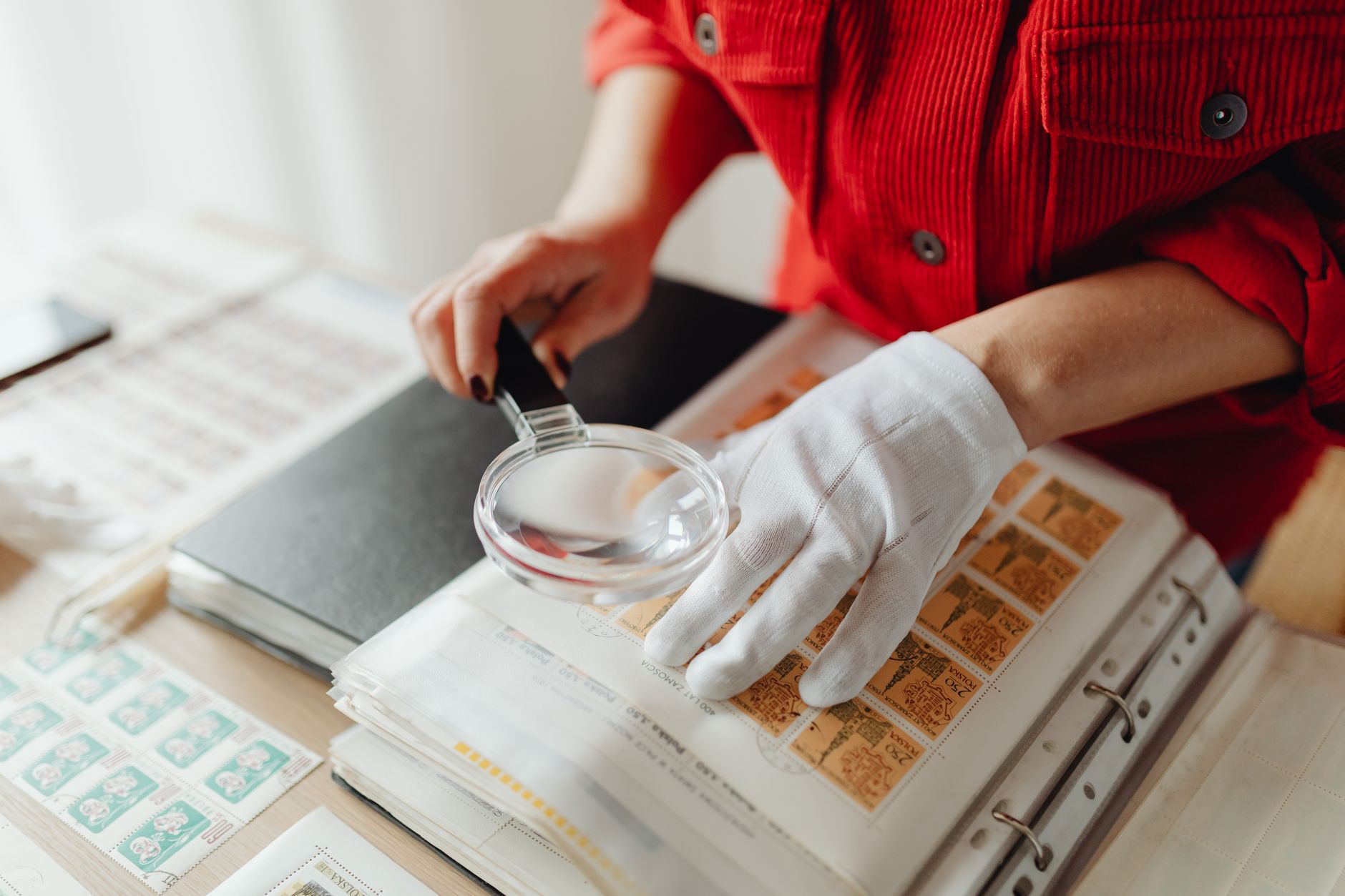
In the materials surrounding the issue, stamps appear in pairs, blocks of four, and blocks of five. Such designations describe joined groups of stamps, not different artworks in themselves. For those following the motif, this is a useful distinction: the same image can appear across several collectable items without Miró having created a new maquette for each one.
The imperforate souvenir sheet is something other than a standard group of joined stamps. Such a sheet is a small page where the margin can also carry text and imagery. Imperforate means it lacks the perforation that otherwise makes it easy to separate the stamp from the surrounding paper.
In the Miró issue, the space around the motif is significant. The vignette with the signature and date, alongside the greeting on the sheet, ensures that the viewer encounters more than just a reproduction. The artist's name, the image, and the recipients are brought together in a single printed object.
A greeting is not a financial record
The greeting on the sheet conveys the message that this is a thought from Joan Miró to the flood-affected children in Romania. It specifies the recipient of this solidarity. The children are not an afterthought to the image, but are explicitly present in the message of the issue.
At the same time, it is necessary to distinguish this gesture from the question of financial aid. A stamp with a humanitarian motif does not in itself explain how the sales were organised, whether a special surcharge was levied, or which recipients received any proceeds. To establish this, official issuing documents or other accounts from the Romanian post, Poșta Română, and the organisations involved would be required.
There is no documented fundraising total in the available material. It is therefore more accurate to describe Inundația II as an artistic act of solidarity and a stamp motif dedicated to the affected children, rather than attributing a specific financial result to the issue.
This does not diminish the gesture. Through the medium of the postage stamp, an image could carry both the artist's name and a clear address to people outside the art world. The Romanian disaster found a place within an international artist's oeuvre, and that oeuvre acquired a concrete Romanian connection.
Two ways of seeing the same work
Today, the museum's digital presentation serves as an entry point to Inundația II and its history. Anyone seeking the work should distinguish between the gouache, the postage stamp, and the imperforate sheet. They belong together, but they show different parts of the story. Nor does the museum's presentation itself imply that the original is currently on display in an exhibition gallery.
Yet seeing the maquette alongside the postal issue raises an unusually clear question: what happens to art when it is given an explicit recipient?
In Miró's work, this is not answered by the motif alone. The answer is also found in the margin, in the signature, in the date after the disastrous spring, and in the greeting to the children. There, the free image becomes a targeted act.
Sources & further reading
- Muzeul Național de Istorie a RomânieiMacheta grafică „Inundația II”, de Joan Miró – exponatul lunii septembrie
- mnir.roMacheta grafică „Inundația II", de Joan Miró – exponatul lunii septembrie ⋆ Muzeul Național de Istorie a României
- ziuaconstanta.ro„Inundația II” de Joan Miró, prezentată în premieră în cadrul programului „Exponatul lunii” la Muzeul Național de Istorie a României
- hipstamp.comRomania 1970 Joan Miro Painting Sc 2217 M/s MNH # 12600 | Asia - India, General Issue Stamp / HipStamp
Share the article
Translated from Swedish with AI assistance. Read the original.


