
God’s gift from Hvar: How the rare bogdanuša grape was saved
On the Croatian island of Hvar, the red grape plavac mali has long reigned unchallenged. But in the shadow of the powerful, high-alcohol reds, a group of young, visionary winemakers have brought an almost extinct treasure back to life. Bogdanuša—the grape whose name means “a gift from God”—offers a crisp, salt-kissed contrast that is now attracting renewed interest.
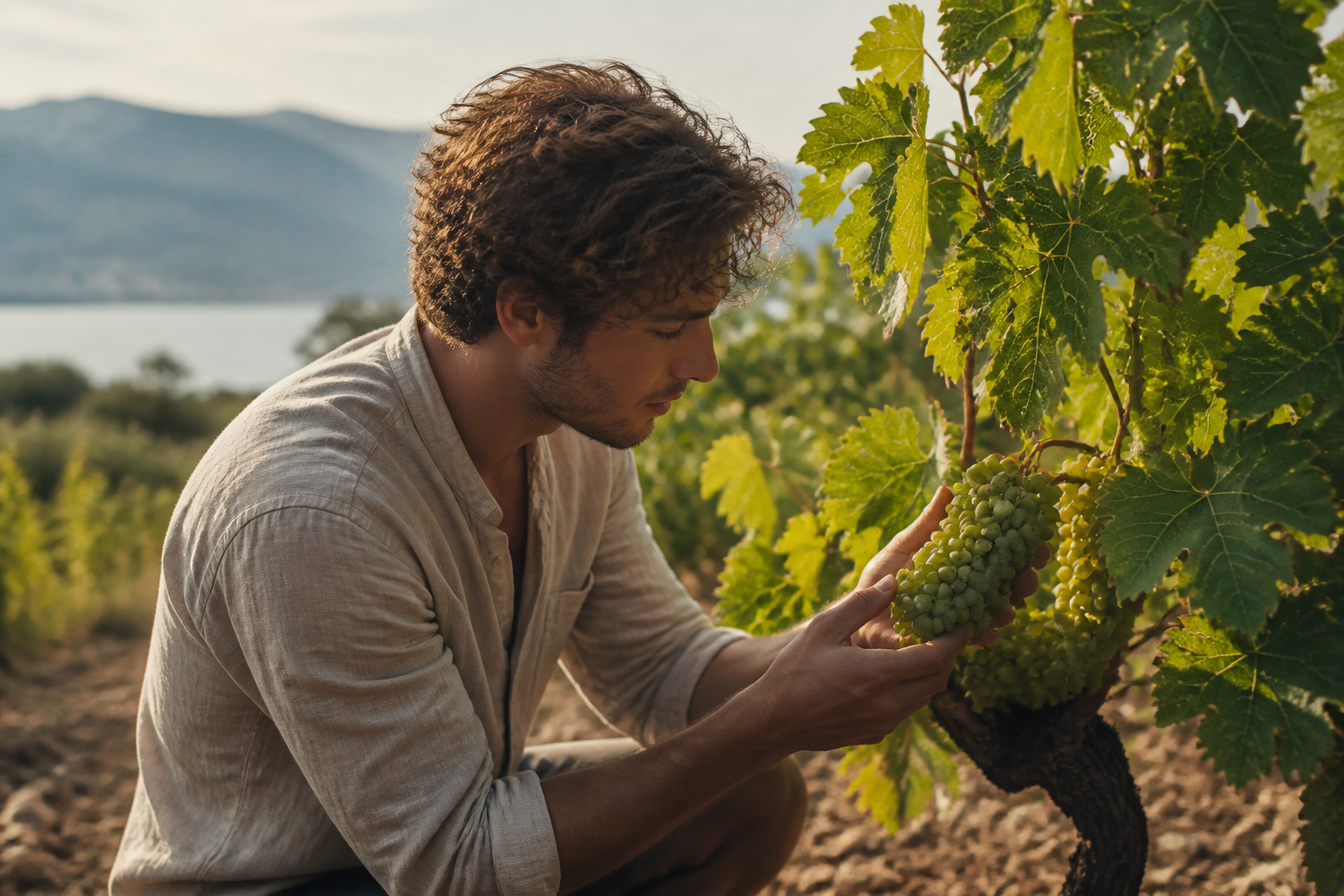
As the afternoon sun sinks over the Starigrad Plain on the Croatian island of Hvar, the dry limestone walls turn a deep golden yellow. The scent of dried sage, rosemary and warm earth hangs heavily in the air. Here, on one of the sunniest islands in the Adriatic, wine has been made for more than two thousand years. But until recently, the plain’s most distinctive treasure was close to being lost.
For decades, Hvar’s reputation for wine has rested on plavac mali—the powerful, dark, high-alcohol red grape that thrives on the steep, sun-baked southern slopes. But on the plain in the north, where cooler breezes sweep in from the sea, a completely different wine tradition lies hidden. Here grows bogdanuša, a light, crisp white grape whose name literally means “a gift from God”. After years of neglect, a new generation of local winemakers has decided to give this historic grape the place it deserves.
The Greeks’ legacy on the Starigrad Plain
To understand bogdanuša, you must understand the Starigrad Plain, or Ager Pharensis, as it was known to the Romans. In the fourth century BC, Greek colonists sailed from the island of Paros into Hvar’s deep northern bay. They founded the town of Pharos (now Stari Grad) and divided the neighbouring fertile plain into a strict geometric pattern of rectangular agricultural plots, bounded by dry-stone walls.
Today, this landscape is one of the world’s best-preserved examples of ancient Greek land division and has been included on the UNESCO World Heritage List. The stone walls built by the Greeks around twenty-four centuries ago are still standing, and olives and grapes are still grown in the same soil.
Bogdanuša is closely associated with this place. According to local tradition, the grape was originally grown to produce wine for religious celebrations—hence the name “God’s gift”. The plain’s red, limestone-rich soil, combined with its sheltered yet airy microclimate, proved perfect for giving the grape its defining qualities: high natural acidity and pronounced minerality.
The threat of extinction and a new generation
In the late twentieth century, however, bogdanuša was close to disappearing from the wine map. During the Yugoslav era, large-scale production and cooperatives that valued quantity over quality were prioritised. Many old vineyards were abandoned as young people left farming for the growing tourism industry along the coast.
When private winemaking re-emerged in the 1990s, the powerful red wines took centre stage. Bogdanuša was often relegated to the role of an anonymous blending grape in simple, oxidised house wines served by the carafe in local konobas (taverns). The grape was considered too neutral and difficult to tame on its own.
But the turning point came when a new generation of winemakers took over the family estates. They saw the potential in the heritage they were in danger of losing. They understood that bogdanuša’s weaknesses in the old-school approach—its sensitivity to oxygen and subtle aromas—were in fact its greatest strengths when handled with modern cellar techniques.
By reducing yields, harvesting earlier in the morning to preserve freshness, and using temperature-controlled fermentation in stainless-steel tanks, the young winemakers succeeded in unlocking the grape’s true character.
A crisp counterpoint in the glass
The result is a wine that feels surprisingly modern. In the glass, bogdanuša is pale straw-yellow, sometimes with almost greenish hues. The aroma is subtle but elegant, with notes of green apple, citrus and white flowers, alongside a distinct hint of the Mediterranean herbs that grow wild around the vineyards.
But it is on the palate that the wine really comes alive. Unlike the heavy reds Dalmatia is known for, bogdanuša offers a fresh, crisp experience. It is light and refreshing, a southern wine that is rarely so easy to enjoy. Its lively acidity is balanced by distinct minerality and a subtle saltiness on the finish—a direct greeting from the Adriatic sea spray carried on the wind across the Starigrad Plain.
The wine seems made for the local cuisine. It cuts beautifully through the richness of grilled mackerel or sardines, lifts the flavour of fresh mussels and squid, and works wonderfully with salty, air-dried pršut and young sheep’s cheeses.
From local secret to international wine lists
Saving bogdanuša is not just about nostalgia; it is also a response to a changing global wine market. Today, wine enthusiasts and sommeliers around the world are looking for wines that are distinctive and true to their origins. Growing fatigue with standardised Chardonnays and Sauvignon Blancs has opened the door to local, indigenous grape varieties.
For anyone who enjoys fresh, mineral-driven white wines from regions such as Chablis or Rías Baixas, bogdanuša offers an exciting alternative with plenty of character. And the fact that the wine carries an unbroken historical link to the ancient Greeks only adds to the experience.
On Hvar, the grape has gone from being a threatened relic to a source of pride, appearing on wine lists alongside the most prestigious red labels. The God’s gift from the Starigrad Plain has not only survived—it has found its place in the modern world.
Facts
Sources & further reading
- UNESCO World Heritage CentreStari Grad Plain
- UNESCO:s världsarvskommittéBeslut 32 COM 8B.29: Stari Grad Plain (Kroatien) uppförs på världsarvslistan
- Journal of Wine Research, vol. 30 nr 4 (2019)'A gift from God': autochthonous grapes and wine heritage on the island of Hvar, Croatia
Share the article
Translated from Swedish with AI assistance. Read the original.


