
From Paris to Belgrade – Why Skadarlija Became the Balkans’ Montmartre
In the heart of Belgrade lies a street where kafanas have become cultural history, and where writers, actors, and painters are still spoken of as if they had only just left the table. Skadarlija is often called Belgrade's Montmartre – but behind the comparison lies a unique history of bohemians, restaurants, and a neighbourhood that has repeatedly had to reinvent itself.
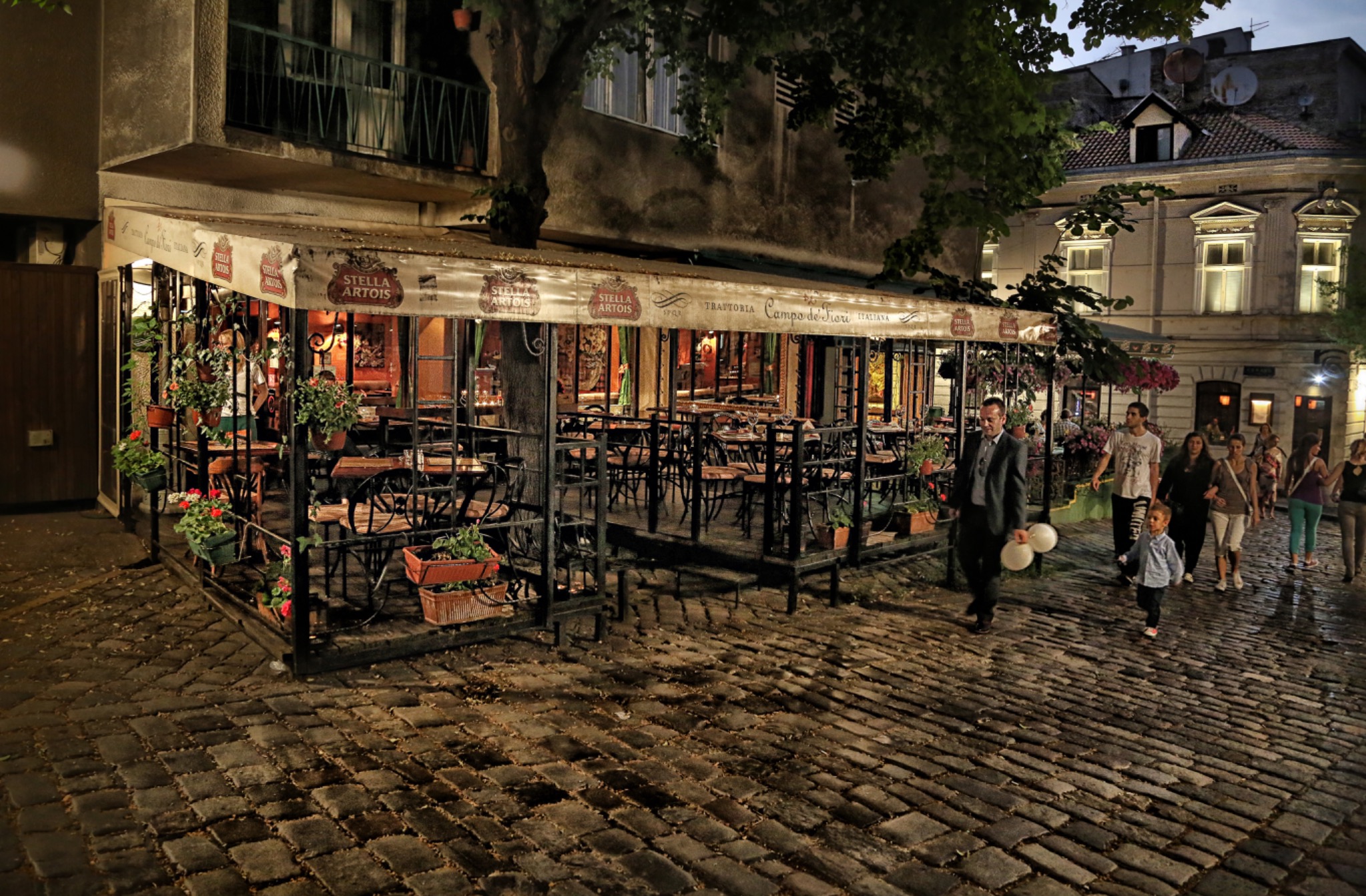
Skadarlija is one of those places in Belgrade that many people know even before they have visited. The imagery is familiar: cobblestones, old facades, restaurants with white tablecloths, musicians wandering between tables, and a street trying to hold on to an older version of the city.
But Skadarlija's history began long before the area became a tourist attraction.
Its first inhabitants are mentioned as early as around 1825. At the time, the area was poor and simple, inhabited by Romani families, craftsmen, merchants, and people making a living from small businesses or renting out rooms. A canal also ran through the area, marking the boundary between Dorćol and Palilula.
The name Skadarska ulica only became official in 1872.
Its bohemian reputation came later.
When the Artists Moved In
During the late 19th and early 20th centuries, actors, writers, and artists began finding their way to the area. The kafanas (traditional taverns) became natural meeting places for the figures of Belgrade's cultural scene, and Skadarlija gradually acquired the identity that is still associated with the street today.
Among the most famous names are Đura Jakšić, Branislav Nušić, Radoje Domanović, Stevan Sremac, and the actress Žanka Stokić.
They did not come to Skadarlija because the area was elegant. On the contrary, it was a simple and rather gritty neighbourhood for a long time.
It was precisely this informal atmosphere that made it attractive.
Here, writers, journalists, actors, and painters could sit for hours over food and wine, discussing politics and literature, continuing the evening long after other parts of the city had gone quiet.
Đura Jakšić and the Identity of Skadarlija
Few people are as strongly associated with Skadarlija as Đura Jakšić.
The poet and painter, one of the most important figures of Serbian Romanticism, was among the first famous bohemians to settle in the area. He lived his final years in the house at Skadarska 34 and died there in 1878.
Today, the house is a cultural centre where literary evenings, exhibitions, and artistic programmes are still hosted.
This makes the place more interesting than a standard memorial house. It is still used for much the same kind of cultural gatherings that once made Skadarlija famous.
Jakšić's relationship with the quarter has therefore become part of Skadarlija's own self-image: slightly rebellious, artistic, and sceptical of anything too orderly.
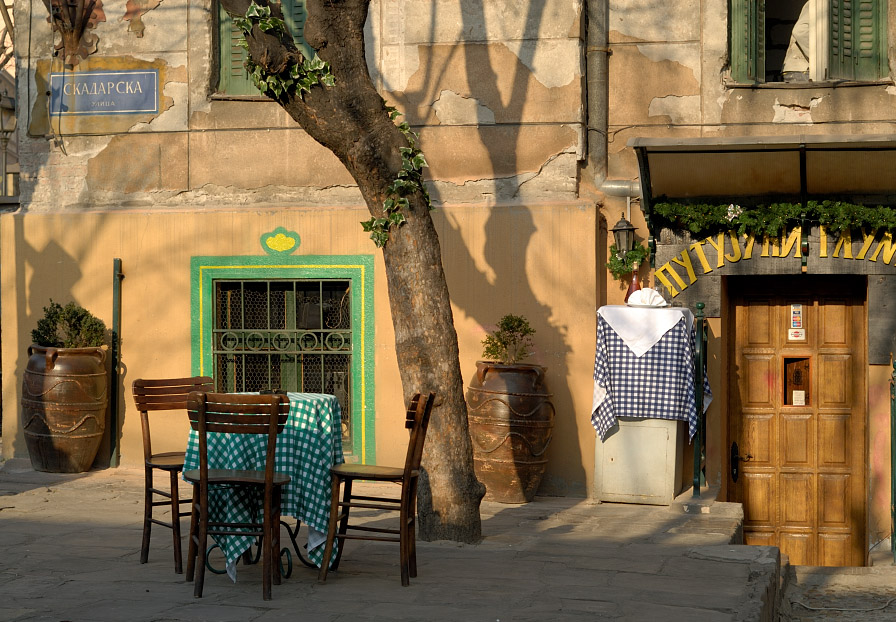
The Kafanas That Became Institutions
It is hard to understand Skadarlija without its kafanas.
One of the most famous is Tri šešira. It opened in 1864 in a building that had previously housed a hat workshop – hence the name, which means "Three Hats".
On the other side of the old neighbourhood boundary lay Dva jelena, "Two Deer".
Both developed into meeting places for generations of writers, artists, actors, and later also politicians, diplomats, and international guests.
In Belgrade's cultural history, the kafana was also more than just a restaurant. It functioned as a living room, workplace, editorial office, and stage all at once.
This is a key reason why Skadarlija's restaurants have acquired an almost institutional status.
Why Montmartre?
The comparison with Montmartre in Paris comes up constantly when Skadarlija is described.
The similarities are easy to understand. Both neighbourhoods built their reputation around artists, writers, and a nightlife that long stood somewhat apart from the more respectable parts of the city. Both have since become tourist destinations where bohemian history itself has become part of the attraction.
But the parallel has its limits.
Skadarlija developed from a completely different historical and social environment than Montmartre, and its identity is deeply rooted in kafana culture, Serbian literature, and Belgrade's own urban history.
Calling the area "Belgrade's Montmartre" is therefore an easy way to explain the atmosphere to an international visitor.
But Skadarlija does not really need Paris to be interesting.
The Old Street Is Also a Modern Construction
At the same time, there is a detail that makes the story more complicated.
The Skadarlija that visitors encounter today is not entirely an untouched slice of 19th-century Belgrade.
During the 20th century, a deliberate revitalisation of the area was carried out. The architect Uglješa Bogunović and others worked to preserve the quarter's character as modern Belgrade grew around it.
The cobblestones were restored, street lamps installed, kafanas rebuilt, and the area was developed into the pedestrian zone and cultural environment so closely associated with Skadarlija today.
In a way, old Belgrade was saved by being recreated.
This does not make the history any less authentic. But it explains why Skadarlija today feels both historic and carefully staged.
Mellan kulturarv och touristattraktion
This is also where Skadarlija's modern dilemma lies.
The Tourist Organisation of Belgrade presents the area as a place where visitors can still experience old bohemian Belgrade through restaurants, traditional music, and the historic setting.
At the same time, the street is one of the city's most famous tourist attractions.
During peak season, tens of thousands of people can pass through the area in a single day.
For some, this is precisely why Skadarlija has lost some of its old spontaneity. What once grew organically around artists and kafanas has become something sold as an experience.
But it would be too simplistic to say that everything is just a facade.
Kuća Đure Jakšića is still used for cultural programmes. Old kafanas remain open. Music can still be heard at the tables, and Belgraders themselves continue to come here, not just tourists.
Skadarlija is therefore both preserved history and a living city.
A Quarter Still Playing Its Old Role
Perhaps the most interesting thing about Skadarlija is not that the area has managed to remain exactly as it was.
It has not.
More interesting is that the street still serves roughly the same function in Belgrade's imagination as it has for over a hundred years.
It is a place where people go to experience a softer, more narrative version of the city – a Belgrade of long dinners, music, literature, and people who are in no hurry to go home.
The Montmartre comparison is likely to continue.
But after an evening on Skadarska ulica, it also becomes clear why many prefer to simply call the place Skadarlija.
Sources & further reading
Share the article
Translated from Swedish with AI assistance. Read the original.


