
Devil’s Town in Serbia: Where Geological Forces Meet Ancient Legends
Deep in the forests of southern Serbia, on the slopes of Mount Radan, more than two hundred unique stone pillars rise up, crowned with heavy stone caps. Đavolja Varoš – Devil’s Town – is one of Europe’s most remarkable natural phenomena. Behind the dramatic formations lies an ongoing struggle between erosion and time, extremely acidic springs, and folk tales of wedding guests turned to stone.
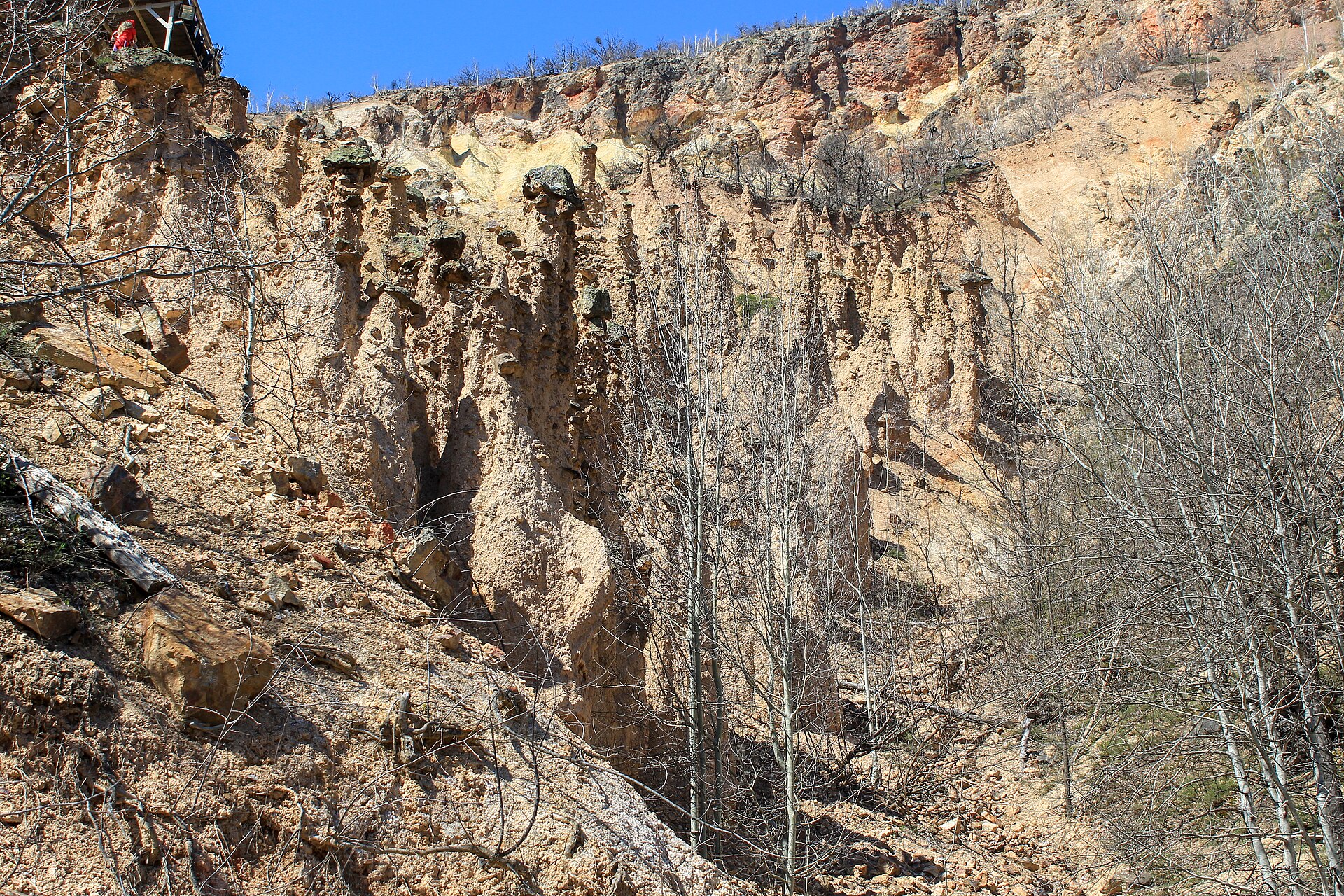
They look like a silent, petrified army gazing out over the deep forests of southern Serbia. On the slopes of Mount Radan, not far from the town of Kuršumlija, 202 unique pillars of clay and stone rise towards the sky. Some reach as high as fifteen metres, and almost all are crowned with a heavy cap of dark andesite blocks. The place is called Đavolja Varoš, which translates as Devil’s Town. It is a landscape shaped by rare geological forces, surrounded by acidic springs and steeped in local legends dating back centuries. For Nordic travellers seeking something unexpected and spectacular beyond the well-visited Adriatic coast, this place offers one of the Balkans’ most fascinating natural experiences.
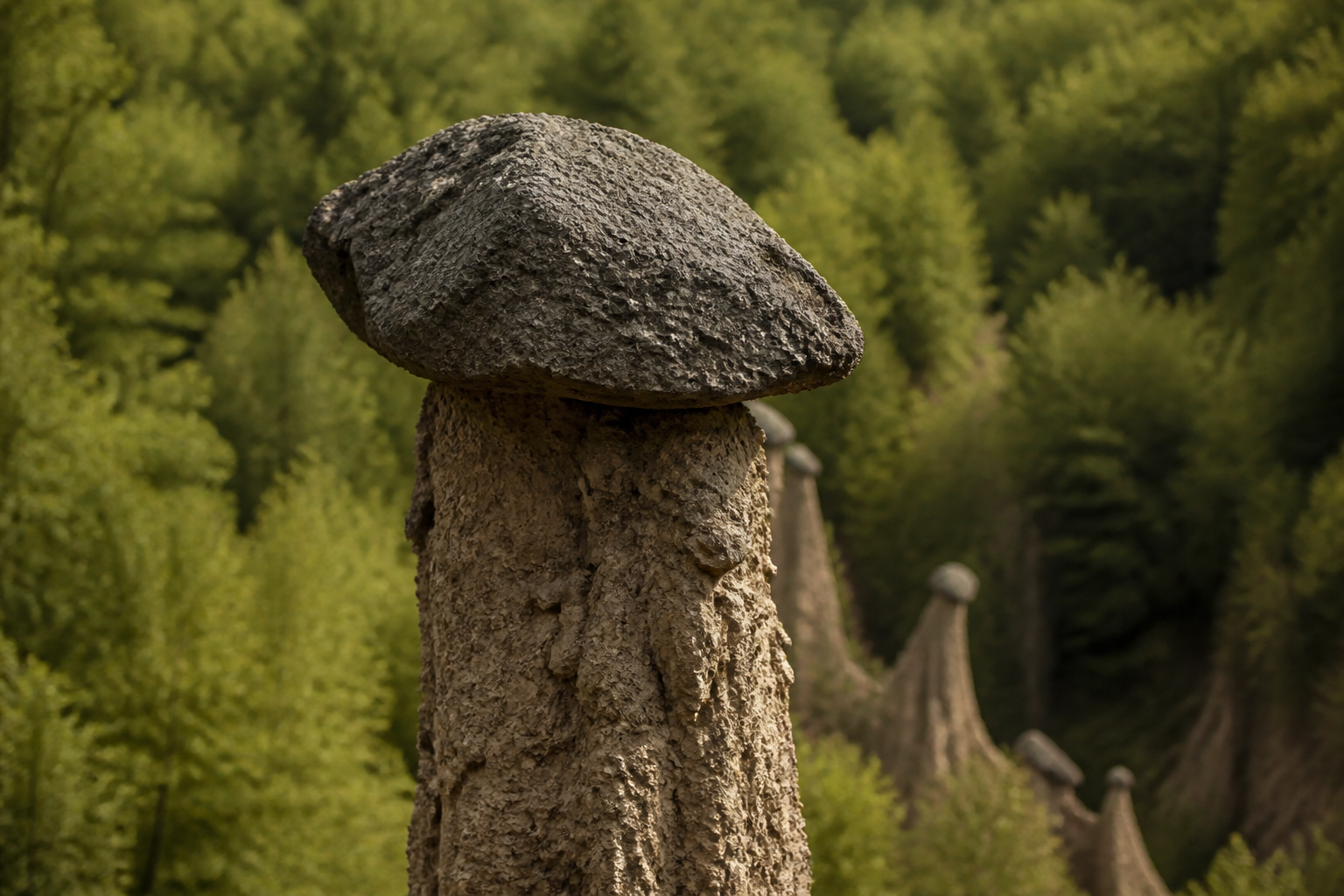
The geological wonder: Pillars in constant change
What at first glance looks like a supernatural work of art is in fact the result of a complex interplay between ancient volcanic activity, erosion and time. Millions of years ago, the entire Radan region was the scene of intense volcanic activity. This left behind a thick layer of loose clay and volcanic ash, covered by a harder layer of andesite.
When rain falls over the two deep ravines of Đavolja Jaruga (Devil’s Ravine) and Paklena Jaruga (Hell’s Ravine), it washes away the soft, unprotected clay. But where the heavy andesite blocks remain, the soil beneath them is protected from erosion by raindrops. The result is that the protected patches of clay slowly rise up from the surrounding, sinking landscape as pillars.
The Serbian geographer Tomislav Rakićević, who studied the phenomenon in detail during the 20th century, described how these formations are caught in a constant cycle of birth and decay. When a stone cap eventually falls off due to the erosion caused by wind and rain, the pillar left behind quickly erodes away. At the same time, new pillars begin to form higher up in the ravines. It is a dynamic and living geological process that continues to this day.
Devil’s water and red springs
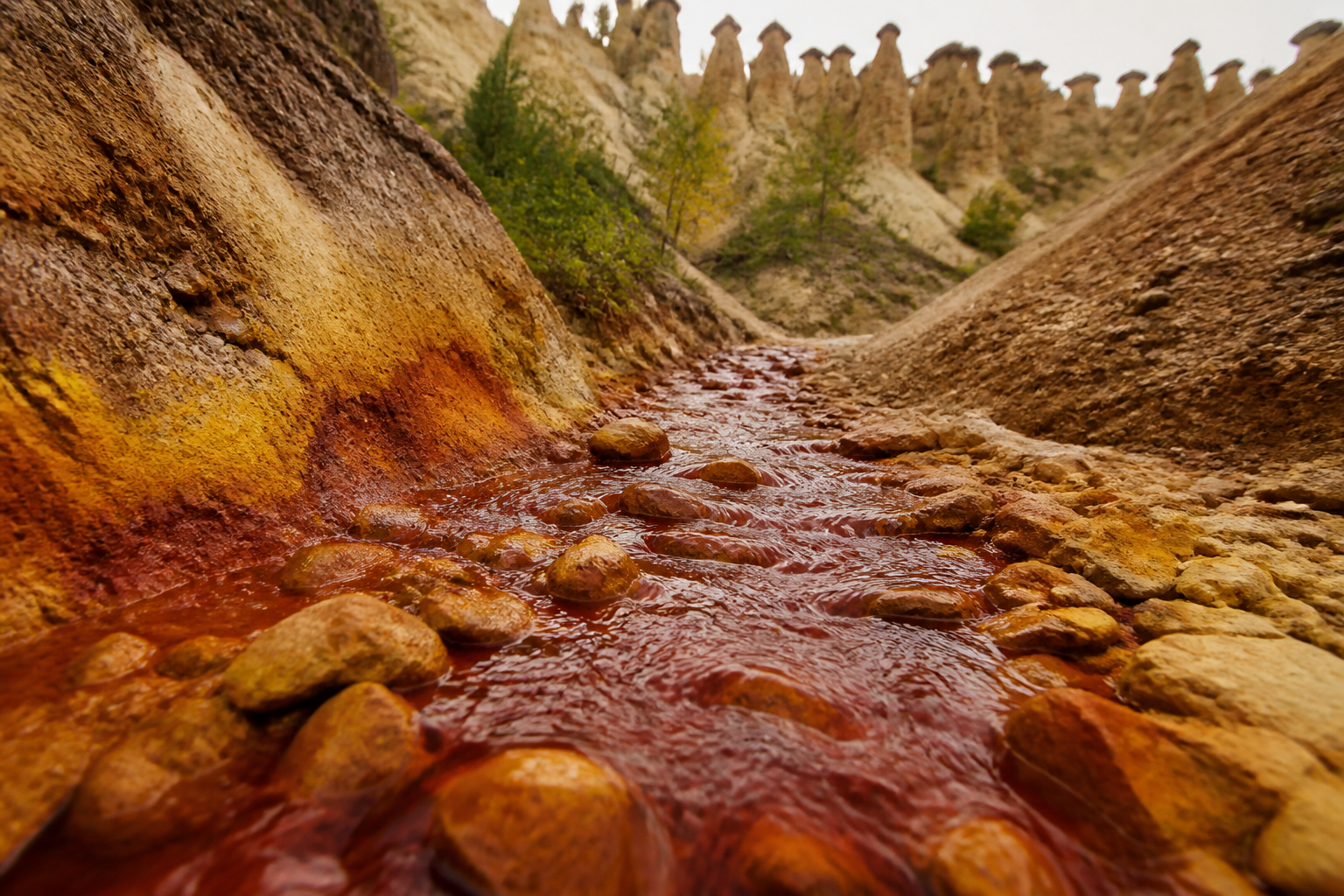
It is not only the stone spires that give the area its unusual character. Springs emerge from the ground, carrying water with extreme chemical properties. The best known is Đavolja voda (Devil’s Water), a spring located very close to the pillars. The water here has a very low pH of around 1.5, making it almost as acidic as battery acid. It is also extremely rich in minerals, with levels of iron, aluminium, copper and sulphur thousands of times higher than in ordinary drinking water.
A little further away flows Crveno vrelo (The Red Spring). Here, iron is deposited from the water, staining the ground and neighbouring streams such as Žuti Potok (Yellow Stream Valley) in vivid rust-red and orange hues. The landscape looks almost otherworldly.
This abundance of minerals has drawn people to the area for a long time. As early as the Middle Ages, during the reign of King Stefan Uroš I in the 13th century, skilled miners – known as Sasi (Saxon miners) – were invited to Serbia to extract metals from these mineral-rich mountains. Visitors can still see traces of their old Saxon mine workings in the terrain around Devil’s Town.
Between science and folklore: The legend of the petrified wedding guests
Before science could explain how erosion and the acidic springs worked, local people came up with their own explanations for the strange landscape. The best-known legend tells of a wedding party. According to the story, the devil had bewitched the local people and made them arrange a wedding between a brother and his sister. To prevent this sin and save the people from demonic delusion, a divine power intervened. Just as the wedding procession was moving through the ravine, the entire party – the bride and groom, guests and musicians – turned to stone. According to local folklore, the heavy andesite blocks atop the pillars represent the guests’ wedding hats.
Another local story says that the pillars are devils made flesh, which people carried on their backs as a symbol of their sins and suffering. By spending a night in prayer at the small wooden church of Sveta Petka (Saint Petka), nestled in the forest right beside the nature reserve, they were said to have been able to shake off their demons. Today, the church is the setting for a distinctive tradition: visitors tie small pieces of cloth to the trees around the church in the hope of leaving their illnesses and worries behind. According to tradition, the pieces of cloth will rot away, and with them the visitors’ troubles.
Visitor guide: The walk and a base in Kuršumlija
Visiting Đavolja Varoš is now easy thanks to well-developed infrastructure, but the experience has retained its wild character. The natural starting point for a visit is Kuršumlija, a historic town known for its thermal springs and nearby spa resorts. The region around Mount Radan is rich in contrasts: quiet coniferous forests, bubbling mineral streams and deep valleys. After a day’s hike among the petrified wedding guests, many head to Prolom Banja, a spa resort known for its alkaline water – a fascinating chemical contrast to the extremely acidic springs of Devil’s Town.
From the visitor centre at the reserve entrance, a well-maintained path of wood and compacted earth leads through woodland and uphill to the ravines. The walk is just over a kilometre long and offers beautiful views of Žuti Potok and the old Saxon mine workings. Several wooden viewing platforms have been built at strategic points, making it possible to get close to the pillars without damaging the fragile clay ground around them.
A visit is particularly recommended in the late afternoon or early evening. As darkness falls, the stone pillars are illuminated by atmospheric floodlighting, heightening the mysterious mood and bringing the imagination to life in a whole new way as shadows fill the deep ravines.
Facts
ĐAVOLJA VAROŠ AT A GLANCE
- Location: In southern Serbia, on the slopes of Mount Radan, approximately 30 kilometres from the town of Kuršumlija.
- Formations: Consists of 202 unique earth and stone pillars, between 2 and 15 metres high.
- Protected status: The area has been under state protection since 1959 and was declared a natural monument of special importance in 1995.
- Unique features: The two acidic springs, Đavolja voda and Crveno vrelo, with extremely low pH values.
Sources & further reading
- Serbiens turistorganisationЂавоља варош
- aroundus.comĐavolja Varoš - Natural monument in Radan Mountain, Serbia
- istraziglobus.comĐavolja Varoš: Kameni svatovi i mistična snaga prirode
- researchgate.netdjavolja varos – a natural phenomenon - ResearchGate
Share the article
Translated from Swedish with AI assistance. Read the original.


