
Burek, somun and cathedral beer – the taste of a perfect day in Sarajevo
Where Ottoman lanes meet Austro-Hungarian Art Nouveau districts lies one of Europe’s most fascinating food cities. Join us on a culinary journey through Sarajevo, from the patient coffee ritual of the morning to a late evening at the city’s historic brewery.
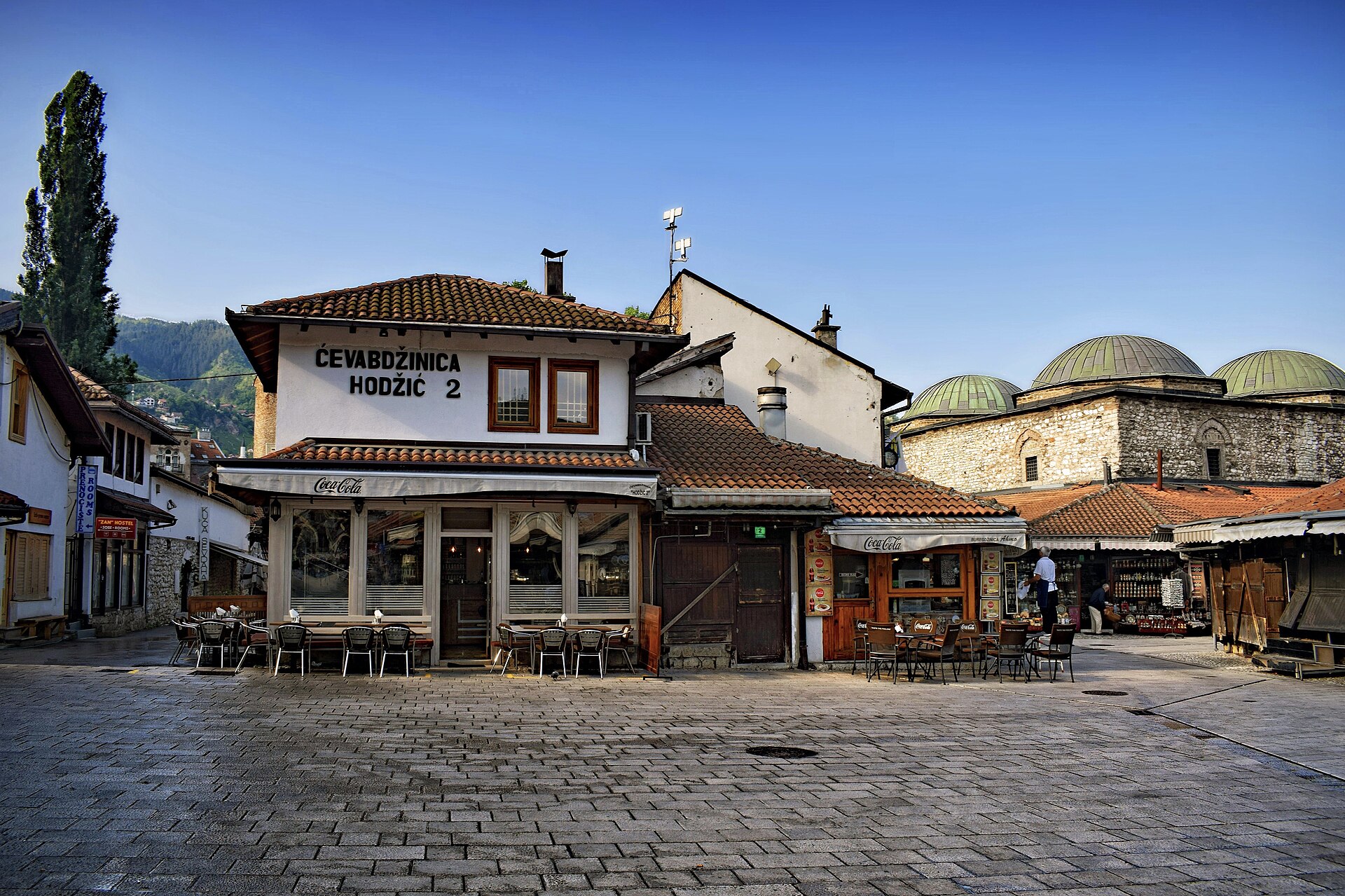
In Sarajevo, there is a street where history has quite literally drawn a line in the ground. Walking along the pedestrianised Ferhadija Street, you suddenly come across a compass rose set into the pavement, bearing the words “Sarajevo Meeting of Cultures”. Look east and you’ll see the low wooden buildings, cobbled lanes and domes of 16th-century Ottoman Baščaršija. Turn west and monumental, pastel-coloured façades from the Austro-Hungarian era rise before you.
This architectural meeting makes for a striking visual experience. The same historic encounter is reflected in the city’s food culture, where traditions from the east sit alongside Central European café elegance. Discovering Sarajevo through its flavours is like walking through centuries of cultural exchange, served in a round porcelain cup, wrapped in crisp filo pastry or poured into a frothy glass of beer.
The patient coffee ritual of the morning
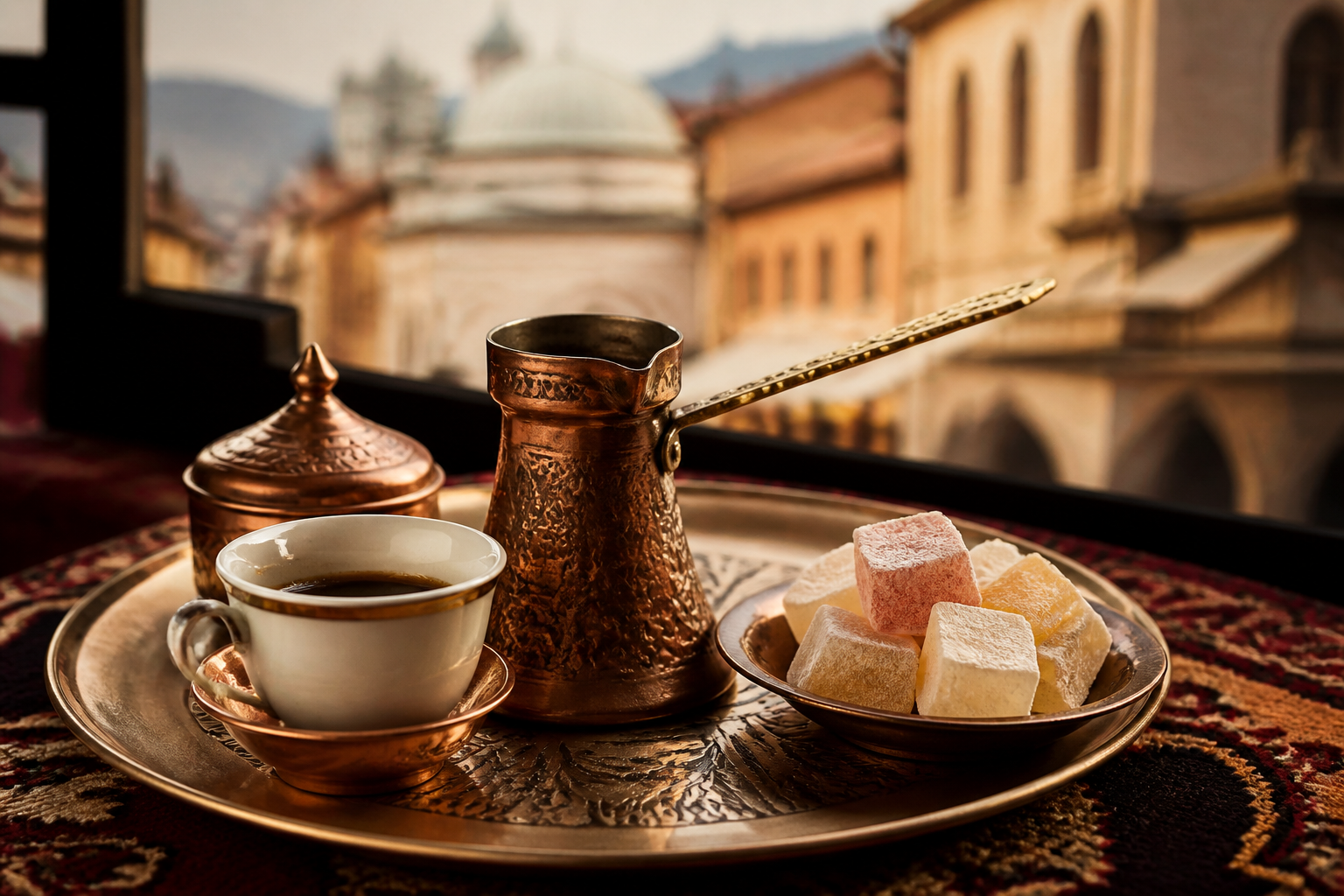
The best place to begin the day in Sarajevo is where the city was born: in the Ottoman lanes of Baščaršija. The scent of freshly ground coffee beans hangs heavily between the artisans’ workshops. But anyone in a hurry would do well to adjust their pace. Drinking traditional Bosnian coffee (bosanska kafa) is anything but a quick caffeine hit; it is a social ceremony that takes time.
Unlike Turkish coffee, the Bosnian version is made by first pouring boiling water into a traditional copper pot, a džezva, then adding finely ground coffee and heating it again until a thick, light-coloured foam rises to the rim. The coffee is then served on a round metal tray with a small glass of cold water, a small sugar cube and a piece of rahat lokum (Turkish delight).
Drinking the coffee takes a little technique. First, spoon some of the light foam, locally known as the foam collar, into the small porcelain cup (findžan). Then carefully pour in the coffee. If you want to sweeten your drink, you don’t stir the sugar directly into the cup. Instead, bite off a small piece of the sugar cube, place it under your tongue and let the strong, hot coffee filter through the sweetness with every sip. It is a moment of complete presence as the city slowly comes to life around you.
The crisp craft of the morning – burek done properly
As eleven o’clock approaches, the wood-fired ovens in the neighbourhood’s bakeries, known as buregdžinicas, reach their perfect temperature. It is time for the classic mid-morning meal that keeps the whole city going: pie.
In Bosnia and Herzegovina, there is a strict terminology that often confuses visitors. There are many different kinds of pie, locally called pita, made from thin, hand-rolled sheets of filo pastry that are filled, rolled into long lengths and coiled into round baking trays. But only one pie can be called burek – the one filled with seasoned minced beef.
Choose a pie filled with fresh cheese and it is called sirnica. If it is filled with spinach and cheese, it is called zeljanica, while one filled with seasoned potatoes is known as krompiruša. The pies are often baked beneath a heavy cast-iron lid covered with glowing embers, a traditional method called sač. This gives the pastry an irresistible crispness on the outside while keeping the filling juicy. The finished pies are cut into generous portions and are best served with a glass of runny, tart yoghurt to balance the rich pastry.
Sweet encounters between east and west
When the afternoon sun casts long shadows across the city’s squares, it is time to cross the invisible cultural boundary on Ferhadija Street. The contrast in atmosphere is reflected directly in the desserts.
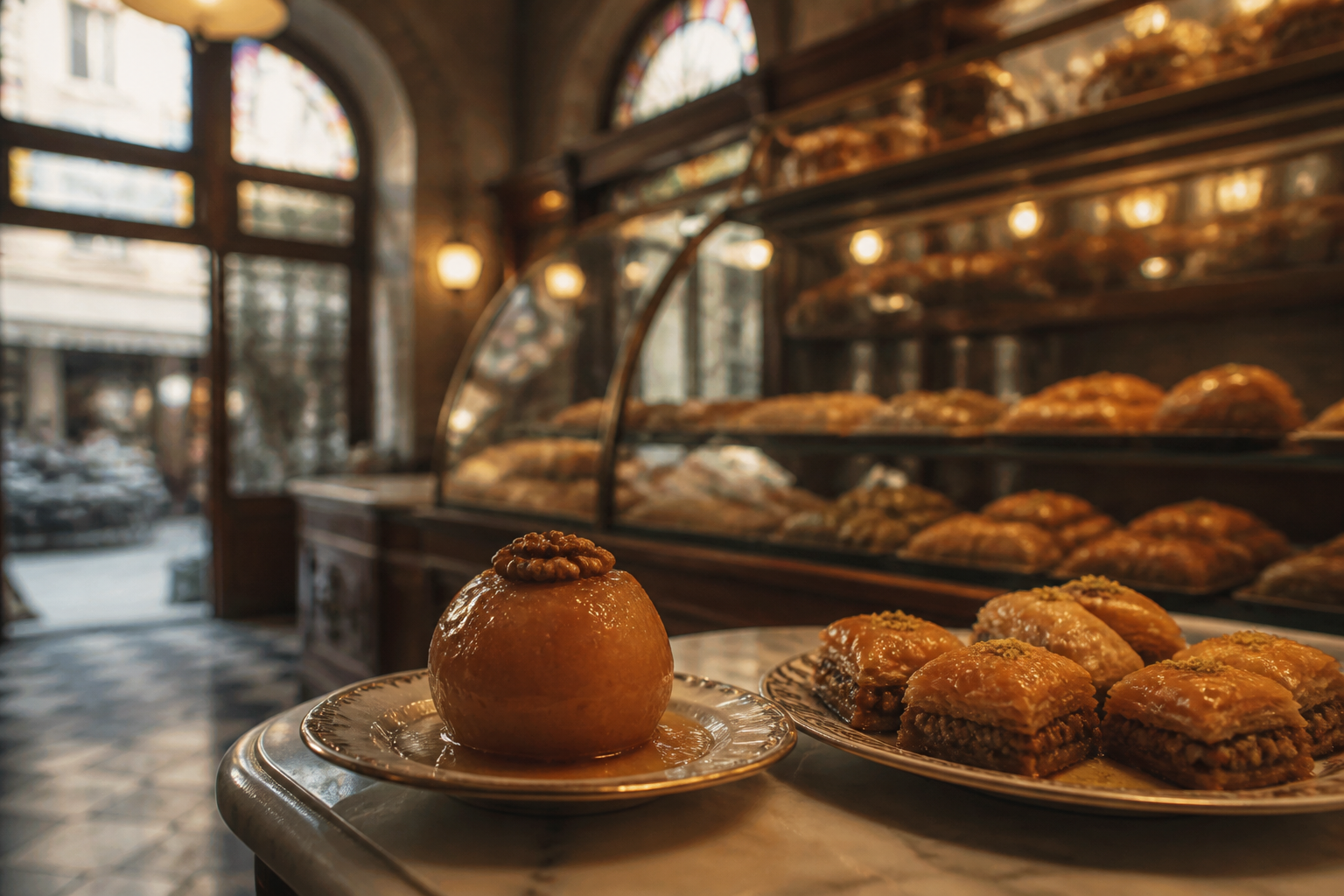
In the Ottoman quarters, honey-sweet baklava is everywhere, made with countless layers of wafer-thin pastry, filled with finely chopped walnuts and drenched in a lemon-flavoured sugar syrup. But anyone wanting to try a truly unique Bosnian dessert should order a tufahija.
This dessert is a little masterpiece of simplicity. A whole apple is peeled and cored, then gently simmered in sugar syrup until completely soft but still holding its shape. The apple is then filled with a cream made from ground walnuts, butter and sugar, before being topped with a generous cloud of whipped cream. It is a dessert that feels rustic and elegant at the same time, and is best enjoyed in one of the city’s classic cafés, where the Austro-Hungarian heritage lives on in the high ceilings.
Ćevapi – an unpretentious dinner classic
No culinary account of Sarajevo is complete without mentioning the city’s best-known dish. As evening approaches, the air fills with the distinctive smoke of the charcoal grills at the old town’s ćevabdžinicas. Here, they cook ćevapi, small, hand-rolled minced-beef sausages that have become synonymous with the region’s cuisine.
In Sarajevo, ćevapi are served with disarming simplicity. Forget chips, ajvar or other accompaniments that often find their way onto plates outside the country. Here, it’s all about the meat, bread and onion. The ćevapi are quickly grilled over high heat, retaining their juiciness.
What elevates the dish to an art form is the bread, somun. This exceptionally airy, flat bread is baked in wood-fired ovens at very high temperatures, making it puff up like a balloon in just a few seconds. Before serving, the bread is cut open and placed briefly on top of the meat on the grill. This steams the bread soft and lets it soak up the meat juices. The dish is served piping hot with a generous heap of finely chopped raw onion and a dollop of kajmak – a creamy, lightly salted dairy product that slowly melts over the meat. It is best eaten with your hands, straight from the greasy paper.
An evening at the historic brewery
Once dinner is over, head away from the narrow lanes. Cross the Miljacka River via the Latin Bridge – the place where Archduke Franz Ferdinand was shot on a summer’s day in 1914, an event that went on to redraw the map of Europe. Just a few minutes’ walk up the slope in the Bistrik neighbourhood stands one of the city’s most distinctive buildings: Sarajevska Pivara.
This monumental red-brick brewery was founded in 1864, during the final years of Ottoman rule, but was expanded and given its present palace-like architecture during the Austro-Hungarian period. During the city’s darkest times, particularly during the siege in the 1990s, the brewery’s deep underground water sources played a vital role in the survival of its residents.
Inside the vast brick building is a grand beer hall with high ceilings, dark wood panelling and balconies that call to mind the classic beer cathedrals of Central Europe. Today, locals from Sarajevo and visitors alike gather here to drink a Sarajevsko pivo. With its historic heritage, warm atmosphere and the hum of conversation beneath the heavy chandeliers, it is a lovely place to round off a day in a city defined by fascinating contrasts.
Facts
A food guide to Sarajevo
- Bosanska kafa: Traditional coffee prepared in a copper pot (džezva) and served with rahat lokum (Turkish delight).
- Burek: Crisp filo pastry pie filled with seasoned minced beef. Other pita (pies) are named after their fillings, such as sirnica (cheese) and zeljanica (spinach).
- Somun: The exceptionally airy, stone-baked bread that is an essential accompaniment to ćevapi.
- Kajmak: A creamy, lightly salted dairy product with a texture somewhere between cream cheese and butter.
Sources & further reading
- sverigesradio.seSkotten i Sarajevo 100 år senare | P1 Kultur Reportage
- so-rummet.seSkotten i Sarajevo | Historia
- historia.nuSkotten i Sarajevo den 28 juni 1914
- guides.loc.govBosnian Newspapers in the Library of Congress: Introduction
Share the article
Translated from Swedish with AI assistance. Read the original.


