
Beyond Dubrovnik’s Walls: The Wine Route Putting Herzegovina on Europe’s Map
Just a couple of hours’ drive from Croatia’s busy beaches and Dubrovnik’s narrow lanes lies a completely different world. In Herzegovina’s rolling limestone landscape, wines are being made in a region that has recently received the Council of Europe’s official recognition as one of the continent’s most exciting cultural routes. Join us on Herzegovina’s wine route – a journey among ancient grapes, family-run cellars and a new generation challenging Europe’s wine elite.
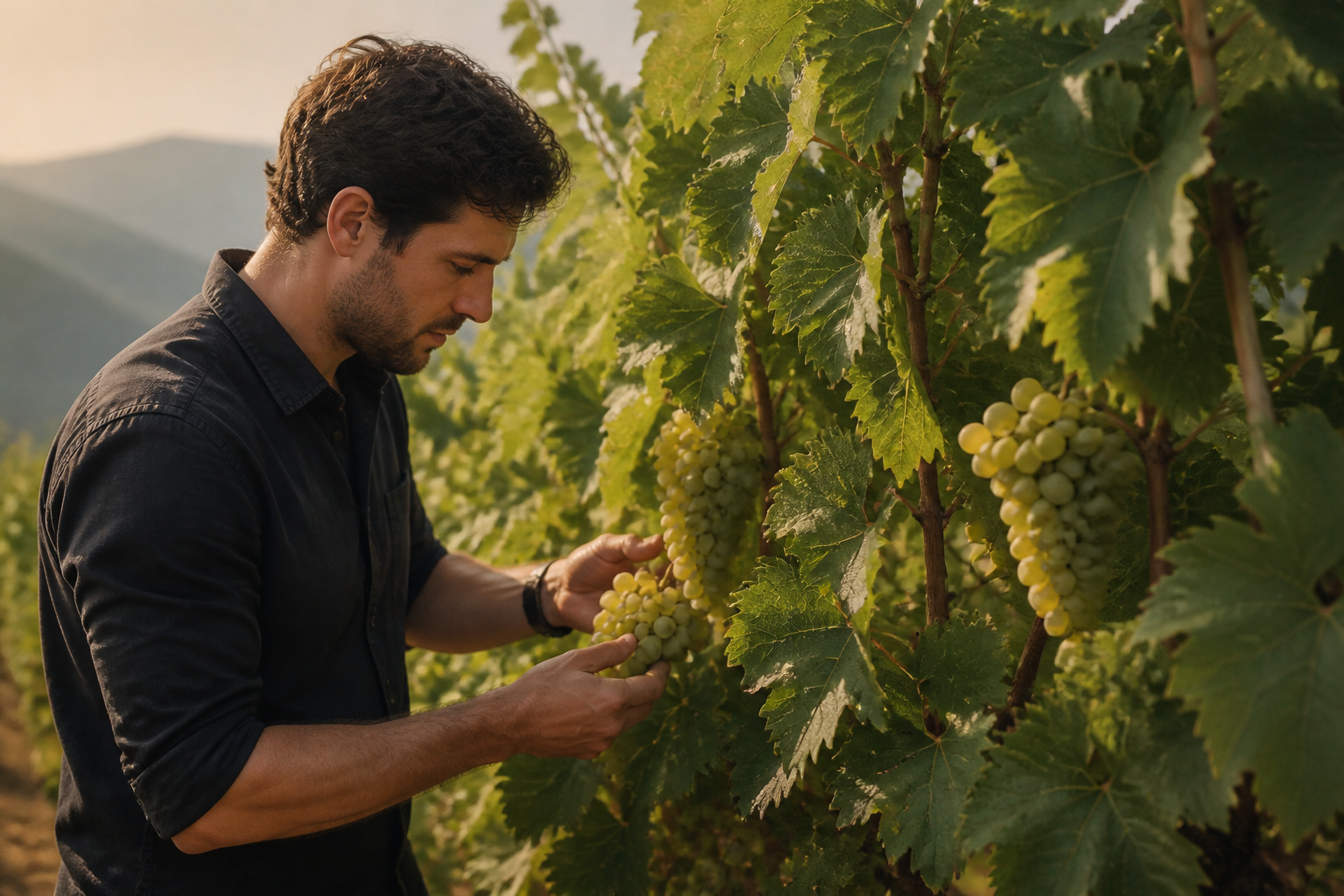
Most Nordic travellers heading to south-eastern Europe make for Croatia’s glittering coastline. They fill Dubrovnik’s medieval lanes and sunbathe on the pebble beaches of Makarska, often unaware that one of the continent’s most authentic and historic wine regions lies just a stone’s throw away, on the other side of the Bosnian border.
As you turn off the coast and drive inland, the landscape changes quickly. The damp sea air gives way to an intense, dry heat that shimmers above Herzegovina’s rugged limestone mountains. Here, in a dramatic landscape shaped by sun, stone and emerald-green rivers such as the Neretva, wine has been cultivated for thousands of years. Now this hidden wine tradition has finally received the international recognition it deserves. Vinska cesta Hercegovine – Herzegovina’s wine route – has become a member of Iter Vitis, a European cultural route certified by the Council of Europe.
Iter Vitis – the Balkans’ new cultural route
Inclusion in Iter Vitis is more than just a feather in the cap for local winemakers. The Council of Europe’s certification aims to showcase wine regions where landscape, history and cultural heritage come together to form a unique whole. For Herzegovina, it means a welcome spotlight on a wine culture that has survived the fall of empires, wars and decades of industrial mass production during the Yugoslav era.
Along the wine route, which stretches from Mostar in the north to Trebinje in the south, the journey is as much about cultural heritage as what is in the glass. The roads wind past Ottoman stone bridges, medieval burial sites – known as stećci – and ancient monasteries. It is a living cultural route where the craftsmanship of the Old World meets a new generation of visionaries determined to put their own unique grape varieties on the world map.
Grapes that tell the story of their terroir
What makes Herzegovina a fascinating destination for wine lovers is its almost exclusive focus on indigenous grape varieties. Here, there is no attempt to imitate French classics; instead, local grapes are allowed to speak for their unique terroir of limestone and Mediterranean sunshine.
The queen of Herzegovina’s wine landscape is called žilavka. Her name comes from the word žila (vein), referring partly to the fine veins visible on the ripe grape skin, but above all to the grape’s extremely deep root system. Žilavka is a survivor. Its roots bore deep into the dry, stony soil to find water in fissures far below the surface. The result is a white wine with an intense character. A classic žilavka is golden yellow, full-bodied and distinctly mineral. It carries aromas of yellow apples, peach and wild herbs such as sage and rosemary, often with a subtle note of bitter almond on the finish.
The king at her side is the blue grape blatina. Blatina has a botanical peculiarity that makes it both loved and feared by winemakers: it has only female flowers. This means the grape cannot self-pollinate. For it to produce any grapes at all, blatina must be planted alongside other varieties that flower at the same time, usually trnjak or vranac, so that bees can take care of pollination. If the weather is unfavourable during the short flowering period, there is no harvest at all, giving rise to the local nickname “the empty-pocket grape”. But when nature cooperates, blatina produces wonderful wines. They are ruby-red, elegant and velvety, with balanced acidity and notes of dark cherries, plums and spices.
In recent years, the blue grape trnjak, which historically served mainly as a pollinator for blatina, has also emerged as a star in its own right. Winemakers have realised that trnjak can produce deeply coloured, powerful, tannic wines on its own, with great ageing potential and packed with dark fruit and liquorice notes.
From monastic cellars to natural-wine pioneers
Travelling along the wine route means being swept between different worlds and philosophies. In the small town of Čitluk, you will find Josip Brkić at the Brkić winery. He is the region’s undisputed pioneer of biodynamic winemaking. Brkić sees his vineyards as a living cosmos and works with minimal human intervention. His flagship wine, “Mjesečar” (Moonwalker), is an amber-coloured, skin-macerated žilavka (a so-called orange wine), made entirely without added sulphur and aged in local Bosnian oak barrels in step with the phases of the moon. It is a wine that challenges the senses and demonstrates the grape’s enormous range.
Further south, near the town of Ljubuški, producer Nuić offers a completely different aesthetic. The family has literally blasted away tonnes of limestone to create rolling amphitheatres of vineyards. Nuić is a modern, high-tech operation producing razor-sharp, elegant wines with a strong international focus, particularly from the trnjak grape. In the same area, the small family-run boutique winery Škegro shows that great things can be achieved on a small scale. Its “Krš” wine range (meaning karst in the local language) is a pure tribute to the stony soil, with a minerality you can almost touch.
If you continue east towards the town of Trebinje, near the Montenegrin border, the powerful blue grape vranac dominates. Here you will find the Serbian Orthodox monastery of Tvrdoš. The monks at Tvrdoš have made wine in their cool stone cellars since the 15th century. Today, old traditions are combined with modern technology, and their oak-aged vranac is known for its complexity, with deep notes of blackberry, chocolate and roasted coffee. Not far away is Vukoje, one of the country’s most award-winning producers. Among other things, Vukoje manages the historic imperial vineyards (“Carski Vinogradi”), originally established under the Austro-Hungarian Monarchy in the late 19th century to supply the court in Vienna with Herzegovinian wine.
Eno-gastronomy: the taste of Herzegovinian hospitality
No Herzegovinian wine should be enjoyed without food, and in this region the cuisine is deeply rooted in the rugged landscape. The local cooking is simple, honest and driven by its ingredients – a perfect reflection of the terrain.
A meal almost always begins with a Herzegovinian meza. The platters are crowded with thin slices of air-dried ham (pršut), sun-ripened figs and the unique delicacy sir iz mijeha – a cheese aged inside an entire sheepskin for up to three months. This method gives the cheese an intense, crumbly texture and a powerful, herby aroma. A crisp, well-chilled žilavka is the perfect partner: its fresh acidity and minerality cut through the cheese’s saltiness and fat beautifully.
When it is time for the main course, meat takes centre stage. The most traditional method of cooking is peka (also known as sač). Veal, lamb and potatoes are placed in a round cast-iron pan, covered with a heavy metal bell and buried under glowing embers for several hours. The meat becomes so tender it falls apart at the touch, infused with flavours from the wild herbs growing on the surrounding mountains. A dish like this calls for a wine with backbone. A well-aged blatina, with its soft, velvety tannins and dark-berry notes, takes the dish to a new level without overwhelming the subtle flavours of the meat.
For a lighter meal, the region’s rivers, such as the icy-cold Bunica or Trebišnjica, offer wonderful fresh trout. Grilled over an open fire with a little olive oil and garlic, it makes a sublime pairing with a younger, fruitier žilavka.
A journey beyond the familiar
Travelling along Herzegovina’s wine route is about daring to venture beyond the well-trodden tourist trail. It is a region where hospitality still feels spontaneous and genuine. Often, it is the winemaker themselves who greets you at the door, shows you around the oak barrels and pours the wine with earth-stained hands.
The European recognition through Iter Vitis marks the beginning of a new chapter for the region. For Nordic travellers looking for authenticity, unique flavours and spectacular natural experiences, it is high time to pack a bag. Herzegovina is no longer just a day trip from Croatia – it is a destination in its own right.
Facts
HERZEGOVINA’S WINE ROUTE – GOOD TO KNOW
- Geography: The wine route extends across several municipalities in southern Bosnia and Herzegovina, with the towns of Mostar, Čitluk, Ljubuški and Trebinje as natural starting points.
- Climate: A typical Mediterranean climate, with hot summers and mild, rainy winters. The stony limestone soil reflects the heat and gives the wines a pronounced minerality.
- Getting there: The nearest international airports are in Split and Dubrovnik in Croatia, as well as Sarajevo and Mostar in Bosnia and Herzegovina. It is easy to hire a car and drive across the border (check in advance that the rental company allows cross-border travel).
Share the article
Translated from Swedish with AI assistance. Read the original.


