
Between minarets and mountain peaks – how Sarajevo became a weekend favourite of contrasts
Few cities in Europe bring urban buzz and wild nature together as effortlessly as Sarajevo. Here, you can step straight out of the Ottoman alleyways, take the cable car up into the mountains and, twenty minutes later, stand on a rocky outcrop looking out over the city’s rooftops.
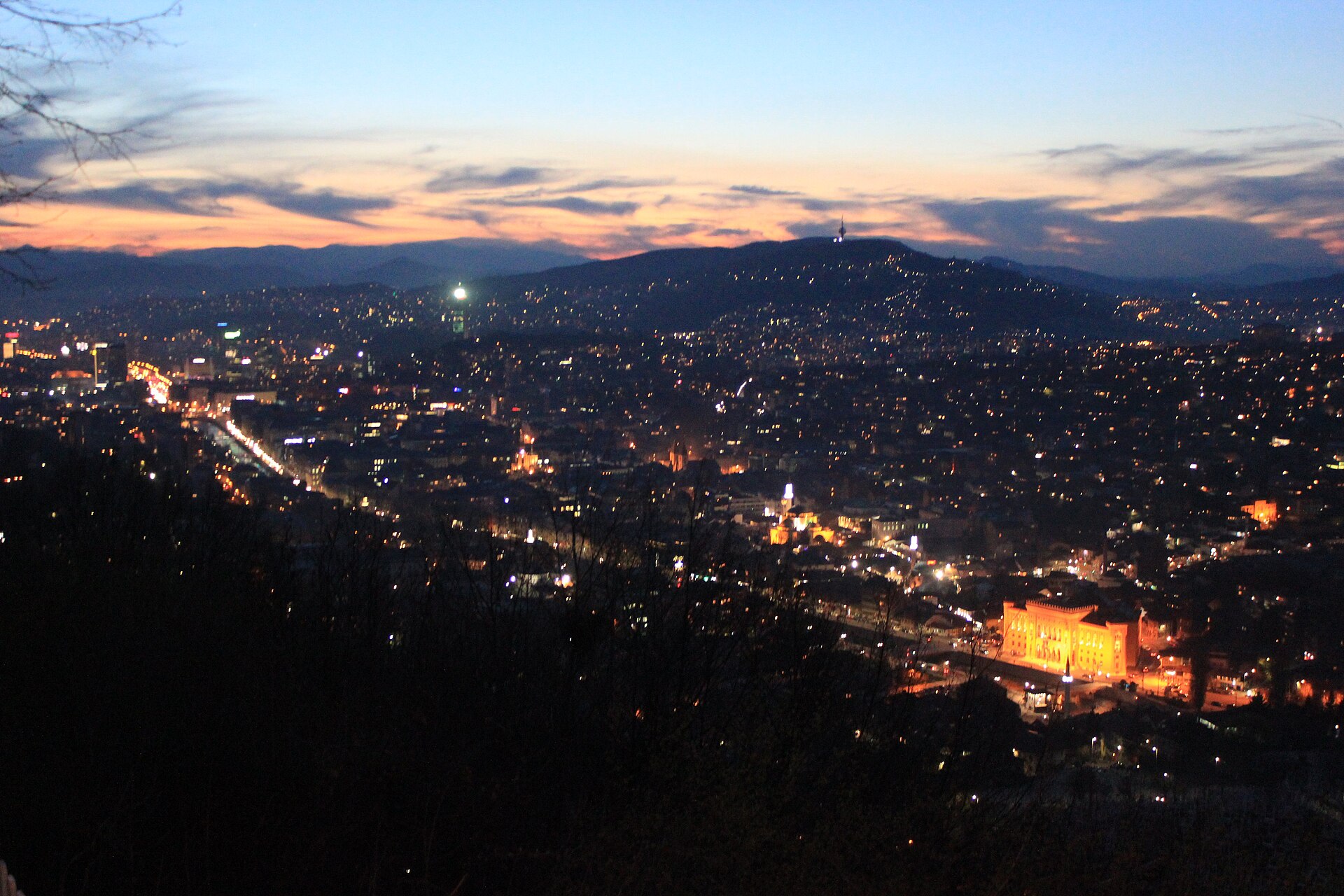
The smell of freshly ground coffee mingles with smoke from grills where thin breads are filled with ćevapi. It is mid-morning in Baščaršija, Sarajevo’s old Ottoman quarter, where the cobblestones have been polished smooth by feet over the centuries. But what truly defines the capital of Bosnia and Herzegovina is not just its historic centre. It is what happens when you look up. Wherever you turn in the city, steep green mountainsides frame the valley through which the Miljacka flows.
Few European cities offer the same immediate closeness to wild nature. In twenty minutes, you can go from a bustling square to quiet pine forests and alpine peaks.
The cable car to Trebević
The easiest way to swap the city’s pace for mountain scenery is to take the cable car straight from the old quarter. Within minutes, the city noise fades as the gondolas glide up towards Mount Trebević. This was one of the main venues during the 1984 Winter Olympics, and the ruins of the famous bobsleigh and luge track are still here. Today, the concrete structure has been taken over by graffiti and moss, and the track has become a popular walking route and a living work of art in the middle of the forest.
Trebević offers spectacular panoramic views over Sarajevo’s rooftops, mosques and church towers. Up here, you’ll find hikers, runners and families seeking the cool mountain air, especially during the hottest months of summer.
Bjelašnica – the mountain of rugged heights
For those looking for a more alpine challenge, Mount Bjelašnica lies just twenty minutes southwest of Sarajevo, directly next to Mount Igman. Bjelašnica is the highest of Sarajevo’s Olympic mountains, rising 2,067 metres above sea level.
The mountain is defined by dramatic contrasts. Its lower slopes are densely forested, but at around 1,500 metres you pass the tree line. Beyond it lies a rugged, almost lunar landscape. Local mountaineering clubs maintain an extensive network of hiking trails leading up to the bare peaks. In winter, Bjelašnica becomes one of the country’s most popular ski areas, but in summer and autumn, hiking boots are the way to explore its wind-swept heights.
Jahorina and Igman: Olympic trails and pine forests
Just east of Trebević lies Jahorina, the second-highest mountain around Sarajevo at 1,913 metres. Like the other mountains, Jahorina has a strong Olympic heritage, and today it is a modern ski resort with more than 40 kilometres of pistes. During the snow-free part of the year, the mountain offers a wonderful setting for hiking. The ski lifts, which take visitors up to 1,894 metres, offer sweeping views towards Sarajevo. Jahorina’s slopes are covered in stately pine forests up to 1,500 metres, where the forest thins out and gives way to the distinctive low-growing alpine pine known as klek.
On the other side of the city, we find Igman, which, at 1,502 metres at Crni vrh, is the lowest of the Sarajevo mountains. Igman borders Bjelašnica and the suburb of Ilidža, where the springs at Vrelo Bosne create a lush parkland where the Bosna river begins. During the 1984 Olympics, Igman was at the heart of the Nordic events; the ski jumps at Malo Polje and the cross-country trails at Veliko Polje drew the world’s top athletes. Although the trails and facilities on Igman still bear visible marks and scars from the war of the 1990s, nature has slowly begun to reclaim the area, and the mountain is once again a haven for outdoor pursuits.
Food as a restorative in the city
After a day in the mountains, you naturally find yourself drawn back to the valley and Sarajevo’s rich food culture. Bosnian cuisine is made for replenishing your energy after physical exertion.
In the old craftsmen’s quarter, you’ll find traditional restaurants serving slow-cooked dishes such as bosanski lonac (a hearty meat and vegetable stew) or stuffed vegetables such as sogan-dolma. But the city is most closely associated with its ćevapi – grilled minced-meat rolls served in freshly baked somun bread with kajmak and chopped onion. For something quick and filling, burek, the flaky pastry filled with meat, is an obvious choice.
Ending the day in Sarajevo takes time. Bosnian coffee culture is not something to rush. Coffee is served in traditional copper pots, džezva, alongside a piece of turkish delight (rahat lokum) and a glass of water. It is a ritual best enjoyed at one of the city’s many outdoor cafés, as the shadows slowly lengthen over the surrounding mountains.
Facts
SARAJEVO’S MOUNTAINS AT A GLANCE
- Bjelašnica: Sarajevo’s highest Olympic mountain (2,067 m). Located 20 minutes southwest of the city, it is known for hiking and, in winter, downhill skiing.
- Jahorina: The second-highest mountain (1,913 m), with lifts up to 1,894 metres, more than 40 kilometres of ski pistes and hiking trails.
- Trebević: Rises just beside the city and is easily reached by cable car from the old quarter. The old Olympic luge track is here.
- Igman: Sarajevo’s lowest mountain (1,502 m), with the Olympic ski jumps at Malo Polje and cross-country skiing trails at Veliko Polje.
Sources & further reading
- thebosnianpyramid.comTOUR OF THE MOUNTAINS - Bjelasnica, Igman, Trebevic ...
- stay.baSki Sarajevo: Plan Jahorina and Bjelašnica in One Trip
- bosnia-spirit.comJahorina vs Bjelašnica — which ski resort near Sarajevo?
Share the article
Translated from Swedish with AI assistance. Read the original.


