
Art Under Fire: How Sarajevo’s Crises Are Shaping the Swedish Filmmakers of the Future
Ahead of the launch of a brand-new film directing programme in 2029, Lund University is looking beyond traditional Nordic networks. Through an exchange with the Academy of Performing Arts in Sarajevo, Swedish educators hope to return art to its most urgent core – where storytelling is not a career choice, but a vital necessity.
It is a grey morning at the Centre for Languages and Literature (SOL) in Lund. The corridors smell of filter coffee and damp woollen coats, and conversations drift quietly between the bookshelves. Here, in the academically orderly region of Skåne, plans are currently underway for a new artistic milestone. In 2029, Lund University, through the Malmö Theatre Academy, is set to open the doors to a brand-new film directing programme.
But anyone who thinks the curriculum will only be shaped by Western European theories and Nordic realism is mistaken. The answer to how tomorrow’s Swedish directors will find their voice is being sought a thousand miles to the south, in a city where art was once the final line of defence against total destruction.
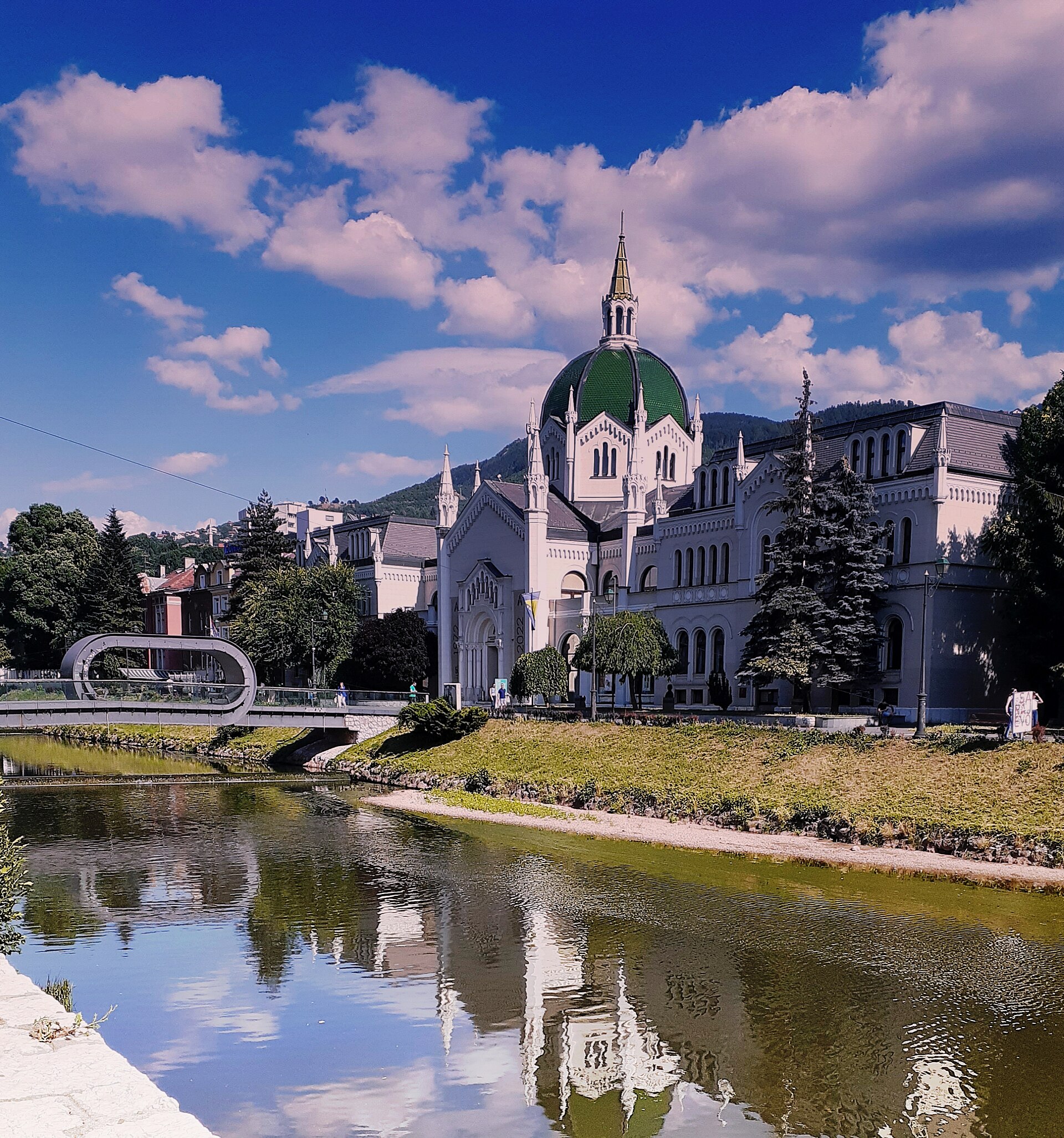
Through the EU's Erasmus+ programme, a delegation of Swedish theatre and film educators has established a deep collaboration with the Akademija scenskih umjetnosti (ASU) – the Academy of Performing Arts – in Sarajevo. It is an encounter between two diametrically opposed educational cultures, but also a conscious effort to inject a lost artistic nerve into the Swedish educational model.
The Bridge Builders Between Lund and the Miljacka
The idea of crossing Scanian academic structure with Bosnian artistic intensity has grown out of an awareness that contemporary Swedish storytelling sometimes suffers from a certain complacency. Fredrik Haller, a director and senior lecturer at the Malmö Theatre Academy, has been one of the driving forces behind the study visits to the Bosnian capital. Together with colleagues, he has wanted to examine what happens when the focus is shifted from pure technical craftsmanship to the actual urgency of the story.
A key figure in this intellectual bridge-building is the historian and author Santino Resic, who works at Lund University. With his deep knowledge of Balkan history and culture, he has served as a link between the two worlds. Resic often points out how tightly interwoven the past and present are in Bosnian cultural life. In Sarajevo, history is not something left behind; it is the raw material with which every new generation of artists must engage.
As the Swedish educators walk along the Miljacka river, where ASU’s modest yet legendary premises are located, they encounter a reality very different from the sheltered existence that characterises Lund University. Here, resources are scarce, but the artistic drive is monumental.
The Creative Nerve on the Banks of the Miljacka
The academy in Sarajevo has nurtured some of the region’s very finest filmmakers and actors. At the helm of many of the artistic discussions is Haris Pašović, one of Bosnia’s most influential theatre and film directors, and a professor at ASU. Pašović, who throughout his life has moved seamlessly between international stages and the local academy, embodies the uncompromising attitude to artistic creation that the Swedish educators wish to understand and, in part, import.
Fredrik Haller emphasises that in Sarajevo, no sharp distinction is made between film and theatre; instead, the method of storytelling is absolutely central.
This focus on storytelling has deep roots. It was during the darkest years of the city's modern history that ASU's pedagogy was forged.
War Memory as Cinematic Pedagogy
To understand the artistic intensity in Sarajevo, one must wind back the clock to the 1990s. During the 1,425-day siege of Sarajevo, ASU never closed its doors. While shells fell on the rooftops and snipers dominated the streets, students and teachers continued to gather in basements. They rehearsed plays, read poetry, and filmed what was happening outside the windows.
It was during this period that Haris Pašović, in the midst of war, organised the legendary theatre festival and laid the foundations for what would later become the Sarajevo Film Festival. It was not a luxury or a distraction for the starving population; it was an act of resistance. Showing films and staging plays was a way to maintain humanity and refuse to be reduced to victims.
This experience has forged a unique pedagogical tradition at ASU. The memory of the war is not merely a trauma to be processed, but a cinematic method. It has taught generations of Bosnian filmmakers to work under extreme conditions, to trust raw acting performances, and to understand the camera as a tool for both testimony and survival. For the Swedish students and teachers visiting the city, this serves as a valuable reminder of what art can be when all safety nets are gone.
The Encounter and Clash of Two Educational Cultures
However, the collaboration is not entirely without friction. Bringing together the Swedish and Bosnian models also means a clash between two different approaches to education.
The Swedish higher education model is largely characterised by flat structures, student influence, rigorous work environment regulations, and a strong belief in consensus. It is a safe and democratic environment, but critics argue that it can sometimes dilute artistic edge.
At ASU in Sarajevo, the tradition is more authoritative and hierarchical, deeply rooted in the Central European master-class culture. Here, the professor is expected to be an artistic leader whose word carries significant weight, and students are subjected to direct, sometimes merciless criticism of their work. It is a tough school, but it also fosters immense craftsmanship and a resilience to adversity.
The challenge for Lund University ahead of 2029 will be to strike a balance. How can they integrate Sarajevo's intensity, its focus on urgent storytelling, and its respect for artistic gravity, without sacrificing the democratic values and safety nets on which the Swedish higher education system relies?
Urgent Storytelling
Once the new film directing programme in Skåne launches, the collaboration with ASU will be an integral part of its DNA. The intention is for the Erasmus exchanges to continue, with an ongoing flow of teachers and students between Lund, Malmö, and Sarajevo.
The hope is that Swedish students will return from the banks of the Miljacka with a fresh perspective on their own creative work. Not so that they can replicate Bosnian war history – every artist must find their own conflicts – but so that they learn to treat their own stories with the same gravity and respect.
In an era where the film industry is often driven by algorithms, target audience analyses, and safe bets, the salvation of artistic Swedish cinema may well lie in the experiences born in Sarajevo’s basements. The encounter between Lund’s academic rigour and Sarajevo’s existential fire could be exactly the injection that Nordic filmmaking needs to dare to take real risks once again.
Facts
The Exchange and the New Programme
- The collaboration: Takes place within the framework of the EU's Erasmus+ exchange programme and involves the Malmö Theatre Academy (part of the Faculty of Fine and Performing Arts at Lund University) and the Academy of Performing Arts (ASU) in Sarajevo.
- Historical connection: ASU was founded in 1981 and, during the siege of Sarajevo (1992–1996), became a focal point for cultural resistance, led by figures including Haris Pašović.
- The future: Lund University plans to launch a brand-new film directing programme in 2029, where experiences from the collaboration with Sarajevo will be integrated into the curriculum.
Sources & further reading
Share the article
Translated from Swedish with AI assistance. Read the original.


