
A View Between Two Worlds: Director Goran Kapetanović’s Journey from Sarajevo to Swedish Film
He fled the war at the age of 17 and found a new home in Sweden. Today, director Goran Kapetanović is one of the most acclaimed voices in the Swedish film and television industry, telling stories that build a living bridge across the Adriatic.
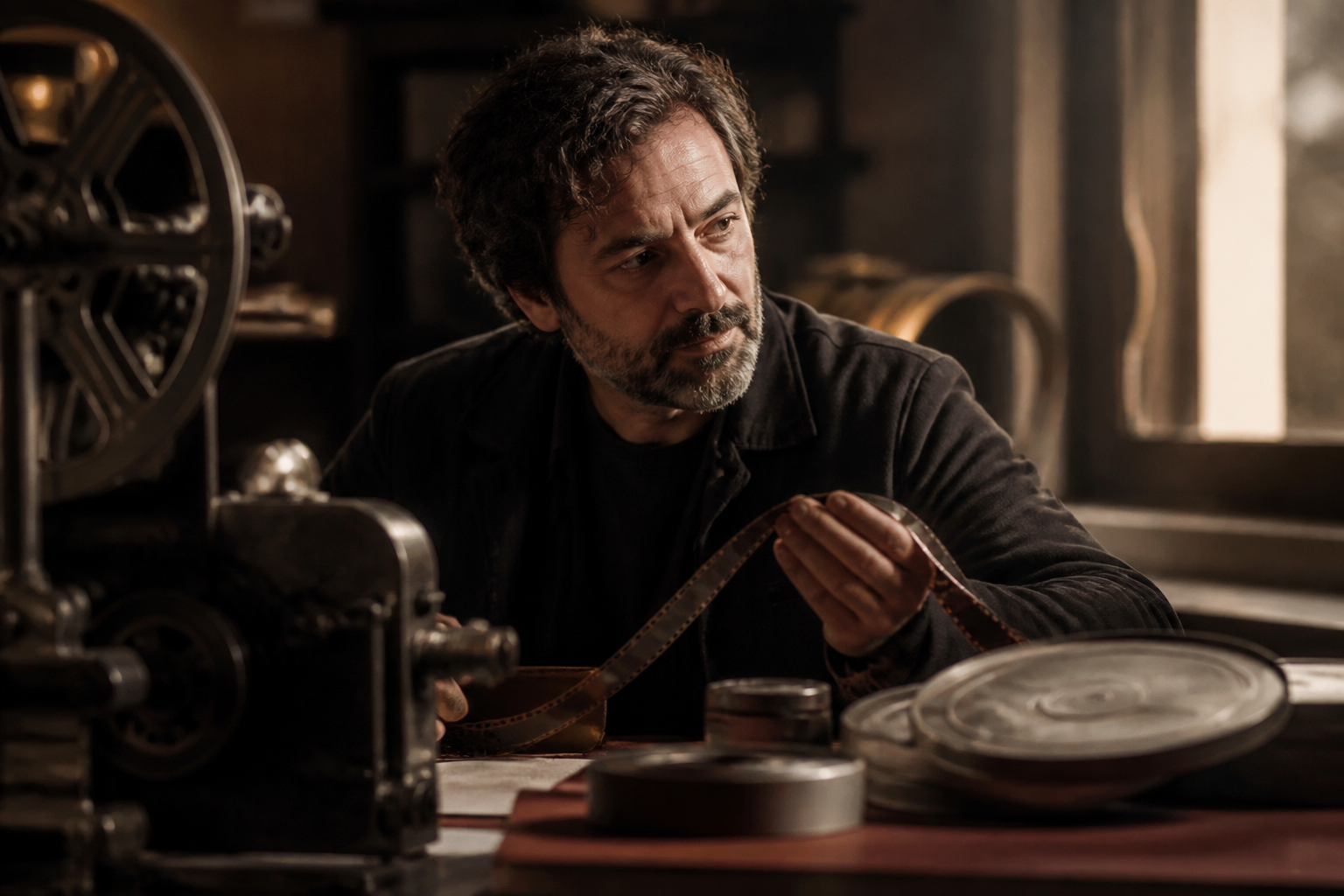
When a young person is forced to leave their home city in the midst of a war breaking out, the experience leaves marks that never entirely fade. For Goran Kapetanović, born in Sarajevo in 1974, fleeing to Sweden in 1991 marked the beginning of a completely new path in life. At 17, he encountered a new country, a new language and, eventually, a new way of expressing himself: through the lens of a film camera.
Today, Kapetanović is one of the most respected names in Swedish screen culture. His ability to portray complex human destinies and fragile relationships has made him a leading voice in contemporary Swedish cultural life.
From Sarajevo to Stockholm’s film scene
His path to the top of Swedish cinema began with academic studies. Between 2001 and 2004, Kapetanović studied directing at Stockholm University of the Arts. This was where he laid the foundations for a craft that would later earn him both national and international awards. Since graduating, he has not only worked behind the camera but also supported the next generation of filmmakers, and today is a senior lecturer at Malmö Theatre Academy.
His early work bears witness to a director with a sharp eye for personal drama. Short films such as Eko and En familj showed early signs of his talent for capturing everyday situations charged with emotion. But it was by turning to his own roots that he would truly reach a wide audience.
Filming what is difficult and personal
In films such as Flykting 532 (2015), and especially the acclaimed Min faster i Sarajevo (2016), Kapetanović weaves together his experiences of two worlds. He explores the difficulties of living in exile, carrying memories of war and at the same time trying to build a new life in the Nordic countries. Min faster i Sarajevo was a major success and won the Guldbagge Award for Best Director in 2016.
The films achieve the remarkable feat of making the deeply personal universal. For Swedish cinema audiences, the stories offered an important key to understanding the pain and challenges carried by many in the Swedish-Bosnian diaspora. At the same time, they revealed a rare warmth and a tone that refused to be confined to darkness alone.
A master of suspense
In recent years, Kapetanović has moved on to major television productions without losing his characteristic sensitivity. The thriller series Kalifat (2020) became one of SVT’s biggest successes in modern times, both in Sweden and internationally. Through its depiction of radicalisation and human desperation, the director once again demonstrated his unique ability to handle difficult and charged subjects.
Following the success of Kalifat, he directed the drama series Knutby (2021), a production that cemented his status as one of the country’s most accomplished thriller directors. Whether a story is set in a small-town Swedish congregation or on the streets of Sarajevo, Kapetanović manages to find its human core. It is precisely this perspective—shaped by two cultures and sets of experiences—that makes his bridge-building filmmaking so distinctive.
Facts
Goran Kapetanović
- Born: 12 December 1974 in Sarajevo, then part of Yugoslavia.
- Background: Fled to Sweden in 1991 at the age of 17.
- Education: Directing programme at Stockholm University of the Arts (2001–2004).
- Current role: Works as a director and senior lecturer at Malmö Theatre Academy.
- Selected works: Kiruna-Kigali (2012), Flykting 532 (2015), Min faster i Sarajevo (2016), Krig (2017), Kalifat (2020), Knutby (2021).
- Awards: The Guldbagge Award for Best Director (2016, for Min faster i Sarajevo) and more than 20 international film awards.
Sources & further reading
- sv.wikipedia.orgGoran Kapetanović
Share the article
Translated from Swedish with AI assistance. Read the original.


