
Winding roads and border crossings – how to get car hire right in Montenegro
Driving in Montenegro is one of the most spectacular road experiences Europe has to offer. But its dramatic geography and location outside the EU place particular demands on anyone hiring a car. From hidden insurance clauses and the vital Green Card to breathtaking hairpin bends and border queues, here’s the complete guide to a safe driving holiday in the Balkans.
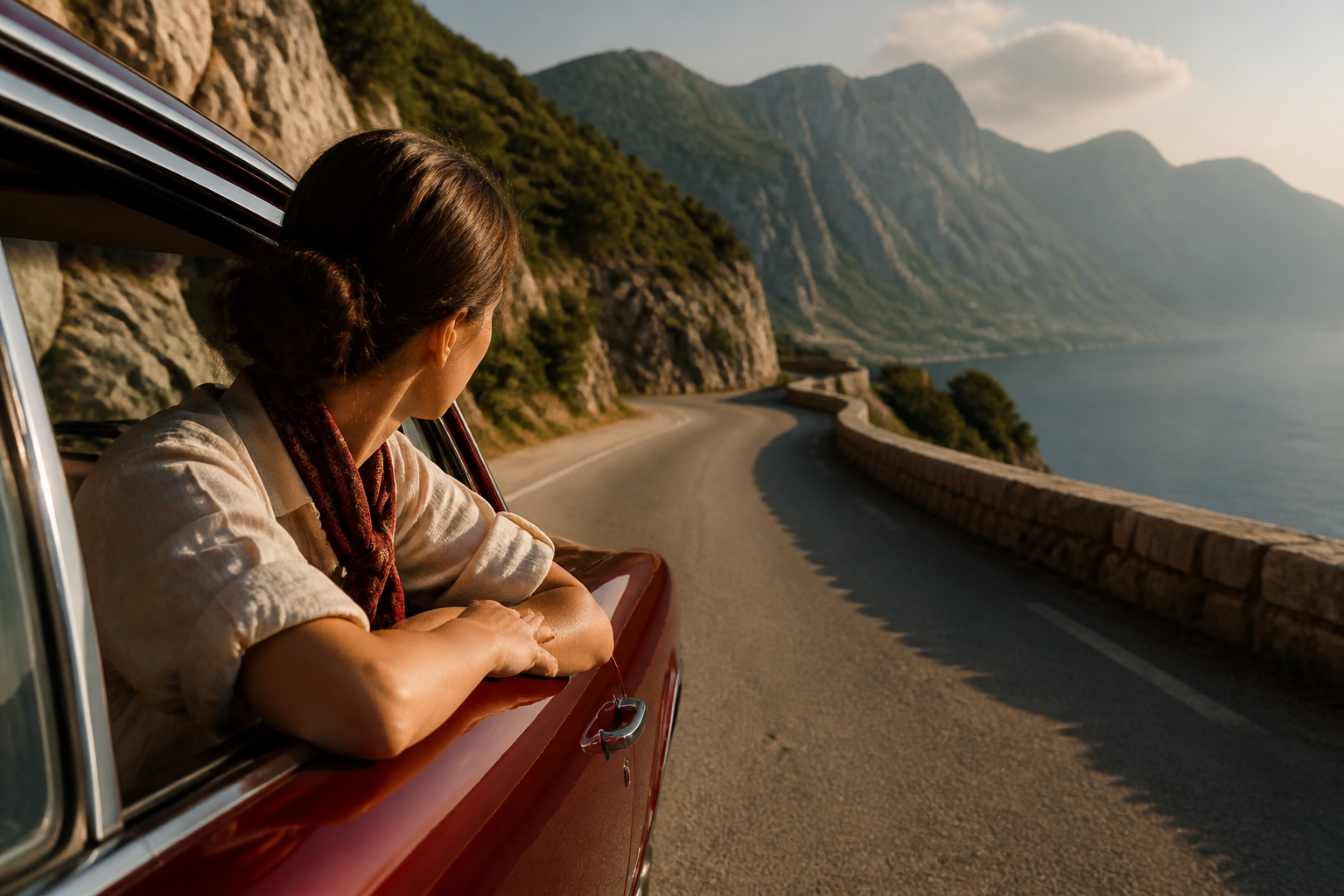
Montenegro is made for a road trip. Its modest size makes it possible to swim in the Adriatic Sea in the morning and hike among the snow-covered peaks above 2,000 metres in Durmitor National Park in the afternoon.
Many Nordic travellers choose to fly to Podgorica or Tivat airport, or to Dubrovnik Airport in neighbouring Croatia, to start their road trip. But navigating Montenegro’s roads takes more than an up-to-date satnav. The driving culture, administrative rules at the borders and physical road conditions differ significantly from what we are used to in the Nordic countries.
A Balkan border adventure: how the “Green Card” works
If you plan to fly to Dubrovnik Airport in Croatia and drive across the border into Montenegro, it is important to check in advance with the rental company which documents and insurance are required for cross-border travel. One of the most commonly requested documents is the so-called Green Card (zelena karta). This is an international insurance certificate showing that the rental car has valid third-party insurance outside the EU. Montenegro is not an EU member, which means that standard Croatian or European rental-car insurance does not automatically cover you there.
When booking a rental car in Croatia, tell the rental company explicitly that you plan to cross the border. The company will then charge a cross-border fee and provide you with the physical Green Card. Without the document, you risk being stopped at the Montenegrin border and having to buy local border insurance on the spot.
The most common crossing from Croatia is Debeli Brijeg, near Herceg Novi. During the peak season (July–August), expect queues of one to two hours. One tip is to use the smaller crossing at Kobila (Vitaljina), which is often much quieter.
Planning to drive on from Montenegro to other neighbouring countries? Check carefully that your Green Card also covers Albania (if you cross via Sukobin or Hani i Hotit) or Bosnia and Herzegovina (via Šćepan Polje, for example). The border crossing north into Serbia is usually via Dobrakovo. Thanks to the relatively new Pelješac Bridge in Croatia, you can now avoid the Bosnian Neum Corridor if you are driving only along the Croatian coast. But as soon as Montenegro is on your route, the Green Card is an absolute requirement.
Insurance traps: what CDW actually covers
A basic collision damage waiver, usually called CDW, is almost always included when you book a rental car. However, it is important to understand that CDW rarely means you are fully covered. There is almost always an excess, which can range from €500 to €2,000 depending on the car class and rental company.
Roads in Montenegro are often narrow, and stone chips, loose gravel and tight parking spaces in historic towns such as Kotor are not uncommon. Standard CDW insurance generally does not cover damage to:
- Windscreen and other windows
- Tyres and wheels
- The car’s undercarriage (which is particularly exposed on Montenegro’s mountain roads)
- Wing mirrors
To avoid unpleasant surprises, it is recommended that you either upgrade to Super CDW (SCDW) directly with the rental company, which usually eliminates the excess entirely, or take out standalone excess insurance through your Swedish credit card or home insurance. If you rely on an external policy, you should still be prepared for the rental company to block a deposit on your credit card for the duration of the rental.
Booking rules in practice: age limits and deposits
Generally, you must be at least 21 and have held your driving licence for at least one or two years to rent a car in Montenegro. Some companies allow younger drivers for an additional daily fee (“young driver fee”). The upper age limit for car hire is usually around 70 to 75.
Swedish and Nordic driving licences are accepted without issue by the major international rental companies. However, it is still recommended that you obtain an international driving permit (issued by, for example, the Royal Swedish Automobile Club, KAK) in case you end up in a dispute with local police in the countryside.
When collecting the car, the main driver must have a physical credit card (Mastercard or Visa) in their own name. Debit cards (standard bank cards without credit) are rarely accepted for the deposit, even if you have enough money in your account. The deposit, which covers the excess plus a buffer for fuel, is blocked on the card and released only a few days after the car is returned undamaged.
Comparison: picking up your car in Croatia vs Montenegro
Choosing where to start your trip affects both your budget and the logistics. Here are the main differences to consider:
| Factor | Pick up in Dubrovnik (Croatia) | Pick up in Podgorica/Tivat (Montenegro) |
|---|---|---|
| Border fee | Yes, always applies (price shown when booking) | No, included if you stay in Montenegro |
| Border queues | Can take 1–4 hours during peak season | Avoided entirely at the start of your trip |
| Flight options | Often more direct flights from the Nordic countries, and cheaper ones | Fewer direct flights, often with a stopover |
| Car-hire prices | Often a lower base price due to strong competition | A slightly higher base price in summer |
Road conditions and driving culture: from the coast to the hairpin bends
Montenegro’s infrastructure has improved considerably in recent years, but the terrain is challenging. The coastal road (Magistrala) is generally in good condition, but heavily trafficked during the summer months. The short Kamenari–Lepetane ferry crossing can save you a lot of time here. The ferry crosses the narrow strait in the Bay of Kotor in just under ten minutes, saving you the journey of a little over 40 minutes around the inner bay – although the drive around the bay itself offers some of the country’s most beautiful views.
Conditions change quickly when you leave the coast and head into the mountains. The legendary serpentine road from Kotor up to Cetinje has 25 numbered hairpin bends on a very narrow road. Driving defensively, staying fully focused and being ready to reverse to the nearest passing bay if you meet a bus are essential.
Montenegrin driving culture is best described as temperamental. Local drivers often have little patience with slow-moving tourists and sometimes make risky overtakes on blind bends. Keep close to your right-hand side, maintain your distance and don’t let a car tailgating you put you under pressure.
Facts
FACTS: DRIVING IN MONTENEGRO
- Currency: The euro (EUR) is used in Montenegro, even though the country is not in the EU.
- Fuel: Petrol stations (e.g. Jugopetrol) can be found in all towns and along the main roads. In the countryside and mountainous areas, however, stations can be far apart, so make a habit of filling up in good time.
Sources & further reading
- rac.co.ukDriving in Montenegro (2026) cost, fines, checklist, rules
- montenegrocarhire.comBalkans Border Crossing Guide - Montenegro Car Rental
- macedonia-car-rental.comGreen Card Montenegro: Car Rental Coverage - Relax Rent a Car Skopje
- mack-rent.comCross-Border Car Rental: Croatia, Montenegro & Albania
Share the article
Translated from Swedish with AI assistance. Read the original.


