
When the Mountains Speak: New Species Discovered on Albania's Isolated Peaks
High above the southern Albanian valleys, scientists have identified two completely new species of mountain bush-crickets. The discovery on the Tomorr and Trebeshina mountain ranges shines a light on one of Europe's most isolated and biodiverse mountain worlds – a magnet for nature-loving travellers.
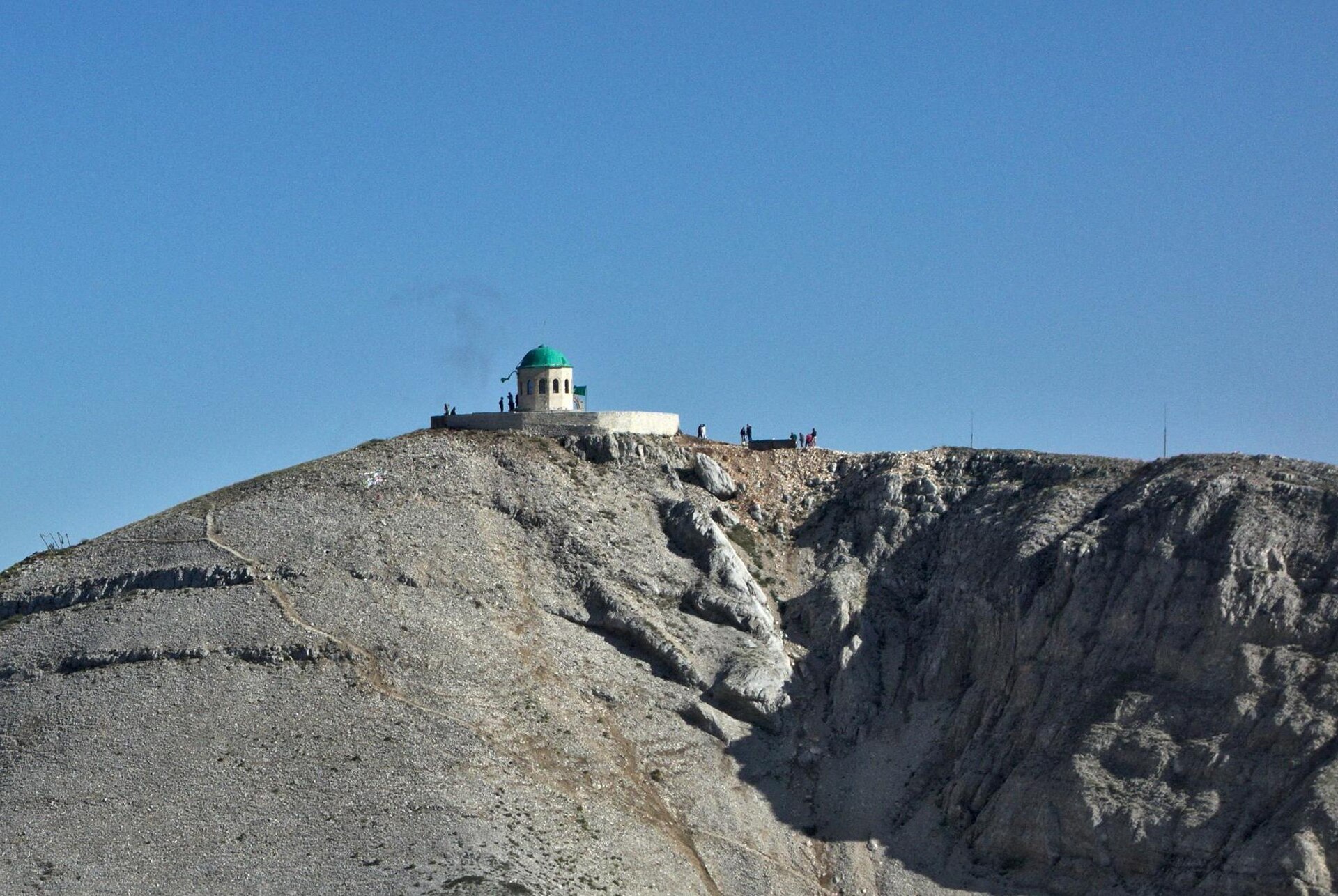
High above the southern Albanian valleys, where the limestone cliffs rise like grey walls against the clear blue Adriatic sky, a quiet evolutionary process is underway. Here, on the isolated mountain peaks of Tomorr and Trebeshina, scientists have made a discovery that reminds us that Europe still harbours biological secrets. Two completely new species of mountain bush-crickets have been identified in different mountain areas of southern Albania.
For the nature-loving traveller, this is more than just an academic note in a scientific journal. It is confirmation that Albania's wild interior is one of the continent's best-preserved natural environments, where ecotourism and scientific curiosity now go hand in hand.
A Quiet Scientific Sensation
In June 2026, a study was published in the zoological journal Zootaxa that made biologists sit up and take notice. After meticulous field studies, a research team consisting of Albanian and international experts was able to describe two previously unknown species within the bush-cricket family (Tettigoniidae): Montana tomorri and Montana dani.
These small insects tell a larger story about the environment they inhabit. Montana tomorri has been found exclusively at altitudes above 1,700 metres on the mythical Mount Tomorr and in the area around the Kulmak Pass. Montana dani, in turn, has been identified on the Trebeshina, Lunxhëria, and Nemërçka mountain ranges further south.
What makes the discovery fascinating is how the species have adapted to their specific habitats. The researchers discovered that they differ in their physical attributes, particularly the shape of the males' forewings, the so-called tegmina, which are used to produce the characteristic stridulation sound – the bush-crickets' song. In Montana tomorri, the wings are more upward-pointing and meet at the tips, while in Montana dani they are flatter and more separated. This means they sing with different voices. The species have been found in different mountain areas of southern Albania.
Mali i Tomorrit – Hidden Paths of the Sacred Mountain
To understand why these species have been able to evolve in peace, one must understand Albania's geography. The country is dominated by mountain ranges that carve through the landscape, creating deep, impassable valleys. The mountain peaks function in practice as ecological islands – biologists often call them “sky islands”. Up here, the climate is cooler, wetter, and completely different from the hot valleys below. Animals and plants adapted to this alpine climate cannot descend into the valleys to spread to the next mountain, leading to the local evolution of unique species.
Mali i Tomorrit, or Mount Tomorr, is a striking example. The mountain rises like a gigantic barrier east of the historic city of Berat. Its highest point, Çuka e Partizanit, reaches 2,416 metres above sea level. For Albanians, Tomorr is not just a geographical formation; it is a sacred mountain, associated with legends of the giant Baba Tomorr and home to the Sufi Bektashi Order. Every year in August, thousands of people make a pilgrimage up to the Teqeja e Abaz Aliut shrine on the Kulmak Pass.
For hikers, Tomorr offers a magnificent environment. As you pass the tree line, the lush beech and pine forests give way to a barren, almost alpine landscape of limestone and shale. It is in these windswept grasslands, on the rocky slopes above 1,700 metres, that Montana tomorri lives. Hiking here requires good physical fitness and preferably a local guide, but the reward is a panoramic view stretching across the whole of central Albania.
Trebeshina and the Wild Valleys of the South
Further south, near the historic Zagoria region and the catchment areas of the mighty Vjosa River, rises the Trebeshina mountain range. It is here, as well as on the neighbouring mountains of Lunxhëria and Nemërçka, that the second newly discovered species, Montana dani, makes its home.
Trebeshina offers rolling alpine meadows, deep karst fissures, and an incredibly rich flora. Here, you often hike in absolute solitude, accompanied only by local shepherds. The starting point for tours in these parts is often the traditional stone villages of the Zagoria Valley, such as Dardhë, where traditional architecture has been preserved for decades.
It is in this border zone between the mild Mediterranean winds and the bitter inland climate that evolution has worked in silence. Hiking along the ridges of Trebeshina means moving through a landscape where every valley has its own microclimatic identity. The fact that researchers discovered new species of invertebrates here as recently as 2026 shows how much remains to be explored in the region.
New Horizons of Ecotourism
The discovery of the two new mountain bush-crickets has breathed new life into Albania's conservation efforts, led by the National Agency of Protected Areas (AKZM). It highlights the importance of protecting these sensitive ecosystems from unregulated development.
In recent years, Albania has experienced a major boom in tourism, with the southern coastal areas drawing the crowds. But the interior has partly chosen a different path. By focusing on ecotourism, small-scale accommodation in mountain villages, and guided hikes, the country is trying to preserve its natural assets while creating long-term income for the local population.
For travellers seeking something beyond Europe's most well-trodden trails, Albania's mountains offer a combination of challenge and genuine hospitality. Staying at a local guesthouse in a village like Dardhë, eating traditional dishes made from local ingredients, and then setting out on trails where science is still making new discoveries adds a deeper dimension to travel.
Next time you stand on a mountain ridge in southern Albania, listening to the crickets and bush-crickets chirping at dusk, it is worth pausing. The sound you hear may very well belong to a species that humanity has only just got to know.
Facts
The Balkans' ”Sky Islands”
- The concept: “Sky islands” describes isolated mountain peaks surrounded by radically different lowland environments.
- Evolutionary effect: Since the species adapted to the cool alpine climate on the peaks cannot survive in the warm and dry valleys, they are effectively trapped on their mountain.
- High endemism: This leads to a high degree of endemism – meaning species that exist in only one specific place in the entire world.
- The new species: The newly discovered mountain bush-crickets Montana tomorri and Montana dani are examples of how this phenomenon creates unique ecological niches in the Albanian highlands.
Sources & further reading
- Agjencia Kombëtare e Zonave të MbrojturaDy lloje të reja karkalecash malorë në Shqipëri
- akt.gov.alMali i Tomorrit - Faqja Zyrtare e Turizmit
- mapress.comMontana tomorri and Montana dani (Orthoptera: Tettigoniidae), two new species of bush-crickets from the mountains of south Albania | Zootaxa
- evendo.comMount Tomorr: The Majestic Mountain of Albania
Share the article
Translated from Swedish with AI assistance. Read the original.


