
Via Transilvanica: Romania’s new long-distance trail challenges Europe’s classic hikes
Forget the crowds in the Alps and the well-trodden paths of Spain’s Camino de Santiago. Via Transilvanica now stretches through the heart of Romania: a 1,400-kilometre wilderness trail that offers not only dramatic mountain ranges and untouched ancient forests, but also breathes new life into Transylvania’s dormant medieval villages. Join us on a hike that transforms both the traveller and the places along the way.
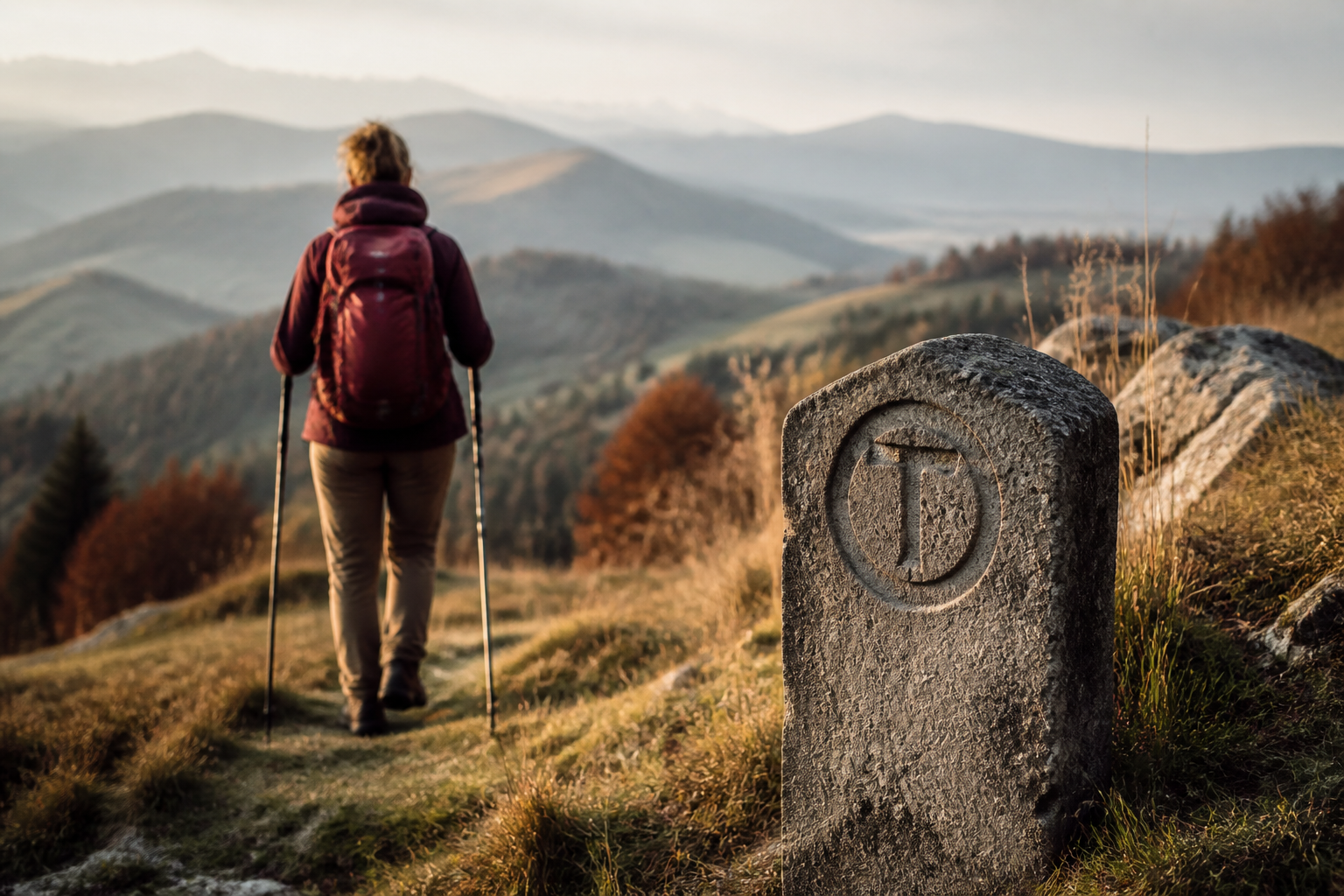
Mist hangs over the rolling hills of Bucovina as the morning sun slowly breaks through. The sound of cowbells mingles with the scent of damp woodland and freshly baked bread from a nearby farm. Ahead, a narrow dirt path winds its way forward, marked by a grey, hand-carved stone pillar with an orange T painted on top.
We are on Via Transilvanica, Romania’s first true long-distance trail. In a short time, this monumental project—which stretches for around 1,400 kilometres across the country—has become a symbol of a new kind of sustainable tourism in south-eastern Europe. It is a trail that challenges the idea of what a European walking holiday can be, far beyond the commercialised and heavily trafficked routes of western Europe.
From Putna to the Danube: The seven lands
Via Transilvanica was inaugurated in autumn 2022, after just over four years of intensive work. The trail crosses Romania diagonally, from the historic monastery in Putna in northern Bucovina all the way to the city of Drobeta-Turnu Severin, on the banks of the Danube in the south.
Traseul, as the trail is called in Romanian, is divided into seven distinct historical and geographical regions, known as “the seven lands” (ținuturi). Hiking here is like leafing through a living historical atlas. The trail passes through Bucovina’s fairytale conifer forests and painted monasteries, crosses the dramatic volcanic mountain ranges of the highlands (Ținutul de Sus), and continues into Terra Siculorum and Terra Saxonum—areas shaped by centuries of Szekler (Hungarian) and Saxon (German) culture.
The landscape changes dramatically from one day to the next. One moment you are walking along narrow paths through the deep forests of the Carpathians, where wolves and bears roam naturally. The next, you emerge from the forest to find vast pastures, rolling vineyards and medieval villages with fortified churches and colourful house fronts.
The Ușeriu brothers and the dream of Tășuleasa Social
Behind this huge infrastructure project lie not billions in state investment, but the determined dream of a local environmental organisation. The non-profit association Tășuleasa Social, led by brothers Alin and Tibi Ușeriu, has taken the project from idea to completion.
Tibi Ușeriu is a well-known name among many extreme sports enthusiasts. Alin Ușeriu, in turn, is the visionary and networker. Together with thousands of volunteers, they managed to mobilise local authorities, private donors and landowners along the entire route.
“We wanted to create a backbone for Romania, a trail that connects cultures, generations and communities that might otherwise risk being forgotten,” Alin Ușeriu explained during the project.
Building a continuous 1,400-kilometre trail in a country with complicated land ownership and, in places, difficult terrain required an enormous logistical effort. Volunteers have cleared old shepherds’ paths, cut back scrub and painted thousands of trail markers on trees and rocks to make the route safe and easy to follow.
The world’s longest art gallery
One of the most distinctive aspects of Via Transilvanica is the way every kilometre has been marked. Instead of simple plastic signs or wooden posts, hikers encounter andesite milestones. These heavy pillars of volcanic stone have been individually carved and sculpted by Romanian and international artists.
Each milestone is a unique work of art with its own symbolism, often inspired by local history, mythology or the natural world of the area. In practice, Via Transilvanica is therefore a 1,400-kilometre-long, open-air art gallery. Reaching the next milestone is not merely a sign of physical progress, but also an aesthetic discovery.
Encounters that are changing the Romanian countryside
As well as offering an outstanding experience of nature, Via Transilvanica has a deep social purpose. Many of the villages along the trail have been hit hard by depopulation and economic stagnation over the past decades, as younger generations have moved to cities or abroad.
By leading hikers directly through villages such as Biertan, Copșa Mare and Șapartoc, the trail creates new small-scale economic opportunities. Local families have opened their homes as guesthouses (pensiuni), retired farmers sell honey, cheese and fresh vegetables straight from their gardens, and small local craftspeople have access to a new market.
Here, encounters take place that are rare in the age of modern mass tourism. It is not unusual for a hiker to be invited in for a cup of coffee or a glass of locally made țuică (plum brandy) by a curious villager who wants to know where they are from. Romanian hospitality is not a product created for tourists; it is a deeply rooted part of local culture.
Practical planning for a Transylvanian adventure
Setting out on Via Transilvanica does not mean you have to set aside two months to walk the entire route. The trail is designed to be easily divided into shorter sections, depending on your time, fitness and interests.
For those who want to experience the best-preserved cultural heritage, the section through Terra Saxonum (Saxon Transylvania) is an excellent choice. Here, you walk between medieval villages, often along gentle paths through leafy oak forests and open meadows. For those seeking wilderness and a physical challenge, the mountain sections in Terra Dacica and Terra Banatica offer much tougher terrain, with steep climbs and magnificent views across the Carpathian peaks.
Access to the region has also improved considerably in recent years. The relatively new Brașov-Ghimbav International Airport is strategically located in the heart of Transylvania, making it easy to reach the central sections of the trail. Alternatively, you can fly to cities such as Cluj-Napoca or Sibiu, both of which have good train and bus connections to various starting points along the route.
Before lacing up your boots, it is important to download the official guidebook, Ghidul Via Transilvanica, which is available free of charge on the organisation’s website in several languages. The guidebook is extremely detailed and includes information ranging from the difficulty and elevation profiles of each section to contact details for accommodation, drinking water sources and places to buy provisions.
Via Transilvanica has already received international recognition for its focus on sustainability and cultural heritage, and has been awarded the prestigious environmental and tourism prize DRV EcoTrophea, among others. It recognises that the future of tourism is not about building bigger hotel complexes, but about making way for slow, genuine encounters—one kilometre at a time.
Facts
At a glance: Via Transilvanica
- Total length: Around 1,400 kilometres (1,400 km+).
- Starting point: Putna Monastery in Bucovina (northern Romania).
- End point: Drobeta-Turnu Severin on the Danube (south-western Romania).
- The seven regions: Bucovina, Ținutul de Sus (the Highlands), Terra Siculorum (the Szekler Land), Terra Saxonum (the Saxon Land), Terra Dacica, Terra Banatica and Terra Romana.
- Waymarking: Orange T symbols and unique, hand-carved andesite milestones for every kilometre.
- Founder: The organisation Tășuleasa Social, led by brothers Alin and Tibi Ușeriu.
- Best time to hike: May to October. In late autumn and winter, snow and cold can make the higher mountain sections difficult to access.
Sources & further reading
- Tășuleasa SocialVia Transilvanica Official Website
- Tășuleasa SocialTășuleasa Social
- nationalgeographic.comDiscover the real Transylvania on a new long-distance hiking trail
- travelandtourworld.comVia Transilvanica: An Award Winning Eco Trail Transforming Romania ...
Share the article
Translated from Swedish with AI assistance. Read the original.


