
Via Dinarica: The Hiking Trail That Opens Up Bosnia’s Wild Heart
From the dramatic limestone peaks of Sutjeska to the welcoming mountain villages of Bjelašnica, Via Dinarica has transformed the wilderness of Bosnia and Herzegovina into one of Europe’s most exciting hiking destinations. For Nordic hikers seeking the genuinely unspoilt, the Bosnian section of the trail is the ultimate adventure.
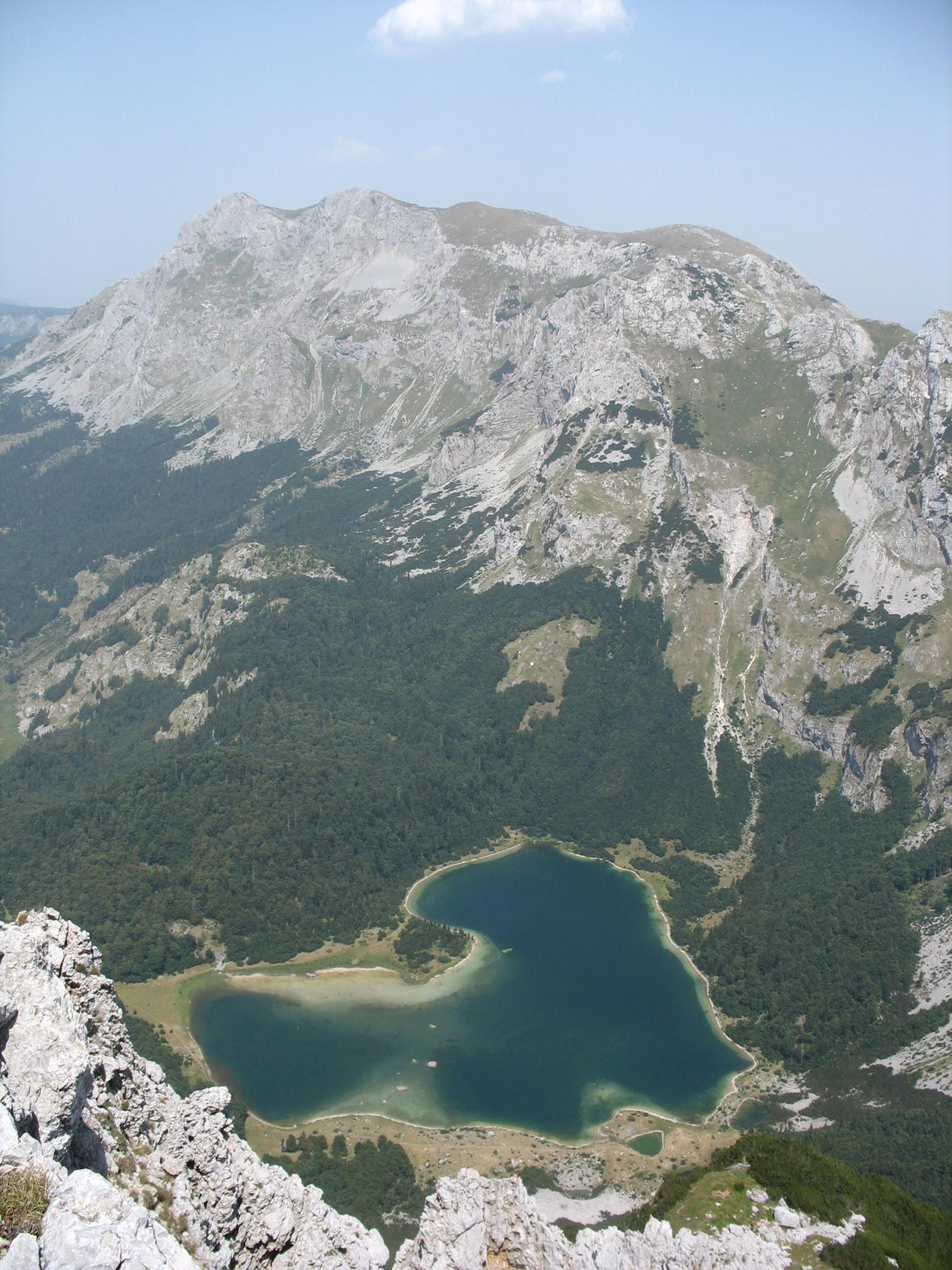
As the morning mist lifts over the Dinaric Alps, a landscape emerges that feels almost unreal in its grandeur. Steep limestone walls cut into the deep blue sky, while dense primeval forests spread across the valleys below. This is the wild heart of Bosnia and Herzegovina, a region that for a long time was difficult for international visitors to reach. But through the cross-border Via Dinarica initiative, the mountains have been opened up to the outside world in a way that both protects nature and strengthens local communities.
The trail runs through the whole of the western Balkans, but it is in Bosnia and Herzegovina that it takes on its most dramatic character. Here, hikers encounter a wilderness with few parallels in Western Europe, combined with a hospitality deeply rooted in local culture.
The White Route – where the mountains meet the sky
Via Dinarica is divided into three parallel routes: the Blue Route along the Adriatic coast, the Green Route through the forested foothills, and the White Route (Bijela staza), which follows the highest ridgelines. It is the White Route that attracts the most adventurous hikers.
In Bosnia and Herzegovina, the White Route offers challenging terrain and breathtaking heights. The trail passes the country’s highest mountain, Maglić, which rises 2,386 metres above sea level on the border with Montenegro. Climbing Maglić takes stamina and concentration; the final hundred metres to the summit involve a steep ascent where you sometimes need to use your hands against the rock. At the top, you are rewarded with panoramic views across a seemingly endless sea of green and grey waves of stone.
Further west, the trail leads through the Prenj massif, often called “the Bosnian Himalaya”. It is a fitting name. Prenj is a rugged and dramatic highland landscape of sharp limestone peaks, deep ravines and wind-battered valleys. Hiking here requires careful planning and respect for the weather, as sources of drinking water are few and the terrain demands your full attention. But for those seeking solitude and silence, Prenj is an almost spiritual experience.
Through primeval forest to heart-shaped waters
One of the greatest contrasts along the Bosnian section of Via Dinarica is the transition from barren mountain peaks to deep, water-rich valleys. In Sutjeska National Park, you walk in the shade of Perućica, one of Europe’s last true primeval forests. Here, the forest has been left to grow undisturbed for thousands of years. Giant firs, pines and beeches – some more than 300 years old and 50 metres tall – fall and decay where they stand, creating a unique and thriving ecosystem. For ecological reasons, you may visit the inner parts of the primeval forest only with a certified guide, a rule that helps preserve this sensitive environment intact.
Another of the trail’s most iconic destinations is Lake Trnovačko (Trnovačko jezero). Although the lake lies just across the border in Montenegro, the best and most natural way to reach it is via the hiking trails from the Bosnian side of Sutjeska. This glacial lake, known for its perfect heart shape and emerald-green water, is nestled in an amphitheatre of high mountain walls. After a long day of hiking, a swim in the fresh mountain water is an experience that stays with you.
The hospitality of mountain villages and the scent of freshly baked pita
What truly sets Via Dinarica apart from the more established hiking trails in the Alps is the human connection. This is not about impersonal hotel complexes or mass tourism. Along the trail, accommodation and meals are provided by traditional mountain huts (“planinarski dom”) and small, sometimes almost completely isolated mountain villages.
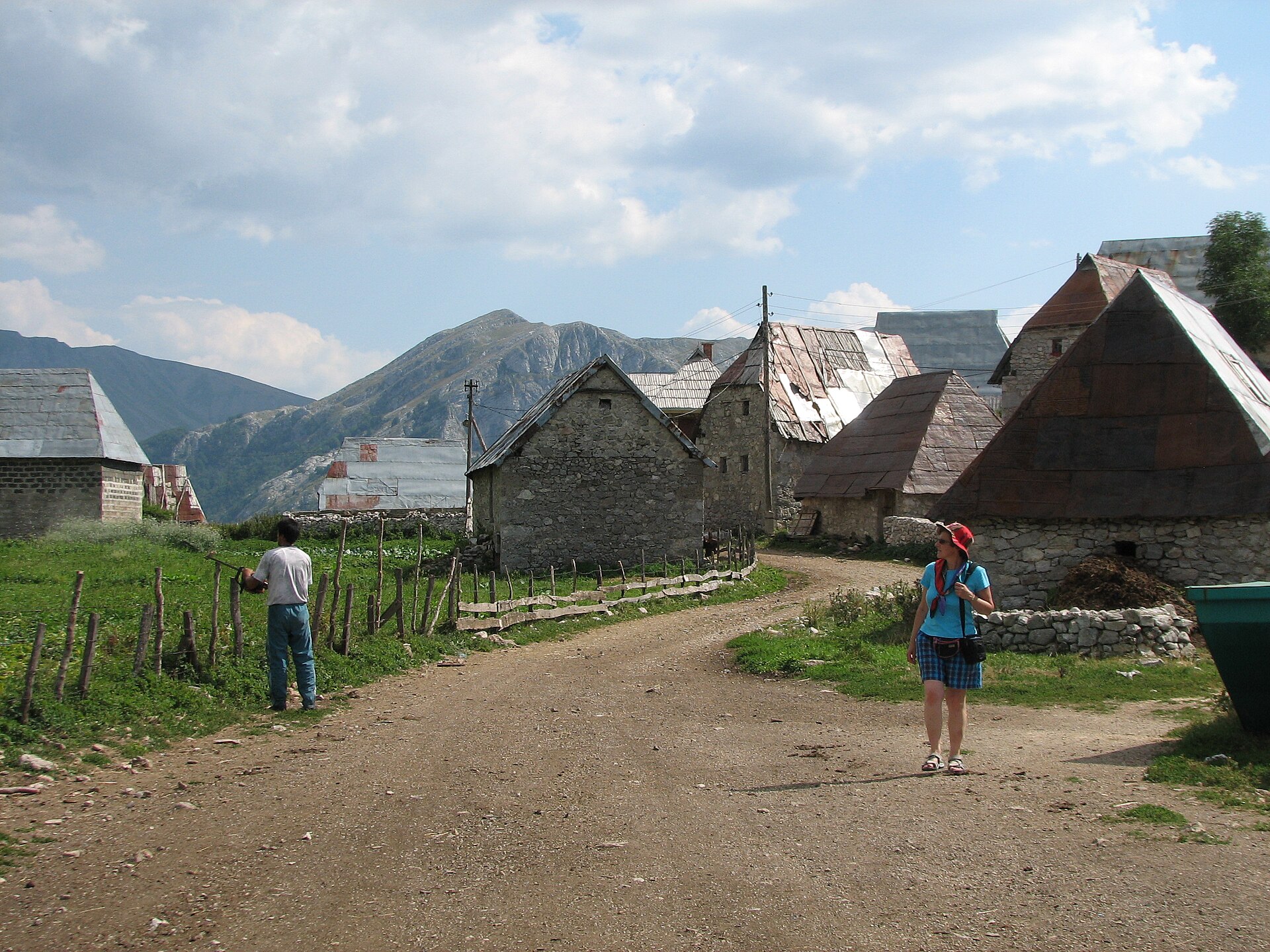
A shining example is Lukomir, situated at almost 1,500 metres above sea level in the Bjelašnica massif. Lukomir is the highest and best-preserved traditional mountain village in Bosnia and Herzegovina. During the winter, the village is completely isolated by snow, but in summer the shepherds return with their flocks of sheep. The houses are built from local stone, with steep shingle roofs to withstand the weight of the snow, and life here follows the same rhythm it has for centuries.
Arriving in a village like Lukomir after a day of hard hiking is like stepping straight into a warm, welcoming embrace. It is rarely long before you are sitting at a sturdy wooden table with an apparently endless plate of freshly baked pita – a traditional filo pastry pie filled with fresh cheese (sirnica), spinach (zeljanica) or meat (burek). It is served with locally produced sour milk and strong, full-bodied Bosnian coffee, brewed in a traditional copper pot called a dzezva. It is simple food, but after hours on the trail it tastes better than anything in a Michelin-starred restaurant.
Sustainable development in the service of the wilderness
Via Dinarica is much more than a tourism project; it is a lifeline for many of the country’s mountain regions threatened by depopulation. The initiative has received substantial support from the United Nations Development Programme (UNDP) and other international organisations, with the aim of creating green jobs and sustainable economic development in rural areas.
Renaud Meyer, UNDP’s representative in Bosnia and Herzegovina, has on several occasions highlighted how the project brings people together and creates new economic opportunities. By certifying local guides, renovating mountain huts and helping small-scale producers sell their goods – such as honey, mountain cheese and hand-knitted woollen products – directly to hikers, tourism helps young people see a future in their home villages.
This is particularly evident in areas such as Blidinje Nature Park, with its distinctive landscape of pine forests and wide high plateaus, as well as around the mountains of Vlašić and Kupres. By coordinating local efforts, people have succeeded in creating a network of services that ensures tourism money goes directly to those who live and work in the mountains.
A new horizon for Nordic hikers
For Nordic hikers, accustomed to the quiet expanses of Sarek or the dramatic views of Jotunheimen, Via Dinarica offers something familiar yet entirely different. There is the same sense of grandeur and unspoilt nature, but in a warmer climate and with a completely different cultural backdrop. It is a place where the echoes of history are ever-present, but the focus is on the present: on the meal shared around the table, the water bottle passed around at the mountain pass, and respect for the mighty mountains shaped over millions of years.
Via Dinarica in Bosnia and Herzegovina is not a trail you hike simply to tick off miles or rack up elevation. You hike it to meet the mountains on their own terms – and to discover that the wildest nature sometimes holds the warmest hospitality.
Facts
VIA DINARICA AT A GLANCE
- Geography: The trail stretches for a total of 120 Swedish miles through Slovenia, Croatia, Bosnia and Herzegovina, Montenegro, Albania, Kosovo and North Macedonia.
- The three routes:
- White Route (Bijela staza): Follows the highest limestone ridges and peaks (best for alpine hiking).
- Green Route (Zelena staza): Runs through lower, forested areas (well suited to cycling and easier hiking).
- Blue Route (Plava staza): Follows the Adriatic coast and islands.
- Best season: For the White Route in Bosnia and Herzegovina, the period from June to mid-October is best, when the snow has melted and the mountain huts are open.
- Accommodation: Mainly in local mountain huts (planinarski dom), with local families (guesthouses) or in tents at designated sites.
Share the article
Translated from Swedish with AI assistance. Read the original.


