
Two days in Sighișoara among towers and lanes
Start at the clock tower, follow the wall, and spend the next morning heading up the covered scholars' stairs. Sighișoara is perfect for a weekend on foot – with pauses on the citadel's square and dinners in the lower town. Here is a walk through a World Heritage site that also needs to be allowed to just be a normal town.
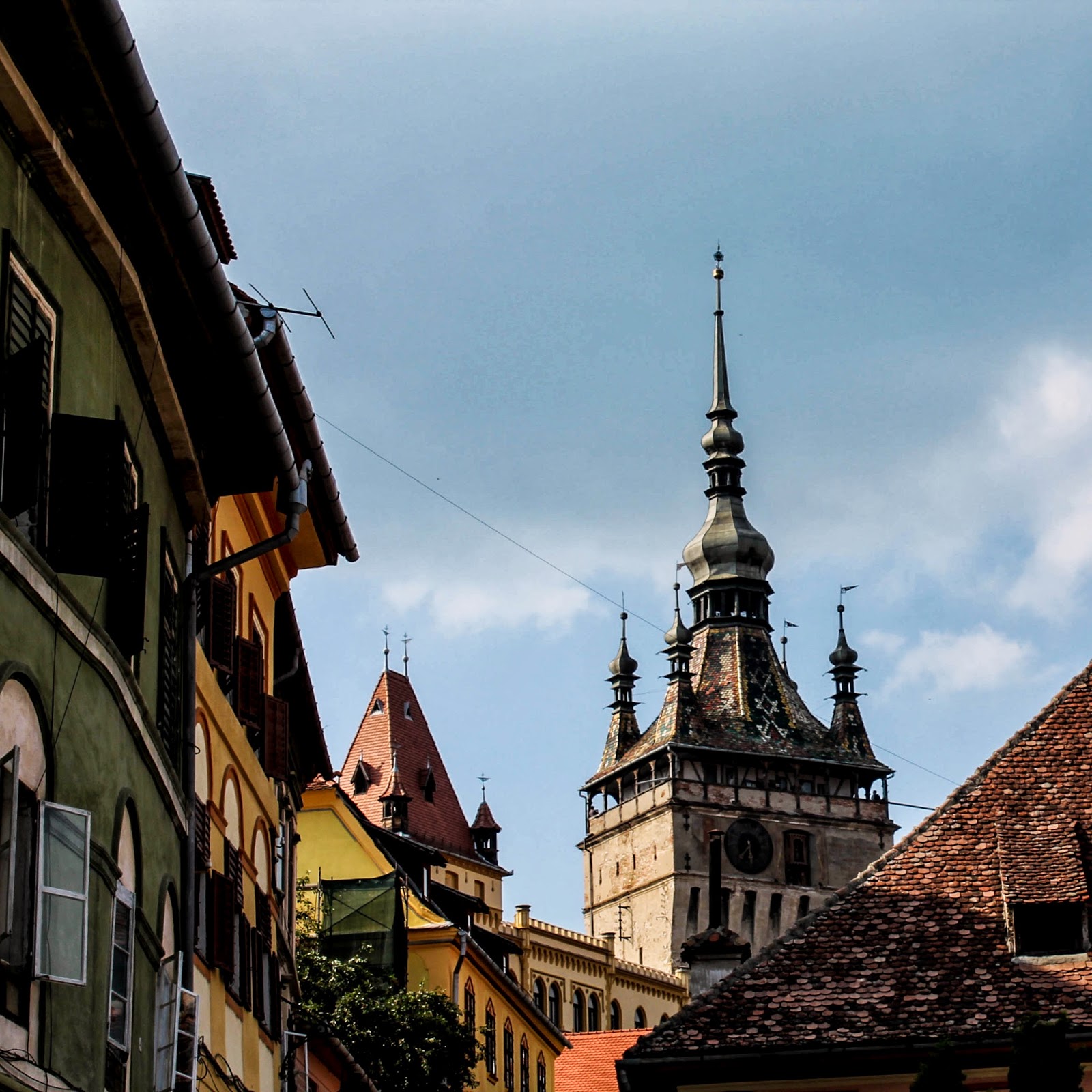
The clock tower gives direction to your walk even before you have a map in hand. It rises above the passage between Sighișoara's lower town and the citadel, with a steep roof and a clock that deserves more attention than a quick glance to check the time. Below, the lanes branch off in different directions. It is tempting to choose one immediately.
Wait a moment. Devote Saturday morning to the tower and the immediate surrounding quarters, saving the hill with the church and the school for Sunday. This gives the weekend an easy rhythm without needing to fill every hour. The historic centre is compact, but cobblestones, slopes and steps mean that distances on the map do not tell the whole story of the walk.
Saturday – start at the clock tower
Turnul cu Ceas, the clock tower, houses the town's history museum. Here, the guild artefacts are a great entry point: tools and objects associated with trade and labour offer something tangible to keep in mind as you head out among the houses. Afterwards, the towers along the wall become more than just a row of photo opportunities. Their names are linked to the people who sewed, forged and crafted what the town needed.
Sighișoara's Transylvanian-Saxon heritage stems from the German-speaking population that settled in this part of modern-day Romania during the Middle Ages. The guilds organised the crafts and were responsible for defending sections of the fortification. The Evangelical church, the school environment and the town's architecture belong to the same heritage. It is this cohesive urban environment, rather than any individual monument, that makes the UNESCO-listed historic centre so fascinating to explore.
Give the clock mechanism and its figures some time as well. They are a detail to be admired in their own right, not merely decoration above the entrance. At the top of the tower, the view helps you read the town: the dense pattern of rooftops, the higher church hill, and the buildings spreading beyond the fortifications. It is a useful orientation for the rest of the day.
Check the museum's current opening hours and which sections are accessible before your visit, particularly during the winter months. Do not pin your entire morning plan on a specific entry time without confirming it first. If the tower is closed, a walk around the citadel works just as well as a starting point.
Follow the wall, but do not hunt for every tower
From the area around the clock tower, head towards Piața Cetății, the citadel square. Then continue west towards Turnul Croitorilor, the Tailors' Tower. The passage through the building makes the defensive design understandable in a very tangible way: here, the tower is both a structure and a gateway into the town.
Next, work your way along the western side of the citadel towards the higher quarters. The streets close to the wall offer different perspectives to the square. Where the centre opens up around outdoor cafés and facades, the edges grow narrower, featuring sections of wall, gateways and angles where a tower suddenly fills your entire field of vision. Follow the footpaths where they exist, but do not think of the walk as an uninterrupted stroll along the top of the town wall.
Treat the guild towers as exterior stops unless you have confirmed they are open to visitors. A name on the map does not guarantee a ticket booth, an exhibition or an open staircase behind the door. The clock tower museum is a destination in itself; the other towers primarily contribute to the reading of the urban space.
On Strada Zidul Cetății you will also find the private museum Casa Armelor și Hărților, which focuses on weapons and maps. This is a potential addition for anyone wishing to delve deeper into museums. Check opening hours and visiting conditions directly before building it into your day. It does not need to become yet another obligatory stop between the towers.
Lunch up high, dinner down below
Piața Cetății is a natural place to pause your walk. Casa Wagner on the square is a specific spot worth considering for a food break in the citadel. Here, the location is part of the appeal: you stay among the lanes and avoid turning lunch into a separate excursion. Check the restaurant's current service before your trip.
On Romanian menus, ciorbă is worth recognising. It is the collective name for sour soups, available in many different varieties. Sarmale, stuffed cabbage rolls, and mămăligă, a maize porridge often served as a side dish, are other dishes to look out for. View them as introductions to the cuisine, rather than a guarantee of what a specific restaurant will serve that weekend.
Afterwards, walk down towards Piața Hermann Oberth. The elongated square lends a different scale to the day compared to the smaller spaces of the citadel. Here is a good place to stop for coffee and let the walk continue among shops, cafés and streets that do not have a tourist attraction at every corner.
Give the lower town its own evening
The historic centre is compact, but cobblestones, slopes and steps mean that distances on the map do not tell the whole story of the walk.
It is easy to treat the lower town merely as a transit route between your accommodation and the citadel. Do the opposite on Saturday evening: choose to dine down there and let that be your reason to stay.
Joseph T., the restaurant in Hotel Central Park on Piața Hermann Oberth, is an option worth looking into for a more structured dining experience. Compare the current menu with the smaller spots around the square. Choose based on what you actually want to eat, not on how medieval the dining room looks.
The same principle applies to the town's food scene in general. A weekend does not have to consist solely of traditional dishes to feel authentic to Transylvania. Soup for lunch, coffee and pastries in the afternoon, and dinner from a broader restaurant menu also paint a picture of the modern town. Festival programs and special culinary events, however, should not be taken as a guarantee of regular weekend service.
Sunday – the scholars' stairs and the church on the hill
Take Strada Școlii up through the citadel the next morning. The destination is the covered scholars' stairs, Scara Acoperită, which continue up towards the school and the church. After the open streets, the passage offers a distinct change of scenery: wood, roof, steps and light filtering in from the sides.
The stairs are well worth your time, but they are indeed stairs. Anyone requiring step-free access should research the alternative street routes and their gradients in advance. Do not assume that an alternative route is automatically easy to navigate; the difference in height remains, and uneven paving is common in the citadel.
At the top lie Școala din Deal (the School on the Hill) and Biserica din Deal (the Church on the Hill). Together, they make the Saxon heritage visible without turning your weekend into a history lesson. The school should not be treated as a freely accessible attraction. Observe the surroundings from the outside and respect the school's operations.
Check the church's opening times separately from those of the museum. If it is open, it is well worth going inside to let the proportions and details of the church interior take over from the vibrant colours of the lanes. Outside, the area around the church and the cemetery offers a peaceful end to the walk. The Ropemakers' Tower is one of the landmarks up here; plan this too as an outdoor stop rather than an assured indoor visit.
Return without haste
Head back down towards the citadel square and choose a different lane where the street network allows. After two days, the subtle differences begin to emerge: which streets lead people through the town and which serve mostly as residential addresses, where the views open up and where the houses crowd tightly around the road.
Finish with lunch or coffee wherever you enjoyed yourself on Saturday, up in the citadel or around Hermann Oberth. There is no need to supplement Sighișoara with an excursion just to make the weekend feel complete. The tower, the wall, the school hill and the lower town provide plenty of substance – and leave room to actually sit down between your walks.
Sources & further reading
- whc.unesco.orgHistoric Centre of Sighişoara - UNESCO World Heritage Centre
- en.wikipedia.orgHistoric Centre of Sighișoara - Wikipedia
Share the article
Translated from Swedish with AI assistance. Read the original.


