
Two days in Cetinje: Royal rooms, billiards and embassies
In Cetinje, the royal palace sits close to café tables and the former diplomatic addresses along the promenades. Starting with King Nikola's Museum and moving on to the Biljarda the next day, you will enjoy a cultural weekend where the collections, the architecture, and the town connecting them all receive equal focus.
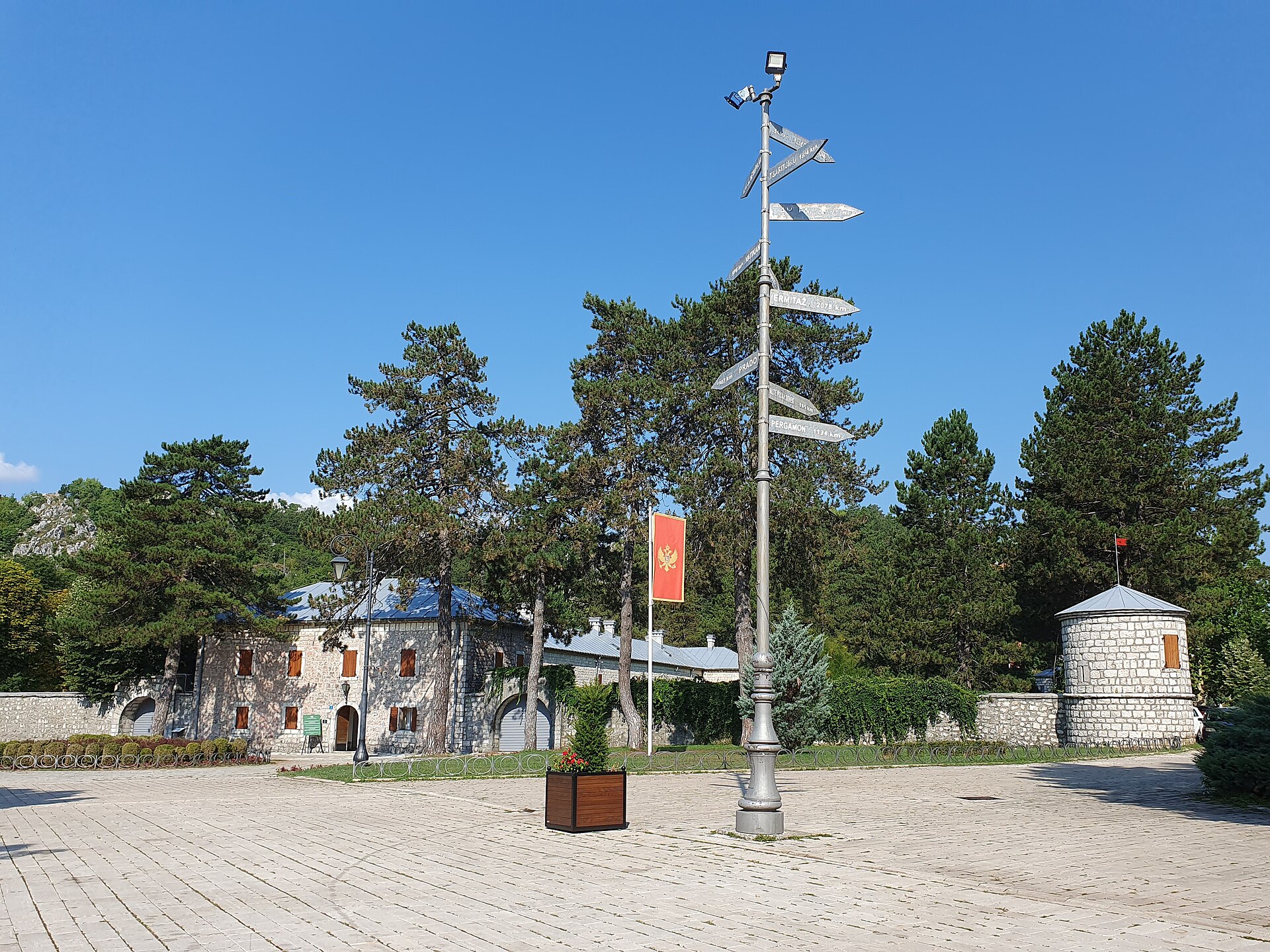
Begin at Dvorski trg and take in the building before stepping inside. King Nikola's former palace has an understated exterior: a long facade, regular windows and an entrance that eschews any monumental courtyard. From here, it is only a short step to both museum rooms and café tables. It is an excellent starting point for Cetinje, where a walk through the centre connects royal residences, old embassies, and today's city life.
Montenegro's current capital is Podgorica. Cetinje is the old royal capital, located inland on the other side of the mountains from the Adriatic coast. Staying overnight allows time for something other than a rushed tour: taking one museum at a time, enjoying a leisurely lunch, and having the time to actually look at the buildings between the sights.
This two-day itinerary assumes that the museums are open during your stay. Especially in winter, you will need to check this before deciding which days of the week your trip should cover.
Day 1: Meet the court at King Nikola's Palace
King Nikola's Museum at Dvorski trg is part of the National Museum of Montenegro. Here, Nikola I Petrović-Njegoš and his family are brought to life through their home and personal belongings, not just through lists of rulers.
Let the rooms guide your visit. Observe how the formal reception rooms differ from the more private parts of the home. Furniture, portraits, clothing and personal belongings tell stories of the court's self-image in various ways. A portrait shows how someone wished to be seen; an everyday object reveals something about how they actually lived.
It is also worth pausing to reflect on the contrast between the scale of the house and the world the family engaged with. Nikola was both prince and king during his long reign. Through family ties and diplomatic relations, the court was part of a European network that stretched far beyond Montenegro. The palace was a home, but also a stage where the state put itself on display.
The court library adds another dimension to the story. Books were a part of the court's intellectual life and representation, not just room decor. Nikola was a writer himself, authoring works including the drama Balkanska carica (The Empress of the Balkans). The image of the writing regent is a useful concept to carry over into tomorrow's encounter with Njegoš. Do not expect, however, that the library's entire collection or specific rarities will be on display; a collection and what is shown to visitors are not the same thing.
After the museum, a break on Dvorski trg is highly appropriate. Linger in the square for a while instead of moving straight on. The royal residence takes on a different proportion when viewed from a café table: less a detached monument, and more a part of the town.
The afternoon belongs to the embassies
Turn the afternoon into an architectural walk with three key stops: the former French, British and Russian embassies. Use Njegoševa street as the spine of your walk and plot the buildings on a map before you start. The tour works perfectly as an exterior walk and does not depend on being able to go inside.
Begin with the French embassy. Its ceramic facade decoration and Art Nouveau style set it apart from its more restrained neighbours. There are details here to be studied up close: surfaces, ornaments and the framing around the windows. Architecture was also a way for a nation to project its identity onto the streets of another state.
Continue to the former British embassy. Its more understated expression provides a clear contrast to your walk. Compare the entrances, the rhythm of the windows, and how much of the building's impact lies in decoration versus proportion. You do not need any architectural training to spot the difference.
Next, head for the Russian embassy. Its more palatial character offers another variation on the same task: creating a representative address for a foreign state.
Together, these buildings show why Cetinje is worth more than a single museum visit. Diplomatic history is woven into the walk as part of the built environment. The old nation names are historical designations, however, not indicators of today's activities or public accessibility. Do not plan any interior visits without separate confirmation.
Lunch and city life beyond the museum square
Do not let every break be spent on Dvorski trg. Continue along Njegoševa and into the side streets, where your walk will find focus points other than museum entrances. Shops, eateries and residential buildings help restore the balance: Cetinje is also a town where people shop, work and have lunch.
Kole is a specific restaurant name worth seeking out for a hearty meal. Gradska, which offers a hotel and restaurant setting near the museum quarter, is an alternative if you would prefer to linger over lunch or coffee in a more formal environment. Treat them as different types of stops rather than a ranking, and check what is available on the day.
On a menu of Montenegrin home-style cooking, look out for pršut (cured ham) and cheese from Njeguši, as well as grilled dishes and slow-cooked meats. The connection to inland cuisine fits well here. Cetinje is close to the coast on the map, but a meal here does not need to follow the seafood-heavy traditions of the coastal restaurants.
End the afternoon with a stroll through the town parks. After museum rooms and facade details, a simple path, trees and a bench are more than enough. Save the next major collection for tomorrow.
Day 2: Biljarda and the writing ruler
The Biljarda has a completely different character to King Nikola's Palace. The low stone building, with its enclosed courtyard, was the residence of Petar II Petrović-Njegoš, Montenegro's ruler and writer. Today, it houses the Njegoš Museum.
Begin with the billiard table that gave the building its name. It is a wonderfully useful object for approaching a historical figure: tangible, easy to picture in use, and less distancing than a formal portrait. Here, a representative residence meets a room for social life.
Then move on to the personal belongings and material relating to Njegoš as an author. His work Gorski vijenac, usually called The Mountain Wreath (and Bergkransen in Swedish), holds a central place in Montenegrin literary history. You do not need to have read it to get something out of the visit. The interest also lies in seeing how writing and state leadership could fit into the same life.
Read the exhibition labels carefully when it comes to documents and manuscripts. Original documents, later editions and reproductions offer different levels of proximity to the work. Do not base your visit on the promise that a specific original manuscript will be on display; let the current exhibition dictate what you delve into.
Together, the two museums offer two entry points into the old capital: the court's family and ceremonial life at Nikola's palace, and the literary and personal story at Njegoš's residence.
Make room for contemporary art too
If you want to add a third indoor visit, check the programme at the Miodrag Dado Đurić Art Gallery. A current exhibition there can give the weekend a contemporary extension after the residences and historical collections. Make sure to check what is actually being shown during your visit; do not count on any specific temporary exhibition at the Biljarda without confirmation from the museum.
Otherwise, a longer lunch and another stroll work just as well. Two days do not mean that every hour has to be filled. Go back to a facade that caught your eye, choose a different side street, or stay longer at the café than you did on the first day.
Choose your travel days based on the museums
Check the opening hours of King Nikola's Museum and the Biljarda individually with the National Museum of Montenegro before booking. A shared museum organisation does not automatically mean identical opening times. In winter, it is particularly important to check weekend opening; a stay over two weekdays might suit your museum plans better than Saturday and Sunday.
At the same time, check current ticket prices, whether a combination ticket is available, and which collections it covers. The itinerary outlined here does not rely on any specific ticket product or access to the interiors of the embassy buildings.
Once that is sorted, the stay itself can be simple. A museum in the morning, a proper lunch, and the town on foot in the afternoon. Cetinje's old role as capital becomes understandable through its objects and buildings. But the weekend gets its shape from what lies between them: a street, a park, and a table where you are happy to linger.
Quick facts
- Country: Montenegro
- Role: The country's historical capital and royal seat
- Location: In the mountains between Podgorica and the coast
- Nearest airports: Podgorica and Tivat
- Ideal for: A cultural weekend of museums and walking tours
Sources & further reading
- en.wikipedia.orgCetinje - Wikipedia
- sr.wikipedia.orgNikola I Petrović Njegoš — Википедија
- montenegrofortravellers.comMuzej kralja Nikole, King Nikola's museum in Cetinje | Montenegro For Travellers
- portalanalitika.meMuzej kralja Nikole - Cetinje
Share the article
Translated from Swedish with AI assistance. Read the original.


