
Through the Balkans by Train: The spectacular railway between Belgrade and Bar
Are you dreaming of a train holiday off the beaten track? The railway from Belgrade to Bar on the Adriatic Sea offers 476 kilometres of breathtaking viaducts, dramatic canyons, and Yugoslav architectural history. Here is the complete guide to one of the continent's most legendary train journeys.
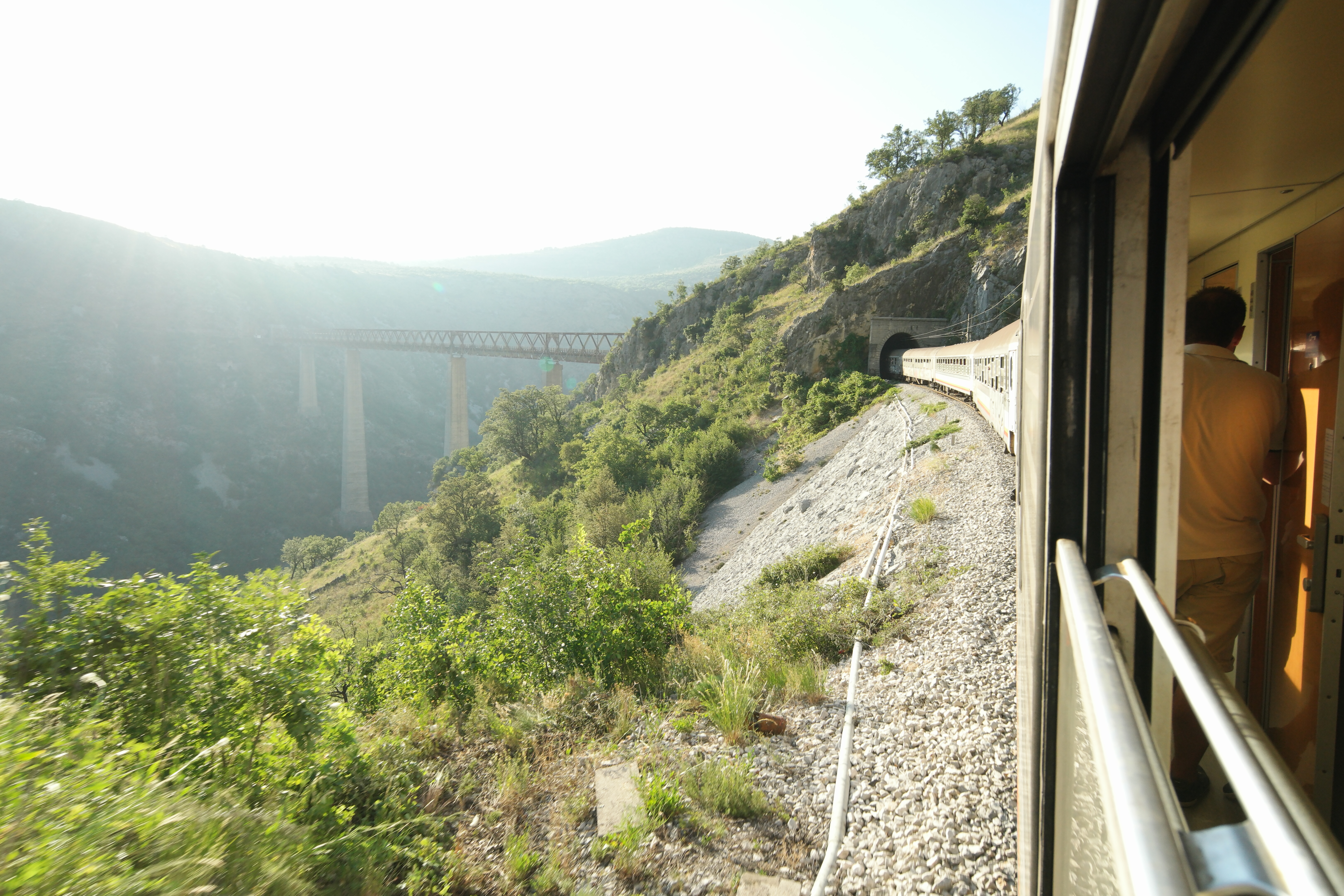
The train slowly rolls out of Belgrade Centre, the station colloquially known as Prokop. It is early morning, and ahead of the locomotive lies one of Europe's most legendary railway lines. What begins on the flat Serbian plains will, over the course of the journey, transform into a dramatic mountain landscape with breathtaking drops, before the tracks finally meet the sparkling waters of the Adriatic Sea in the Montenegrin port town of Bar.
Travelling along the Belgrade–Bar line is not just a means of transport; it is a celebration of slow travel. In recent years, the route has become a favourite among European train enthusiasts and holidaymakers looking for something other than the sterile corridors of high-speed trains.
World-class engineering: The bridges and 254 tunnels
The Belgrade–Bar railway line was one of the most ambitious post-war infrastructure projects in Europe. Work began in the 1950s but was only completed in 1976, when the line opened in its entirety between the interior and the coast. The purpose was strategic: to connect the landlocked capital of Belgrade with a deep-water port on the coast.
Building a railway through the karst landscape that characterises the region required outstanding engineering. The line is forced to conquer the rugged Dinaric Alps. To make this possible, no fewer than 254 tunnels were blasted, and the tracks rest on over 240 bridges and viaducts. Among the tunnels, the six-kilometre-long Sozina tunnel and the almost equally long Zlatibor tunnel are the most famous structures.
The most breathtaking part of the journey is undoubtedly the Mala Rijeka Viaduct, located just north of Podgorica in Montenegro. When completed, it was the world's highest railway bridge, with a structural height of 139 metres and a clearance of nearly 200 metres down to the bottom of the canyon. As the carriages roll over the 498-metre-long steel structure, a dizzying panorama of the deep ravine opens up.
Travelling through the canyons is like journeying through a piece of living architectural history.
Highlights of the journey: From Serbian plains to Montenegrin canyons
The journey can be divided into three distinct landscape types. The first stage through central Serbia offers rolling farmland and forested hills. The further south the train travels, the more dramatic the landscape becomes.
After passing the mountain region of Zlatibor, the train approaches the border with Montenegro, where passport and customs controls take place between the countries before the journey continues south.
Once the train rolls into Montenegro, the most spectacular section by far begins. The tracks wind along the edge of deep canyons and pass through the area around Kolašin, which marks the railway's highest point at over 1,000 metres above sea level. From there, the dramatic descent towards Montenegro's capital, Podgorica, begins.
After Podgorica, the landscape levels out temporarily as the train crosses Lake Skadar. The railway runs along a narrow causeway straight across the massive lake, near the tourist resort of Virpazar. Here, you get fantastic views of the rich birdlife and the surrounding mountains reflected in the glassy water. The final stretch of the journey passes through the long Sozina tunnel before the sea appears and the train finally rolls into its terminus in Bar.
Life on board: The nostalgic slow travel trend
Travelling by train between Belgrade and Bar is a nostalgic experience. Operated by the national railway companies Srbija Voz and ŽPCG, the journey carries a classic slow-travel feel where the nature and views outside the window are the main attraction. The windows in the corridors can often be opened, offering wonderful views along the canyons (though be careful and keep well within the frame of the train).
The service operates with both day and night trains. For those travelling for the views, the day train is the obvious choice – the most dramatic part of the route through the Montenegrin canyons and over Mala Rijeka is then passed in full daylight. The night train is an alternative for pure transport, but in the dark, the scenery is lost.
The atmosphere on board is often social and relaxed. It is common for local travellers to share food and stories, making the train as much a social meeting place as a means of transport.
Practical tips: Tickets, booking pitfalls, and train classes
Booking tickets for Belgrade–Bar can require a bit of patience, as digital booking systems in the Balkans are not always fully integrated with international platforms.
Tickets can be purchased at the railway stations in Belgrade (Prokop) or Bar. During peak summer, the line is popular with both tourists and locals, so it is wise to secure your ticket and seat reservation well in advance at the station.
For current timetables, seat reservations, and current fares, it is safest to check directly with the railway companies' stations or their official information channels prior to departure.
Sources & further reading
- en.wikipedia.orgMala Rijeka Viaduct - Wikipedia
- sh.wikipedia.orgPruga Beograd–Bar – Wikipedija / Википедија
- vozovi.rsPassenger Guide for Train Travel in Serbia | vozovi.rs
- en.wikipedia.orgBelgrade–Bar railway - Wikipedia
Share the article
Translated from Swedish with AI assistance. Read the original.


