
The Transylvanian silence: How a Saxon village became the centre of European slow living
In the shadow of the Carpathians, the Romanian village of Viscri has risen from decades of decay to become a global model for sustainable rural development. Through careful restoration, unique natural environments and an uncompromising tranquility, this Saxon idyll now draws visitors seeking a deeper counterweight to the stresses of the digital age.
As the morning mist clears over the rolling hills of Brașov County, the first sound to be heard is the clatter of wooden clogs against cobblestones, closely followed by a distant cowbell. Here, in the small commune of Bunești, lies Viscri. It is a place where house façades glow in pale Saxon blue, deep green and ochre yellow, and where the roads still largely consist of hard-packed earth and gravel.
Over the past two decades, Viscri has undergone a quiet revolution. From an underpopulated and forgotten outpost in South-Eastern Europe, the village has been transformed into an international centre for what is known in lifestyle circles as slow living – a philosophy centered on slowing down, living in harmony with nature and preserving local heritage. What makes Viscri unique is that this development has not come about by building luxury spa hotels or constructing artificial tourist environments. On the contrary, it is the preservation of the absolute simplest and most authentic that has become the village's greatest asset.
The heritage of the Saxon settlers
To understand Viscri, one must understand its history. In the 12th century, German settlers, known as Transylvanian Saxons, were invited by the Hungarian king for defensive purposes and to cultivate the land in the region. They built solid, walled homesteads and fortified churches to protect themselves from Tatars and Ottomans. For centuries, the Saxons developed a unique culture and a self-sufficient social system that survived both world wars and communist rule.
But after the 1989 revolution and the fall of Nicolae Ceaușescu, everything changed in just a few years. The Saxon population emigrated on an almost collective scale to Germany. Left behind, the characteristic homesteads stood empty, and the unique architecture rapidly began to decay. Roofs collapsed, walls cracked and old craft traditions were on the verge of dying out.
It was at this critical juncture that the rescue operation began.
The rescue operation that shaped a movement
That Viscri is today a living village and not a ghost town is largely thanks to the Mihai Eminescu Trust (MET). For more than a quarter of a century, the organisation has worked to revive the historic villages of Transylvania and Maramureș through what they call the "Whole Village" concept. The philosophy is based on the idea that cultural heritage cannot be preserved in a vacuum; for houses to survive, the people living in them must have a sustainable economy and a future.
The trust's work has garnered significant international attention, and over the years it has carried out more than 1,200 projects in the region. By training the local population in traditional crafts – such as burning lime in temporary kilns, hand-shaping roof tiles from local clay and mixing historically accurate pigments – they have managed to restore hundreds of homesteads. A sister project in the neighbouring village of Alma Vii was awarded three prizes at the prestigious European Heritage Awards as recently as 2024.
An important chapter in Viscri's modern history was also written when the then Prince Charles, now King Charles III, visited the region in the late 1990s. He fell in love with the landscape, bought a traditional 18th-century homestead in the village and had it restored in accordance with all historical standards. The King's commitment gave Viscri a global platform, but it also helped to cement a strict conservation plan: no modern building materials, no paved roads through the village centre and no garish advertising signs.
The last medieval meadows
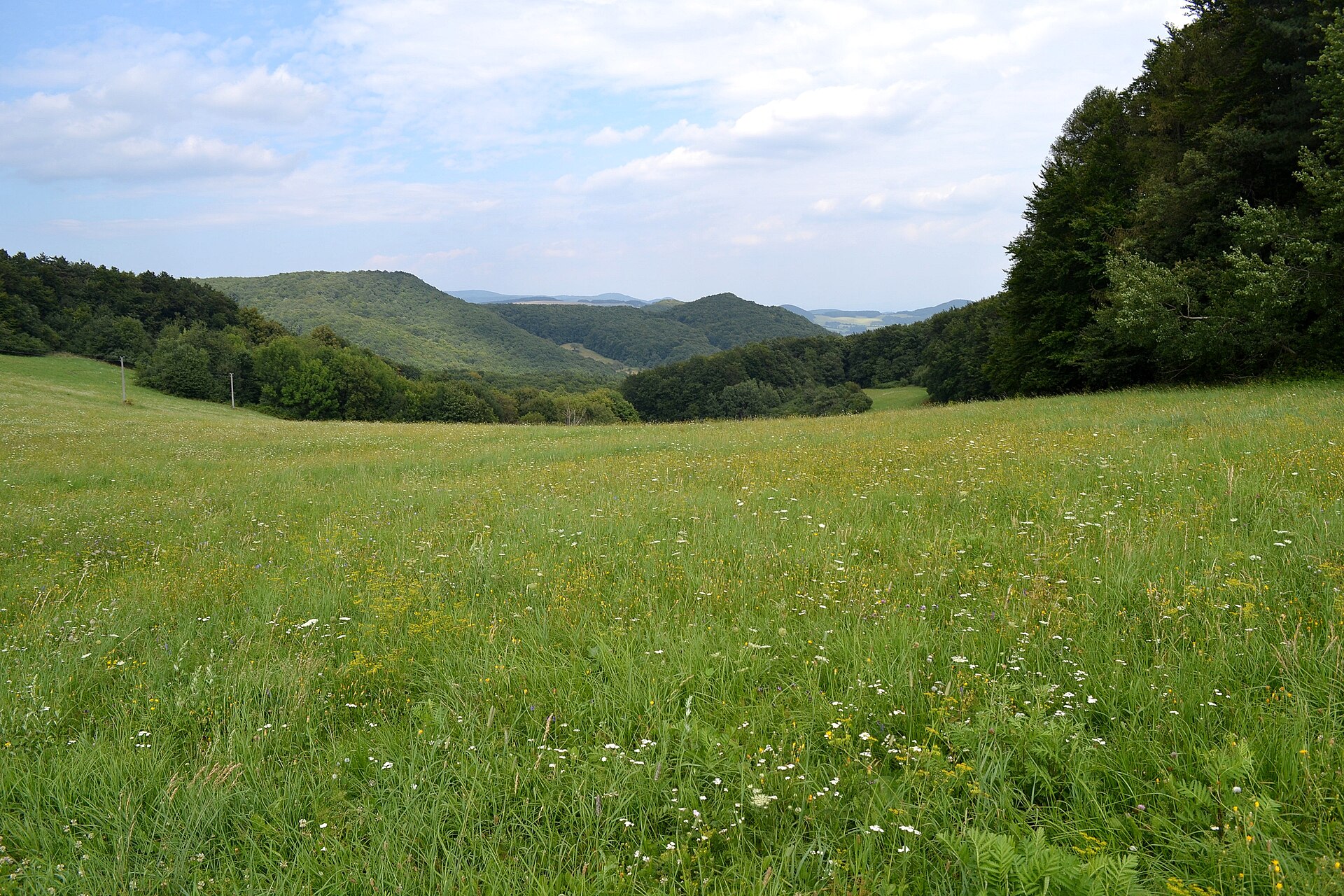
However, it is not only the architecture that makes Viscri feel like another world. Surrounding the village is one of Europe's last intact medieval cultural landscapes. The open oak wood-pastures and unfertilised meadows are a biological sensation. Here, wild orchids grow, gliding birds of prey circle the sky, and the species richness of insects is unmatched in the heavily rationalised agriculture of Western Europe.
This unique ecosystem is regularly studied by researchers from institutions such as the University of Bucharest and Babeș-Bolyai University in Cluj-Napoca. For modern humans, accustomed to sterile urban environments and monocultural fields, a walk through these lands is an almost therapeutic experience. The landscape is still managed using traditional methods; hay is cut by hand with scythes and gathered into characteristic haystacks, and cattle graze freely on the communal pastures.
"Here, the landscape has not changed for centuries. It is not only beautiful, it is a functioning ecological system that shows how humans and nature can actually live in symbiosis."
Gastronomy without filters
As interest in slow living has grown, Viscri has also developed into a destination for those seeking an authentic culinary experience. There are no trendy, minimalist bistros here. Instead, several local families have opened their courtyards as so-called "local gastronomic points" (puncte gastronomice locale) – a Romanian initiative that enables small-scale producers to serve food directly in their homes in a controlled yet simple manner.
The menu is dictated entirely by what is ripe in the kitchen garden that day or what has been delivered from the neighbour's dairy. It is about slow cooking in clay pots over an open fire, hearty soups (ciorbă) flavoured with lovage, fresh bread baked in a wood-fired oven and locally produced cheese made from sheep's and cow's milk. This is often accompanied by a traditional palincă or a glass of wine from Transylvania's cooler wine-growing regions. This is cooking free from trends, where the origin of the ingredients is absolutely transparent.
A sanctuary for analogue life
What ultimately makes Viscri such a powerful source of inspiration for visitors from the Nordic countries is the contrast with our own daily lives. In a society where efficiency, constant connectivity and rapid change are the norm, this Saxon village offers a radical alternative. Here, sustainability is not about technological solutions or climate-smart apps, but about rediscovering the cyclical and the tangible.
As evening falls over Viscri and the cows find their own way back through the village to their respective yards, a deep silence settles over the valley. It is a silence that means not just an absence of sound, but a tangible presence of peace. In an age when more and more people are searching for meaning and authenticity, this small Transylvanian village shows that the way forward sometimes lies in daring to look back.
Facts
FACTS: THE SAXON HERITAGE IN VISCRI
- Location: Viscri is located in the commune of Bunești in Brașov County, in the historical region of Transylvania, Romania.
- Historical background: The village was founded by Transylvanian Saxons in the 12th century under the name Deutsch-Weißkirch.
- UNESCO status: Viscri's fortified church and the surrounding village centre were inscribed on the UNESCO World Heritage list in 1999, thanks to its exceptionally well-preserved medieval structure.
- Mihai Eminescu Trust (MET): A foundation working with sustainable rural development that has been driving the conservation and revitalisation of over 1,200 objects in Transylvania.
Sources & further reading
- Mihai Eminescu TrustMihai Eminescu Trust - Projects
- pmc.ncbi.nlm.nih.govBiocultural tourist experience in Romania's High Nature Value ...
- researchgate.netA Case Study of Viscri Village, Brașov County, Romania
- horizonfoundation.nlMihai Eminescu Trust|Horizon Foundation
Share the article
Translated from Swedish with AI assistance. Read the original.


