
The Return of Roman Gold: The Secret of the Mali Ston Oyster
In a sheltered bay on Croatia's Pelješac peninsula, a quiet natural spectacle unfolds. Here, where the clear saltwater of the Adriatic meets nutrient-rich freshwater currents, the European flat oyster is cultivated in the same way as in antiquity. It is a story of unique natural conditions, medieval monopolies and a delicacy that draws global culinary travellers to the Dalmatian coast.
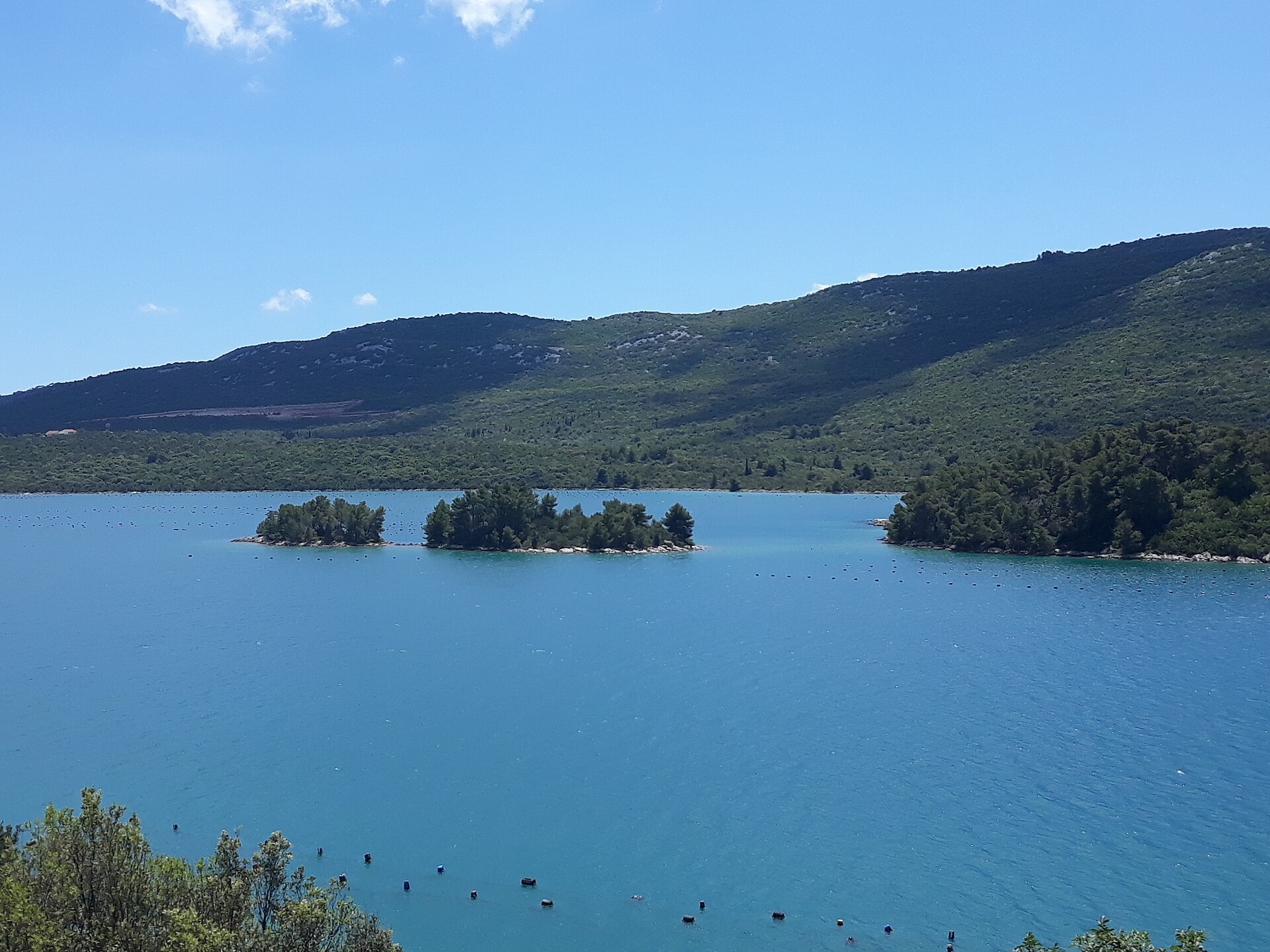
The boat glides silently through the mirror-like, emerald-green waters of Mali Ston Bay. Around it rise the dramatic, rugged limestone mountains of the Pelješac peninsula, their slopes clad in gnarled olive trees and wild herbs. Below the surface lies one of the Mediterranean's best-kept gastronomic secrets: endless rows of suspended ropes where millions of oysters slowly filter the nutrient-rich water.
While the Pacific oyster (Crassostrea gigas) dominates almost all of the world's farms and restaurant menus today, in this Dalmatian archipelago, a completely different species reigns supreme. The European flat oyster, Ostrea edulis, has become a rarity in European waters after being hit hard by parasitic diseases during the 20th century. But in the isolated and protected ecosystem of Mali Ston Bay, this native species has not only survived, but has developed an unparalleled flavour profile.
This is an oyster that tastes of iron, minerals, iodine and a distinct, almost sweet richness. The secret behind this character lies in a hydrological miracle.
When the Neretva meets the Adriatic
Mali Ston Bay is a long, narrow inlet cutting deep between the mainland and the Pelješac peninsula. The fact that oysters thrive so extraordinarily well here is down to a unique geographical stroke of luck. The bay acts as a giant mixing bowl for two completely different types of water.
From the north flows freshwater from the Neretva River, carrying minerals and sediment from the mountains of Bosnia and Herzegovina. At the same time, fresh, salty and oxygen-rich seawater is pushed in from the open Adriatic. Furthermore, the seabed features numerous underwater freshwater springs, locally known as vruje, which pump cool spring water directly into the oyster beds.
This optimal blend of salt and fresh water creates a brackish water with a perfect salinity and an extremely high concentration of phytoplankton. It is this natural nutritional cocktail that gives the flat oysters their rapid growth and deep, complex, mineral taste.
From Pliny's writings to the emperor's table
Humans realised the potential of these waters early on. As far back as the Roman Empire, the bay was famous for its shellfish. In his writings, the Roman natural philosopher Pliny the Elder described how oysters from the Illyrian provinces were considered world-class and were transported to Rome, packed in snow and mountain ice, to be served at the emperors' lavish banquets.
When the Roman Empire fell, new masters took control of the bay. During the Middle Ages and the Renaissance, the region was ruled by the powerful Republic of Dubrovnik (the Republic of Ragusa). For the republic, the Ston area was one of the most vital economic engines. Here lay not only the valuable oyster beds, but also the vast salt pans where 'white gold'—sea salt—was harvested.
To protect these invaluable assets from Ottoman invasions and pirates, the republic built the Walls of Ston. This massive defence system, which stretches over five kilometres across the mountain between the towns of Ston and Mali Ston, is today Europe's longest preserved defensive wall. Inside the walls, strict laws applied. The Republic of Dubrovnik established one of the world's first state monopolies on oyster farming, with draconian punishments for anyone poaching or damaging the beds.
The centuries passed, but the status of the oysters remained unchallenged. In the late 19th century, the Austro-Hungarian Emperor Franz Joseph took a particular liking to the shellfish from Mali Ston. The emperor regularly had wooden crates of fresh oysters sent by express courier to the court in Vienna. The international renown of the oysters was sealed in 1936, when producers from Mali Ston were awarded a Grand Gold Medal at the prestigious General Trades International Exhibition in London.
Modern craftsmanship in the sea garden
Today, family businesses carry the tradition forward. One of the most prominent players is the Šare family, who run the Bota Šare restaurant group and offer visitors a chance to experience the farms up close. They call their cultivation sites Morski Đardin—the sea garden.
Cultivating Ostrea edulis requires immense patience. The process begins by hanging out collectors, often old nets or plastic pipes, where the microscopic oyster larvae can attach during the summer. Once the young oysters, called spat, have grown sufficiently, they are harvested by hand.
Each individual oyster must then be reattached to the ropes. Traditionally, this was done by cementing the oysters to the ropes with a mixture of cement and seawater—a time-consuming precision task requiring great skill. Today, some growers use modern mesh socks, but the principle remains the same: the oysters must hang freely in the flowing, nutrient-rich water at the correct depth to obtain optimal access to food.
It takes between three and four years for a Mali Ston oyster to reach consumable size. During this time, growers must constantly battle natural enemies like the gilthead seabream—a fish with extremely strong jaws that loves to crush young oyster shells—and occasional storms that can tear the ropes down into the depths.
St Joseph's Day: The peak of the season
Although oysters can be eaten year-round in Croatia, there is one specific time of year when they are considered to reach their absolute peak. Around 19 March, on St Joseph's Day (Sveti Josip), the annual oyster festival is celebrated in Mali Ston.
This is no random date. During the cold winter months, as the water temperature drops and the bay fills with nutrients from the winter rains, the oysters build up their glycogen reserves ahead of the coming summer spawning season. In March, they are therefore at their plumpest, most succulent, with a perfect balance of salt and sweetness.
During the festival, the quays of Mali Ston fill with locals, visitors from Zagreb and international food enthusiasts. The growers moor their boats right at the stone quay and shuck the oysters one after another.
The tasting experience here differs markedly from how oysters are often served in Western Europe. Forget shallot vinegar, Tabasco or gratin recipes. In Mali Ston, it is a virtue to eat them completely natural, or at most with a few drops of freshly squeezed Dalmatian lemon. This is best accompanied by a chilled glass of Pošip or Grk—the local dry white wines from the neighbouring islands of Korčula and Pelješac, whose fresh acidity and minerality cut perfectly through the richness of the oyster.
To stand on the quay in Mali Ston, gazing at the medieval walls with the taste of a three-thousand-year-old gastronomic heritage in your mouth, is to understand why this small Croatian bay has maintained its standing through the fall of empires and the shifts of centuries. It is a taste of pure, unspoilt nature.
Facts
THE MALI STON OYSTER
- Species: Ostrea edulis (European flat oyster, called "kamenica" in Croatian).
- Geography: Mali Ston Bay is located at the base of the Pelješac peninsula in southern Dalmatia, approximately 55 kilometres northwest of Dubrovnik.
- Harvesting season: The oysters are at their best during late winter and early spring, peaking during the oyster festival in March.
- Character: Intense salinity combined with a metallic mineral note and a subtle sweetness in the aftertaste.
Sources & further reading
- ultimateguidecroatia.comMali Ston Oysters: A Guide to Croatia's Protected Adriatic Delicacy
- oysterencyclopedia.comMali Ston Oysters - The Oyster Encyclopedia
- oysterencyclopedia.comMali Ston Oysters | Oyster Encyclopedia
- researchgate.netShellfisheries in Croatia: From Manual Collection to Contemporary Practices
Share the article
Translated from Swedish with AI assistance. Read the original.


