
The Realm of Winds Beneath Herzegovina’s Barren Surface: Discover Vjetrenica
An icy, whipping wind greets anyone stepping over the threshold of Vjetrenica. This Herzegovinian cave – renowned for its underground lakes, rare creatures and unique microclimate – has now been inscribed on the UNESCO World Heritage List as Bosnia and Herzegovina's very first natural world heritage site. Join us as we descend into one of the world's most biodiverse subterranean ecosystems.
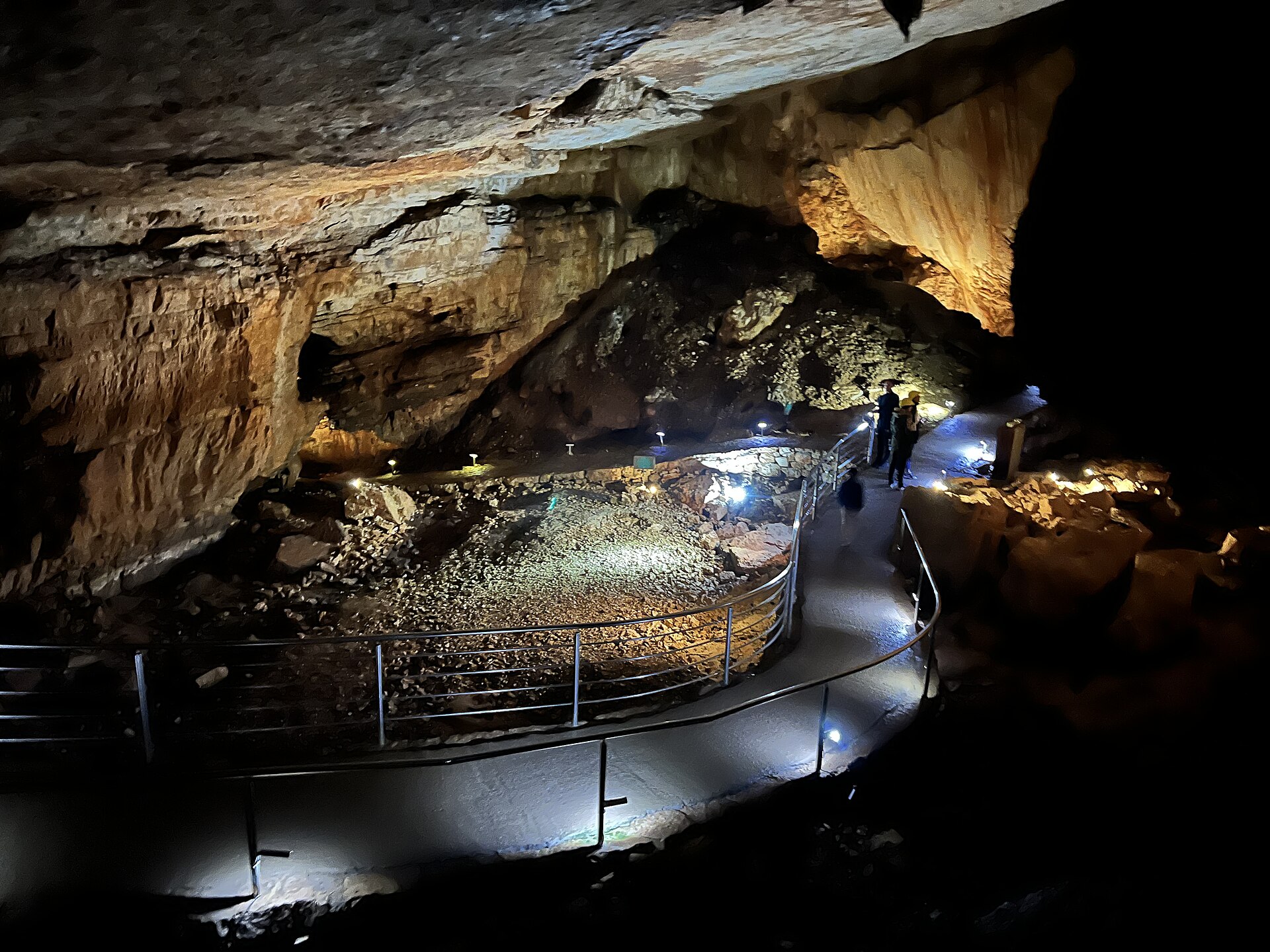
The first thing that strikes you at the cave entrance on the outskirts of the small village of Zavala is not the darkness, but the draft. During the summer months, when the Herzegovinian sun bakes the limestone plains of Popovo Polje with temperatures often soaring well past the 35-degree mark, an intense, icy wind is forced out of the mountain's depths. It is this natural phenomenon that has given the cave its name – Špilja Vjetrenica literally means "Wind Cave".
The wind is caused by the dramatic differences in pressure and temperature between the deep, isolated subterranean world and the warm air outside. Taking your first steps into the mountain brings an immediate change in climate. The temperature inside the cave remains a constant 11.6 °C year-round. The damp air carries the scent of wet stone, mud and pure water. For anyone visiting southern Bosnia and Herzegovina, this underground system offers a contrasting sanctuary from the scorching Mediterranean heat above.
In the summer of 2024, Vjetrenica was officially granted World Heritage status by UNESCO. It is the country's first independent natural heritage site on the list – a milestone that shines a spotlight on one of Europe's most vulnerable and fascinating ecosystems.
The World's Richest Subterranean Ecosystem
To the uninitiated, a cave might seem like a lifeless and sterile environment, but Vjetrenica is quite the opposite. Speleologists and biologists consider the system to be one of the absolute most biodiverse subterranean ecosystems in the world. Over two hundred different animal species have been documented in the darkness of the cave, and around a third of them are troglobites – that is, species completely adapted to a life in perpetual darkness that cannot survive anywhere else.
The most famous resident of this hidden realm is the olm (Proteus anguinus), locally known as čovječja ribica or "human fish" because of its pale, almost skin-toned body. This unique, blind cave salamander is an evolutionary enigma. It lives entirely in water, breathes through external gills and can live to be over a hundred years old. Because resources in the cave's waters are extremely limited, the olm has developed an astonishing ability to survive without food for years by slowing its metabolism to a minimum.
Spotting an olm during a visit requires a bit of luck, but in the crystal-clear underground streams and terraced limestone pools, with a little patience you can glimpse these pale creatures slowly winding across the bottom, completely unaffected by the eternal darkness surrounding them.
Through Subterranean Chambers and Lakes
Vjetrenica extends for a total of over 7,400 metres into the mountain massif, but for ordinary visitors, a section of about 600 metres has been prepared with a secure path and atmospheric lighting. The walk takes you deep beneath the mountain along a route shaped by water over millions of years.
The guided tour leads through spacious chambers that open up after the narrow entrance passages. Here, monumental stalactites hang from the ceiling while stalagmites rise like pillars from the ground. Over millennia, the speleothems have assumed fantastic shapes, creating abstract sculptures brought to life by the lighting. In several places, the path is crossed by running water and small waterfalls, their trickling sounds echoing between the stone walls.
Further into the system, you encounter the underground lakes. The water is so clear that it is difficult to tell where the air ends and the water's surface begins, and the reflections of the cave ceiling create an almost space-like sense of infinity. It is in these silent, cold water reserves that the cave's most unique biological processes take place, protected from the climate changes of the outside world.
Above Ground: Popovo Polje and Zavala
Once you step back out of the cave and are greeted by the Herzegovinian heat and the scent of wild sage, it is well worth stopping to explore the surroundings. Vjetrenica is situated in Popovo Polje, one of the largest karst plains on the entire Balkan Peninsula. In the past, this plain regularly transformed into a huge seasonal lake during winter and spring, but today it is a fertile agricultural landscape framed by dramatic, grey limestone mountains.
Just above the cave entrance lies the historic Serbian Orthodox Monastery of Zavala, which dates back to the 13th century. The monastery's church is partially carved directly out of the cliffside, and its interior houses stunning medieval frescoes. From the monastery courtyard, there is a sweeping view across the flat plain below – a perfect place for contemplation after exploring the depths of the mountain.
For those wishing to deepen their knowledge of the cave's geology and speleology, there is both the Info-edukativni centar Vjetrenica (Information and Education Centre) and the adjacent Biospeleološki muzej Vjetrenica (Biospeleological Museum). Here, you can learn more about how the karst landscape works, how the cave was discovered, and the scientific expeditions that have mapped its depths.
After a day filled with impressions, you can sit down at the old railway station in Zavala. This historic building, which was once part of the narrow-gauge "Ćiro" railway line between Sarajevo and Dubrovnik, has today been transformed into a charming restaurant and guesthouse. It serves local Herzegovinian specialities such as cured meat, cheese aged in sheepskin sacks (sir iz mijeha) and the characteristic regional wines Žilavka and Blatina.
Visiting Vjetrenica is more than just a typical tourist activity; it is a journey into a different, timeless world. Now that UNESCO has given the cave its official seal of approval as one of the Earth's most unique natural heritage sites, it is confirmation that this underground kingdom of wind and fragile creatures will continue to fascinate and be protected for generations to come. For those seeking the genuine, the scientifically interesting and the visually grand, the Herzegovinian karst landscape and its hidden interior offer an experience beyond the ordinary.
Facts
Vjetrenica in figures
- Total length: Over 7,400 metres of explored passages.
- Visitor trail: Approximately 600 metres of prepared and lit pathway.
- Temperature: Constant 11.6 °C year-round.
- UNESCO status: Inscribed as Bosnia and Herzegovina's first natural world heritage site in 2024.
- Unique fauna: Home to over 200 cave-dwelling species, including the famous blind olm (Proteus anguinus).
Sources & further reading
Share the article
Translated from Swedish with AI assistance. Read the original.


