
The Lonely Grape of Korčula: The Grk Wine’s Improbable Survival in the Sand
In the deep, sun-warmed sandy soils around the small village of Lumbarda on the island of Korčula hides one of the wine world's most fascinating survivors. The Grk grape is a botanical rarity that requires a partner to bear fruit at all. Its survival today is the result of a stubborn fight against history, fortunate geology, and generations of dedicated winemakers.
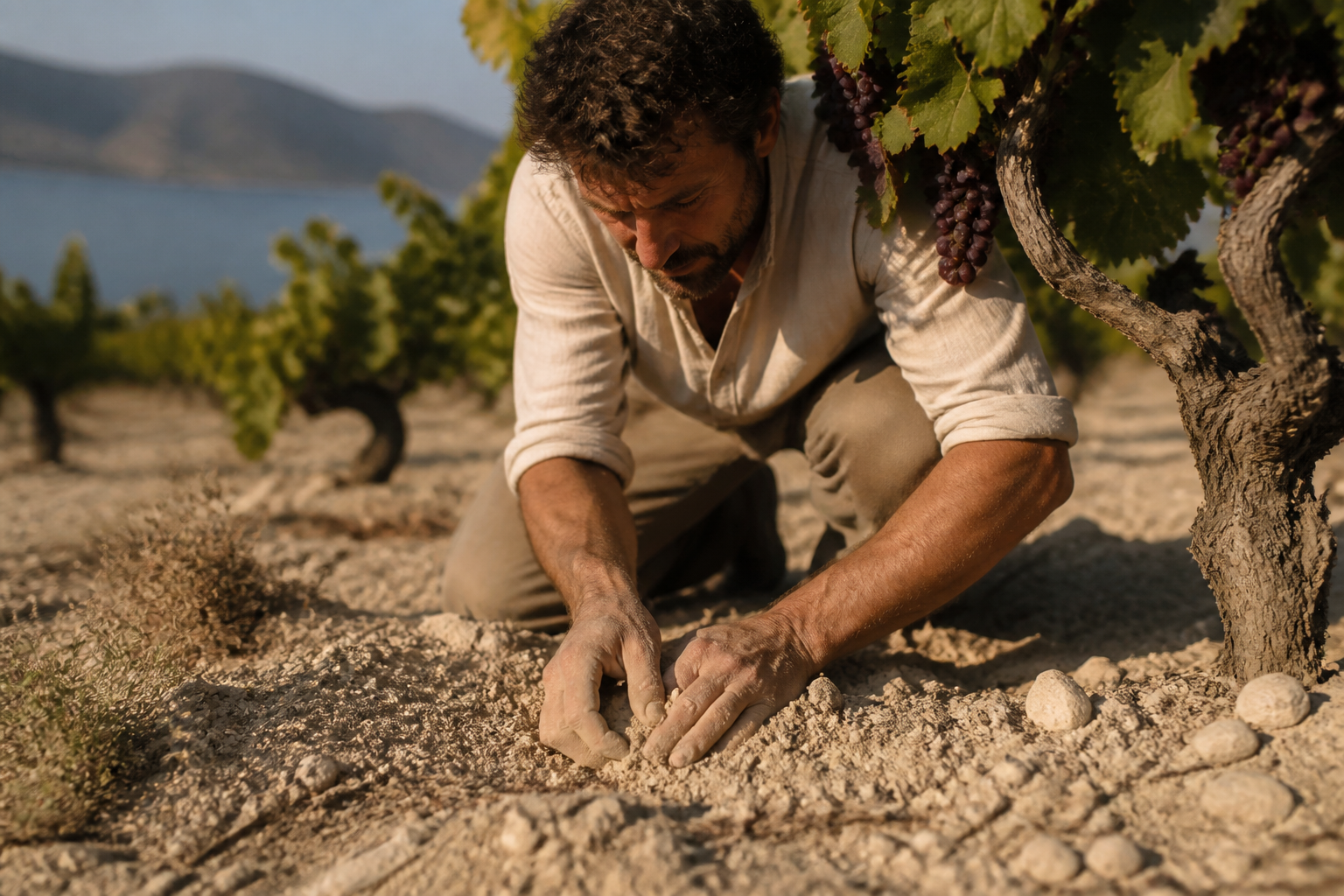
Anyone approaching the eastern tip of the Croatian island of Korčula quickly notices how the landscape changes. The barren limestone mountains and dense, dark green pine forests that gave the island its name – the Greeks' Korkyra Melaina, black Korčula – suddenly give way to a soft, undulating blanket of golden sand. It is here, in the small coastal village of Lumbarda, that one of the Adriatic Sea's best-kept secrets has been rooted since antiquity.
The Grk grape grows here. The name simply means "Greek" in Croatian, a nod to the ancient settlers from Vis who founded a colony here in the 4th century BC and brought grapevines with them. But the word also carries another meaning in the local dialects: bitter. It is an apt description of the subtle, slightly bitter note in the aftertaste that balances the wine's otherwise full-bodied and fruity character.
That Grk exists at all today borders on a botanical miracle. It possesses a genetic peculiarity almost entirely absent among modern, commercial grape varieties: it has only female flowers.
The Botanical Symbiosis
The vast majority of the world's known grapevines are hermaphroditic. They self-pollinate, making viticulture a relatively predictable science. Grk is different. Because its flowers lack functioning pollen, it cannot reproduce on its own. It needs a partner.
The solution developed by Lumbarda's wine growers over the centuries is a beautiful illustration of biological synergy. In the vineyards, Grk is planted side by side with another of Dalmatia’s great grapes: the red Plavac Mali. Typically, one row of Plavac Mali is planted for every three or four rows of Grk.
Since both varieties bloom during the exact same short period in early June, the wind can carry pollen from the red grapes' flowers to the white ones. This means the harvest in these vineyards is double, but in a highly distinctive way. When the grapes are picked at the turn of August and September, the golden Grk grapes are pressed into a fresh, mineral-rich white wine, while the blue Plavac Mali grapes become full-bodied, dark red wines.
The Sandy Soil's Protection Against Phylloxera
But botanical vulnerability is only part of the story of the Grk grape’s unlikely survival. The truly major threat to European wine culture came in the late 19th century, when the dreaded phylloxera (Phylloxera vastatrix) swept across the continent, laying millions of hectares of vineyards to waste.
Phylloxera attacks the roots of the vine and cuts off its nutrient supply. The only way to save European varieties was to graft them onto resistant American rootstocks – a complicated process that changed viticulture forever.
In Lumbarda, however, they withstood the catastrophe. The explanation lay beneath the winemakers' feet. Phylloxera is an organism that thrives in clayey and firm soils where it can build its underground tunnels. In fine, loose sand, the tunnels collapse immediately. The grains of sand pour down and choke the louse before it can reach the roots.
Thanks to Lumbarda's unique sand dunes, the Grk grape could continue to grow on its own, original roots. This makes the old vines in the village living historical monuments, genetically identical to the plants cultivated here hundreds of years ago.
The Coastline's Salty Microclimate
The geography of Lumbarda creates optimal conditions for white wine cultivation in an otherwise very hot region. The sandy soil reflects sunlight during the day but cools quickly at night, helping the grapes retain their high acidity – a necessity to prevent the wine from becoming flabby and heavy in the warm Mediterranean climate.
At the same time, cool breezes from the Adriatic archipelago constantly sweep across the vineyards. The sea winds carry microscopic salt particles that settle on the grape skins. This natural saltiness finds its way all the way into the presses, giving the finished wine a distinct, almost maritime mineral character that balances the ripe notes of stone fruit, melon, and pine needles.
Over the past decades, Grk has also stepped up from the sand dunes to the steep limestone terraces of the Defora area on the south side of the island. Here, the landscape is dramatically different. The sun beats down intensely, and the vines are forced to dig their roots deep into the cracks of the white stone. The wines from Defora are often even more concentrated, full-bodied, and high in alcohol than those grown in the sand, demonstrating the grape’s hidden versatility.
The Craftsmanship Behind the Few Hectares
Grk is very much a craft wine. The total cultivation area is extremely limited – just over fifty hectares in and around Lumbarda. This makes the wine a rarity that seldom reaches beyond Croatia’s borders; the majority is consumed directly on the island or bought up by the country’s fine dining scene.
Growing Grk requires patience and manual labour. Because the grapes often ripen unevenly due to the complicated pollination, the harvest must take place in several stages. Thinning out less developed bunches requires experienced hands and deep knowledge of each individual vine.
This knowledge has been passed down within a few families in Lumbarda. Names like Batistić are synonymous with the grape's renaissance. Today, development is driven forward by a new generation of winemakers combining traditional methods with modern cellar technology.
At family producers like Bire (led by Frano Milina Bire, who was the first to re-establish Grk on the stony terraces of Defora) and Zure (run by brothers Ivan and Marko Batistić along with father Bartul Batistić), the wine has reached new heights. The Zure family’s sparkling version Quinta Essentia and their Reventón, which is aged on the lees (sur lie), demonstrate the grape’s rich potential and breadth.
Other small-scale producers like Cebalo and Popić continue to keep the traditional style alive, where the wine ferments in large old oak casks and retains a rustic, authentic character.
A Wine in the Glass, a Place in the Memory
Sitting on a terrace in Lumbarda as the afternoon sun begins to turn the sand dunes pink, with a glass of cool Grk wine in hand, is an experience of pure concentration.
The wine in the glass is deep straw-yellow, almost golden. The aroma is intense and complex: first, you are met by wild Mediterranean herbs, dried grass, and ripe lemons, followed by a subtle note of pine needles and wet stone. On the palate, it is full-bodied and almost creamy, but with a fresh, vibrant acidity cutting through the weight. And then, in the aftertaste, comes that famous, slightly bitter note along with a salty mineral character that lingers for a long time.
It is not just a wine. It is the taste of a microclimate, of a geological coincidence that saved an ancient grape from extinction, and of the stubborn human will to keep a botanical rarity alive in the sand.
Facts
FACTS: THE GRK GRAPE
- Origin: Lumbarda on the Croatian island of Korčula.
- Characteristic: Functionally female. The grape has only female flowers and cannot be pollinated without pollen from another grape variety (most commonly Plavac Mali) that blooms at the same time in the same vineyard.
- Character: Yields dry, full-bodied white wines with relatively high alcohol content and fresh acidity. Typical aromas include ripe stone fruit, citrus, pine needles, and Mediterranean herbs, often with a distinct salty minerality and a slightly bitter aftertaste.
- Renowned producers: Bire, Zure (known for the wine Quinta Essentia), Cebalo, Popić, and Batistić-Fiduli.
Share the article
Translated from Swedish with AI assistance. Read the original.


