
The legacy of the European Capital of Culture year: How Novi Sad’s old factories became vibrant cultural stations
When the spotlight faded after Novi Sad’s year as European Capital of Culture, the city faced the classic challenge: what happens to all those millions in investment when the party is over? The answer was radical decentralisation: abandoned silk factories, old pasta mills and crumbling shooting pavilions were transformed into a unique network of vibrant cultural stations woven into residents’ everyday lives.
There is a particular kind of quiet determination about Novi Sad. While Belgrade, further south, has a raw, restless big-city energy, Serbia’s second-largest city, on the banks of the Danube, has long established itself as the region’s intellectual and cultural anchor. It was here that the cultural institution Matica srpska was founded in the early 19th century, and here that the Serbian revival found its centre. But in 2022, when the city held the title of European Capital of Culture, the focus was not only on preserving history – it was also about redrawing the map of how culture should be experienced.
For a Nordic visitor, used to well-funded but sometimes rather clinical municipal arts centres, Novi Sad’s transformation is fascinating. The city has avoided the trap of building a single, monumental cultural palace in the centre. Instead, it launched the concept of "Kulturne stanice" (cultural stations) – a decentralised network of meeting places stretching from the historic heart to the most anonymous outlying districts. The model has become an example for Europe of how industrial heritage can be saved and returned to the public.
Svilara – from steam power to creative hive
In the historic district of Almaški kraj, once the city’s first industrial area, a tall brick chimney rises against the Pannonian sky. Here stands Svilara, a former silk-dyeing factory dating back to the city’s heyday in the 19th century. For almost two decades, the building stood empty and fell into disrepair, a quiet reminder of a bygone industrial era.
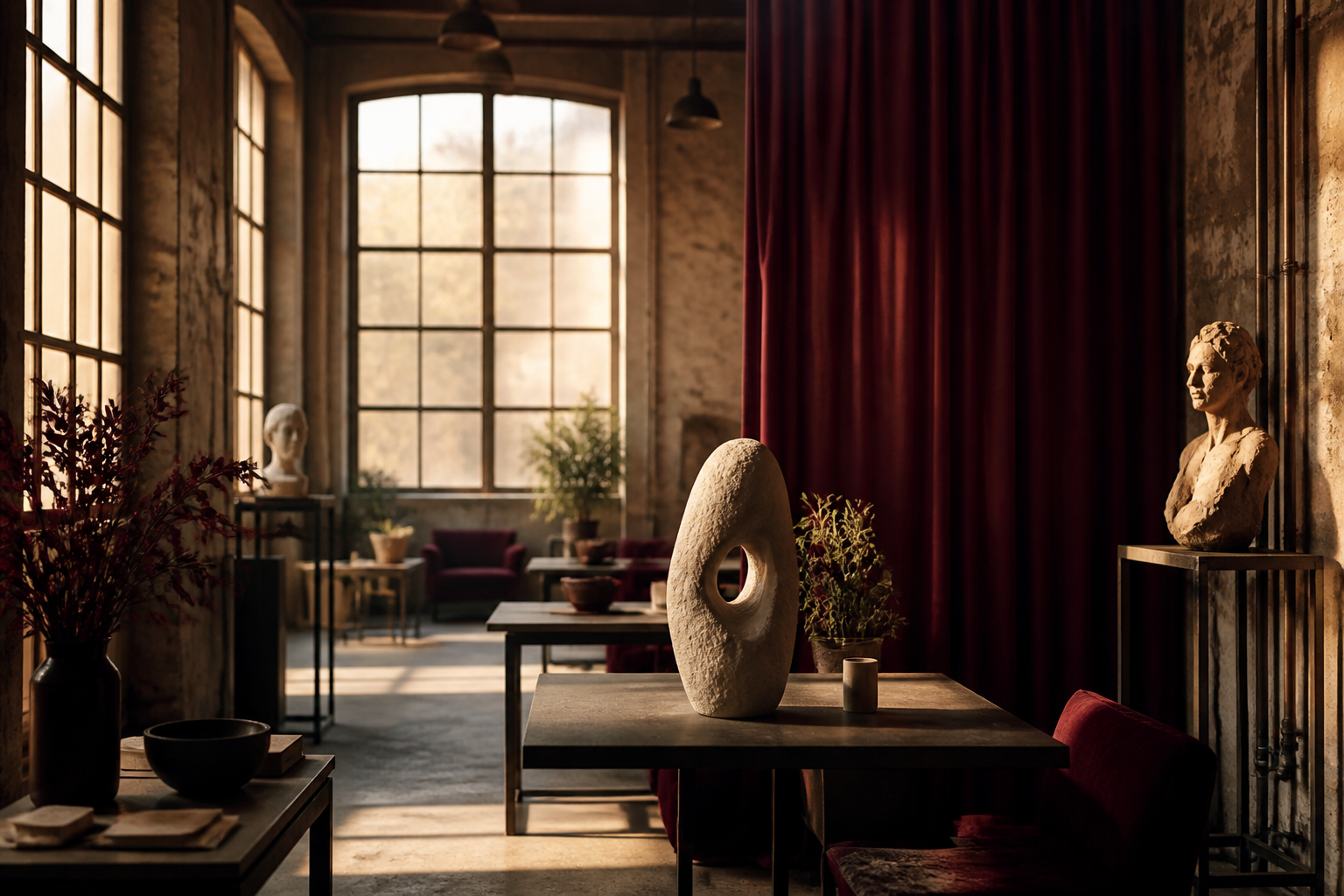
Today, the roar of machinery has been replaced by another kind of hum. Svilara has been restored with a sure touch: its raw industrial feel, with exposed brick walls and steel structures, has been preserved while the building has been adapted for contemporary artistic expression. It houses exhibition halls, open workspaces for local creatives and performance spaces for everything from independent theatre groups to panel discussions on urban development. Svilara does not function as a museum of the past, but as a catalyst for the future of Almaški kraj, inviting local residents to shape its programme themselves.
Eđšeg and the return of forgotten palaces
In sharp contrast to Svilara’s industrial aesthetic is the cultural station Eđšeg in the Grbavica district. This neo-Renaissance pavilion, designed by the celebrated architect György Molnár and built in 1890 for the city’s shooting club, was a central meeting place for Novi Sad’s society for decades. But in the post-war period the building was forgotten, left to decay and, by the end of the 20th century, was all but a ruin.
Thanks to an intensive restoration project launched just over ten years ago, Eđšeg has regained its former glory. Its magnificent wooden floor, tall windows and intricately decorated ceiling now provide a backdrop for classical concerts, literary evenings and workshops. Stepping inside is like travelling back in time, but the programme is anything but dusty. Classical music is combined with contemporary dance performances, and the garden outside has become an oasis for families with children in the neighbourhood.
Distrikt – the raw energy of Liman
Further south, in the Liman district, lies the area briefly known simply as "Distrikt" during the European Capital of Culture year. What was once a sprawling industrial area of workshops and factories has been transformed into a connected creative quarter. Among other venues, it is home to the cultural station KS Liman.
The area has retained its rough, Berlin-like character, with graffiti, weathered concrete and heavy iron doors. This is where Novi Sad’s alternative scene has found a home. Music festivals, underground concerts, digital art and large-scale outdoor exhibitions are held here. Distrikt shows the value of not tidying away the worn and weathered: by allowing the industrial patina to remain, the city has created a place where young artists can experiment without feeling constrained by the conventions of high culture.
Culture beyond the city centre
What is most unique about Novi Sad’s model, however, is the way the cultural stations have reached places that rarely make the cultural pages. KS Mlin is housed in a former pasta factory on Radnička ulica and focuses particularly on cultural activities for children and young people. Here, the next generation can meet professional artists in an environment that encourages them to create for themselves.
Further out still, in satellite communities and outlying districts such as Rumenka, Bukovac, Barka and Kovilj, similar stations have been established. Previously, people had to travel into central Novi Sad to see a theatre performance or visit an art exhibition. Now culture comes to them. In Rumenka and Kovilj, the stations have become important hubs for preserving local traditions and crafts, while also opening the door to new, contemporary influences.
Bringing culture into everyday life in this way is about more than entertainment. It is about democratisation. Giving residents in outlying districts their own fully equipped cultural venues fosters a sense of pride and involvement that extends far beyond the polished tourist trails.
A living legacy for the future
Walking through Novi Sad today, it is clear that the year as European Capital of Culture was not just a temporary festival, but a long-term investment in the city’s social fabric. By turning old industrial buildings into cultural stations, Novi Sad has not only saved unique architectural spaces from demolition – it has also created infrastructure for an independent cultural scene that will thrive for decades to come.
For Nordic travellers looking for something beyond the usual tourist destinations, Novi Sad’s cultural stations offer a perfect introduction to contemporary Serbian cultural life. It is here, among old silk machinery, restored shooting pavilions and raw factory walls, that the city’s true pulse can be felt.
Facts
Sources & further reading
Share the article
Translated from Swedish with AI assistance. Read the original.


