
The island that sold well-being before wellness had a name – Lošinj
On Lošinj, the first guests arrived for the air, the climate and recovery as early as the 19th century. More than 130 years later, the Croatian island has built a modern identity around the very same idea. But the story behind the "Island of Vitality" began long before wellness became a global industry.
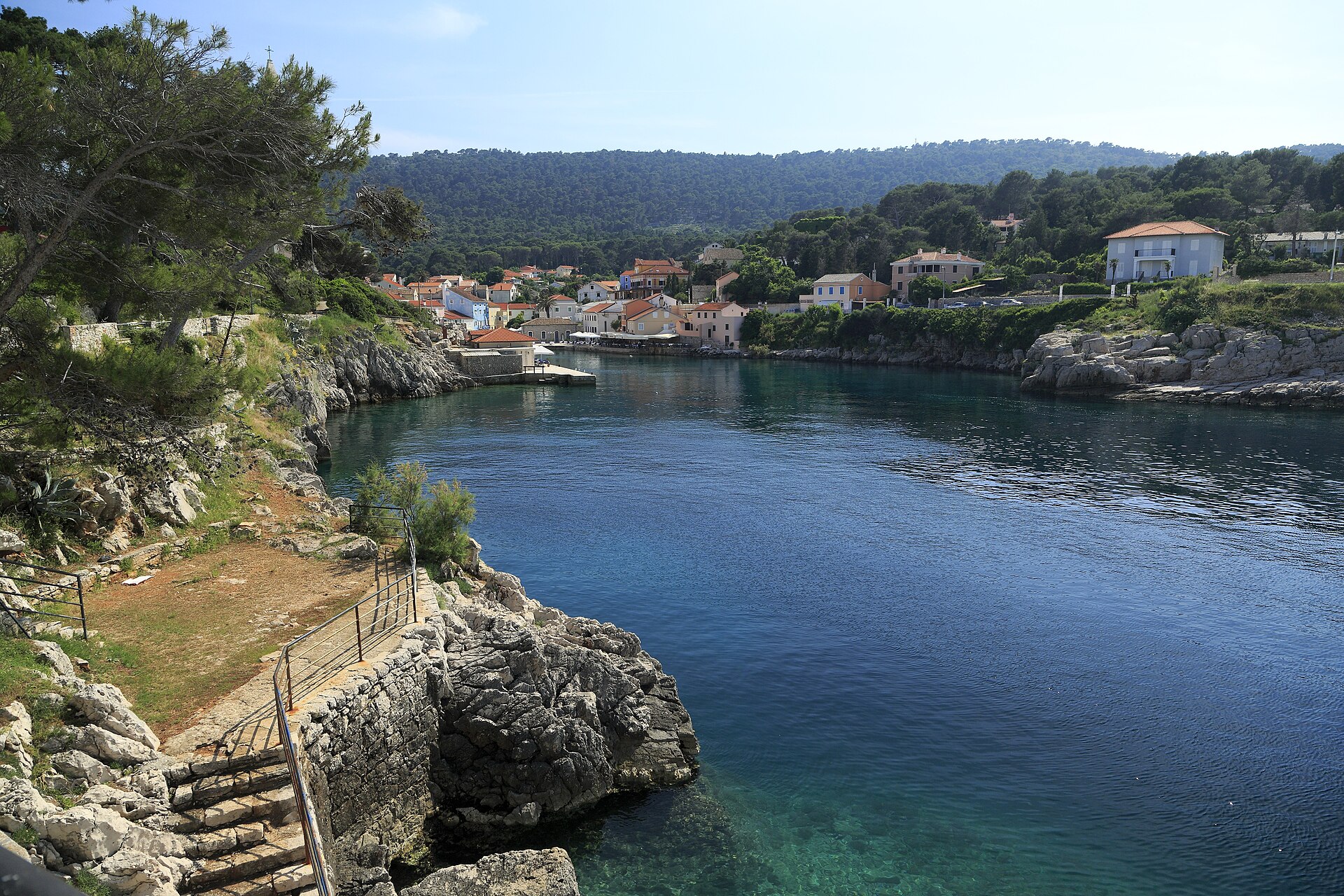
The first thing you notice about Lošinj is perhaps not what you see.
It is what you feel.
The scent of pine. The salt from the sea. The warmth from the stones. Herbs along the paths and the wind moving through the treetops before it reaches the promenade.
At a time when hotels worldwide are building spa departments, selling sleep programmes and speaking of recovery as the new luxury, Lošinj's story feels almost remarkably contemporary.
The difference is that the island started much earlier.
As early as the late 19th century, people came here for what would today be marketed as an exclusive wellness retreat: the climate, the sea air, nature and the opportunity to recover far from the big city.
In 1892, Mali Lošinj and Veli Lošinj were officially recognised as climatic health resorts. A key figure behind this development was Ambroz Haračić, a naturalist and teacher at the maritime school in Mali Lošinj, whose long-term meteorological observations contributed to the knowledge of the island's climate.
This makes Lošinj something more interesting than just another beautiful island in the Adriatic.
It is a place where one of the greatest travel trends of our time has roots dating back more than a century.
It all began with a boy who needed to recover
The history of modern tourism on Lošinj is usually dated to 21 January 1885.
The Austrian physician Conrad Clar arrived in Mali Lošinj accompanied by his son Walter, who was recovering from a severe illness. In local tourism history, this visit is regarded as the beginning of organised tourism on the island.
It was not a summer holiday.
It was January.
And that particular detail says a lot about the kind of destination Lošinj was becoming.
The early guests were not primarily seeking beaches for bathing. They came for the mild climate and for an environment that was considered beneficial for rest and recovery.
Haračić spent years conducting meteorological observations and studying the island's vegetation. His work, along with assessments from doctors such as Conrad Clar and Leopold Schrötter, helped Mali Lošinj and Veli Lošinj receive official status as climatic health resorts in 1892.
Subsequently, sanatoriums, guesthouses, hotels and villas sprang up, and the island began to attract visitors from the Central European aristocracy and the wealthy bourgeoisie.
Long before the word "wellness" became a global industry, Lošinj had begun to build a part of its economy around the human desire to feel better.
The forest that was not always there
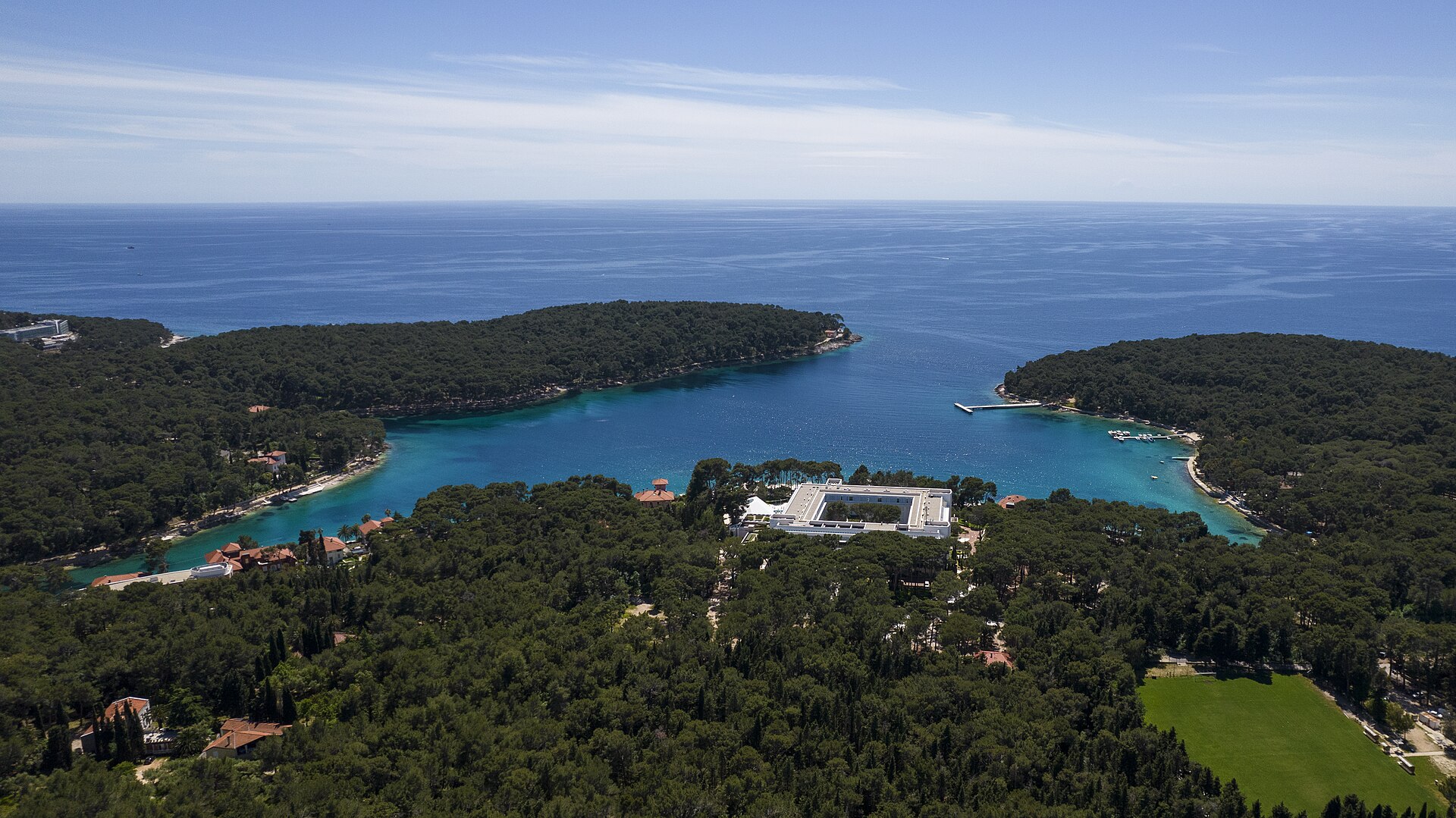
Today, it is almost impossible to imagine Lošinj without the pine trees.
Around Čikat in particular, the forest forms a green canopy over the walking paths. The sea is visible between the trunks, and the scent of pine blends with the salty air.
But parts of the landscape that today seem completely natural are the result of conscious effort.
Ambroz Haračić was a driving force in the local society dedicated to afforesting and beautifying previously barren areas around Mali Lošinj. Čikat and other areas were planted with species including Aleppo pine and black pine.
It is a fascinating detail in the story of Lošinj.
The nature that later became a part of the island's identity is not solely something that humans discovered.
To some extent, humans helped to shape it.
From health resort to Island of Vitality
More than a century later, Lošinj still builds much of its identity around the same fundamental idea.
The difference is the language.
Sanatorium has become spa.
Climatic cure has become wellness.
Walks have become hiking.
And today, the island markets itself under the name Island of Vitality.
It could easily have been just another polished tourism slogan, were it not for the history behind it.
Lošinj shows how a destination can build a modern tourism identity around qualities that have actually characterised the place for generations.
Of course, this does not mean that a week among the pines should be described as a medical treatment.
But perhaps that is precisely why the concept of recovery feels less contrived here than in many other destinations.
Another kind of wealth swims off the coast
Lošinj's identity does not end at the shoreline.
Bottlenose dolphins live in the Adriatic Sea surrounding the archipelago. Based in Veli Lošinj, the Blue World Institute works with research, education and the protection of the marine environment.
A central area of the institute's research is precisely the bottlenose dolphin, through the Adriatic Dolphin Project.
For the visitor, this adds another layer to the island's narrative.
The dolphin is not merely a symbol on a souvenir.
Here, there is a real scientific research environment behind it.
The man who waited nearly 2,000 years under the sea
And then there is another story that sounds almost fabricated.
In 1997, an ancient bronze statue was discovered at a depth of 45 metres in the sea near Lošinj.
The statue depicts a young athlete – an Apoxyomenos – and is dated to the first or second century BC. It was salvaged in 1999 after lying on the seabed for nearly two millennia.
Today, it has its own museum in the heart of Mali Lošinj.
Not just a room in a larger museum.
A museum built around a single, extraordinary object.
On an island that has built much of its identity around nature, the bronze sculpture becomes an unexpected reminder of something else:
people travelled across this sea long before anyone called Lošinj a destination.
Lošinj does not need to compete with Hvar
It is tempting to compare Croatia's islands with one another.
Hvar has its international reputation. Brač has Zlatni Rat. Pag has its distinct landscape and nightlife. Korčula has wine, stone towns and a strong historical identity.
Lošinj does not really need to win that competition.
Its strength lies elsewhere.
Here, the most interesting question is not which beach is the most beautiful.
It is why people continue to seek out this place for surprisingly similar reasons as they did more than 130 years ago.
Perhaps the luxury of our time has caught up with Lošinj
There is a paradox in contemporary travel.
For decades, luxury was about getting more.
Bigger hotels. More activities. More entertainment. More food. More shopping. More of everything.
Now, people increasingly pay for the opposite.
Silence.
Sleep.
Nature.
Walks.
Time without a schedule.
This is why Lošinj's old history suddenly feels so modern.
Not because the island has invented anything new, but because the rest of the world has begun to value the very things Lošinj built its early tourism identity around back in the 19th century.
And perhaps that is the finest reason to travel here.
Not to find the next big thing.
But to discover an island that understood the value of slowing down long before the rest of us started calling it wellness.
Practicalities · Lošinj
Getting there
For those arriving by car, the two main ferry routes to the Cres–Lošinj archipelago are Valbiska on Krk to Merag on Cres, and Brestova in Istria to Porozina on Cres. The islands of Cres and Lošinj are connected by road at Osor, so the journey continues by road to Lošinj. Valbiska–Merag takes about 25 minutes, and Brestova–Porozina about 20 minutes. Timetables vary by season and should always be checked before travelling.
When to go
July and August are perfect for those wanting classic midsummer weather, but for those seeking Lošinj's quieter side, late spring and early autumn are particularly appealing. During these times, walking, cycling and excursions can play a larger part in the trip than during the hottest summer days.
Where to stay
Mali Lošinj is the natural choice for those who want restaurants, harbour life and amenities close at hand. Veli Lošinj is smaller and quieter. The area around Čikat is particularly well-suited to those who prioritise pine forests, coastal walks and proximity to the sea.
Don't miss
Čikat and the coastal paths, Veli Lošinj, and the Museum of Apoxyomenos. Anyone interested in the marine environment can also familiarise themselves with the work of the Blue World Institute.
How long
Three to four nights are enough for an initial introduction, but five to seven days make it possible to truly adapt to the slower pace that forms a major part of Lošinj's appeal.
Good to know
Cres and Lošinj can easily be combined in the same trip as the islands are connected by road at Osor. Ferry connections and timetables are seasonal, so be sure to check current information before departure.
Share the article
Translated from Swedish with AI assistance. Read the original.


