
The Great Silence in Ljubljana: How Slovenia’s Car-Free Vision Became an Export Success
The first thing that strikes visitors to central Ljubljana is not what they hear, but what is missing. By closing the city centre to cars, the Slovenian capital has created a lively green living room — and a model that now inspires urban planners across the Nordic countries.
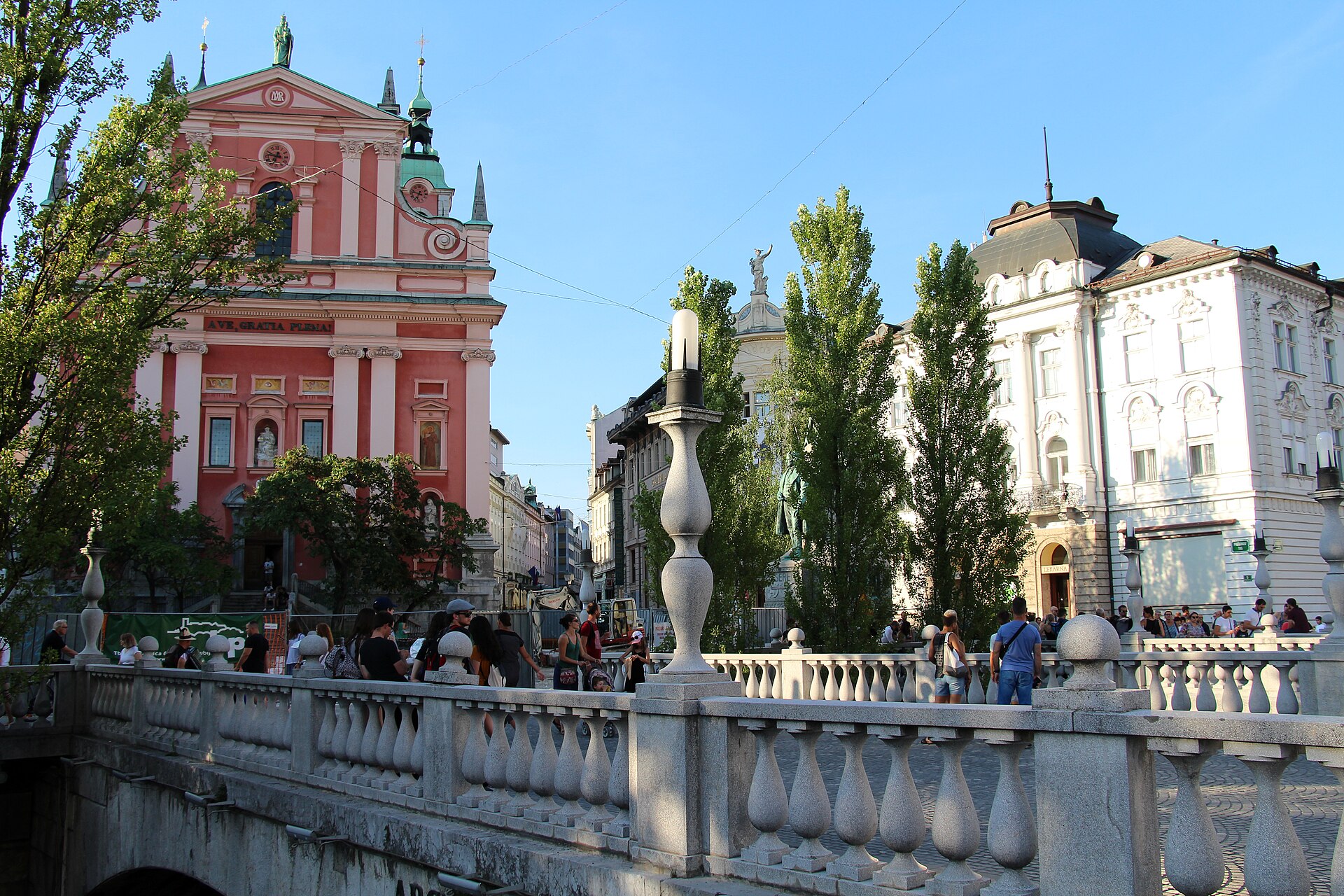
The first thing visitors notice in central Ljubljana is a striking absence of noise. No monotonous rumble of diesel engines, no tyres rattling over cobblestones, no sudden car horns. Instead, the air is filled with the chatter of riverside cafés, the soft clicking of passing bicycles and the rush of water.
The Slovenian capital’s almost meditative quiet is no historical accident. It is the result of one of Europe’s most radical urban planning decisions in modern times. In 2007, under the leadership of Mayor Zoran Janković, the city began implementing its strategic document, “Vision 2025”. The most controversial step was to close the entire historic city centre to motorised traffic. What was then met with scepticism from both business owners and motorists has since transformed Ljubljana into an international model of sustainable mobility — a blueprint closely studied by urban planners around the world as they grapple with cities’ dependence on cars.
Slovenska cesta: From traffic gridlock to green boulevard
At the heart of this transformation is Slovenska cesta, the city’s central thoroughfare. Until 2013, the street was a four-lane arterial road cutting straight through Ljubljana, carrying more than twenty thousand vehicles a day. The air was heavy with exhaust fumes, and the barrier between the historic city centre and the western districts was complete.
Today, the street is barely recognisable. It has been transformed into a “shared space” boulevard where pedestrians, cyclists and public transport share the space. Private cars are completely gone. The asphalt has been replaced with light-coloured paving stones, and rows of Siberian ash trees shade the broad pavements.
The transformation of Slovenska cesta shows that even the busiest traffic arteries can be reclaimed and returned to people. It is a change that closely echoes discussions now taking place about major streets in several modern cities, where architects are looking for practical examples of how to reduce the dominance of cars without bringing the city to a standstill.
Jože Plečnik’s legacy: Architecture on a human scale
Ljubljana’s success, however, is not based solely on modern engineering or political courage in the 21st century. It rests on a solid historical foundation laid by one of Europe’s most visionary architects: Jože Plečnik. During the interwar period, after working in both Vienna and Prague, Plečnik returned to his home city with a vision of transforming the provincial town into a modern centre of culture.
Plečnik did not design for cars. He designed for people on foot. His architecture is characterised by classical columns, open squares and monumental yet intimate public spaces. His most famous work, the Triple Bridge (Tromostovje), is a perfect example of his philosophy. By adding two pedestrian bridges, one on either side of the existing 19th-century stone bridge, he created a natural funnel leading people from central Prešeren Square across to the old city’s marketplaces.
When Ljubljana’s modern planners closed the city centre to cars, they did not need to invent entirely new urban structures; above all, they needed to free Plečnik’s existing vision from the post-war focus on cars. Bridges such as the Triple Bridge once again became the meeting places they were originally designed to be. History thus became the tool that legitimised the green revolution.
Kavalir and the logistics of everyday life without cars
Creating a car-free city is not simply a matter of putting up prohibition signs. A functioning city requires logistics, especially for older people, people with limited mobility and deliveries. Ljubljana’s solution to this dilemma has become one of the city’s best-loved symbols: Kavalir.
The Kavalir system consists of a fleet of small, green electric vehicles resembling spacious golf carts. They move quietly and slowly through the car-free lanes, from Wolfova Street to Kongresni trg (Congress Square). The vehicles are completely free for everyone to use — from local residents carrying heavy shopping bags to visitors with tired feet. You can either flag down a Kavalir in the street or call for one, much like an on-demand minibus.
For slightly longer journeys, the city has developed the BicikeLJ cycle scheme, where the first hour of use is free. The whole system is linked by the Urbana card, a smart card that works as a payment and access card for buses, bicycles, car parks outside the car-free zone and even the city’s libraries. By offering these integrated solutions, the city has shown that life without a car need not mean poorer mobility — on the contrary, the city becomes more accessible to the groups who find it hardest to get around independently.
Life along the Ljubljanica: The city’s shared living room
The effects of the green revolution are most clearly felt along the Ljubljanica River. In the decades after the Second World War, the riverbanks served mainly as car parks, and the river itself was heavily polluted. Today, the riverside has reclaimed its role as the city’s social lifeline.
Tree-lined promenades run along both sides of the water, bordered by cafés and restaurants where locals meet for a coffee or a glass of Slovenian wine. The old car parks have been replaced by squares, pocket parks and stone steps leading down to the water, where people sit to read or simply watch the boats glide quietly past. The car-free zone has also made room for a richer outdoor cultural life, with temporary exhibitions and flea markets fitting seamlessly into the open spaces. From the city centre, greenery flows naturally into the vast Tivoli Park, almost erasing the boundary between city and nature.
A model for the future of urban planning
Ljubljana’s journey from a car-centred post-communist city to an award-winning green capital shows that radical change is possible in a relatively short time. This is what draws urban planners, architects and politicians from around the world to Slovenia.
Proposals for car-free zones often prompt debate about whether businesses will suffer or accessibility will decline. Ljubljana has shown that these concerns can be overcome with the right planning: businesses in the city centre have flourished since cars disappeared, and smart mobility solutions such as Kavalir have made the centre more accessible to those who need it most.
The example shows that people will make use of public spaces as soon as they are given room and a sense of safety. By combining Jože Plečnik’s timeless architecture with modern green technology, Ljubljana has not only created a better city for its own residents — it has given the rest of Europe a practical blueprint for what urban life could look like in the future.
Facts
The green transformation in figures
- Car-free zone: Since 2007, Ljubljana’s car-free zone has expanded to more than 17 hectares in the historic city centre.
- Kavalir: Small, green electric vehicles that provide free rides in the car-free zone for anyone who needs one.
- BicikeLJ: The city’s bike-sharing scheme, with more than 80 stations where the first hour is always free.
- Urbana card: The shared smart card for buses, bicycles, car parks and the city’s libraries.
Sources & further reading
- resetera.comPeople protested when Ljubljana's city center went car-free. Now they ...
- urban-mobility-observatory.transport.ec.europa.euPedestrianisation of Ljubljana city centre
- ebrdgreencities.comPedestrianisation and car-free zones: Ljubljana, Slovenia – EBRD
- eumiesawards.comSlovenska Street Renovation - EUmies Awards
Share the article
Translated from Swedish with AI assistance. Read the original.


