
The dream of the Albanian Riviera – why Swedes are buying homes in Saranda
As prices on Spain’s sunny coast and in Italy’s hilltop villages have soared beyond reach, more and more Swedes are turning their attention to south-eastern Europe. In southern Albania, buyers are met with turquoise water, dramatic mountains and a property market gripped by gold fever. But behind the promises of cheap square metres lie both legal labyrinths and a local population watching its hometown change from the ground up.
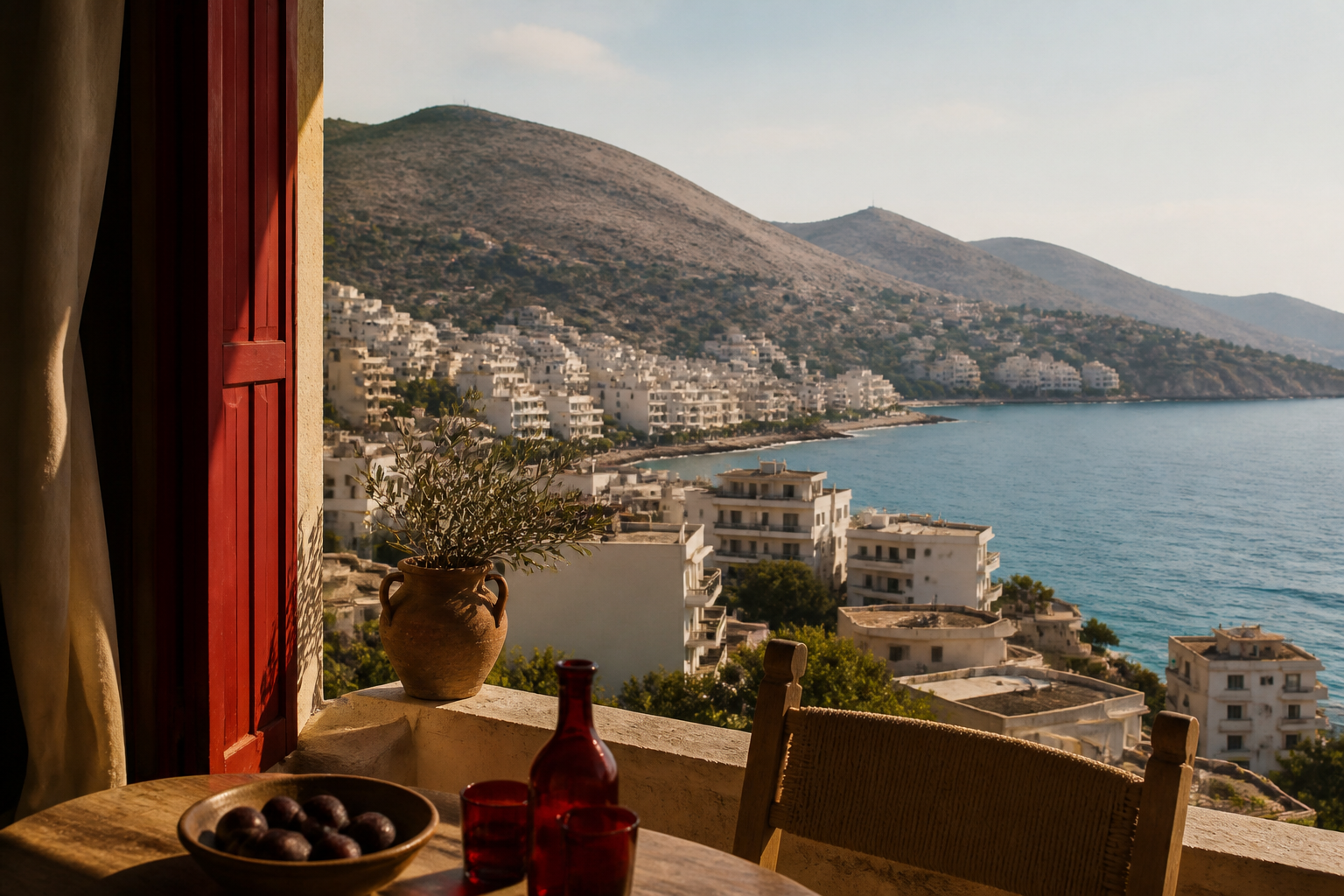
As the sun sinks over the Ionian Sea and bathes Saranda Bay in gold, the lights of Corfu come on just off the coast. It is so close that you can almost make out the outlines of the Greek hotels on the other side of the strait. But on this side of the water, in southern Albania, the atmosphere is different. The smell of freshly grilled fish mingles with that of wet concrete. The sound of waves lapping is accompanied by the rhythmic thudding of drills and construction cranes reaching towards the sky.
Saranda, once a sleepy fishing village that during the communist era served mainly as a holiday resort for the local elite, has become the epicentre of one of Europe’s most dynamic property booms. Among the foreign buyers flocking to the city, Swedes and Norwegians are an increasingly noticeable group. They are looking not only for an affordable holiday home, but also for a piece of the unspoilt Mediterranean that seems to have disappeared in the more developed countries to the west.
The financial case for the Ionian Sea
It is no secret what first attracts Nordic buyers: the price. While an average apartment with a sea view in Spanish Marbella or on the French Riviera can easily cost staggering sums, southern Albania has long offered homes by the sea for a fraction of that price. Although prices have risen sharply in recent years, the price per square metre in Saranda is still highly competitive.
But it is not just about the purchase price. The cost of living in Albania is among the lowest in Europe, making everyday life—with restaurant meals, produce from the local market and services—remarkably affordable for anyone with a Swedish income or pension.
But the market is changing rapidly. While Saranda offers a more affordable option, more exclusive neighbouring resorts such as Himara and the dramatically situated Dhërmi further up the coast have begun to target the luxury market. Design villas and boutique hotels are being built for an affluent international clientele. Inspiration is often drawn from Vlora, where the extensive redevelopment of the seafront promenade, Vlora lungomare, has shown how modern urban planning can raise an entire city’s profile and property values.
Legal pitfalls and tighter regulations
Buying property in a country outside the EU brings a very different set of challenges from doing business in Spain or France. Albania’s property register has historically been affected by bureaucracy, corruption and unclear ownership – a legacy of the period after the fall of communism in 1991, when state land was to be returned to private hands.
For a foreign buyer, it is absolutely essential to navigate the process with the help of independent legal expertise. All property transactions must be registered with the state property agency, State cadastre agency (ASHK). One of the most common pitfalls is buying a home in a newly built property where the developer has not yet obtained the final ownership certificate, known as the certifikatës së pronësisë. Without this document, you do not legally own the property, which can lead to years of legal uncertainty.
In addition, the Bank of Albania, the country’s central bank, has tightened controls on financial transactions in recent years to combat money laundering. This means that every flow of money must be accounted for in minute detail. For Swedish buyers, who are used to smooth digital processes, Albanian bureaucracy can feel both slow and frustrating.
Inna Kataeva, an experienced figure in the local property industry who works closely with foreign investors, stresses the importance of patience. Companies such as Investropa are helping to drive clear professionalisation in the market, but she also emphasises that no shortcuts should ever be taken. Buying an off-plan home in the hope of a quick rise in value requires thorough due diligence on the developer’s financial history and previous projects.
The downside of gold fever
But the boom is not all sunsets and successful investments. The rapid transformation of southern Albania also has a downside, creating tensions in the local community.
As foreign buyers push up prices, it has become increasingly difficult for young Albanians to get onto the property ladder in their hometowns. An average Albanian salary rarely stretches to the prices now being asked in central Saranda. Many local families are forced to move away from the coast, inland or to the capital, Tirana, risking a loss of the cities’ permanent populations.
Infrastructure is also struggling to keep pace with the explosive rate of construction. During the summer months, when the city’s population multiplies, water and electricity supplies and waste management come under severe pressure. There are also concerns that the unique coastal environment is being lost in a forest of anonymous concrete blocks.
The contrasts that attract
Despite the challenges, it is hard not to be swept up in the optimism that defines the region. For many Swedes, it is precisely the contrasts that make it appealing: modern, cosmopolitan life existing side by side with the traditional and unpretentious.
Many people who buy a home on the coast choose to combine their stays with visits to Tirana. The contrast between Saranda’s laid-back beach life and the capital’s feverish pace is complete. In Tirana’s trendy Blloku district, where the communist dictatorship’s elite once lived in isolation behind walls, colourful cafés and award-winning restaurants now jostle for space. Here, you meet a young, well-educated, English-speaking population.
Huge urban development projects are also under way in the capital, including New boulevard, reflecting the country’s ambition to look ahead and integrate with the rest of Europe. At the same time, oases such as Liqeni artificial, the large artificial lake in the southern part of the city, offer a place to unwind.
Buying a home in Saranda today is more than a property purchase; it is a choice to position yourself at the crossroads of old and new Europe. For Swedish buyers who enter the process with their eyes open, realistic expectations and respect for the local culture, an adventure awaits that is far more colourful than the traditional life found on established sunny coasts.
Facts
THINGS TO BEAR IN MIND WHEN BUYING PROPERTY IN ALBANIA
- Ownership certificate (certifikatë pronësie): Never buy a property without confirming that this document exists and is registered with the State cadastre agency (ASHK).
- Independent lawyer: Always hire your own legal representative, who is not connected to the estate agent or developer.
- Bank transactions: All payments must be made through official bank accounts. Keep all documentation showing where the funds came from to meet the Bank of Albania’s requirements.
- Infrastructure: Check the property’s access to water, electricity and sewage – especially in newly built areas where connections may be delayed.
Sources & further reading
- Sveriges ambassad i TiranaSweden Abroad - Ambassadens reseinformation för Albanien
- Albaniens turistbyråAlbanian National Tourism Agency
- investropa.comAlbania Real Estate Market Analysis (2026) - Investropa
- balfinrealestate.comInvestimi në prona të paluajtshme dhe kuadri ligjor në fuqi
Share the article
Translated from Swedish with AI assistance. Read the original.


