
The Cash Shock in the Balkans: Why Your Swedish Bank Cards Stay in Your Wallet
In Sweden, only five per cent of people paid in cash the last time they made an in-store purchase. In the Balkans, your card works at the hotel, petrol station and supermarket – but not at the bakery, in a taxi or at the market. The cash shock isn’t about cards no longer working; it’s about Swedish travellers having to think about something we’ve almost forgotten at home. And it’s about the region no longer being the budget destination it once was.
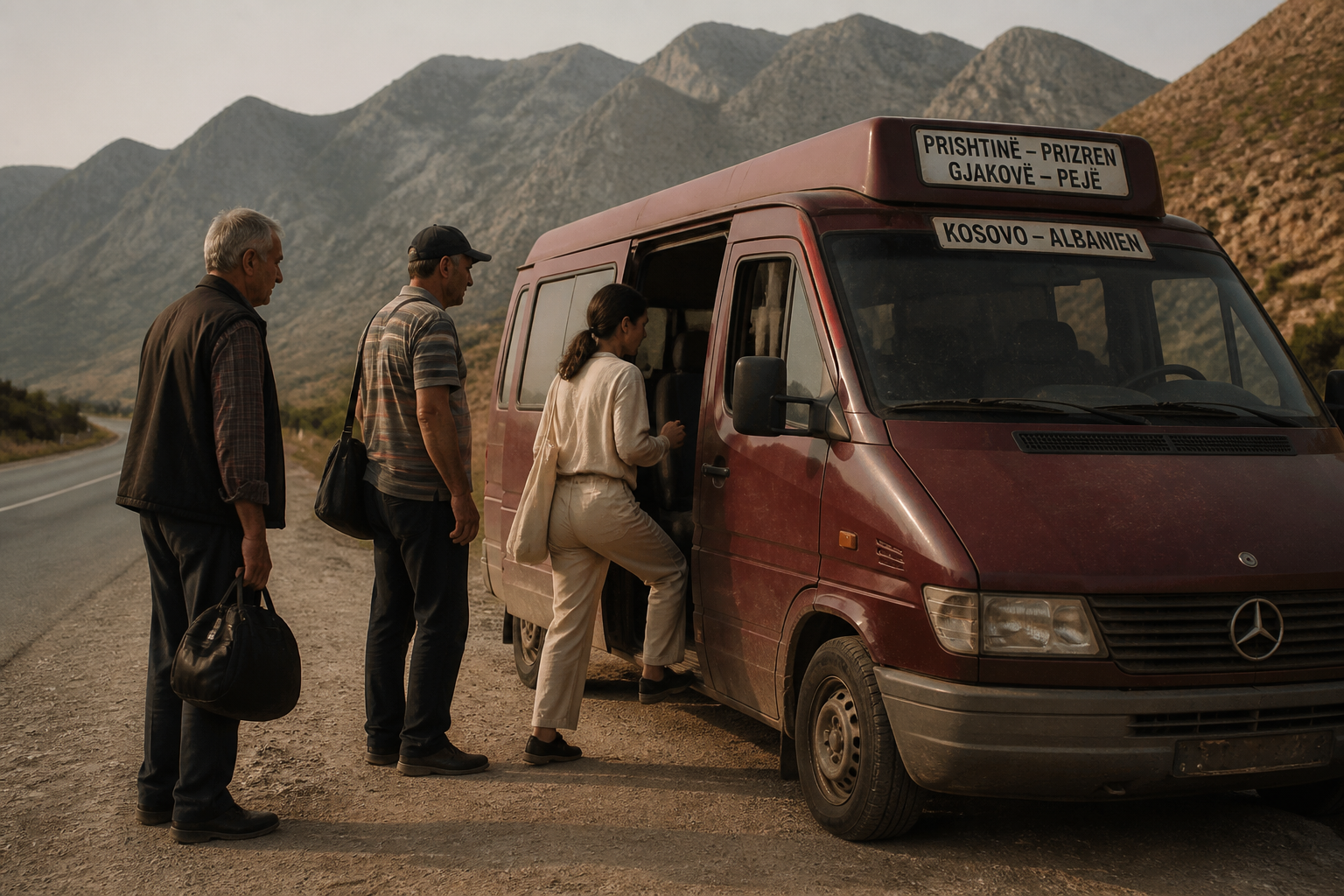
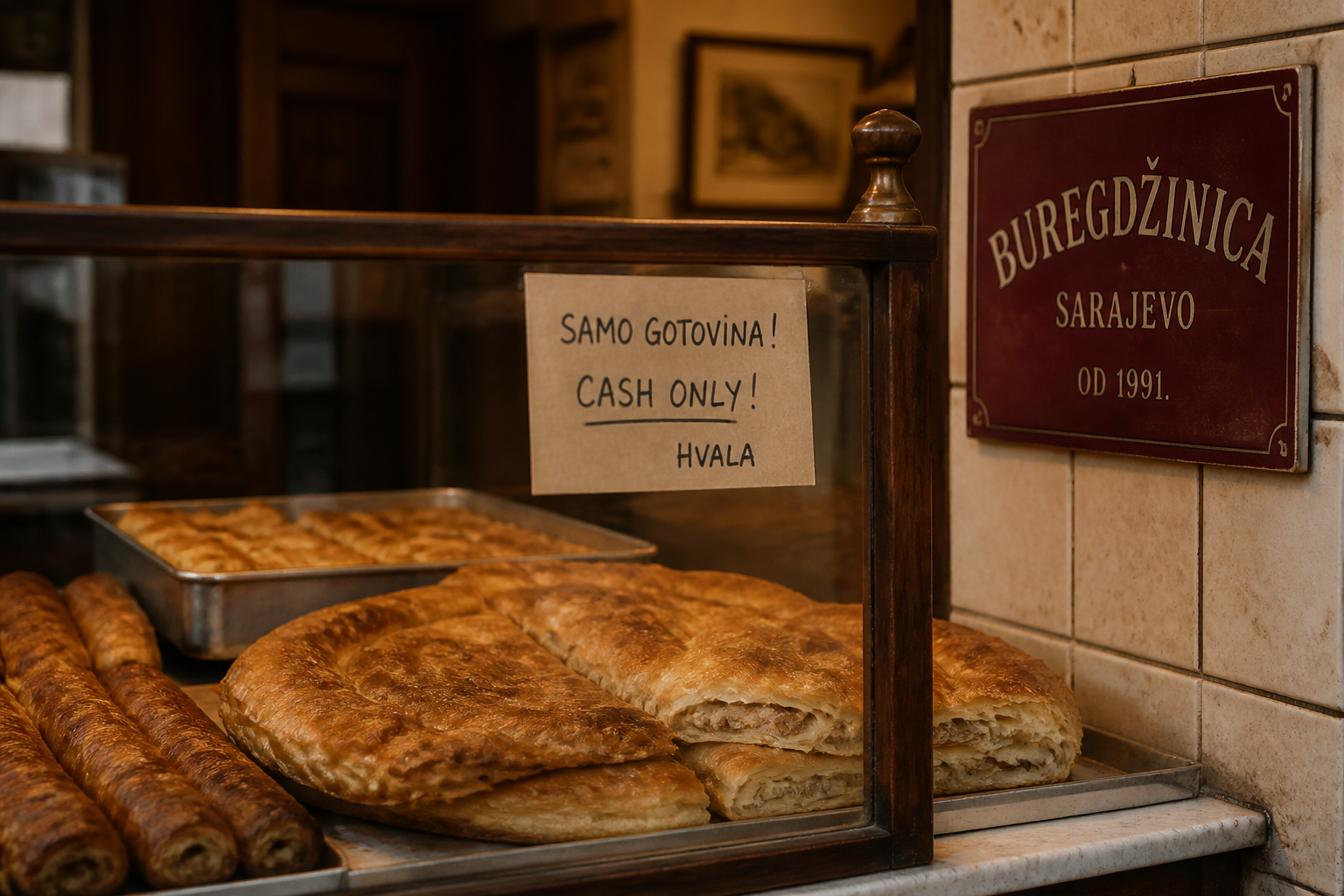
There’s a moment almost every Swedish traveller in the Balkans will recognise. Not at the hotel reception in Split, not at the petrol station outside Belgrade and not at the supermarket in Sarajevo – there, the card goes through, followed by a receipt and a nod. The moment comes later: in the taxi from Podgorica airport, at the market stall in Mostar where the tomatoes sit in wooden crates, in the small family-run guesthouse in a Bosnian mountain village, in front of the bakery where the tray of burek has just come out of the oven.
That’s where someone reaches for a notebook instead of a card terminal. And that’s where the Nordic traveller discovers she’s forgotten something that was second nature a generation ago: carrying cash.
That’s the real cash shock. It’s not that cards never work – they do, and increasingly so – but that cash still plays a part in everyday life that Sweden has effectively done away with.
Sweden is the outlier, not the Balkans
To understand the contrast, you have to start by looking at Sweden. In the Riksbank’s 2026 Payments Report, five per cent of Swedes say they paid in cash the last time they made an in-store purchase – down from ten per cent just two years earlier. The figure is even lower in Norway and slightly higher in Denmark. In most of Europe, cash is still the most common way to pay in physical shops.
In other words, it’s not the Balkans that are unusual. It’s us. Swedish travellers leave the world’s most digitally advanced payment culture for the normal world, and quite naturally interpret that normality as backwardness.
The Riksbank has also started to apply the brakes. It now recommends that households keep cash at home in a range of denominations and stresses that several payment methods must work alongside one another, for reasons of preparedness. What looks old-fashioned at a market in Novi Pazar is described by Sweden’s central bank as a form of societal resilience that Sweden risks having designed out of its systems.
Change has been rapid – and uneven
The image of the Balkans as a cash-based region is also becoming increasingly outdated. The figures point clearly in one direction.
At the end of 2025, Serbia had around 13.3 million payment cards and just over 184,000 active retail outlets with card facilities – an increase of almost fifteen per cent in a year and close to double the number in 2020. In the first quarter of 2026, more than 195 million card transactions were made with Serbian merchants, almost twenty per cent more than the year before. At the same time, instant payments and QR solutions are growing rapidly, and the central bank is preparing a cap on fees for cards issued abroad – an issue that has come to light precisely because tourists are paying by card so often.
At the turn of the year, Bosnia and Herzegovina had just over 2.6 million active cards in a country with a population of just under 3.5 million, according to the central bank’s annual card report. In 2026, government agencies and business organisations launched a joint initiative to further increase the share of digital payments.
Croatia and Slovenia are effectively already there. Croatia adopted the euro in 2023, card acceptance is on a par with Western Europe, and contactless payments work in small shops, on buses and at markets. Montenegro has used the euro since 2002 and card acceptance is good in coastal resorts. Albania and Kosovo are further behind but catching up quickly: hotels, larger restaurants and chain stores in Tirana and along the Riviera take cards, while you need cash in lek or euros as soon as you leave the tourist trail.
So the divide doesn’t run between Sweden and “the Balkans”. It runs between town and countryside, tourist areas and everyday neighbourhoods, larger businesses and sole traders – and between countries at different stages of the same change.
Where cash still rules
The places where Swedish travellers should reasonably expect to need banknotes are fairly predictable, and broadly the same across the region: small cafés and bakeries, town squares and street markets, some taxis that don’t take app bookings, privately rented rooms and flats, small family-run guesthouses, entrances to small museums and monasteries, local buses and minibuses, and most places in the countryside.
The reasons are more prosaic than cultural. For a café selling an espresso for the equivalent of ten kronor, terminal rental and transaction fees are a noticeable expense. Business organisations in the region have repeatedly pointed to fee levels as an obstacle, and that’s also where reform efforts are now focused. At the same time, the informal economy in the Western Balkans is larger than the EU average, and cash leaves no trace – a structure built on decades of weak trust in the state and tax authorities rather than reluctance to embrace technology.
Anyone who concludes that the region is hostile to technology has missed something: internet connections are often faster and cheaper than in Sweden, and e-commerce is well developed. What persists instead is another habit – cash on delivery, handed over when the courier knocks at the door.
And no, it’s not cheap any more
The second assumption that needs adjusting is about the value of money rather than its form. The Balkans as a budget destination is becoming a thing of the past, at least in the places Swedes tend to visit.
Croatia is the clearest example. In summer 2026, the European press reported half-empty beaches and hotel rooms available in high season, blaming the prices: sun loungers in Dubrovnik costing amounts close to Swedish levels, and fish dishes on the terraces in the same price bracket as back home. Many hotels and restaurants took the opportunity to raise prices when the euro was introduced in 2023, and the European Commission’s forecast puts inflation in Croatia at 4.6 per cent in 2026 – higher than the year before.
Montenegro’s coastal resorts follow the same pattern. Further inland, in Bosnia, in Serbia outside Belgrade and in Albanian mountain villages, prices are still in a different league. This gives the trip a curious duality: you can pay 250 kronor by card for a tuna steak at a seaside terrace on the Adriatic, then three hours later pay 60 kronor in cash for a better dinner.
How to plan in practice
The rules are simpler than their reputation suggests.
Withdraw local currency from a proper bank ATM, not from the freestanding yellow and blue machines where tourists tend to go – they offer terrible exchange rates. Always choose “without conversion” when prompted. Carry the right currency for the country: euros in Croatia, Slovenia, Montenegro and Kosovo, convertible marks in Bosnia and Herzegovina, dinars in Serbia, lek in Albania, denars in North Macedonia. Euros are informally accepted in some tourist spots in countries that use the dinar, but at a poor rate and with change given in local currency.
Keep a sensible cash reserve – the equivalent of a few hundred kronor will cover a day of taxis, coffee, markets and admission fees. Save your small notes: you can’t pay for a coffee with a hundred-euro note. And expect your card to work for big purchases, while cash is needed for small ones.
The cash shock isn’t a step backwards, then, but a reminder. Two payment cultures exist side by side in the Balkans, and both seem to be here to stay. In Sweden, we opted out of one of them. It’s only when you travel that you realise what that choice meant.
Facts
CARD OR CASH – COUNTRY BY COUNTRY (2026)
- Croatia and Slovenia: euro. Card acceptance on a par with Western Europe, with contactless payments also accepted in small shops and on buses. Cash is mostly needed at markets and with small-scale accommodation providers.
- Montenegro: euro (unilaterally since 2002). Good card acceptance in coastal resorts and cities, less so inland.
- Bosnia and Herzegovina: convertible marks (BAM), pegged to the euro. Good card acceptance in Sarajevo and Mostar; cash in smaller towns, at markets and with private hosts.
- Serbia: dinar (RSD). Cards work well in Belgrade and Novi Sad, and increasingly across the rest of the country; kafanas, local transport and the countryside are often cash-only.
- Albania and Kosovo: lek and euro respectively. Cards accepted at hotels, larger restaurants and chain stores in cities and tourist resorts; cash for food, taxis and markets.
- North Macedonia: denar (MKD). Cards accepted in cities and at larger businesses; cash elsewhere.
Sources & further reading
- Sveriges riksbankBetalningsrapport 2026 – svenska folkets betalningsvanor
- Centralbanken i Bosnien och HercegovinaCard Operations in BH in 2025
- Serbian.NewsSerbia’s Digital Payments Growth Reshapes Banking and Fintech Competition
- Serbia BusinessSerbia moves to cut foreign card costs
Share the article
Translated from Swedish with AI assistance. Read the original.


