
The Bohinj Railway: Through the Julian Alps by Train
It was designed to link the Austro-Hungarian Empire with the Adriatic Sea. Today, Slovenia’s Bohinj Railway is enjoying an unexpected renaissance. For Nordic rail travellers, its spectacular route – complete with historic steam locomotives, a car train and the world’s largest stone bridge – offers a perfect link between the mountains of Central Europe and the Mediterranean breeze.
The contrasts are striking as the train pulls out of Bohinjska Bistrica station. Behind us lie the dramatic, snow-capped peaks of the Julian Alps and the deep blue waters of Lake Bohinj. Ahead is one of Europe’s most spectacular and historically significant railway routes. The Bohinj Railway – or Bohinjska proga in Slovenian – is more than just a transport link; it is a journey through time and space, and a testament to heroic engineering.
For a new generation of Nordic interrailers seeking climate-smart and rewarding alternatives to flying or the overcrowded motorways leading south to the Mediterranean, this 85-kilometre railway has become a key link. Rather than simply hurrying past the Alps, the Bohinj Railway invites you to travel slowly, letting the landscape change gradually – from alpine highlands to vineyards in a Mediterranean climate.
Imperial engineering through the Alpine massif
The Bohinj Railway was born out of a huge infrastructure project in the early 20th century. The Austro-Hungarian Empire needed a direct strategic link from Vienna and the country’s industrial heartland to the Adriatic port city of Trieste. The solution was the “Neue Alpenbahnen”, a network of railways cutting straight through the Alpine barriers. When Emperor Franz Joseph inaugurated the line in 1906, it was hailed as one of the greatest engineering achievements of its time.
Building a railway in this terrain required heroic efforts. Workers had to negotiate narrow gorges, cross fast-flowing rivers and bore deep into the limestone mountains. The most challenging section was the Bohinj Tunnel. At 6,327 metres long, running beneath the massive Mount Kobla, it was a marvel of precision. When the two teams digging from opposite ends finally met in the darkness of the mountain, their measurements were out by barely a few centimetres.
As well as the tunnel, the route required dozens of bridges and viaducts. The best known is Solkan Bridge, near the Italian border. The bridge spans the emerald-green Soča River with a central arch measuring 85 metres, making it to this day the world’s longest stone arch railway bridge. Crossing it, with the river far below, is one of the absolute highlights of the journey.
A living museum on rails
Today, the service is owned and operated by Slovenia’s state railway company, Slovenske železnice (SŽ). Modern, quiet Stadler Flirt trains with large panoramic windows serve daily commuters and regular tourists. But for those who want to experience the past first-hand, special heritage excursions run during the summer months.
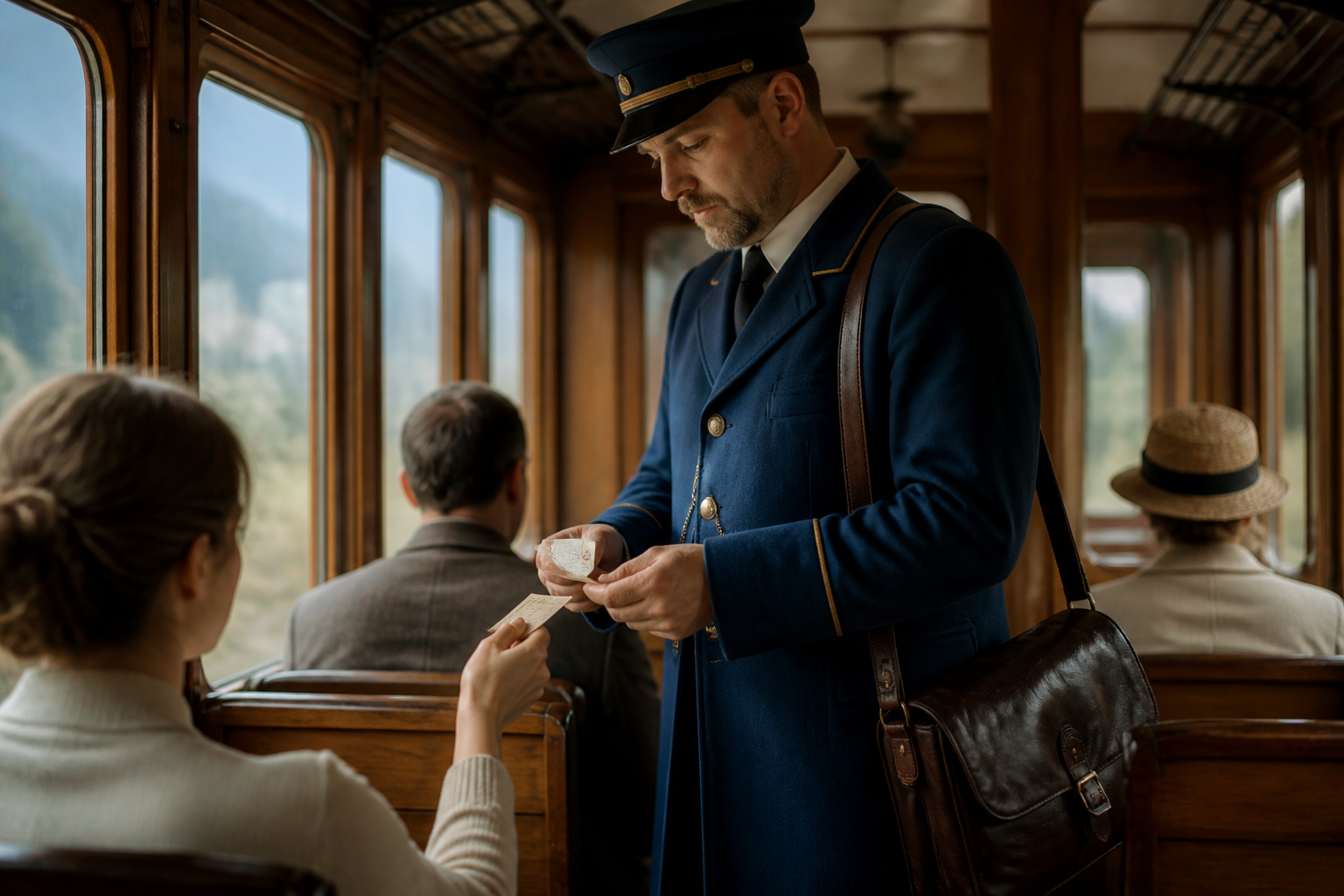
When the historic heritage train, hauled by the old steam locomotive SŽ 25-026, pulls into the platform, the air fills with the smell of coal smoke and hot oil. The conductors wear period uniforms, and the carriages, with their wooden benches, take passengers straight back to the early 20th century. The train chugs through the Baška Valley, and its slow pace gives you time to take in every detail of the passing stone villages, steep mountain slopes and deep gorges.
The unique car train, Avtovlak, is also particularly popular with interrailers and active travellers. Carrying cars, bicycles and foot passengers, it is one of the last remaining services of its kind in Europe over such short distances. By driving onto the open carriages at Bohinjska Bistrica, travellers and their vehicles can pass straight through the Bohinj Tunnel to Podbrdo or Most na Soči in just a few minutes. This saves more than half an hour of complicated, steep mountain driving on narrow roads – and offers a memorable train ride with the wind in your hair.
From alpine Bohinj to a Mediterranean feel in the south
The real magic of the journey lies in the rapid changes in landscape and culture. We start in Bohinjska Bistrica, a hub for outdoor activities where the air is crisp and the forests dense. Here, hiking trails, fly-fishing and ski resorts define alpine Slovenia.
Once the train has passed through the tunnel and heads south along the Soča Valley, the landscape changes noticeably. The mountains soften, the forests give way to orchards and vineyards, and the stone houses acquire flat, terracotta-coloured roofs. By the time the train reaches its final stop in Nova Gorica, the alpine chill has been completely replaced by mild winds from the Adriatic Sea.
Nova Gorica, which together with its Italian neighbour Gorizia has been named a European Capital of Culture, is a fascinating place. Here, Slavic and Romance Europe meet. You can literally stand with one foot in Slovenia and the other in Italy in the shared Europe Square in front of the station. It is the perfect end to a journey that shows the railway is not just a means of transport, but a living bridge between cultures, eras and landscapes.
Facts
FACTS: THE BOHINJ RAILWAY (BOHINJSKA PROGA)
- Route: Runs between Jesenice in the north and Nova Gorica in the south (approx. 85 km).
- History: Inaugurated in 1906 by the Austro-Hungarian Empire to give Central Europe access to the port of Trieste.
- Solkan Bridge: The world’s longest stone railway bridge, with an 85-metre arch over the Soča River.
- Bohinj Tunnel: The railway’s longest tunnel (6,327 metres), running straight beneath the Alpine massif of Kobla.
- Avtovlak: The popular car train that carries cars, bicycles and passengers through the Bohinj Tunnel between Bohinjska Bistrica and Most na Soči.
Sources & further reading
- rail-away.comSlovenia's Scenic Adventure – The Bohinj Railway Motorail
- slovenia.infoThe most beautiful train journeys in Slovenia
- zelezniskimuzej.siMuzejski vlak v čast 120. obletnici Bohinjske proge - Železniški muzej
- gorenjskainfo.comFOTO in VIDEO: Po Bohinjski progi znova zapeljal muzejski vlak ...
Share the article
Translated from Swedish with AI assistance. Read the original.


