
The Balkan Autumn Arts Season: Three Festivals for the Curious Traveller
As mass tourism retreats from the Adriatic coast, the Balkan capitals come alive in a different way. During the autumn months, Sarajevo, Belgrade and Zagreb become stages for some of south-eastern Europe’s most dynamic and internationally minded cultural festivals. For Nordic cultural travellers, September, October and November offer a perfect introduction to the region’s contemporary art and filmmaking.
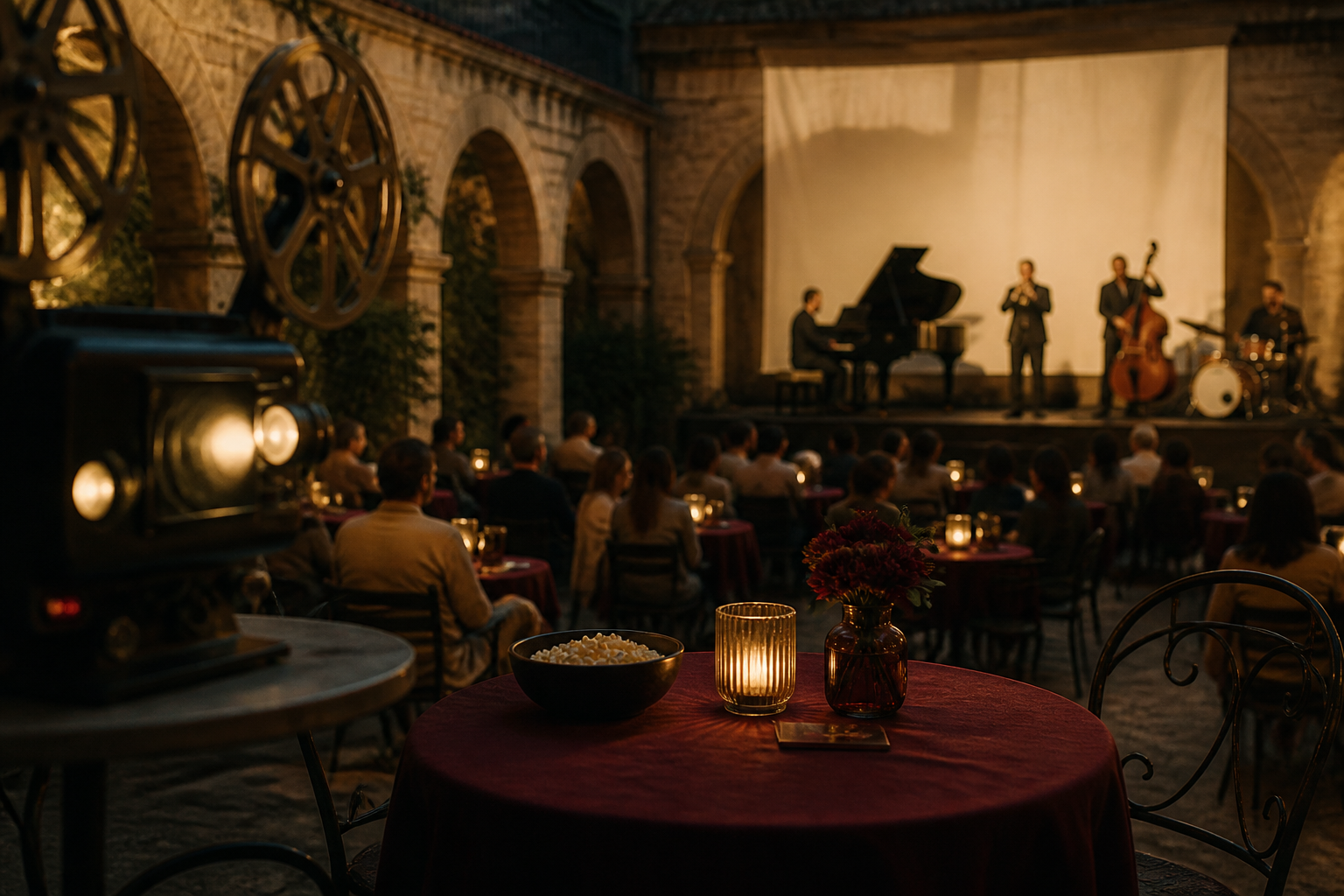
Once the worst of the summer heat has passed and the last beachgoers have packed away their sun loungers on the Croatian islands, a noticeable shift takes place in the Balkans. It is now, in the mild, clear months of autumn, that local cultural life in the inland capitals really comes into its own. This is no nostalgic look back, but a lively, forward-looking scene where international encounters and uncompromising artistic vision take centre stage.
For a Nordic audience, the autumn festivals in Sarajevo, Belgrade and Zagreb offer the chance to experience culture of the highest international calibre in settings that feel both more intimate and considerably more accessible than comparable events in western Europe.
Sarajevo in September: Documentary film with a global outlook
In September, when the city is still bathed in the warm, golden light of late summer and the scent of freshly baked somun bread mingles with the crisp air from the surrounding mountains, the spotlight turns to Sarajevo’s documentary film scene. AJB DOC Film Festival, organised by Al Jazeera Balkans, has quickly established itself as one of the most important platforms for socially engaged documentary film in south-eastern Europe.
Unlike the larger and more glamorous Sarajevo Film Festival in August, AJB DOC has a more focused and intimate atmosphere. Filmmakers, journalists and a notably engaged local audience come together here to discuss pressing global issues, human rights and social change.
Screenings take place at central venues such as the historic Bosnian Cultural Center (Bosanski kulturni centar – BKC), a magnificent building that was once the city’s main synagogue, as well as the modern Cineplexx Sarajevo cinema. What makes AJB DOC particularly interesting for international visitors is the festival’s ability to place regional stories in a global context. Many of the films explore universal themes such as migration, the environment and justice, and post-screening discussions often continue late into the mild September evenings.
Belgrade in October: Boundless jazz in the autumn night
As October arrives, the leafy parks of Belgrade turn yellow and red, while the rivers Sava and Danube are wrapped in a cool morning mist. At the end of the month, the Serbian capital fills with syncopation and improvisation as the Belgrade Jazz Festival (Beogradski džez festival) gets under way. Founded back in 1971, the festival has a rich history but has managed to retain remarkable artistic sharpness and curiosity.
The programme is an uncompromising mix of legendary pioneers and the most progressive voices in contemporary jazz. In recent years, the stages have welcomed groundbreaking American musicians such as visionary trumpeter Wadada Leo Smith and powerful saxophonist James Brandon Lewis. At the same time, the festival champions the region’s own rich jazz tradition. The venerable Big Bend RTS (Serbia’s radio big band) plays a central role, often alongside distinguished guests such as trumpet legend Stjepko Gut, who has shaped the local scene over several decades.
Concerts are split between two of Belgrade’s most characterful cultural buildings. The monumental Kolarčeva zadužbina (Kolarac Foundation), near the pedestrian street Knez Mihailova, offers world-class acoustics for the larger-scale and classical concerts. Younger, more experimental jazz takes place instead at Dom omladine Beograda (Belgrade Youth Centre), where concerts often continue long past midnight and turn into impromptu jam sessions. It is in these late hours, as musicians meet a passionate Serbian audience, that Belgrade’s unique energy is at its clearest.
Zagreb in November: Tomorrow’s filmmakers beneath the glow of gas lamps
In November, damp weather settles over Zagreb’s streets and the old gas lamps in the medieval Gornji grad district are lit early in the afternoon. It is the perfect setting for the Zagreb Film Festival (ZFF), which for more than two decades has served as a springboard for emerging international directors. The festival’s distinctive niche is that its competition categories show only first or second feature films by filmmakers on their way to becoming masters. Over the years, the prestigious Golden Pram (Zlatna kolica) has been awarded to filmmakers who have since become established names on the global stage.
For film enthusiasts, ZFF is an exceptionally accessible festival. Zagreb is a compact, walkable city, and festival screenings are spread across a network of characterful independent cinemas. Although the historic Kino Tuškanac – a beautiful modernist cinema surrounded by leafy woodland, just a stone’s throw from the bustling Britanski trg square – is periodically undergoing renovation, the spirit of Zagreb’s classic cinema culture is ever-present during festival week.
What makes ZFF especially appealing to Nordic visitors is that practically all films are shown with both Croatian and English subtitles. There is also an extensive industry programme, with open lectures, masterclasses and panels where international film professionals discuss the future of cinema.
A cultural traveller’s guide to the autumn Balkans
Travelling to the Balkans to experience the cultural season is easy, but it takes a little planning to make the most of your visit. Unlike the huge festivals of western Europe, ticket prices here are still very affordable, making it possible to see several screenings or concerts a day without breaking the bank.
The best way to travel between the cities is by bus or train, although air connections between regional hubs have improved. Autumn is also when the cities’ cafés and restaurants move indoors. In Sarajevo, that means taking shelter from the autumn rain in a traditional teahouse in Baščaršija; in Belgrade, finding refuge in smoky but cosy cellar taverns; and in Zagreb, enjoying a perfect espresso at one of the cafés along Bogovićeva street, surrounded by turned-up collars and lively discussions about the previous day’s film screenings.
It is in these moments, between the cinema and the café table, that you realise the Balkans’ true appeal in autumn is not to be found on the beaches, but in the vibrant, deeply human culture that shapes the region’s capitals.
Facts
THREE KEY AUTUMN FESTIVALS
AJB DOC Film Festival (Sarajevo) When: Mid-September Focus: Socially engaged documentary film Main venues: Bosnian Cultural Center (BKC), Cineplexx Sarajevo
Belgrade Jazz Festival (Belgrade) When: Last week of October Focus: International and regional jazz Main venues: Dom omladine Beograda, Kolarčeva zadužbina
Zagreb Film Festival (Zagreb) When: November Focus: Debut films and new directors Main venues: Several independent cinemas, including Kino Tuškanac screens
Sources & further reading
- businessdoceurope.com7th AJB DOC Film Festival call for submissions
- domomladine.org41. BEOGRADSKI DŽEZ FESTIVAL 2025. - Dom omladine Beograda
- filmfreeway.comAl Jazeera Balkans Documentary Film Festival (AJB DOC)
- en.wikipedia.orgZagreb Film Festival
Share the article
Translated from Swedish with AI assistance. Read the original.


