
The Art That Broke the Concrete: How Tirana’s Cold War Bunkers Became Avant-Garde
For decades, Albania was one of the world’s most isolated and militarised countries, where the regime’s paranoia was hidden in cold concrete rooms underground. Today, Tirana’s most monumental nuclear bunkers have been reborn as internationally acclaimed museums and galleries for contemporary artists. Here, history and the avant-garde meet in a darkness that has finally begun to breathe.
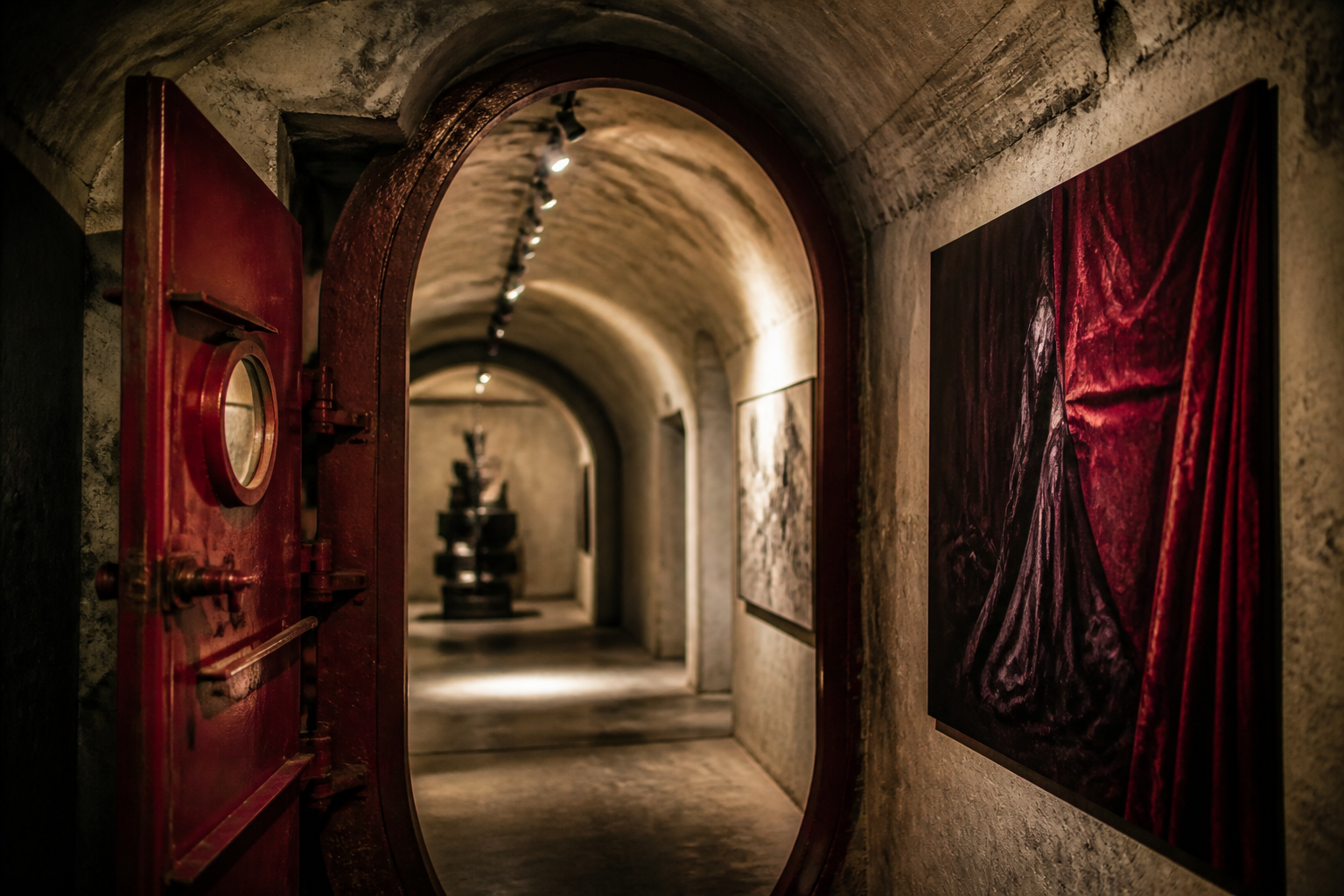
Tirana in the August heat is a sensory explosion. The Albanian capital vibrates with the honking of yellow taxis, the smell of freshly brewed espresso from countless pavement cafés and the bold, almost defiant pastel colours of old communist apartment blocks. But just a couple of steps below the surface, the noise stops abruptly. The air turns suddenly cool and damp, carrying the faint, unmistakable smell of raw concrete and old iron.
Down here, in Tirana’s hidden catacombs, one of Europe’s most fascinating cultural transformations is under way. The sites once built to protect the dictatorship from fictional nuclear attacks have become Bunk'Art 1 and Bunk'Art 2. They are not just historical museums, but living underground exhibition spaces where contemporary architecture, sound installations and provocative art compel visitors to engage directly, and sometimes uncomfortably, with the past. For curious Nordic cultural travellers, accustomed to open and transparent societies, these cold concrete vaults offer an almost dizzying glimpse into a world that until recently was completely closed off.
Bunk'Art 1: The elite’s nuclear bunker city
On the outskirts of Tirana, at the foot of the mighty Mount Dajti, lies Bunk'Art 1. This vast, five-storey complex, with more than 100 rooms, was completed in the 1970s to house the dictator Enver Hoxha and his inner circle in the event of war. Hoxha ruled Albania with an iron fist from the end of the Second World War until his death in 1985, obsessed with the idea that the country was constantly under threat of invasion by both the Western powers and the Soviet Union.
Walking through the endless grey corridors of Bunk'Art 1 is like stepping straight into a fever dream from the Cold War. The dictator’s own room, complete with a period red telephone and a heavy bed clad in dark wood, remains preserved as if he had just left it. But it is the way the rooms are used today that makes the site unique.
Rather than simply functioning as a dusty military history museum, the Italian journalist and curator Carlo Bollino, together with Albanian historians, has created a place where art is allowed to challenge the silence of history. Large theatre halls deep underground, once intended for political speeches, are now used for video installations and experimental music. The sound of echoing footsteps mingles with muted historical radio speeches, creating an atmosphere balanced between art gallery and haunted house.
Bunk'Art 2: The machinery of terror beneath the city centre
If Bunk'Art 1 represents the isolation of the political elite, Bunk'Art 2 tells a much darker and more central story. Located in the heart of Tirana, right next to the Ministry of Internal Affairs and a stone’s throw from central Skanderbeg Square, this 1,000-square-metre shelter was originally built for staff from the Ministry of Internal Affairs and the dreaded secret police, Sigurimi.
The entrance to Bunk'Art 2 is a newly created concrete dome that rises from the ground beside the classical government buildings. The dome is a work of art in itself, but also a controversial symbol in the city – it is a reminder of the up to 173,000 smaller bunkers that the regime scattered across the Albanian landscape.
Inside, the focus is firmly on the regime’s victims. The exhibitions document Sigurimi’s brutal methods of surveillance, wiretapping equipment and the persecution of dissidents. Here, art becomes a tool for enduring the darkness. In the cramped cells, visitors encounter artistic installations honouring those who were imprisoned or disappeared.
The historian and journalist Admirina Peçi, who has been closely involved in documenting material for the museums, has emphasised how important it is that these sites do not become mere tourist attractions, but tools for collective reflection. For a young generation of Albanians, and for visitors from abroad, the underground museum becomes a tangible place where the past can no longer be denied.
Avant-garde in the darkness: Healing through art
What is most remarkable about Tirana’s underground art scene is how it manages to balance on the fine line between historical documentation and artistic freedom. Rather than sanitising history, the raw, damp-damaged walls, rusty gas masks and heavy iron doors have been allowed to provide the backdrop for modern works.
Several rooms contain site-specific installations in which Albanian and international contemporary artists have taken the bunkers’ original purpose – fear, isolation and control – and transformed it into something else. Light projections pulsing in time with heartbeats on the raw walls, or sculptures made from old surveillance equipment, become a quiet protest against authoritarianism.
It is a form of catharsis. By inviting the avant-garde into the dictator’s innermost sanctum, Tirana has managed to disarm the ghosts of history. The concrete, once a symbol of national captivity, has become a canvas for artistic liberation.
Tirana’s metamorphosis: From closed dictatorship to creative metropolis
The transformation of the bunkers is symptomatic of Tirana’s entire modern journey. Much of this creative revolution can be traced to Edi Rama, the country’s current prime minister, who, during his time as mayor of Tirana, took the radical decision to repaint the city’s monotonous grey façades in bold, vivid colours and patterns. Rama, an artist himself, understood that aesthetics can change a society’s psychology.
This playful but purposeful approach to the past can be seen everywhere in the city today. After emerging from Bunk'Art’s chilly corridors, many visitors make their way to Komiteti café-museum in central Tirana. Here, in a setting filled with old television sets, worn armchairs from the communist era and unusual china, the city’s young intellectuals gather over a glass of artisanally made raki. It is a place that is at once a museum of everyday life under the dictatorship and one of the city’s liveliest and trendiest hangouts.
In a short time, Tirana has gone from being one of Europe’s most overlooked corners to a destination for travellers seeking something beyond the polished city break. It is a city that does not hide its scars, but instead invites artists and visitors to touch them. And perhaps it is precisely there, in the meeting of Cold War concrete and colourful avant-garde, that Albania’s true soul is best discovered.
Facts
Bunk'Art museums in Tirana
- Bunk'Art 1: Located on the outskirts of Tirana, about six kilometres from the centre. Focuses on the military history of the Albanian regime, dictator Enver Hoxha’s private suite and large-scale art installations. The easiest way to get there is by city bus or taxi towards the Dajti Ekspres cable car.
- Bunk'Art 2: Located in central Tirana (Rruga Abdi Toptani), just behind the Ministry of Internal Affairs. Dedicated to the history of the Ministry of Internal Affairs, the methods of the secret police Sigurimi and the memory of the regime’s victims.
Sources & further reading
- Smithsonian MagazineIn Albania, Cold War Bunkers Are Reborn as Art Museums and Trendy Cafes
- fwtmagazine.comBunkered down in Albania - Food, Wine & Travel - FWT Magazine
- nationalgeographic.comOnce a state secret, these Albanian bunkers are now ...
- us.trip.com🕳️ Underground Time Travel: Exploring Bunk'Art in Tirana
Share the article
Translated from Swedish with AI assistance. Read the original.


