
The art of stretching dough paper-thin – meet maznik and authentic Balkan home cooking
For many, Balkan food means grilled meat platters along tourist strips. But the real culinary treasures are hidden in home kitchens. Dishes such as Macedonian maznik take hours to prepare – and only minutes to eat.
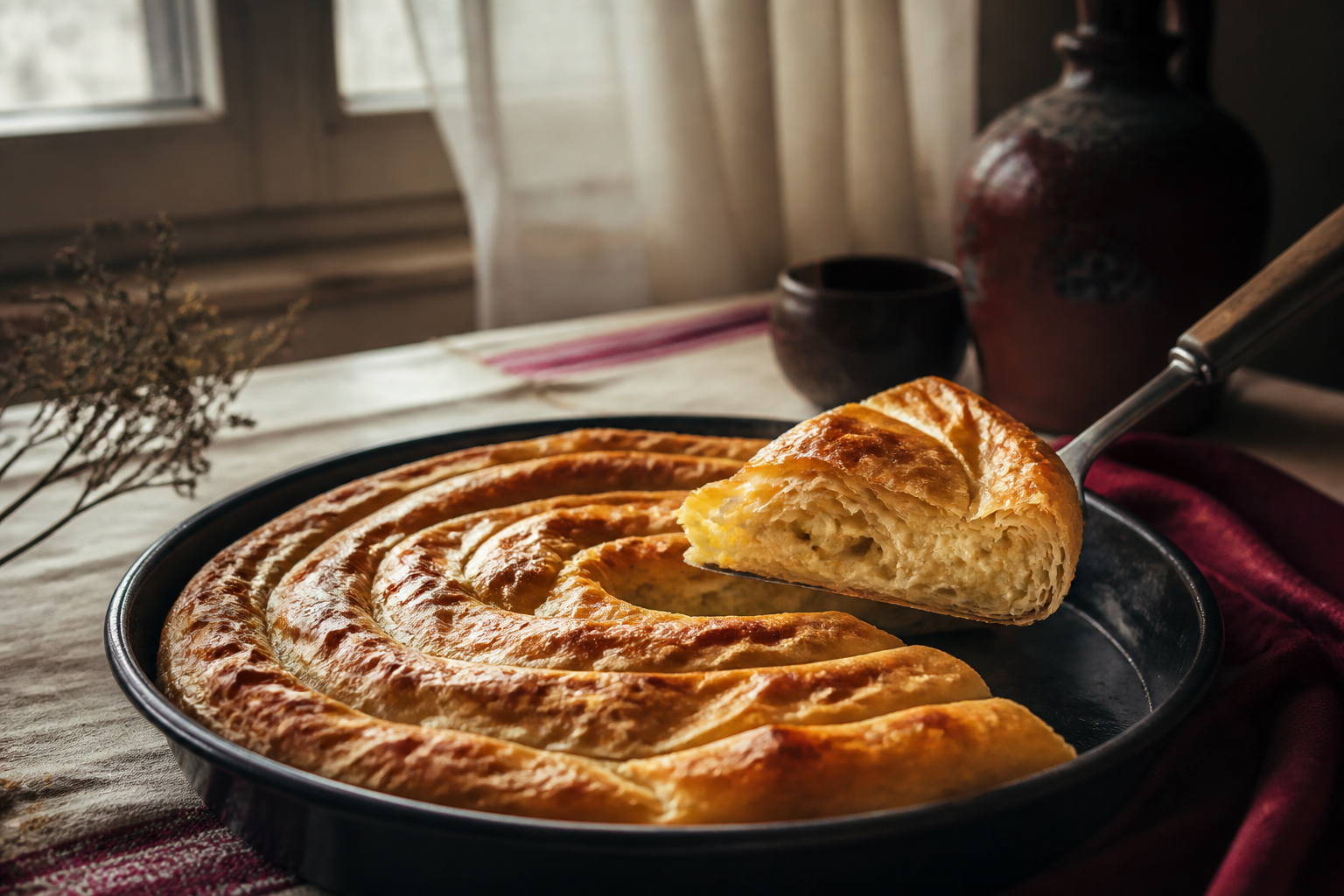
It begins around a large kitchen table covered with a white cloth. A ball of dough is taken from the tray and gently flattened by hand. Then the patient work of stretching the dough begins. With a sure touch, it is pulled in every direction, bit by bit, until it covers the whole table and hangs over the edges. The dough has become so thin that it is almost transparent.
This is the foundation of maznik, one of the most beloved pastries in Macedonian cuisine. Corn oil is drizzled over the paper-thin sheet and feta cheese is crumbled on top. The thicker edges are cut away, then the whole creation is rolled into a long sausage and coiled into a spiral on a round baking tray – just like a giant cinnamon bun. After a turn in the oven, it is crisp, salty and filling.
Making maznik takes both time and skill. It is a genuine food craft traditionally passed down from generation to generation, although in modern everyday life it has become increasingly rare for younger generations to take the time to learn the art.
Beyond the shortcuts of tourist strips
Many travellers who visit the Balkans return home feeling that the food consisted mostly of anonymous pizzas, chips or overcooked pasta. But this is often the result of eating at restaurants geared towards tourists along the main tourist routes, rather than experiencing the local food culture.
Authentic Balkan cuisine is not fine dining, but hearty, substantial home cooking shaped by the region’s history and geography. It is a cuisine built on ingredients such as meat, potatoes, bread, white cheese and peppers. Since much of the Balkans was historically an agricultural society, fresh and pickled vegetables play a central role. It is only in the past few decades, with industrialisation, that meat has become an everyday staple for the average family.
The legacy of the Ottoman Empire
It is no coincidence that Macedonian and other Balkan cuisines share many similarities. Over centuries of Ottoman rule, Turkish food traditions became part of local cuisines. This is especially evident in desserts.
After a meal, sweet pastries made with dough and sugar syrup are often served. Baklava and tulumba – deep-fried pieces of dough soaked in sugar syrup – are direct legacies of the Ottoman era. For anyone who wants to temper the intense sweetness, a classic home-cook’s trick is to add a little freshly squeezed lemon to the syrup, giving the dessert a fresher note.
Generosity on the plate
When eating in the Balkans, you rarely encounter the heavy sauces common in northern European cuisine. Instead, it is the accompaniments that bring moisture and character to the dishes. A spoonful of ajvar (a rich pepper spread), kajmak (a creamy, rich and slightly soured fresh cheese) or tzatziki is a constant companion to both meat and bread.
But perhaps the most important element of the food culture is generosity. Cooking for exactly the number of people who will be eating is unheard of. In the Balkans, people always cook for a small army, and the aim is to ensure that no guest ever has to leave the table hungry.
Facts
The Macedonian pantry
- White cheese and watermelon: A classic, refreshing combination often eaten during the hot summer months.
- Tavče Gravče: A traditional, hearty bean stew, often baked and served in earthenware.
- Ajvar: The iconic pepper spread, cooked in large quantities in autumn to last through the winter.
- Sweet endings: Baklava and tulumba are popular desserts with roots in the Ottoman Empire.
Sources & further reading
- discoveringtheplanet.comMaten på Balkan och det Makedonska köket, en favorit när ...
Share the article
Translated from Swedish with AI assistance. Read the original.


