
Tavče gravče – white beans with paprika and a baked crust
Soft beans beneath a lightly roasted crust, with onions and paprika in a red sauce. Tavče gravče gets its character when the boiled beans are finished in the oven. While a clay dish is traditional, a standard baking dish can easily bring this Macedonian classic to your dinner table at home.
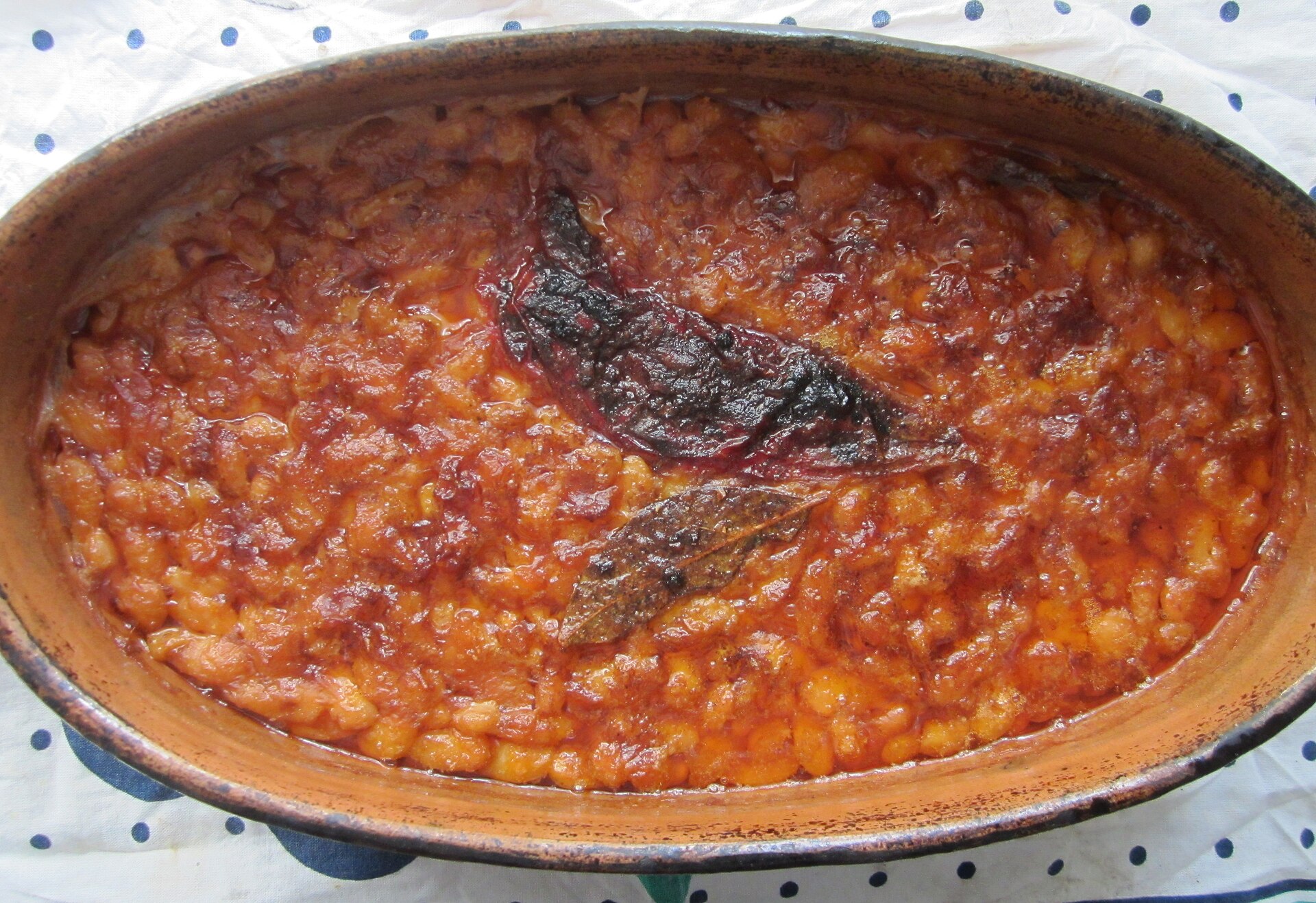
The beans must already be soft when they go into the oven. This is a key difference between tavče gravče and a bean stew that is left to simmer under a lid. The oven's role is to bring the flavours together, allow the sauce to thicken, and colour the surface – not to rescue a hard bean.
In North Macedonia's tavče gravče, white beans, onions, and paprika meet in a shallow dish, traditionally made of clay. The result should offer both juiciness and texture: beans that hold their shape but give way easily, with sauce remaining between them. It is a dish where a few simple ingredients are given room to shine, and where the difference between boiled and oven-baked is truly noticeable.
Start with the texture of the bean
Large white Tetovec beans, associated with Tetovo in the north-western part of the country, are a classic choice in Macedonian recipes. Their size gives the bean a prominent role in the dish. You do not simply eat a spoonful of sauce with beans in it; you feel the thin skin and soft interior of each individual bean.
In a Nordic home kitchen, other white beans can be used. Cannellini beans are a practical alternative, as are larger white beans sold dried. This is a convenient adaptation rather than a claim that the varieties are identical. Size, skin toughness, and how easily the bean breaks down all affect the final result.
Dried beans need to be soaked and then boiled according to the package instructions. Soaking helps them absorb water before cooking. Discard the soaking water and use fresh water for boiling. Do not let the oven baking replace proper pre-boiling.
Once cooked, the beans should be soft all the way through, without a firm or chalky core. At the same time, it is ideal if the skins remain intact, so stir gently towards the end of cooking. Save some of the cooking water: the starch in it will later help bind the beans and the seasoning together.
Paprika is more than heat
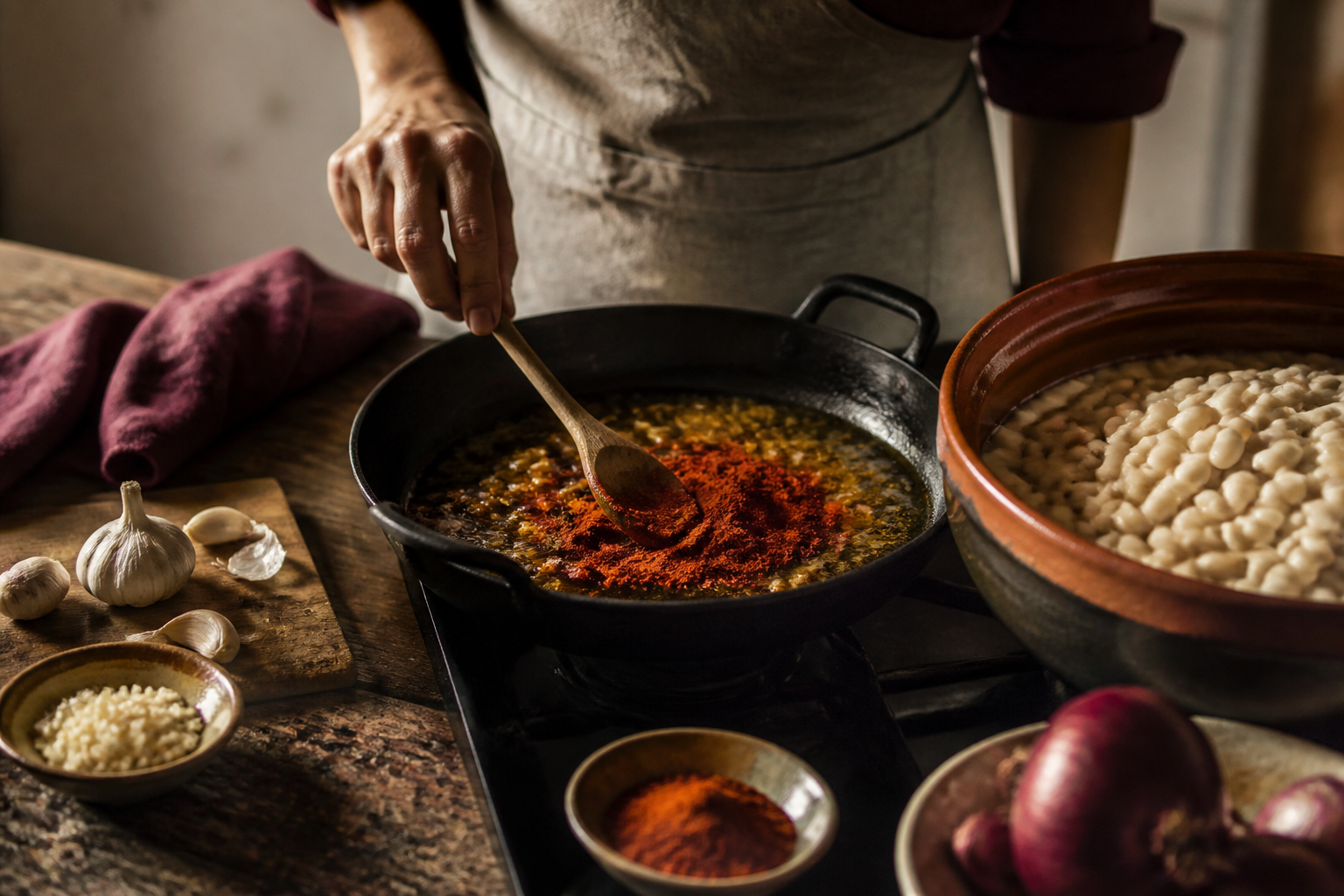
The role of paprika begins with colour and flavour, not heat. Sweet paprika powder provides a warm red hue and a rounded pepper flavour. Hot paprika can add a more distinct kick, but tavče gravče does not need to be a hot dish.
The onions are softened in oil before the paprika powder is added. Lower the heat or remove the pan from the hob when stirring in the powder, and then add liquid. Paprika burned in hot oil becomes bitter; that taste cannot be baked away.
Fresh red peppers and dried red peppers also feature in different recipe variations. They perform different roles. Fresh pepper adds flesh and sweetness as it softens. Dried pepper has a more concentrated flavour and needs liquid to soften. Neither should automatically replace paprika powder; the pieces and the powder yield different textures and distribute flavour in different ways.
Garlic, tomato, and mint are optional variations rather than mandatory ingredients. Garlic offers a different sharpness to onion, tomato adds acidity and liquid, and mint provides a refreshing herbal contrast. There is no need to add everything at once. A stripped-back version makes it easier to appreciate what the beans, onions, and paprika actually contribute.
The sauce must go into the oven
In variations that use a roux, a little flour is combined with the oil and paprika before the mixture is diluted. This gives the sauce body. The roux should not form a thick blanket over the beans, but rather help the liquid cling to them.
Without flour, the starch from the cooking water and evaporation in the oven must do more of the work. A few beans can also be gently mashed into the liquid. It is worth understanding the difference: a thickened sauce behaves differently to a thin broth, and should therefore be judged by its consistency rather than by the liquid measurements of another recipe.
When transferring the beans and seasoning to the dish, the mixture should still be thoroughly juicy. The liquid needs to penetrate between the beans, not just sit as a puddle at the bottom. At the same time, the goal is a baked dish, not a deep soup.
A wide, shallow dish allows more liquid to evaporate than a narrow, deep one. A higher oven temperature gives quicker colour, but also increases the risk of the surface drying out before the sauce has reached the right consistency. A longer baking time concentrates the flavour and reduces liquid. Therefore, you should check the dish during baking and add a little warm cooking water or water if needed.
When the sauce is bubbling between the beans and the surface has taken on colour, consistency is the deciding factor. Underneath the crust, the dish should still be soft and juicy. Let it rest for a moment before serving to allow the sauce to set without drying out.
The role of the clay dish – and home alternatives
The clay dish is part of tavče gravče's recognisable character. The dish can be baked in a single large vessel or in small clay bowls for individual servings. The small bowls give each portion its own baked crust, but they also evaporate moisture differently than a larger dish.
You can easily make a home version in a standard ovenproof dish. Preferably choose one where the beans lie relatively shallow, and adjust the liquid accordingly. If you use clayware, ensure it is oven-safe; follow the manufacturer's instructions for heating and handling.
Canned white beans are another convenient shortcut. Drain and rinse them, but handle them gently as they are already cooked. Since there is no cooking water to save, plain water will have to replace it. A light thickening or a few mashed beans can help the sauce bind together.
When using canned beans, thoroughly cooked onions become especially important. They must have time to soften before everything is mixed, and the paprika needs to blend into the seasoning without burning. The shortcut lies in skipping the boiling of the beans, not in pouring cold ingredients directly into the dish. This is an adaptation for the weekday kitchen, not a tested replica of a specific Macedonian recipe.
A main course that can also be a side dish
The beans do not need meat to carry the meal. Moirecepti's Lenten version shows the meat-free side of the dish, while MMS suggests it both as a main course and as a side dish for fish. At ZZ Edinstvo, there is a variation with country sausage; ribs also feature among the variations.
Sausage and ribs naturally alter the dish by adding fat, salt, and meaty flavour. They are variations, not ingredients that make an otherwise incomplete bean dish complete. In the same way, tavče gravče takes on a different role when a smaller portion is served alongside fish compared to when the dish is placed in the middle of the table as the main meal.
At home, bread and a salad with a tangy dressing can be accompaniment enough. The bread mops up the sauce, and the salad provides a contrast to the soft beans. Let the dish sit on the table for serving. This keeps the whole point visible: the red sauce, the beans, and the crust that only the oven can create.
Share the article
Translated from Swedish with AI assistance. Read the original.


