
Swedish companies invest in Croatia – deepening ties
More than 50 Swedish companies are now active in Croatia, while new investments are emerging in sectors including industry, pharmaceuticals and wood production. From Varaždin to Zagreb and Slavonia, economic ties between Sweden and Croatia are becoming increasingly tangible.
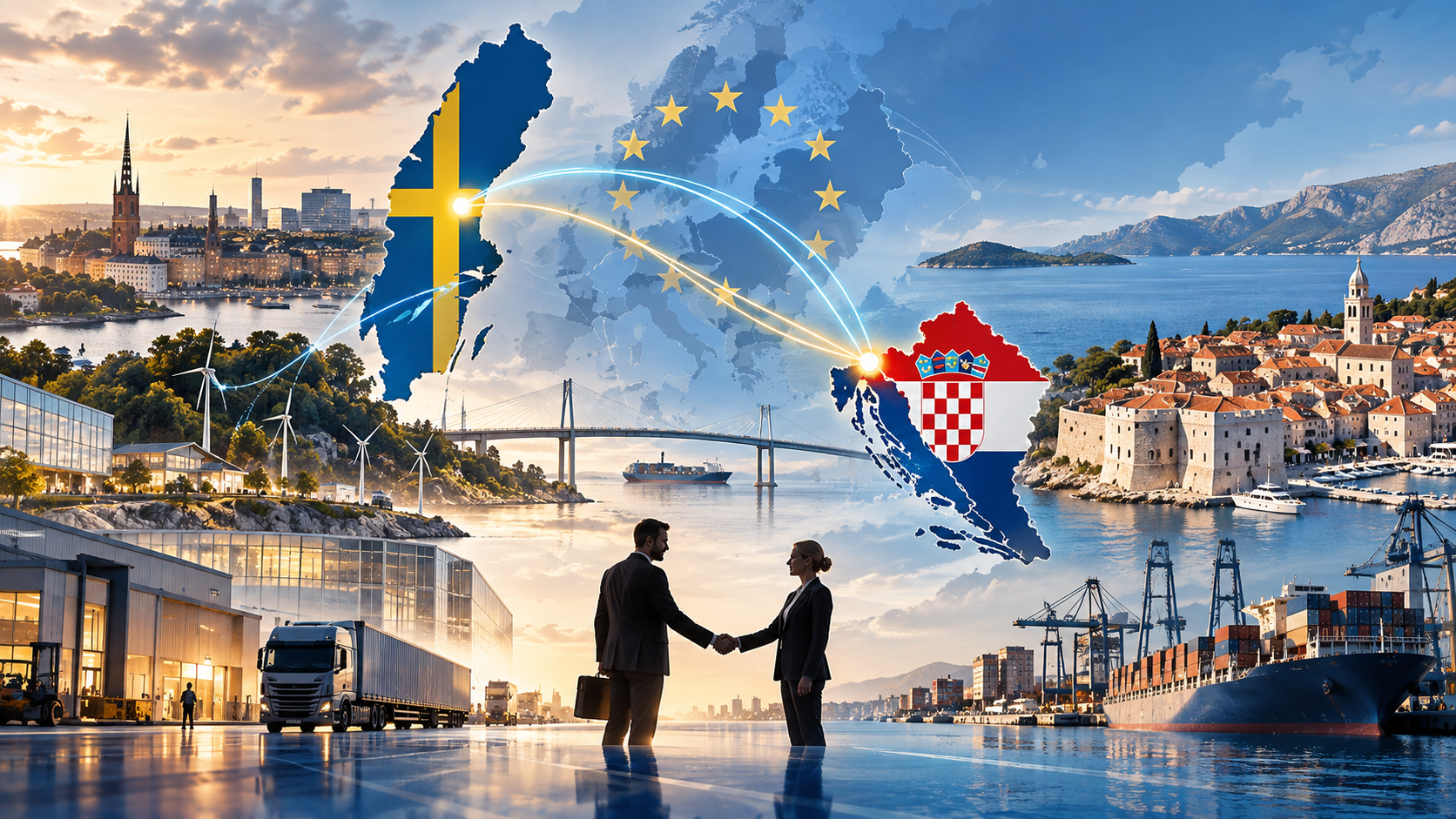
Sweden and Croatia have long had strong ties through tourism, migration and personal relationships. But in recent years, links between businesses have also become increasingly clear.
Today, more than 50 Swedish companies are active in the Croatian market. They include well-known names such as IKEA, ABB, Electrolux, Scania, SKF, Securitas, Tetra Pak, Volvo Trucks, Bjelin and the pharmaceutical company Sobi.
Swedish direct investment in Croatia amounted to around 818 million euros between 1993 and the first quarter of 2026. Trade between the two countries totalled approximately 253 million euros in the first six months of the year alone.
But those figures do not tell the whole story.
What is interesting is how Swedish companies are moving beyond simply selling products in Croatia to acquiring businesses, building factories and making the country part of their long-term European strategy.
Inwido entered the market through Varaždin
One of this year’s clearest examples came in June 2026.
The Malmö-based window and door company Inwido entered the Croatian market by acquiring 70 per cent of Marlex, an established manufacturer of PVC and aluminium windows and doors based in Varaždin.
Marlex has around 270 employees and annual revenue of approximately 33 million euros.
For Inwido, the deal was about more than entering Croatia. The company described the acquisition as a platform for further expansion in South-East Europe.
Marlex will retain its name and local management.
This is a model that has become common in Nordic acquisitions: the local identity is preserved, while capital, networks and expansion come from a larger group.
A new pharmaceutical factory near Zagreb
The pharmaceutical sector is also growing.
The Swedish company Sobi, which develops medicines for rare diseases, is building a new production facility near Zagreb together with Pfizer.
The investment is reported to be worth around 100 million euros, with the facility scheduled to open towards the end of 2026.
For Croatia, the project means more than just another foreign investment.
Pharmaceutical production brings skilled jobs, advanced technology and the opportunity to strengthen the country’s role in European life sciences.
For Sweden, it also means that a Swedish company is placing an important part of its future operations in a country that is still a relatively small market compared with Germany, France or the UK.
From trade to an industrial presence
There is a big difference between exporting to a country and investing there.
When a Swedish company acquires a Croatian manufacturer or builds a factory, the relationship becomes much more long-term. Suppliers, employees, research, training and local infrastructure all become part of the same business structure.
That is why Sweden’s growing presence in Croatia is interesting beyond the individual deals themselves.
It shows how Croatia has changed since joining the EU in 2013 and adopting the euro and joining Schengen in 2023.
The country is no longer just a tourist destination for Swedish consumers. For an increasing number of companies, it is a market for production, investment and expansion within the EU.
Bjelin shows how far integration can go
Bjelin and the Pervanovo group are a clear example.
The group has built up extensive operations combining Swedish technology development with Croatia’s wood industry and Slavonian oak.
Over the years, production in Croatia has evolved from traditional wood processing into more advanced and automated industry.
The same development can be seen in several other investments: Croatia is not just being used for lower-cost production, but as part of a larger European value chain.
Why Croatia?
There are several reasons for Swedish companies.
Croatia is a member of the EU, the euro area and Schengen. This makes trade, investment, transport and payments easier.
The country is also geographically positioned between Central Europe, the Adriatic and the Western Balkans. For companies looking to grow in the region, Croatia can therefore serve as a natural base.
Inwido’s acquisition of Marlex illustrates this. The company describes Croatia as a step towards further expansion in South-East Europe.
That means an investment in Varaždin could potentially have significance well beyond the Croatian market.
Sweden exports – and so does Croatia
Trade does not flow in just one direction, either.
In January–June 2026, Croatia exported goods worth around 128 million euros to Sweden, while Swedish exports to Croatia amounted to approximately 125 million euros.
The balance is unusually even.
This makes the relationship more interesting than the traditional model in which a wealthier Nordic country simply sells products or invests capital in a smaller country.
Croatia is also a supplier, exporter and industrial partner.
Two EU countries growing closer
Sweden and Croatia are geographically far apart, but economically the distance between them has become smaller.
Tourism and personal ties between the countries remain important, but they are now complemented by something more lasting: companies acquiring businesses, building factories and organising production across borders.
That is where the new Swedish-Croatian relationship becomes particularly interesting.
Not as a series of isolated investments, but as part of a wider shift in which Croatia is gaining a clearer place in Nordic companies’ European strategies.
Sources & further reading
Share the article
Translated from Swedish with AI assistance. Read the original.


