
Summer in the Balkans, Autumn in Swedish
With relatives, the family language has a place every day. What happens to it when school starts again in Sweden?
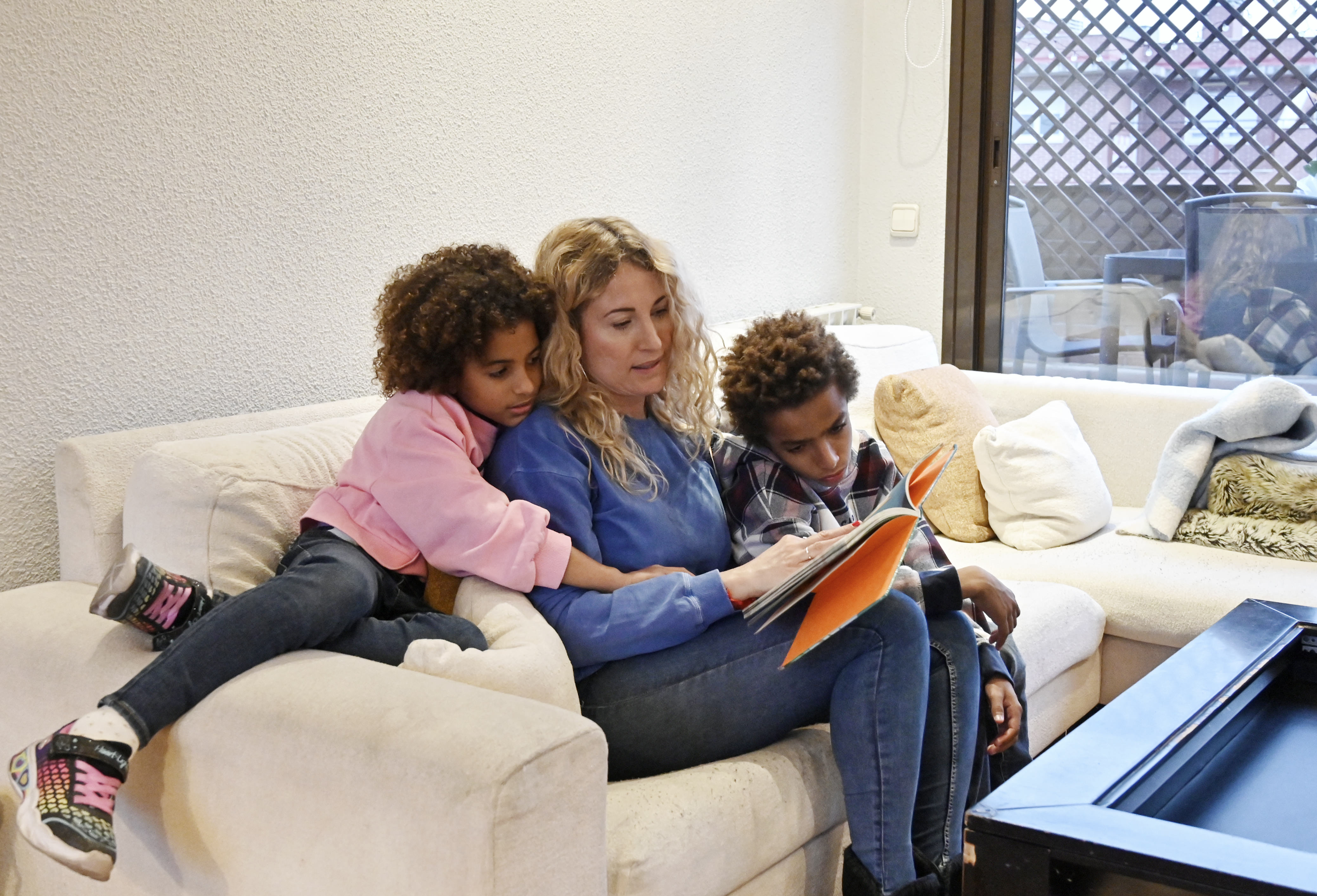
In the summer, a child can wake up to the sound of a language heard everywhere: at the breakfast table, in the car on the way to the swimming spot, and when someone calls out from the balcony. A translation is not always needed. The words are there in the conversations, in the jokes, and in the small tasks that fill an ordinary day.
Then comes the journey back to Sweden. School starts, friends are waiting, and Swedish takes up more space again. The child can still understand what relatives are saying, but when they want to tell someone about their school day, the Swedish words come first.
This is a hypothetical summer scene, not the story of an interviewed family. It raises a question that is familiar in many homes with ties to both the Nordic countries and the Balkans: How does a language find its place even when the summer holidays are over?
Words belong in different places
A child who uses several languages does not need to know the same words in all of them. Skolverket (the Swedish National Agency for Education) describes how vocabulary is affected by where and with whom the languages are used. Words for home and family may be easier to find in one language, while words from school come more quickly in another.
This is perhaps noticeable when the child easily understands what an older relative is asking for at the dinner table, but needs to switch to Swedish to explain their schoolwork. Understanding more than you say yourself does not mean the language is gone. It also shows which conversations the child has had the opportunity to practise.
For those whose daily life is in Sweden and whose family is in, for example, Bosnia and Herzegovina, Serbia or Croatia, the summer can make the difference clear. For a few weeks, the family's language can be used outside the home. It is heard in the shop, on the playground and among cousins. Back in Sweden, the context changes.
A language needs more than homework
It is easy to turn the issue into yet another task for the child: Answer in the right language. Learn more words. Speak better next time we travel. But language is also used to belong. A conversation with grandad might be about his tomatoes. A cousin might want to show off a game. Someone wants to know how school is going.
Such conversations do not have to be perfect to mean something. The child can start in one language and borrow a word from another. The adult can help with the word and then continue listening to the story itself.
When the holidays are over, keeping in touch can find a place in daily life: a brief phone call with relatives, a book read together, or a recipe where the child gets to ask what the ingredients are called. It does not have to feel like a language lesson. The important thing is that there is something the child actually wants to say, hear or do.
For families who want to know what school can offer, there is also mother tongue tuition. The conditions depend on the child's situation and type of school; Skolverket describes the rules, and the municipality or the school can answer what applies in individual cases.
More than one language in the suitcase
Life between the Nordic region and the Balkans is rarely a straight line. A child can feel at home in both places and still lack words at times. They may speak fluently with a cousin but fall silent when an adult asks a more difficult question. They might choose Swedish one day and the family language the next.
Summer can give the language more space. The rest of the year, its place is decided in the smaller moments: who keeps the conversation going, who waits while the child looks for a word, and who shows them that it is worth trying.
Sources & further reading
- SkolverketSkolverket: Flerspråkig utveckling
- SkolverketSkolverket: Rätt till modersmålsundervisning
Share the article
Translated from Swedish with AI assistance. Read the original.


