
Srebarna – on the pelicans' terms by the Danube
A pale back above the reeds, a heavy bill, and a head with dishevelled nape feathers. In Srebarna in north-eastern Bulgaria, encounters with the Dalmatian pelican must take place from a distance. Follow the lakeside, use the observation points, and allow time for the wetland's less conspicuous birds as well.
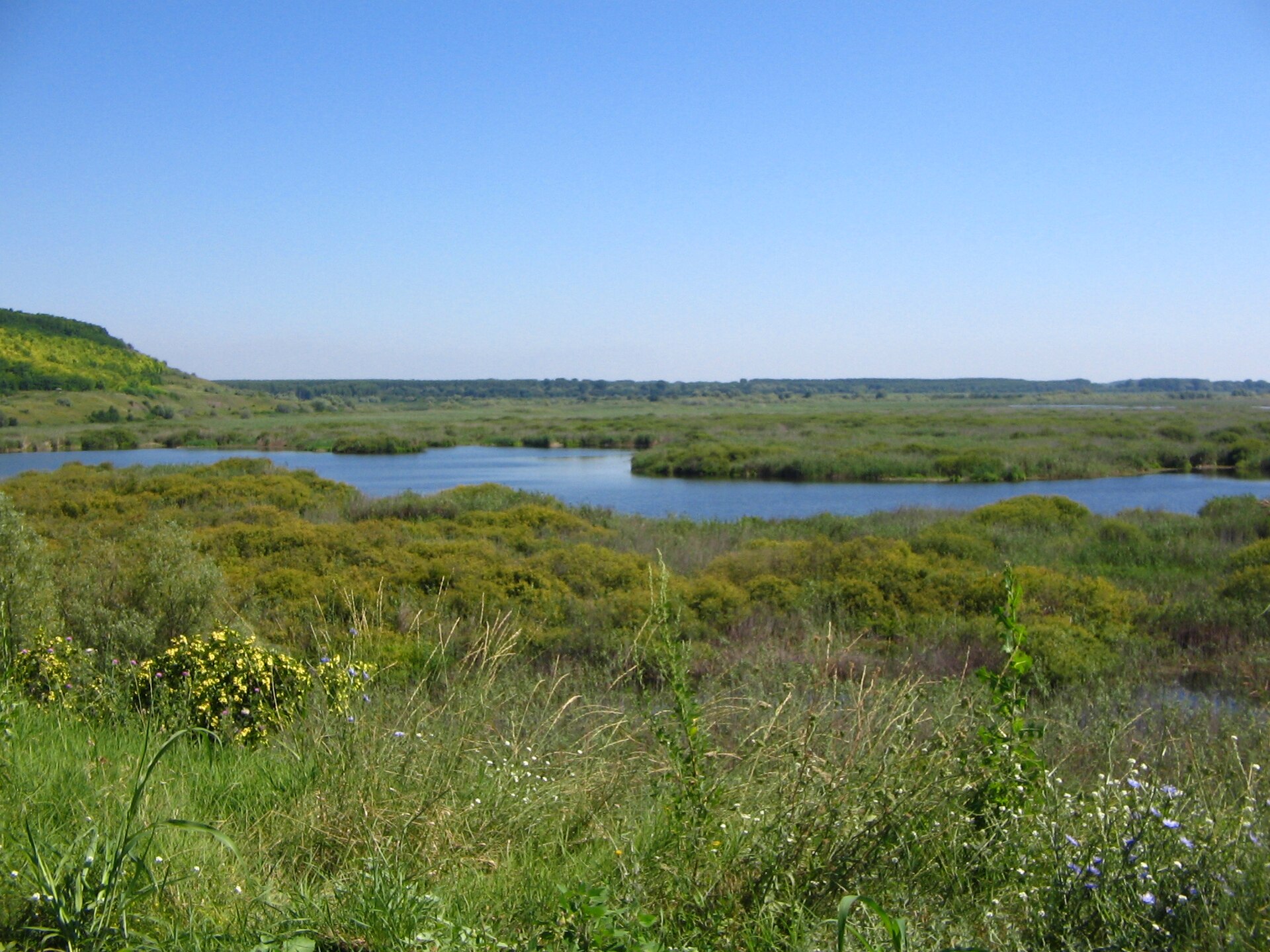
Start by looking along the edge of the reeds, not just out over the open water. A pelican riding low in the lake can at first resemble a pale patch. When it turns its head, the long bill and pouch appear. If it takes off, the proportions become clear: broad wings, a tucked-in neck, and a body that requires plenty of space to get airborne.
This is a good introduction to Srebarna. Here, birdwatching is less about getting close and more about understanding where to direct your gaze. Lake Srebarna lies adjacent to the Danube, west of Silistra, in a landscape of open water, reeds, and damp shoreline environments. The pelicans provide a clear objective for the trip, but the wetland deserves more than a quick stop to tick a species off a list.
Identifying the Dalmatian pelican
The Dalmatian pelican has greyish-white plumage and feathers on the nape that give its head its characteristic, somewhat untidy profile. During the breeding season, the pouch of adult birds takes on a more intense orange to reddish colour. From a distance, however, the silhouette is often more useful than the shades of colour: the massive bill, the heavy body, and the neck held drawn back in flight.
Watch how the birds use the water. Pelicans fish from the surface by dipping their bills and catching fish in their throat pouches before squeezing the water out. Sometimes several fish together. Other moments are spent preening and resting. A bird preening itself demonstrates both the reach of its bill and just how mobile its neck actually is.
Srebarna is a breeding site for the species, but that is not the same as the colony always being clearly visible from the visitor area. Reeds, distance, the birds' movements, and the conditions of any given year affect the experience. Older population figures do not tell you how many pelicans will be in front of the observation point when you arrive. Therefore, ask for current local sightings rather than planning based on a figure in an older travel description.
A birding route starting at the museum
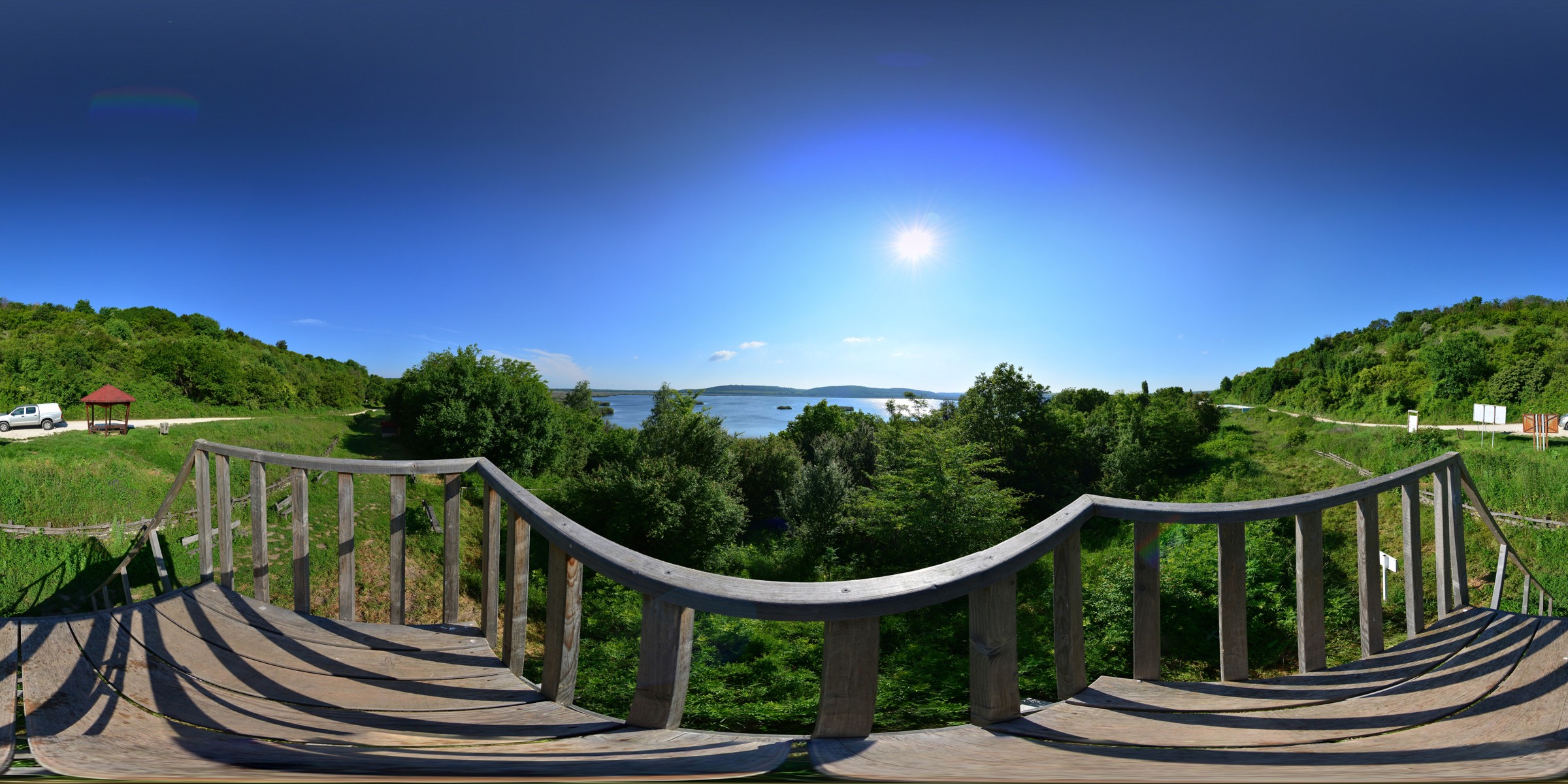
Plan your visit as a walk between the natural history museum and the eco-trail observation points, rather than an attempt to go all the way around the lake. A good place to start is the village of Srebarna. The museum provides context to what might otherwise just seem like distant birds and vast expanses of reeds.
The museum's visitor experience includes a camera feed of the pelicans. Check before your trip that the museum is open and that the camera feed is operational; its current functionality was not confirmed during the preparation of this article. If the feed is working, it can offer a closer look at the colony without visitors needing to approach the nesting site.
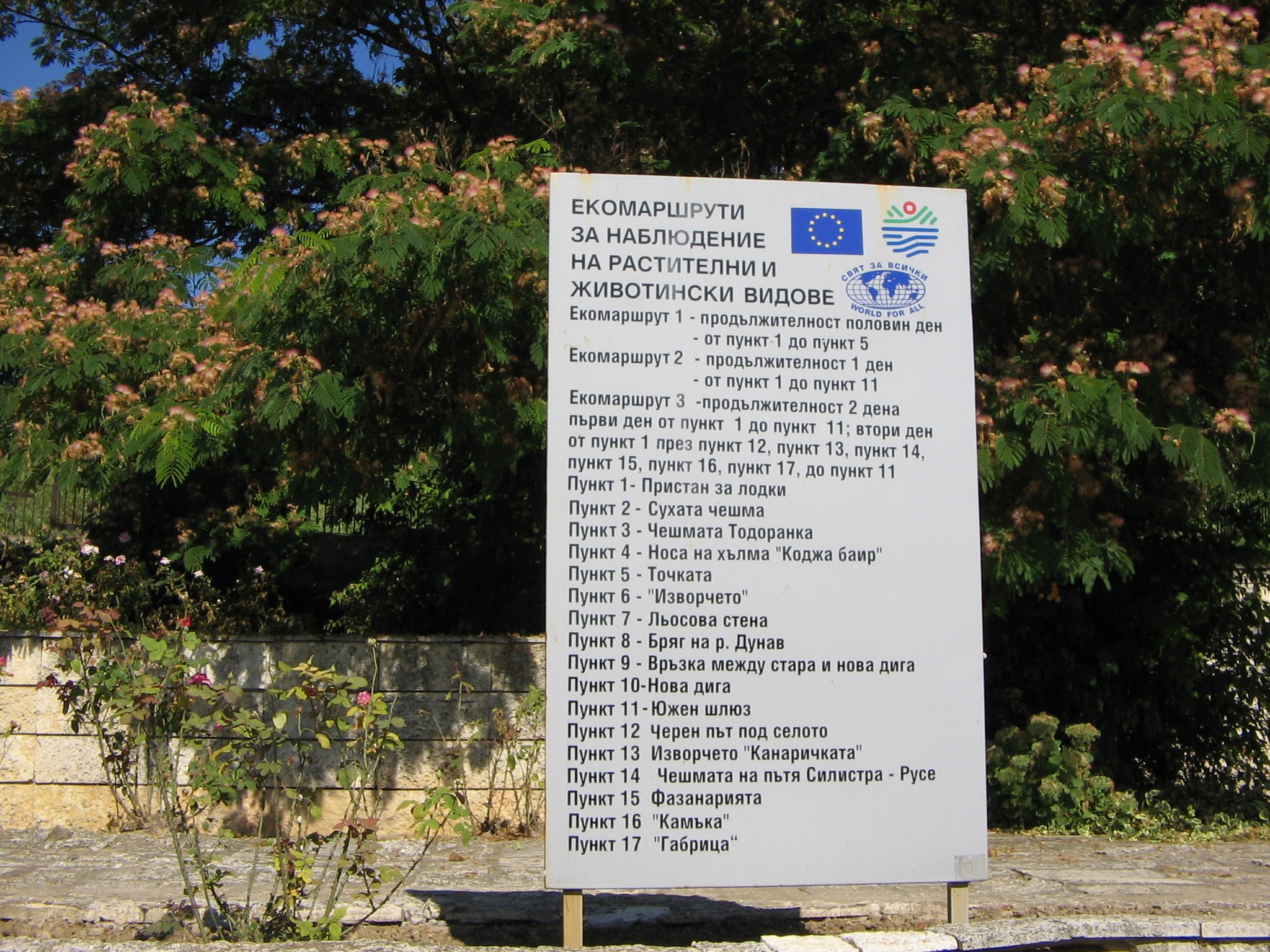
Then continue to the accessible observation platforms along the eco-trail. Ask locally which sections and viewpoints are open to use. This is not a fixed itinerary: choose your route based on the day's access, weather, and visibility, and follow the signs instead of trying to find a shortcut to the water.
At each stop, it pays to start with binoculars and scan the landscape slowly. Look first over open water, then along the outer edge of the reeds, and finally towards clearings and shallow areas. A spotting scope comes into its own once you have found something to study. Give the same view a little time; a stationary heron can be harder to spot than a flying pelican.
The water decides what you see
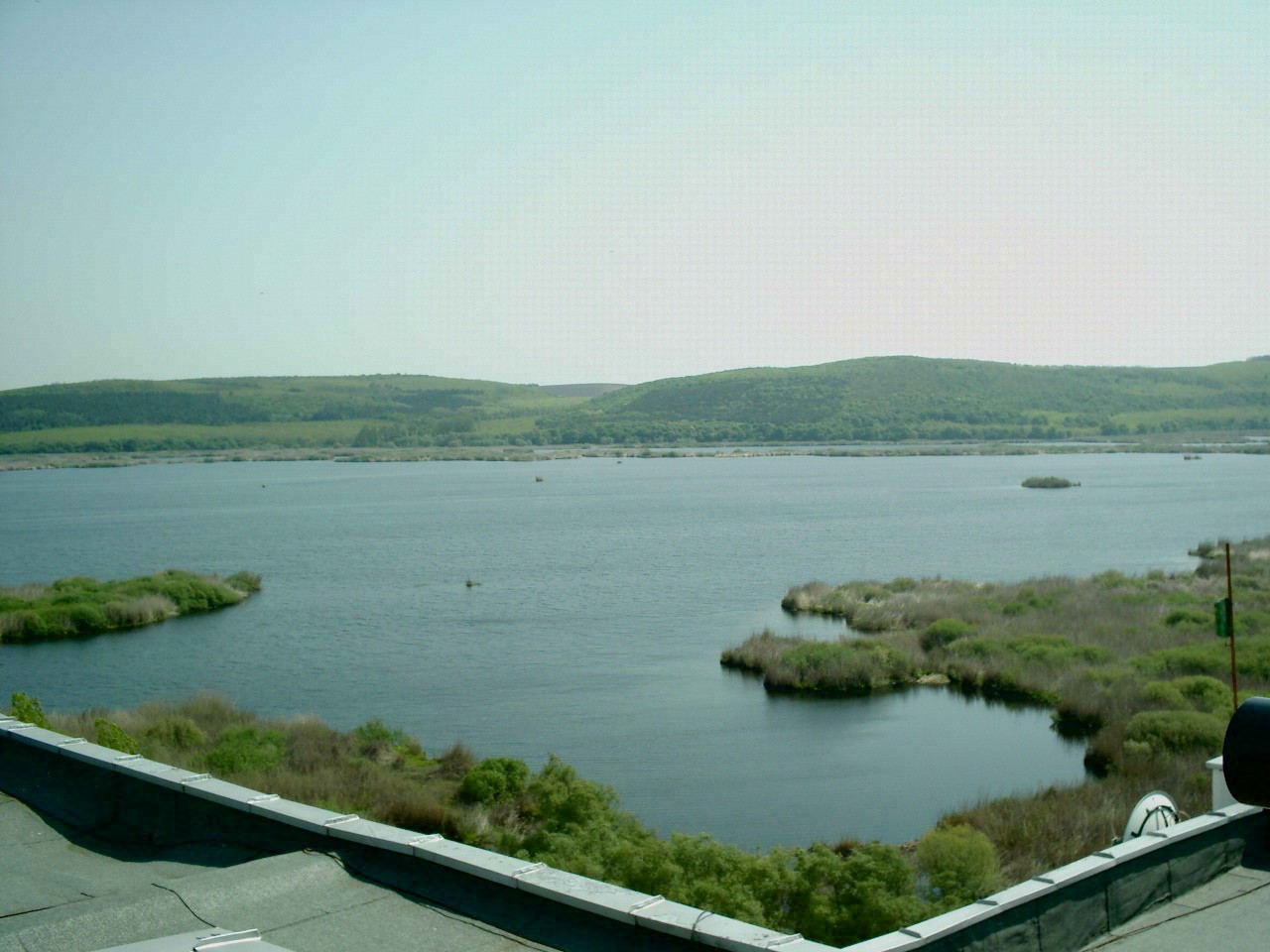
Srebarna is a freshwater lake in the Danube floodplain. Its connection to the river and variations in water levels are crucial to how the wetland functions. They affect where fish can move, which shorelines become accessible for foraging, and how well the breeding habitats are protected by water.
Floating reed islands are part of the lake's distinctive character. They consist of bound plant material and root systems, rather than solid shoreline. Together with reedbeds and flooded willow forests, they create various types of shelter and foraging environments. For the visitor, this means that birdlife is not evenly distributed across the lake. A seemingly empty stretch of water can lie right next to a lively but hidden reed edge.
Water levels alter both the birds' habitat and the visitor's view.
Water levels alter both the birds' habitat and the visitor's view.
Among the birds to look out for are the purple heron, spoonbill, and glossy ibis. They use the wetland in different ways and may not all be visible at the same time. The purple heron's elongated body and warm brownish-purple tones blend well into the reeds. A spoonbill reveals itself by its broad bill-tip and by sweeping its bill from side to side in shallow water. The glossy ibis has a down-curved bill; the metallic sheen of its dark plumage only appears when the light catches it just right.
Do not just look for more birds, then, but for more types of environment. A gap in the reeds, a shallow patch, and the edge of a tree line can yield completely different sightings from the same platform. The species are reasons to keep your eyes open, not promises of what an individual visit will bring.
Conservation also means distance
The pelican colonies are not places to approach for a better photo. Use the marked visitor trails and observation points, respect barriers, and follow instructions from the reserve staff. Do not attempt to bypass obscuring reeds by stepping out onto the shoreline. The very distance that might feel frustrating to a photographer is what gives the birds the peace they need.
Bird monitoring is needed to distinguish temporary fluctuations from more long-term problems. The number of birds seen during a single visit does not, on its own, tell you how the breeding season has gone or how healthy the wetland is. Water conditions, access to undisturbed nesting sites, and what happens during the rest of the year are also part of the picture.
The Bulgarian Society for the Protection of Birds (BSPB) works with bird conservation in Bulgaria and is a useful organisation to consult for information. However, read reports with place names in mind: results from Persin or Kalimok–Brashlen do not automatically describe the situation in Srebarna. No current conclusions about local patrol rounds or satellite-tagged birds can be drawn from the source material here.
Choose your season based on what you want to discover
Spring and early summer are a natural starting point for anyone wishing to experience breeding activity and a lively wetland landscape. At the same time, this period requires special consideration. The presence of birds in the colony does not mean that the visitor should expect to see into every part of it.
During the spring and autumn migrations, the composition of the birdlife changes. This makes the period interesting for those who enjoy birdwatching more broadly rather than just searching for pelicans. Ask for local updates before your journey: seasonal patterns help with planning but are no substitute for fresh observations.
Silistra is a practical base for accommodation for those wishing to combine the wetland with a town on the Danube. From there, the journey continues westwards towards the village of Srebarna. Check transport connections for the final stretch in advance if you are travelling without a car, including how to get back.
Allow a quiet morning or afternoon rather than a brief photo stop. If you have plenty of time, a return visit can offer different light and different bird movements. Bring binoculars, preferably a spotting scope with a tripod, as well as water, sunscreen, and shoes suitable for uneven paths. A windcheater and insect repellent are also useful in a wetland.
The pelican often becomes the main focus of the trip. But a successful visit does not have to end there. Once your eyes have adapted to the reeds, there is plenty of reason to linger, even after the large, pale bird has slipped out of sight.
Share the article
Translated from Swedish with AI assistance. Read the original.


