
Spetzofai from Pelion – sausage stew starring sweet peppers
The sausage should get a good sear, the peppers soften, and the tomatoes simmer down into a sauce worthy of scooping up with bread. Spetzofai belongs to Pelion in Greece. Here is a version for Swedish home kitchens, where the choice of ingredients and the order in the pan make all the difference.
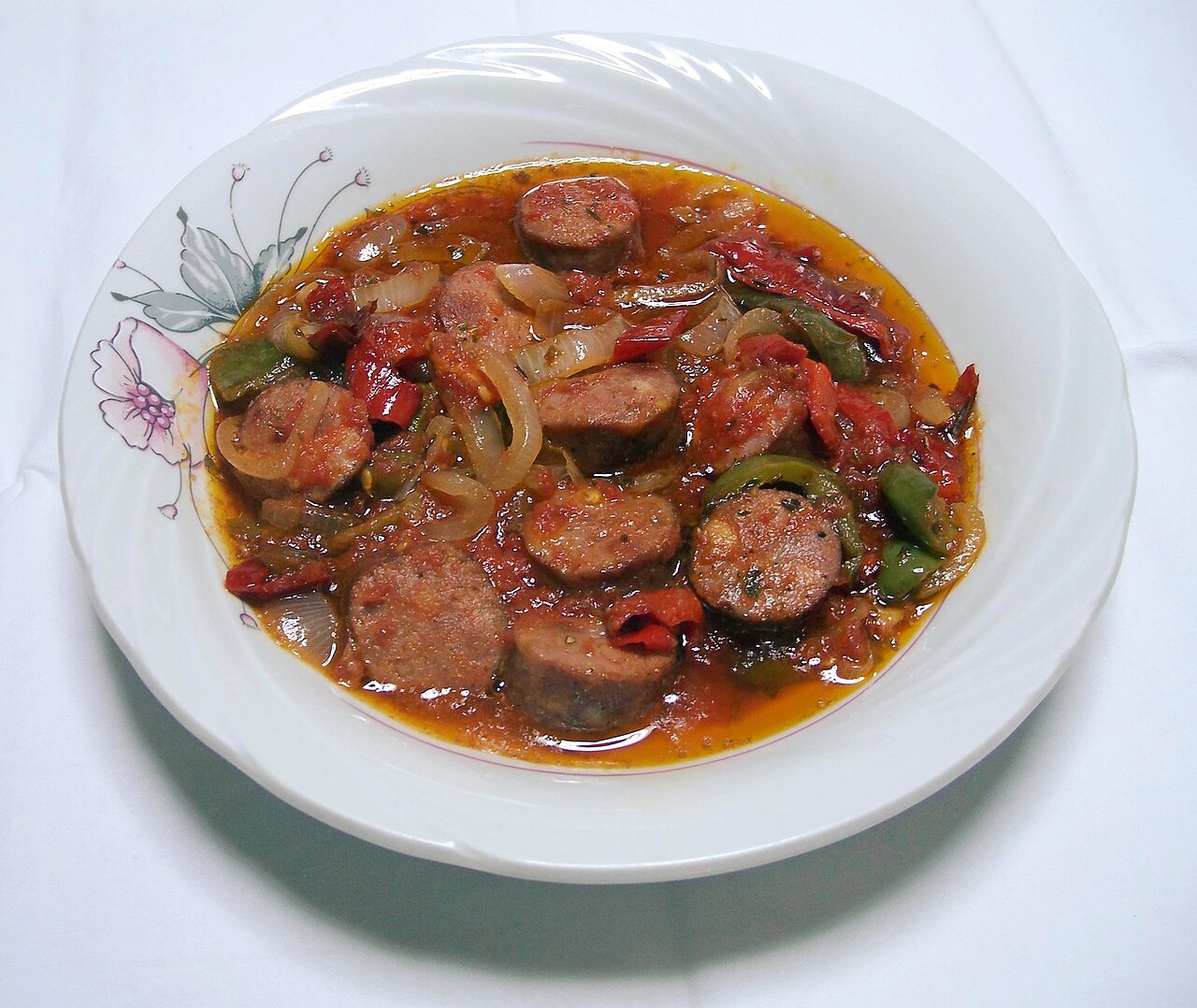
Let the peppers take centre stage in the pan. In spetzofai, they are not a colourful addition to the sausage, but a key ingredient: large pieces that first get some colour and then soften in the tomato sauce. The fat and seasoning from the sausage bind the stew together. The sauce should coat the ingredients, not leave them swimming in watery tomato juice.
This is rustic food with relatively few ingredients, but it benefits from a little care. Fry in batches, hold back on the liquid, and give the vegetables time. This ensures you get browned sausage, juicy peppers, and a concentrated sauce.
Pelion, not Spetses
Spetzofai is associated with Pelion, the mountainous peninsula near Volos on the Greek mainland. Spellings such as spetsofai and spentzofai also occur. The name may bring the island of Spetses to mind, but the dish's regional home is Pelion – this is also how it is presented by the food writer Diane Kochilas.
Pelion is a useful corrective to the image of Greek cuisine as solely grilled fish, Greek salad, and white houses by the sea. Here you will also find forested slopes, orchards, and mountain villages with stone houses. The sea is close, but that is not the whole story. Sausages, vegetables, and slow-simmered dishes are just as naturally a part of the regional picture.
Spetzofai combines the robust flavours of cured meats with the sweetness of peppers and the acidity of tomatoes. Peppers and tomatoes originally came from the Americas and in time became staples in many European kitchens. Just because the stew feels deeply rooted in Pelion does not mean its ingredients have always been there. Food culture is also built when new ingredients become everyday items.
There is no reason to treat any single household's recipe as the definitive version. The ratio of sausage to peppers, the amount of tomato, and the level of heat all vary. The distinct identity of the dish lies in the combination and the cooking method, rather than every pan containing the exact same spices.
Choose sausage by flavour and texture
Greek country sausage is the starting point. Loukaniko is the Greek word for sausage, not the name of a single specific seasoning. Depending on the origin and producer, the sausage may, for example, feature notes of leek, herbs, or orange peel. Therefore, read the description on the packaging instead of assuming that all Greek sausage tastes the same.
In a Swedish home kitchen, a coarse pork sausage with a distinct meaty flavour and moderate smokiness works well. A heavily smoked sausage will pull the whole stew in its direction. A very lean, finely ground sausage gives a different texture and less fat to carry the sauce.
Toulouse sausage is a possible alternative if you want to use fresh sausage with relatively restrained seasoning. It is a French substitute, not an original Greek ingredient. Furthermore, fresh sausage needs to be cooked all the way through; follow the product's cooking instructions before using it in the recipe below, which is based on pre-cooked (heat-treated) sausage.
Long green peppers are ideal. Green pepper provides a slightly bitter, vegetal note that balances the fat. Red pointed peppers contribute sweetness. A mixture is a good home-kitchen solution, and standard green and red bell peppers also work.
Roasted jarred Florina peppers, on the other hand, are not a direct substitute for raw peppers. They are already soft and may have some acidity from the brine. If you use them, drain them and add them towards the end. Otherwise, they risk falling apart before the sauce is ready.
Heat is a seasoning, not an end in itself. Start gently with the chilli and let the peppers and sausage remain recognisable. For the tomato sauce, ordinary whole tinned tomatoes will do nicely; you don't need to hunt for tomatoes from Santorini to make this stew.
Spetzofai for four
This is our own home-kitchen version, not a recreation of a specific Greek chef's recipe. It yields four main course portions with bread, or smaller portions as part of a multi-course meal.
Estimated total time: 50–60 minutes.
Ingredients
- 500 g coarse, pre-cooked pork sausage, preferably Greek country sausage or a moderately smoked equivalent
- 600 g peppers, preferably roughly equal parts green pepper and red pointed pepper
- 400 g whole tinned tomatoes with juice
- 2 garlic cloves, thinly sliced
- 2 tbsp olive oil, equivalent to 30 ml
- 1 tbsp tomato purée
- 50–100 ml water, if needed
- 1 tsp dried oregano
- 1 pinch chilli flakes, or to taste
- Black pepper and salt to taste
- Bread for serving
Method
- Prepare large pieces. Deseed the peppers and cut them into wide strips or large, elongated chunks. Slice the sausage into pieces about two centimetres thick. Roughly crush the tomatoes with a fork in a bowl.
- Brown the sausage separately. Heat a wide, deep frying pan or a shallow casserole. Add about half of the oil and fry the sausage over medium-high heat until the cut sides have taken on colour, about 5–7 minutes. Transfer to a plate. Leave a little of the rendering fat in the pan, but pour off any excess if there is a lot.
- Give the peppers space. Add the rest of the oil if needed. Fry the peppers in two batches if the pan is crowded, for about 10–15 minutes in total. Turn them occasionally. They should get some colour in places and begin to soften, but still hold their shape. An overcrowded pan creates more steam and less browning.
- Build the sauce. Gather all the peppers in the pan. Reduce the heat slightly and add the garlic, tomato purée, and chilli. Stir gently for about a minute. Pour in the tomatoes and add the oregano. Scrape up any browned bits from the bottom of the pan.
- Simmer without drowning. Return the sausage to the pan. Let everything simmer gently, uncovered, for about 15–20 minutes. Only add a little water if the sauce starts to run dry before the peppers have softened. Turn gently with a wide spatula instead of stirring vigorously.
- Check the texture. The peppers are done when a knife pierces them easily but the pieces are still whole. The sauce should be rich and cling to the sausage and vegetables. If it is thin, let it simmer down for a few more minutes. Season with black pepper, and only then with salt – the sausage may already have contributed enough.
It is a good idea to let the stew stand off the heat for a few minutes before serving. If the peppers are cooked but the sauce is still watery, you can lift out the sausage and peppers, reduce the sauce separately, and then return them. This is better than boiling the vegetables to mush while waiting for the right consistency.
A pan in the middle of the table
Spetzofai works well both as a main course and as a meze, a small dish to share. In the latter context, it pairs beautifully with tsipouro, the Greek grape distillate. But the meal does not have to be built around alcohol: cold sparkling water with lemon provides a refreshing contrast to the salt and fat of the sausage.
As a main course, bread and a simple salad go a long way. Cucumber, leafy greens, and a tangy dressing are a serving suggestion, not an assertion of how the stew must always be eaten on Pelion. For a meze meal, you can portion it into smaller bowls and let other dishes complement it.
Serve with crusty bread that has a sturdy crumb to soak up the sauce. That is exactly where the meal comes together: in the tomato that has simmered down with the savoury seared flavours of the sausage and the sweetness of the peppers, ready to be scooped up with the next piece of bread.
Sources & further reading
- dianekochilas.comSausage-Pepper Stew from Pelion / Spetsofai
- poupadou.comSpetsofai, a summer recipe from Pelion - Poupadou
- realgreekrecipes.comSpetsofai - Greek Sausage In Tomato Sauce - Real Greek Recipes
- mygreekitchen.grSpetsofai Pelion - Mygreekitchen
Share the article
Translated from Swedish with AI assistance. Read the original.


