
Smoke, community and red mountains: When southern Serbia roasts its peppers
Every autumn, a smoky blanket settles over the Balkans as tonnes of red peppers are roasted over open fires. But ajvar is about much more than preserving food – it is a collective ritual, a prestigious craft tradition and a flavour that has found its way all the way to Nordic delicatessen shelves.
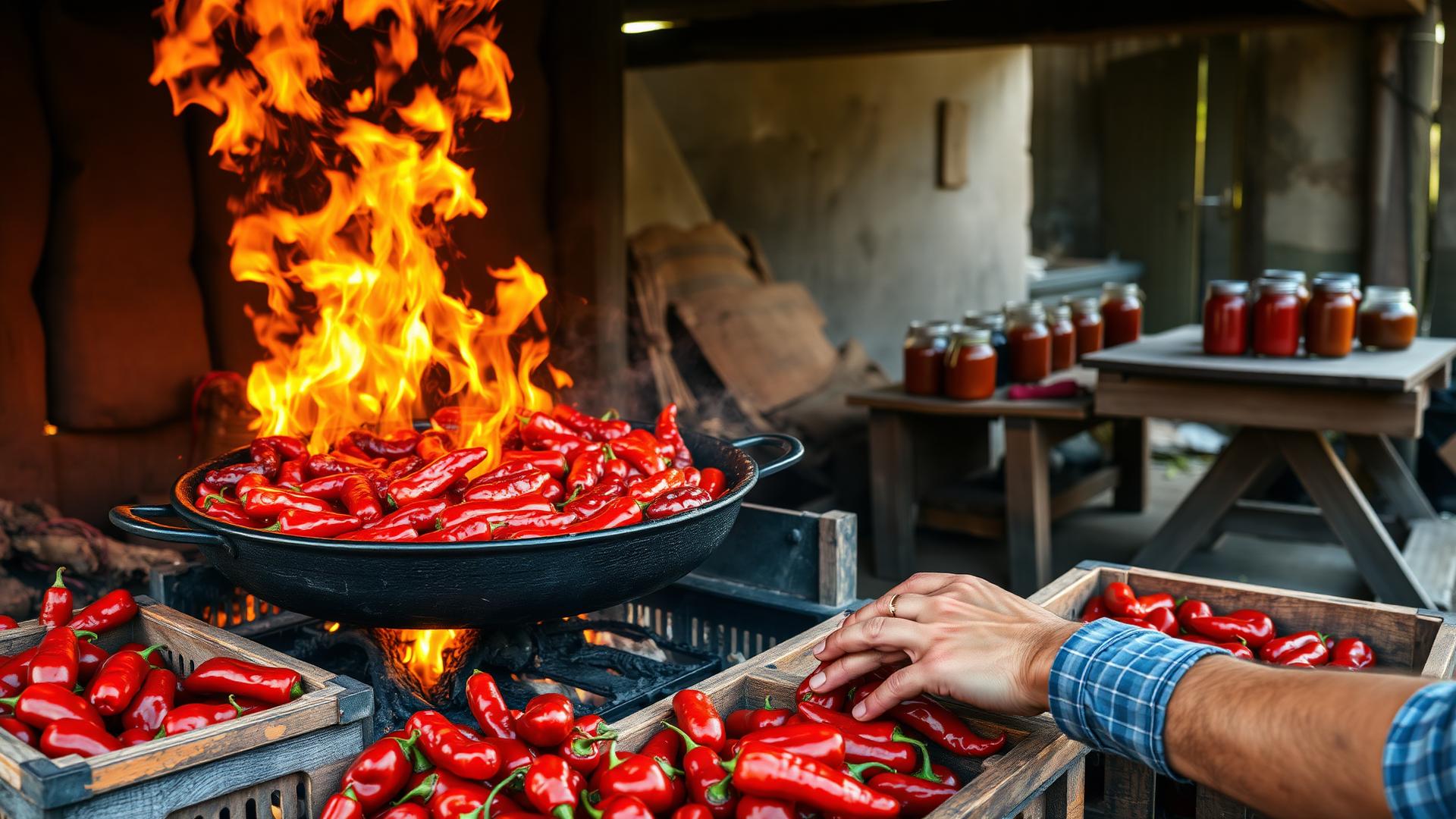
It begins with a subtle change in the air during the early mornings of September. Then comes the smell: a heavy, sweetish and deeply smoky aroma that drifts out from backyards, driveways and balconies. Anyone travelling through southern Serbia and North Macedonia in early autumn cannot miss the phenomenon. It is ajvar season, the weeks when the region comes to a standstill to turn the last harvest of summer into what is often known locally as “the caviar of the Balkans”.
This is no ordinary cooking. It is an annual folk festival, a social institution and a craft in which the smallest mistake can ruin months of work. To an outsider, spending several days on hard work to fill a dozen jars may seem extreme. For people here, it is an absolute necessity for getting through the winter – and a source of pride passed down through generations.
The Leskovac method: Geographical protection and the right pepper varieties
If France has its Champagne and Italy its Parmigiano Reggiano, southern Serbia has its peppers. The epicentre of this growing tradition is the town of Leskovac. Here, in the broad valley along the South Morava River, the many hours of sunshine and mineral-rich soil create perfect conditions for growing long peppers of the very highest quality.
This is where the protected product Leskovački domaći ajvar (Leskovac homemade ajvar) comes from. To carry this name, the product must meet strict criteria. It can only be made from locally grown pepper varieties, above all the legendary kurtovska kapija, but also local varieties such as domaća kanija. This pepper is flat and fleshy, with a low water content and a high natural sugar content that caramelises perfectly when it meets the fire.
The flat shape of the kurtovska kapija is no accident. It means the pepper sits steadily on the cast-iron plate without rolling, ensuring an even roast. Using the wrong kind of pepper for ajvar is a cardinal sin, resulting in a runny, pale and tasteless mush. In Leskovac, people take this very seriously; it is about preserving a cultural heritage, but also about protecting local farmers’ livelihoods from cheap industrial imitations.
Neighbours working together at the stove: The smell of roasted peppers fills the towns
Once the harvest has been gathered, residential neighbourhoods turn into communal outdoor kitchens. The classic Smederevac wood-burning stoves – low, sturdy cast-iron cookers found in almost every home – are carried out into the yards. Neighbours, friends and extended families gather in what is best described as an informal production line, where everyone has a set role.
The work is strictly divided and requires enormous patience. First, the peppers are roasted on the hot top of the stove until their skins turn black and blistered. They are then placed in plastic sacks or covered tubs to steam, making it easier to peel off the burnt skin. This is the most time-consuming step: every little fragment of black skin and every single seed must be removed by hand. Leaving seeds behind is considered in southern Serbia a sign of carelessness and a lack of respect for the ingredients.
Once the peeled peppers have drained thoroughly overnight in mesh sacks, they are coarsely ground. Then the really hard work begins: cooking. In enormous, wide pots (known as šerpe), the pepper purée simmers with sunflower oil and salt, while being stirred constantly with large wooden paddles. The process takes hours, and the stove must never be left unattended. The oil is added gradually, and the aim is to reach a creamy, almost velvety consistency, with the wooden paddle leaving a clear, dry trail across the bottom of the pot. Only then is the ajvar ready to be poured into sterilised jars.
The battle over the recipe: Pure pepper craft versus Macedonian aubergine
Although love of ajvar is universal across the Balkans, there is a constant and at times heated debate about what authentic ajvar can contain. The main dividing line is between the Serbian school, embodied by Leskovac, and the Macedonian tradition.
In Serbia, orthodoxy reigns supreme: authentic ajvar consists exclusively of roasted red peppers, oil, salt and a little vinegar for acidity. Mixing in other vegetables is seen as almost sacrilegious, or as a cheap way of bulking it out.
Travel south across the border into North Macedonia, and the rules change. Here, adding roasted aubergine is perfectly acceptable – and, according to many, absolutely essential. In towns such as Gevgelija and Kriva Palanka, known for their high-quality ajvar production, people also say that aubergine gives the mixture a rounder flavour and a creamier texture. The Macedonian tradition often includes a little garlic too, while the Serbian version strictly avoids it so as not to overpower the pure pepper flavour.
Another variation is cepkani ajvar (shredded ajvar), in which the ingredients are shredded or chopped rather than ground, giving it a completely different, stringier texture. This debate about ingredients and consistency is very much alive, from traditional markets such as Skopje’s Old Bazaar to international food sites such as Taste Atlas, where Balkan dishes are regularly ranked and passionately discussed by food lovers proud of their craft.
Whatever the recipe, ajvar is also the basis for other much-loved local specialities. One of the best known is urnebes – an intensely flavoured, spicy spread made with matured white cheese, ajvar, garlic and hot chilli, and the indispensable accompaniment to grilled meat in southern Serbia.
From Balkan winter stores to a Nordic deli favourite
What began as a matter of survival – a way to preserve the summer harvest for the cold winter months – has, over the past few decades, found its way into the upper reaches of international gastronomy. In Sweden and the rest of the Nordic countries, ajvar has long been available on supermarket shelves, but most often in the form of cheap, industrially produced varieties. These are often diluted with water, thickening agents and tomato purée, resulting in a product that is a long way from the original craft tradition.
But change is on the way. As Nordic interest in genuine food craftsmanship, pure ingredients and traditional preserving methods has exploded, attitudes to ajvar have changed too. Today, authentic, handmade ajvar from southern Serbia and North Macedonia is increasingly found in specialist delicatessens in Stockholm, Gothenburg and Copenhagen.
Nordic consumers have discovered that authentic ajvar, cooked over an open fire without additives, has a gastronomic complexity reminiscent of a fine pesto or Spanish romesco. Its smoky sweetness works wonderfully as a flavour enhancer in modern Nordic cooking – not just with traditional Balkan food, but as an accompaniment to everything from grilled root vegetables and sourdough bread to slow-cooked dishes and vegetarian meals.
When smoke rises from the backyards of Leskovac and Kriva Palanka, it is not just about filling the cupboards for winter. It is about keeping alive one of Europe’s most time-consuming and loving food traditions. A tradition that is now, jar by jar, making its way onto Nordic dinner tables too.
Facts
A quick guide to ajvar terminology
- Ajvar: A spicy spread made from roasted red peppers. The name probably derives from the Turkish word havyar (caviar).
- Kurtovska kapija: The best-known and most prized pepper variety for making ajvar, known for its flat shape and high sugar content.
- Smederevac: The classic Serbian cast-iron wood-burning stove, central to ajvar season.
- Urnebes: A spicy Serbian cheese salad or spread made with ajvar, garlic, hot chilli and salty white cheese.
Share the article
Translated from Swedish with AI assistance. Read the original.


