
Sinjska Alka – three centuries of galloping, honour and tradition
Every summer, Sinj becomes the stage for one of Croatia’s most distinctive traditions. During Sinjska Alka, Alka riders gallop at full speed towards a small iron ring, lance in hand – a contest that has endured since the 18th century and is now part of UNESCO’s Intangible Cultural Heritage.
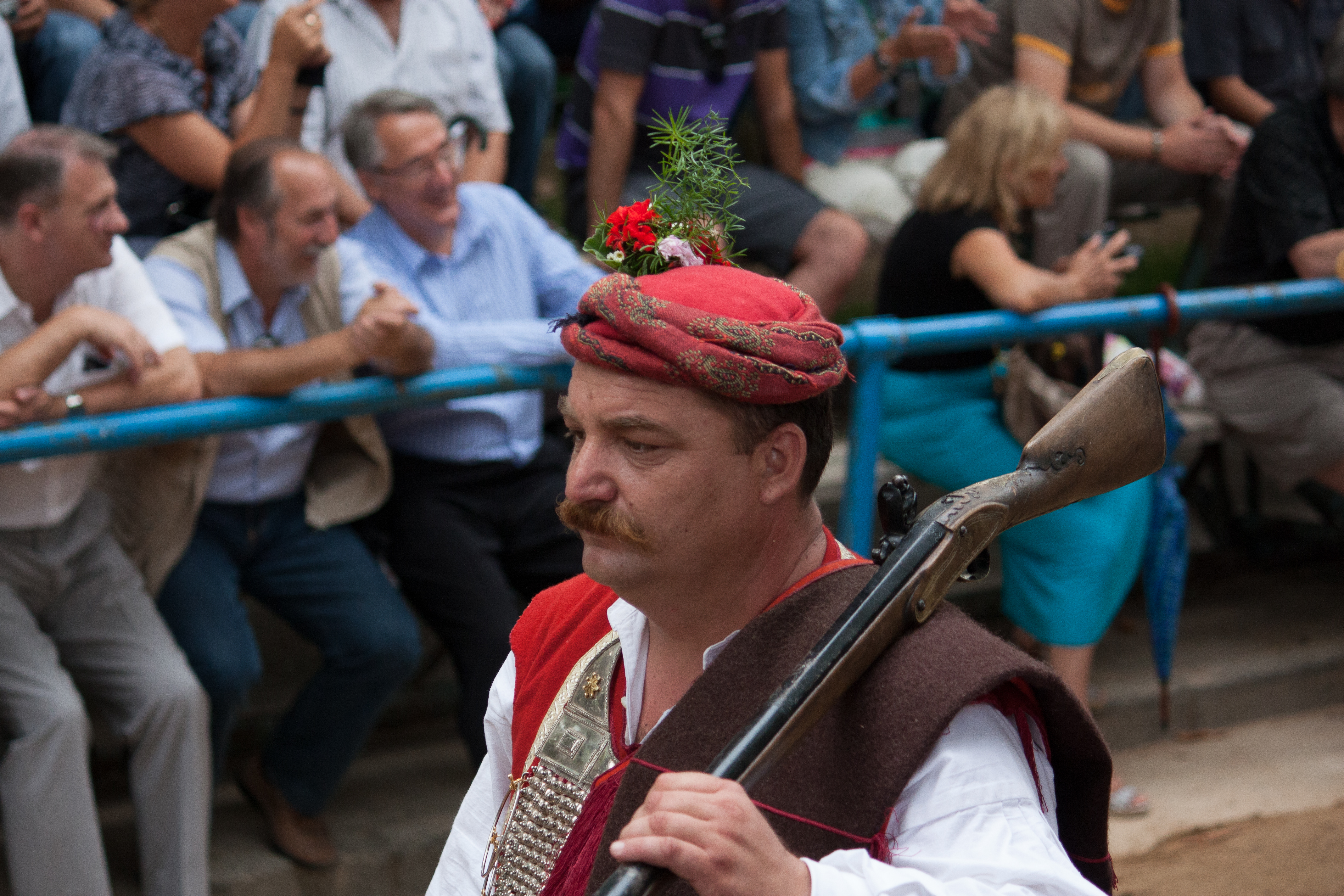
Sinjska Alka is difficult to understand as simply a competition. For the people of Sinj and Cetinska krajina, it is just as much a story of local identity, families, craftsmanship and memory.
The tradition has been kept alive since the 18th century and is now the only surviving example of the kind of chivalric tournament once held in several Croatian coastal towns. In 2010, Sinjska Alka was inscribed on UNESCO’s Representative List of the Intangible Cultural Heritage of Humanity.
A small ring decides everything
At a distance, the competition looks simple.
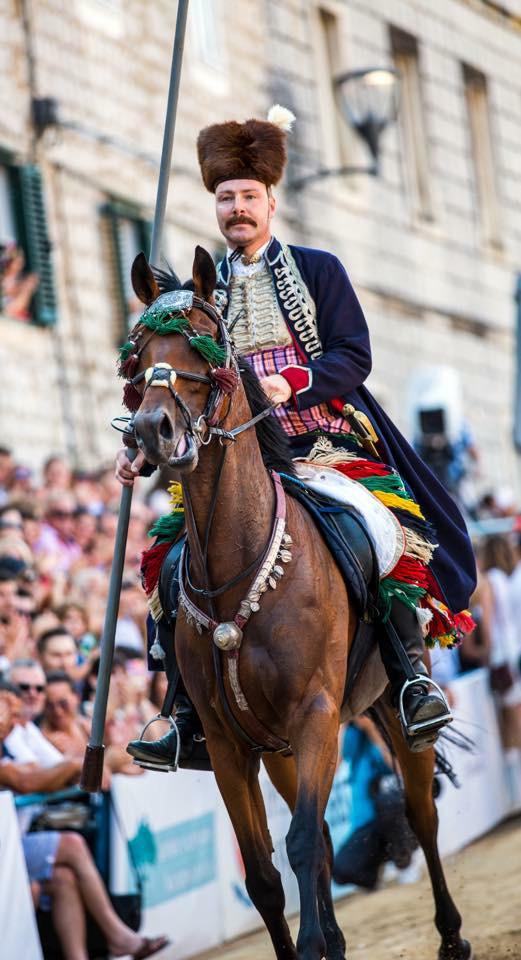
An Alka rider gallops along the course and tries to strike an iron ring, the alka, with the tip of a lance. The ring consists of two concentric circles joined by three bars.
But behind those few seconds of riding lie years of training, control and precision.
It is not enough simply to hit the ring. Where the lance passes through determines how many points the rider scores, and the most prestigious hit is the centre – what in Sinj is called hitting u sridu.
The expression has become much more than a reference to the competition itself. In Croatia, it is also used figuratively to mean getting something exactly right.
Who can become an Alka rider?
Sinjska Alka is not an open sporting event that anyone can enter.
The tradition is closely tied to Sinj and Cetinska krajina. UNESCO describes how participants come from local families and how knowledge is passed down through the community from generation to generation.
And it is not just the riders.
Behind the Alka are people who work with the horses, costumes, weapons, equipment and the organisation of the competition itself. The local community as a whole has played a part in preserving the tradition.
That is also one of the reasons the Alka has survived for so long. It has never been merely an event for spectators.
It is something the town itself carries.
The costumes tell their own story
When the Alka riders and their entourages ride through Sinj, the clothing is almost as striking as the horses.
The historical uniforms, weapons and details of the equipment bear traces of several cultural influences. The tradition brings together local Dalmatian expressions with Oriental and Venetian elements.
Even the word alka is of Turkish origin.
UNESCO highlights this very blend as part of the tradition’s history. The Alka emerged in an area where different political and cultural worlds had long met.
More than the day of the competition
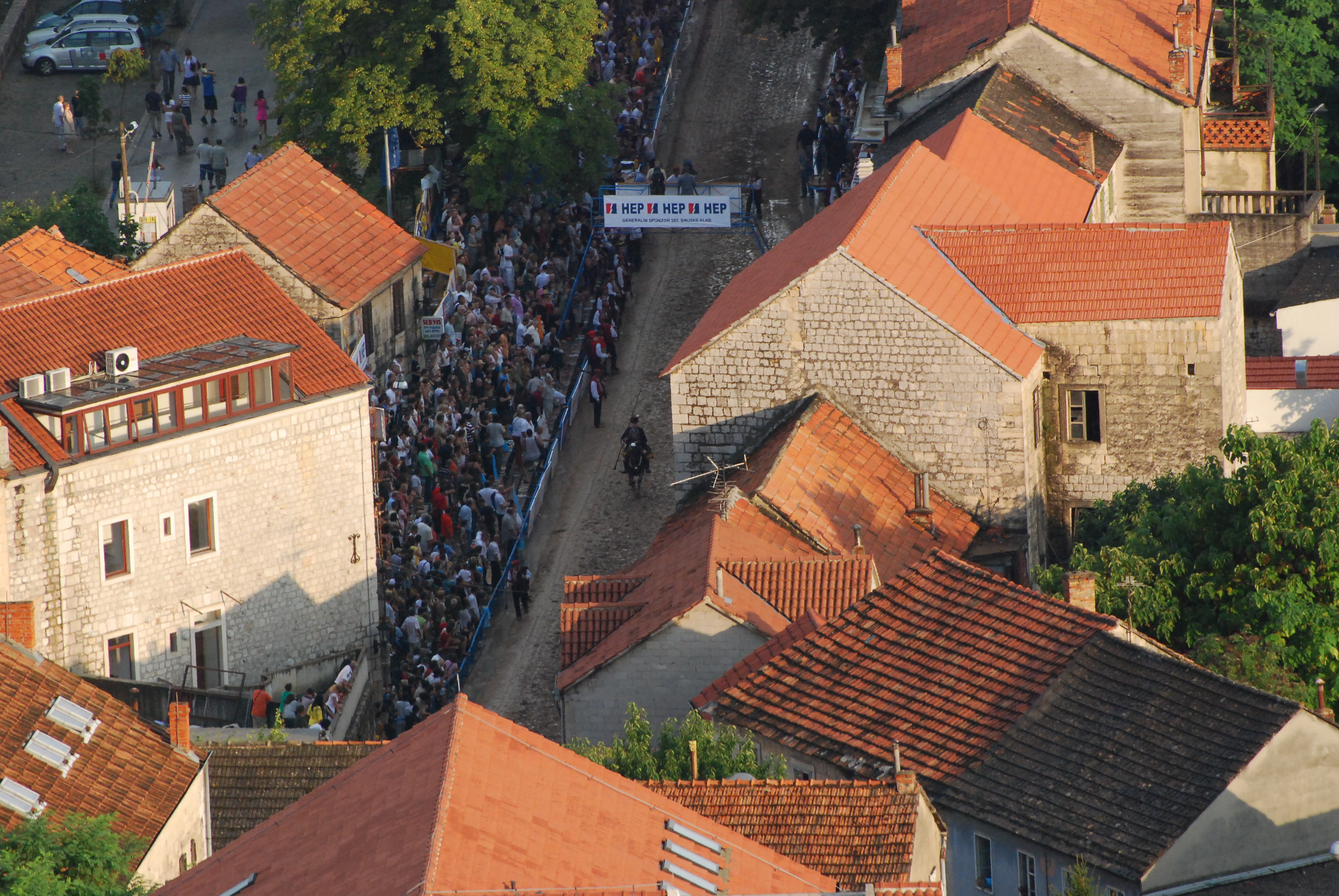
In Sinj, the Alka begins long before the first rider sets off on the course.
Preparations, training and other Alka-related events shape the town throughout the summer. As the main competition approaches, the streets fill with visitors, families returning home and people who follow the tradition year after year.
Religious celebrations, family visits and local festivities are also closely interwoven with the Alka.
This means the event operates on several levels at once: as sport, ceremony, cultural heritage and a social gathering place.
A tradition that continues to change
An old tradition does not have to stand still.
The rules of Sinjska Alka were codified as early as 1833 in a statute that emphasises both fairness and ethical conduct. At the same time, the organisation around the competition has continued to adapt to a modern audience and growing international interest.
Today, the Muzej Sinjske alke plays an important role in documenting the history and explaining it to visitors, while the competition itself still relies on living knowledge of horses, riding, equipment and ceremonies.
The 311th Alka in 2026
In 2026, the 311th Sinjska Alka was held.
The main competition took place on 9 August and concluded, as usual, with the naming of that year’s slavodobitnik – the winner. Celebrations continued later that evening in central Sinj. :chatgpt-content-reference{index="1"}
The fact that the count has now passed 300 editions says something about the tradition’s unusual continuity.
Many historical events have been reconstructed later for tourism or cultural festivals. Sinjska Alka is different because it still belongs to the community that created it.
When the whole town becomes part of the story
For a visitor, it is easy to be drawn first to the spectacle: the horses, lances, uniforms and the small metal ring suspended above the course.
But it is the people around it who explain why the Alka has survived.
Families who know the riders’ names. Children growing up with the stories. Craftspeople who know the details of the equipment. People who gather in the same place year after year.
That is where Sinjska Alka becomes more than a spectacular event and turns into cultural heritage.
Not just something put on display.
But something that is still lived.
Sources & further reading
Share the article
Translated from Swedish with AI assistance. Read the original.


