
Sarajevo through two lenses – the city of my birth and the city I return to
I was born in Sarajevo in 1991. Today I live in Sweden, but every time I return, I see the city through two lenses – one that remembers, and one that compares. The old Sarajevo remains, but alongside it, something new is emerging: young people who want to be heard, new ideas, international connections, and a city that is still trying to decide where it is heading.
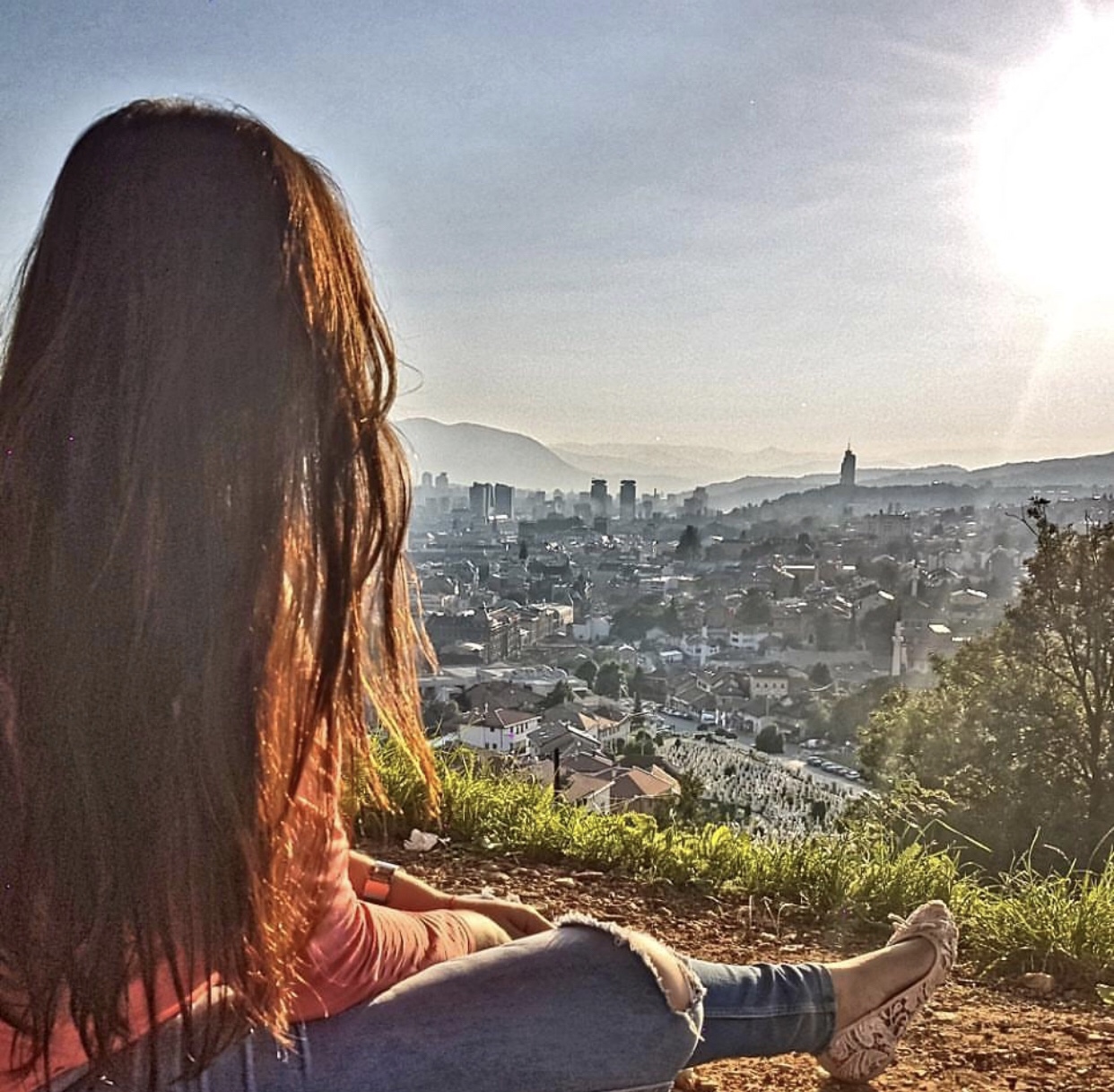
It is strange to return to a city you think you know. I know the streets, recognise the mountains, and know roughly how the late afternoon light falls across the roofs. Yet I see Sarajevo differently now. Perhaps because I no longer live here, perhaps because Sweden has become a part of my life, or perhaps because both the city and I have changed.
Sitting high above Sarajevo, looking out over the rooftops, minarets, church steeples, new high-rises, and the mountains enclosing it all, the city feels both familiar and slightly foreign. It is still the place where I was born, but also a city I now return to.
The city I thought I knew
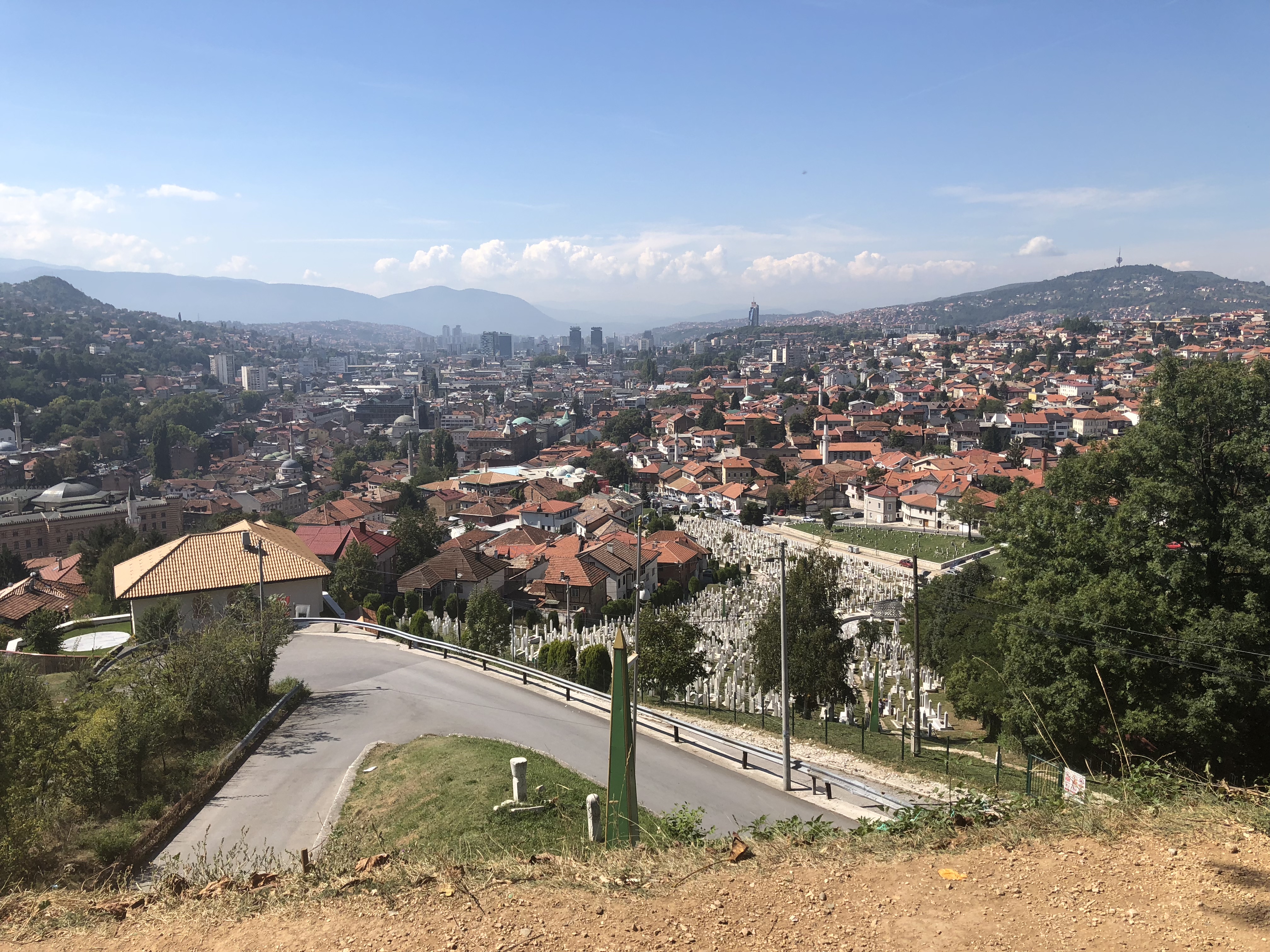
When you grow up somewhere, you rarely look at the place through the eyes of a visitor. The mountains, the old quarters, the sounds of the street, and the cafés where a coffee can easily stretch into an entire afternoon just feel like a natural part of everyday life.
It was only when I moved away that I began to understand what I had taken for granted.
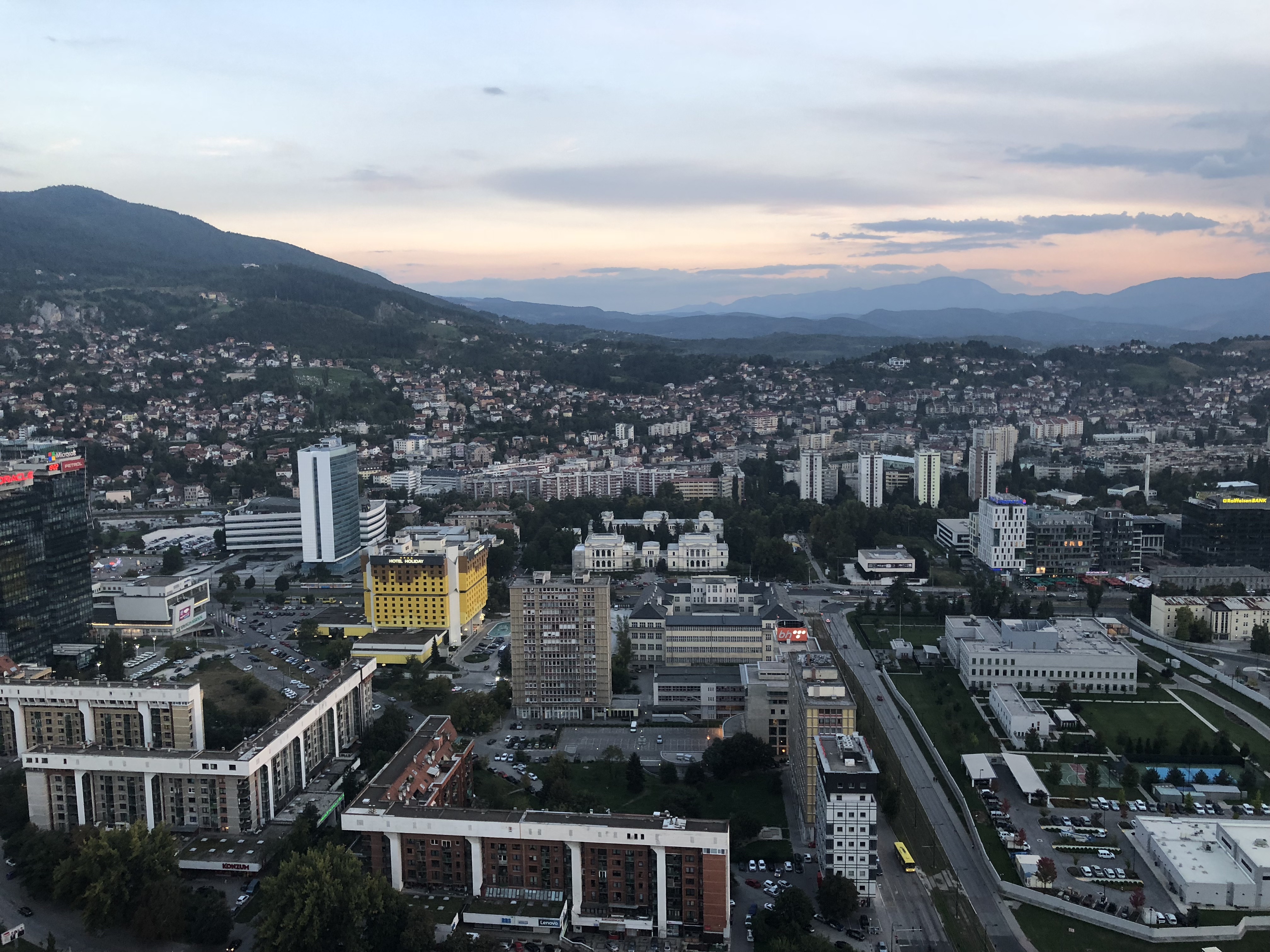
Sarajevo is geographically unique. The city lies almost like a bowl between the mountains, and from the heights, you can see different eras resting side by side. Old mahala (traditional residential) neighbourhoods climb the slopes, the older city centre spreads out below, and beyond it rises a more modern Sarajevo with office blocks, residential buildings, and new developments.
There is no clear line where the old ends and the new begins. They co-exist, just like so much else in Sarajevo.
Sarajevo is changing before our eyes
It is easy to speak of Sarajevo through its history. The war, Yugoslavia, the Ottoman heritage, Austria-Hungary, and the Winter Olympics are all parts of the city's identity.
But Sarajevo is not a museum.
When I return, I also see a city trying to modernise. New buildings alter the skyline, businesses emerge, and restaurants and cafés are replaced faster than I can memorise them between visits. A new generation is working in technology, design, culture, media, and entrepreneurship, trying to carve out their place in a society where the path forward is not always obvious.
Development is not simple. Sarajevo still wrestles with problems well known to the people here: political inertia, economic uncertainty, bureaucracy, and the feeling among many young people that opportunities lie elsewhere.
At the same time, there is a clear forward movement. That is the part of Sarajevo that interests me most today.
A generation that wants to be heard
There are young people who do not want their only choice to be adapting or leaving.
They start businesses, create art, work digitally, build projects, organise, and try to find new ways to shape their own future.
Not everyone will stay, and perhaps they do not need to. People leaving Bosnia and Herzegovina is nothing new. What has changed, perhaps, is the relationship between staying and going.
Today, you can live in Stockholm and work with Sarajevo, study in Vienna and start something in Bosnia, or live in Sweden and still be an active part of a project, a company, a family, or a cultural context in the Balkans.
Distance no longer means the same as it did before.
Sarajevo and Europe are closer than the map suggests
From Sweden, the Balkans can sometimes feel far away, but in practice, there is a constant exchange between Sarajevo and the rest of Europe.
Students travel abroad and return. Businesses collaborate across borders. Cultural projects bring together people from different countries. Festivals, universities, and organisations create new networks, and the diaspora often serves as a natural link between Bosnia and other European societies.
People with roots in Bosnia and Herzegovina live in Sweden, Germany, Austria, Norway, the Netherlands, and many other countries. They are not just people who once left, but also a part of the relationship back.
They bring with them ideas, contacts, language, work culture, and experiences. Sometimes this connection is glaringly obvious, sometimes barely noticeable, but it is there.
Those who never really left
I think many who have left Sarajevo recognise a particular paradox. You build a life elsewhere, learn a new language, find new routines, and eventually begin to feel at home there too.
But certain things stay with you.
It might be a way of speaking, a dish, a song, a street you always want to walk past, or a view you automatically look for when you return.
Many who live abroad have never stopped participating in the life of the city, either. They renovate family homes, start businesses, return in the summer, and bring their children to show them where their parents or grandparents grew up.
Roots do not have to bind a person to the same place to continue to matter.
Autumn softens Sarajevo
I particularly love Sarajevo in autumn.
Summer has its own energy and a faster pace, but in autumn, the city changes. The light softens, the mountains around Sarajevo begin to turn, and the evenings draw in earlier.
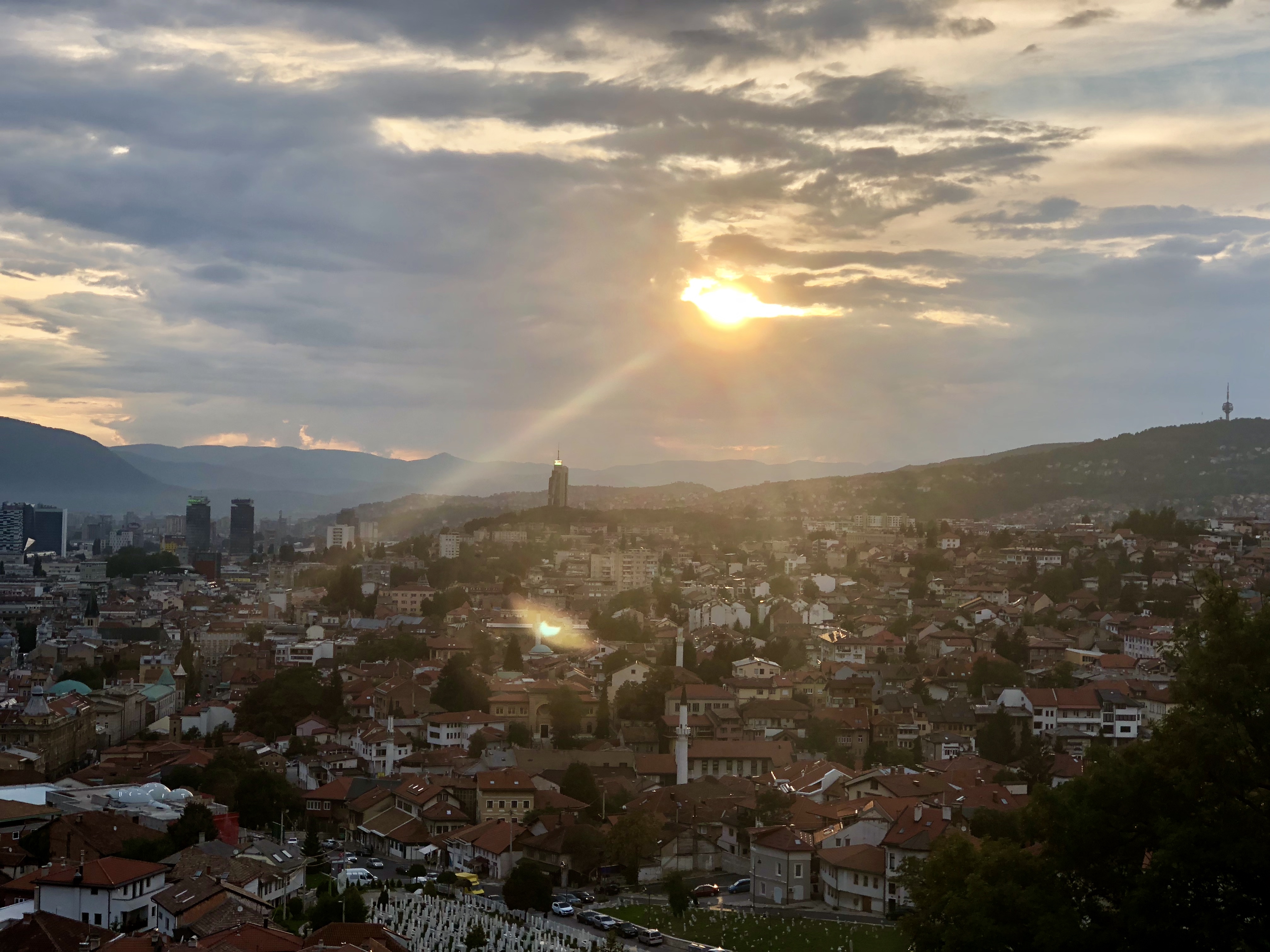
The cafés feel warmer, and from the hills, you can watch the sun slowly disappear behind the mountains as the city lights flicker on, one by one.
There is something slightly melancholic about Sarajevo during this season, but not in a sad way. Rather, it feels as though the city is lowering its voice.
Old rooftops and new high-rises are bathed in the same evening light, and that is perhaps when I love Sarajevo most. When the city is not trying to impress, but is simply being itself.
What I miss – and what I do not romanticise
It is easy to idealise the place you have left, and I try not to do so.
I miss Sarajevo's spontaneity and social warmth. I miss long conversations over coffee, the proximity between city and nature, and the sense that people still make time for one another in a way that is sometimes harder to find in Sweden.
At the same time, I see things more clearly after living in Sweden. I appreciate structure when it works, predictability, and institutions that people can rely on.
Loving a city does not mean you have to turn a eye to its problems. Perhaps it is quite the opposite. You want a place to improve precisely because it matters to you.
Two homes do not need to compete
People who move often speak of two alternatives: here or there, Sweden or Bosnia, the old life or the new.
I believe less and less in that division.
You can belong to two places in different ways. Sweden is a part of my life, and Sarajevo is a part of my history. One does not have to diminish the significance of the other.
On the contrary, the distance has made me see both places more clearly. I see things in Sarajevo that I did not see when I was closer, and I see Sweden differently because I know what life can look like elsewhere.
Perhaps this is precisely what happens to many of us who live between the Nordic countries and the Balkans. We do not become half of two things. We gain two perspectives.
The city I return to
When I look out over Sarajevo today, I do not just see the city of my birth.
I see a place where history is still visible, but where the future is simultaneously trying to make itself heard. I see young people who want something more, people who have left but never fully disappeared, and a Sarajevo being tied closer to the rest of Europe without having to stop being Sarajevo.
And I see a city that is not finished.
I like that.
Perhaps a city does not need to be finished to be worth believing in.
Perhaps it is precisely the distance that makes me see Sarajevo more clearly now – not just as the city I come from, but as a city that is still trying to decide where it is heading.
And each time I return, both the city and I have managed to change a little more.
Share the article
Translated from Swedish with AI assistance. Read the original.


