
Rules and rights: How to buy property in Croatia as an EU citizen
Many Swedes share the dream of owning a home by the Adriatic Sea. As an EU citizen, you buy on the same terms as a Croatian citizen – but the process involves its own checks, paperwork and fees. Here is the full journey, from the land registry extract to registered ownership, including taxes, roles and pitfalls.
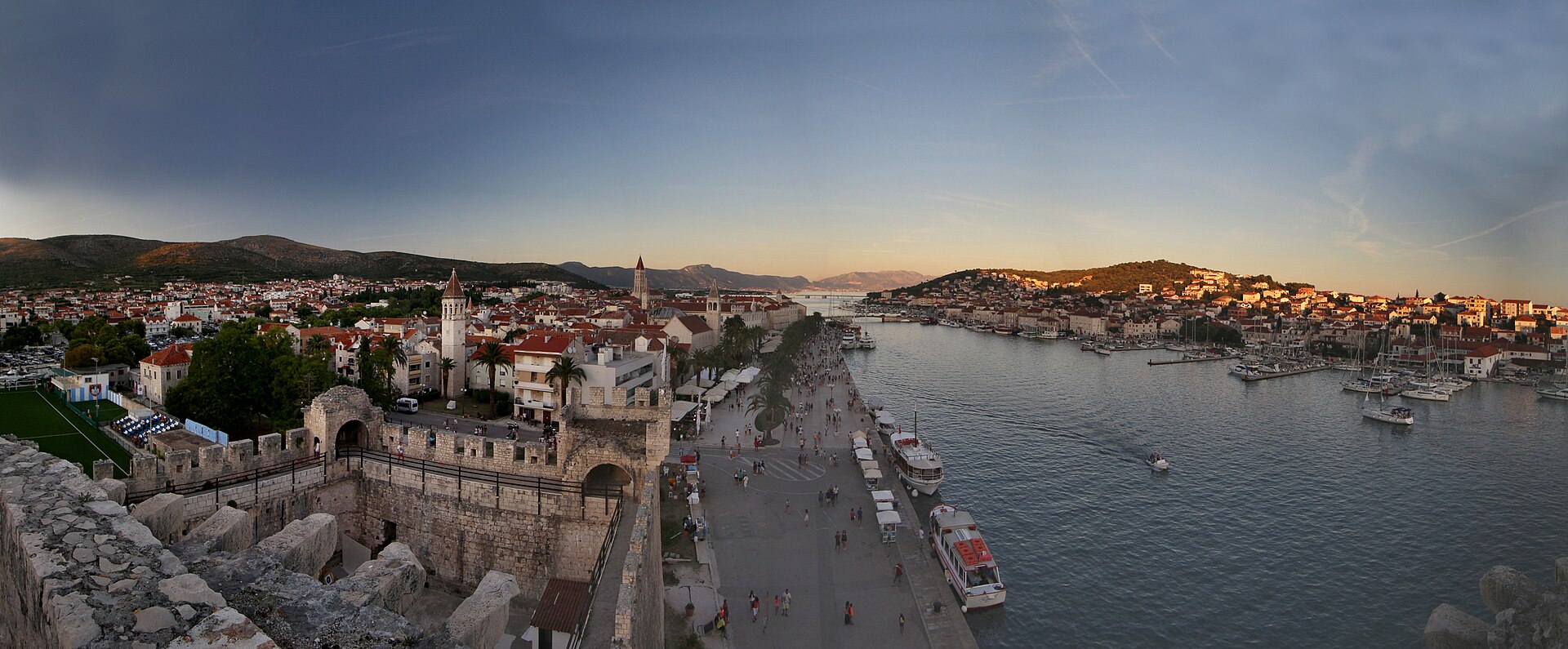
For a Swedish buyer, the dream of a limestone house by the Adriatic Sea is not a legal grey area. Croatia has a clearly regulated process for property purchases, and as an EU citizen you are, in practice, on the same footing as a Croatian citizen. But between the estate agent’s listing and your name appearing in the land register lies a chain of checks, paperwork and fees that is easy to underestimate. Here is the whole process, step by step.
The same terms as Croatian citizens
As a citizen of an EU country – and the same applies to Norway, Iceland and Liechtenstein – you may acquire ownership of property in Croatia on exactly the same terms as Croatian citizens and legal entities based in the country. You do not need approval from the Ministry of Justice and Public Administration, unlike buyers from countries outside the EU and EEA, who must pass a reciprocity assessment and obtain the ministry’s approval before ownership can be registered.
The exception applies to property in specially excluded areas, above all agricultural land, which is governed by its own law. We return to this below.
First: get an OIB
Before you can act as a party in Croatian legal and administrative proceedings, you need an OIB, the country’s personal identification number. The OIB identifies foreign individuals in all official procedures in Croatia and allows you to be registered as a taxpayer.
A foreign individual should contact the competent tax office (Porezna uprava), or the Ministry of the Interior or the police authority if you are also registering your residence in the country. Citizens of the EU and EEA can also apply for an OIB remotely, through the electronic OIB allocation service on Croatia’s e-Citizens portal.
Step 1: Check the land register
The most important part of the whole purchase is also the cheapest. Check ownership in the land register (zemljišna knjiga) at the municipal court with jurisdiction over the area where the property is located. According to the authorities, an extract from the land register is the only proof of ownership and other registrable rights to a property. What the seller, estate agent or neighbour says is not proof.
The extract consists of three parts, and you need to read all of them:
- Sheet A – property register: the property’s basic details: cadastral municipality, parcel number, file number, area, address, use and how the land is developed.
- Sheet B – ownership register: who owns the property, previous changes of ownership, and personal restrictions on the owner’s right to dispose of it, such as guardianship or bankruptcy.
- Sheet C – encumbrances register: the rights of third parties. This shows mortgages, rights of repurchase, pre-emption rights, tenancy and lease agreements, registered enforcement proceedings, and prohibitions on transfer or encumbrance.
Sheet C is the most common source of unpleasant surprises. An unpaid mortgage or a registered enforcement proceeding follows the property, not the seller. Land register extracts and cadastral details can now be obtained digitally through the joint land register and cadastre information system, the Uređena zemlja portal.
Step 2: Check the building documents
In addition to proof of ownership, you should request all documents relating to the building and land that the seller has. The authorities’ own checklist for buying a house or flat includes a land register extract, a building permit or other valid building document, an occupancy permit (uporabna dozvola) and an energy performance certificate.
If you are buying a flat under construction, the developer must show an enforceable, final building permit or equivalent official building document. The occupancy permit is just as important: it cannot be issued if construction has deviated from the requirements set out in the building permit. The Croatian authorities also recommend checking the main project, which forms part of the building permit.
It is the seller’s responsibility to obtain the energy performance certificate, show it to prospective buyers and hand it over to the buyer. It is valid for ten years from the date of issue. A few types of building are exempt, including wholly detached buildings with a useful floor area of less than 50 square metres and residential buildings used for less than four months a year – an exemption worth knowing about, particularly for holiday homes.
Step 3: Preliminary contract and deposit
It is customary to begin by signing a preliminary contract (predugovor). The contract should identify the property using the land register details – cadastral municipality, parcel number and file number – and describe the property: for a flat, its address, floor, flat number, room layout and total area. The price, date of the final contract and deposit amount should also be stated.
The deposit is agreed as a cancellation fee. If the buyer pulls out, the seller keeps the deposit; if the seller pulls out, they must pay the buyer double the amount. The customary amount is ten per cent of the property’s value. The preliminary contract must be certified by a notary.
Step 4: The purchase contract
The purchase contract contains everything included in the preliminary contract, as well as the date on which the property will be handed over to the buyer and the seller’s guarantee that the property is free of third-party rights. The rules on purchase contracts are set out in Articles 376–473 of the Croatian Obligations Act.
The authorities expressly recommend that you have a lawyer draw up the contract to ensure you, as the buyer, are properly protected. The contract is certified by a notary in several copies, distributed as follows: one to the seller, one to the buyer, one kept by the notary, one for the land registry department of the municipal court when ownership is registered, one for the tax authority when the property transfer tax is reported, and one for the bank if the purchase is financed with a loan.
Who does what: notary, lawyer and estate agent
The roles differ from those in Sweden and are often confused.
The notary (javni bilježnik) is a public official who certifies signatures and documents, and reports the occurrence of property transfer tax electronically to the local tax office within 30 days of the document being drawn up or certified. The notary is impartial and does not represent you.
The lawyer is the person who actually looks after your interests: checking land register extracts and encumbrances, drafting the contract terms and ensuring that payment and registration are linked. Hiring a lawyer is not a legal requirement for an EU citizen, but the authorities’ recommendation to have a lawyer draft the contract is a good reason to do so.
The estate agent acts as an intermediary for the property. The seller’s obligation to obtain an energy performance certificate and state the building’s energy rating in advertisements applies regardless of who places the advertisement.
| Role | What they do | Do they represent you? |
|---|---|---|
| Notary (javni bilježnik) | Certifies signatures and documents, reports the property transfer tax to the tax office within 30 days, certifies the tabular declaration | No – impartial public official |
| Lawyer | Checks land register extracts and encumbrances, drafts the contract terms, ensures that payment and registration are linked | Yes – looks after your interests |
| Estate agent | Acts as an intermediary for the property and viewings; the seller must obtain an energy performance certificate and state the energy rating in the advertisement | No – works in the interests of the transaction |
Taxes, fees and costs
Property transfer tax. If you have acquired property – a building or land – without VAT being paid on the acquisition, you are liable for property transfer tax. The rate is three per cent of the property’s market value at the time of acquisition. The person acquiring the property – that is, the buyer – is liable for the tax.
When the tax is not charged. Property transfer tax is not charged on acquisitions where the supply is instead subject to VAT. VAT exemptions include the supply of land that is not building land, and the supply of buildings or parts of buildings and the land they stand on if more than two years have passed between first occupation or use and the next supply. The distinction between a new-build and an older home therefore determines which tax applies to the purchase – check this before you make an offer.
Reporting. In the normal course of events, the notary handles the reporting. Only in exceptional cases does the buyer report it themselves, namely when the document on which the acquisition is based was not drawn up or certified by a notary.
In addition to the tax, you should budget for notary fees, legal costs, estate agent’s fees, charges for land register extracts and registration, and, if you take out a loan, the bank’s costs. The amounts vary and should be requested in writing in advance.
Agricultural land – the major exception
Croatia considers agricultural land a particularly protected asset, and it is governed by a separate law: the Agricultural Land Act. When the country joined the EU on 1 July 2013, an initial seven-year moratorium was imposed on EU citizens and EU companies acquiring agricultural land; this was later extended by a further three years. The moratorium ended on 1 July 2023.
The end of the moratorium does not mean that agricultural land can be bought like a flat. Its acquisition is still governed by the special legislation on agricultural land, not the general rules for residential property. Citizens and legal entities from third countries are still prohibited from acquiring agricultural land, unless otherwise provided for by an international agreement or specific regulations, or in cases of inheritance where the reciprocity requirement is met.
So always check how the land is classified in Sheet A. A plot described in an advertisement as building land with olive trees may be registered as agricultural land – in which case a different law governs the purchase. Protected natural areas and the maritime domain (pomorsko dobro) along the coast are also subject to their own rules and additional restrictions.
Step 5: Registered ownership
Once the purchase price has been paid in full, the seller is obliged to issue a tabular declaration, certified by a notary, which allows you to register your ownership. At the same time, the seller must hand over the energy performance certificate or a copy of it.
The application for registration is submitted to the land registry department of the competent municipal court. It is only when the court has approved the application and entered your name in the land register that you are legally the owner. Until then, you have a contract – not a house.
Sources & further reading
- Republiken Kroatiens myndighetsportal gov.hrReal estate purchase for foreign nationals
- Republiken Kroatiens myndighetsportal gov.hrPurchase of real property
- Republiken Kroatiens myndighetsportal gov.hrSale of real property
- Republiken Kroatiens myndighetsportal gov.hrReal estate transfer tax
Share the article
Translated from Swedish with AI assistance. Read the original.


